Latest Stories
Most recently published stories on Vocal.
Iranian Army Receives New Batches of Russian Mi-28 Attack Helicopters as U.S. Attack Looms. AI-Generated.
The Iran has reportedly received new batches of Mi‑28 Havoc attack helicopters from Russia, marking a significant upgrade to its rotary-wing combat fleet at a time of rising regional tensions and growing fears of a potential confrontation with the United States. According to defense sources and regional intelligence assessments, the deliveries form part of a broader military cooperation package between Tehran and Moscow, reflecting closer strategic ties forged amid international sanctions and shared geopolitical interests. Iranian state-linked outlets described the arrival of the helicopters as a “defensive reinforcement,” while analysts view the move as a clear signal of deterrence as speculation increases over possible U.S. or allied military action. Strengthening Iran’s Air Assault Capability The Mi-28 is a heavily armed and armored attack helicopter designed for close air support, anti-armor missions, and low-altitude combat operations. Equipped with a 30mm cannon, guided anti-tank missiles, and advanced night-vision targeting systems, the aircraft significantly enhances Iran’s ability to conduct precision strikes and defend key installations. Military experts say the acquisition modernizes Iran’s aging helicopter fleet, which has relied largely on older U.S.-era platforms and domestically modified variants. The Mi-28’s radar and infrared sensors allow operations in poor weather and at night, giving Iran greater tactical flexibility in both border defense and internal security roles. An Iranian defense official, speaking anonymously, said the helicopters would be deployed to “strategically sensitive regions” and used for training alongside existing air force and ground units. Context of Rising Tensions The reported deliveries come as tensions escalate over Iran’s missile program, regional proxy activity, and confrontations in the Persian Gulf and surrounding theaters. U.S. officials have recently warned of consequences should Iranian forces or allied militias threaten American personnel or interests in the region. While no formal announcement of imminent military action has been made, analysts note increased U.S. naval and air activity in the Middle East, fueling speculation of possible strikes on Iranian military infrastructure. The arrival of advanced Russian helicopters appears aimed at strengthening Iran’s deterrence posture and complicating any external military planning. “This is about signaling,” said a Middle East security analyst. “Iran wants to show it can respond quickly to ground incursions or precision raids with modern airpower support.” Russia-Iran Defense Cooperation The helicopter deliveries highlight the deepening military relationship between Moscow and Tehran. Since the outbreak of the Ukraine conflict and subsequent Western sanctions on Russia, both countries have expanded defense and technology exchanges. Russia has sought alternative markets and partners for its military hardware, while Iran has gained access to more modern platforms than it could previously obtain under international restrictions. In return, Iran has reportedly provided drones and logistical support to Russian operations elsewhere, strengthening a mutually beneficial partnership. Western officials have expressed concern that this cooperation undermines global arms control efforts and could destabilize an already volatile region. Strategic Implications From a military perspective, the Mi-28s could play a role in defending critical sites such as missile bases, nuclear facilities, and border regions vulnerable to infiltration. Their presence also increases Iran’s ability to conduct rapid-response operations against perceived threats. However, experts caution that helicopters alone would not prevent a large-scale U.S. strike but could raise the cost and complexity of any operation. The deployment may also encourage neighboring states to upgrade their own air defense and attack capabilities, potentially accelerating a regional arms race. Looking Ahead Neither Washington nor Tehran has confirmed direct confrontation plans, but the symbolism of the helicopter deliveries is clear. Iran appears intent on projecting readiness and resilience, while Russia continues to expand its influence through military exports and strategic alliances. As diplomatic channels remain strained, the arrival of advanced attack helicopters underscores how regional security dynamics are increasingly shaped by military signaling rather than negotiation. Observers warn that miscalculation on either side could rapidly escalate into open conflict, making the coming weeks critical for stability in the Middle East.
By Fiaz Ahmed 22 days ago in The Swamp
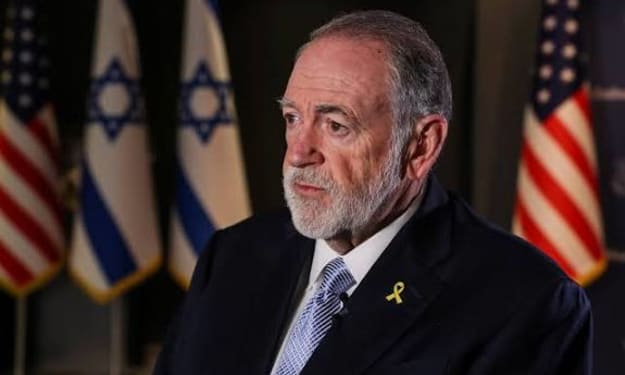
U.S. Envoy Suggests It Would Be ‘Fine’ if Israel Expands Across the Middle East. AI-Generated.
A senior U.S. government envoy has sparked controversy after suggesting that it would be “fine” if Israel were to expand its influence or territory across parts of the Middle East, comments that have drawn sharp reactions from diplomats, regional leaders, and human rights groups. The remarks were made during a closed-door policy discussion with foreign correspondents and later confirmed by officials familiar with the exchange. While the envoy did not explicitly endorse military conquest, critics say the statement implies tolerance for territorial expansion that would violate international norms and destabilize an already volatile region. Diplomatic Fallout Regional governments quickly expressed concern over what they viewed as a departure from longstanding U.S. policy supporting negotiated solutions and respect for national sovereignty. A spokesperson for a Gulf state foreign ministry said the comments were “deeply troubling” and could encourage escalation rather than restraint. Palestinian officials condemned the statement as evidence that Washington is abandoning its role as a neutral mediator. “Such language signals approval of occupation and undermines any prospects for peace,” one senior Palestinian representative said. European diplomats privately warned that the comments could strain transatlantic unity at a time when coordinated diplomacy is needed to address conflicts in Gaza, Lebanon, and Syria. U.S. Clarifications Following the backlash, the U.S. State Department attempted to soften the impact of the remarks, issuing a statement emphasizing that U.S. policy continues to support a rules-based international order and opposes unilateral changes to borders. “The United States remains committed to regional stability and to solutions achieved through diplomacy,” the statement said, adding that the envoy’s comments were taken out of context and did not reflect an official endorsement of territorial expansion. Nevertheless, analysts note that the initial remark reflects growing divisions within Washington over how to manage Israel’s security posture and the broader Middle East crisis. Strategic Context The comments come amid heightened tensions across the region, with Israeli military operations expanding beyond Gaza and periodic strikes reported in Lebanon and Syria. Israeli officials have framed these actions as necessary to counter threats from militant groups backed by Iran. Some security hawks in Washington argue that Israel’s military dominance could reshape the regional balance of power in favor of U.S. allies. Others warn that unchecked expansion would fuel radicalization and increase the likelihood of a wider regional war. “This kind of rhetoric feeds the perception that force, not diplomacy, is becoming the preferred tool of policy,” said a Middle East analyst based in Washington. “That’s a dangerous signal in a region already on edge.” Legal and Ethical Concerns International law experts stress that any territorial expansion through military means would violate the UN Charter and long-standing principles of sovereignty. Human rights organizations have warned that such policies would likely worsen humanitarian conditions and displace civilians across multiple countries. “These statements normalize the idea that borders can be changed by force,” said a spokesperson for a global rights group. “That sets a precedent with implications far beyond Israel and its neighbors.” Domestic Political Impact Within the United States, the envoy’s remarks have triggered debate in Congress. Several lawmakers called for clarification and reaffirmation of U.S. commitment to a two-state solution and regional diplomacy. Others defended the envoy, arguing that Israel must be allowed to secure its borders against hostile actors. The divide reflects broader tensions in U.S. politics, where support for Israel remains strong but concerns over civilian casualties and regional escalation are growing. Looking Ahead While the administration has moved quickly to distance itself from the statement, its impact is likely to linger. Diplomatic observers say trust in U.S. mediation efforts could be weakened if regional partners believe Washington is shifting toward acceptance of territorial expansion. As conflicts intensify across the Middle East, the episode underscores how a single comment can inflame sensitivities and complicate already fragile diplomatic efforts. Whether the controversy leads to policy recalibration or deeper rifts remains to be seen, but it highlights the precarious balance between military power and diplomacy in one of the world’s most unstable regions.
By Fiaz Ahmed 22 days ago in The Swamp
Iran Prepares Nuclear Counterproposal as U.S. Considers Limited Military Strikes. AI-Generated.
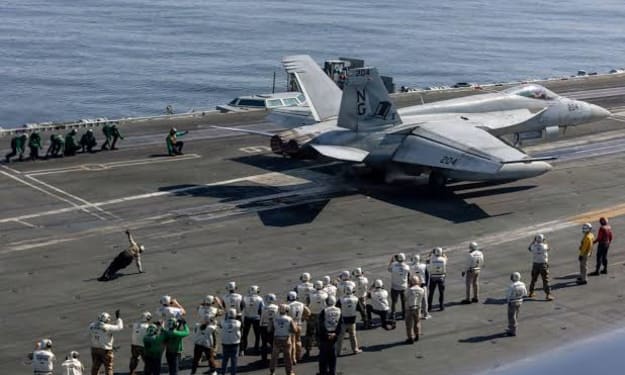
Tensions between the United States and Iran over Tehran’s nuclear programme have intensified this week as Iranian officials prepare a draft nuclear counterproposal while Washington weighs the possibility of limited military strikes if diplomacy fails to yield a deal, according to multiple government and diplomatic sources. Iran’s Foreign Minister Abbas Araghchi said on Friday that Tehran expects to have a draft proposal ready for delivery to U.S. negotiators within the next two to three days, following indirect talks earlier this week in Geneva. Araghchi suggested that although significant disagreements remain, there is room for negotiation on measures to ensure Iran’s nuclear activities remain peaceful. “We have not offered any suspension [of enrichment] and the U.S. side has not asked for zero enrichment,” Araghchi said in a televised interview, adding that discussions are focused on safeguards and confidence-building measures. He said the two sides had agreed on some guiding principles but that a full agreement was not yet within reach. U.S. Pressure and Military Options Meanwhile, Donald Trump has publicly warned that the United States is considering limited military action to compel Tehran to accept terms on its nuclear programme, setting an informal deadline of roughly 10–15 days for a diplomatic breakthrough. Trump said on Friday that he is “considering” a limited strike to pressure Iran, framing it as a necessary step if talks falter. U.S. military planners have reportedly advanced options that include targeted strikes against specific military and leadership infrastructure, as well as contingencies that could involve broader measures if conflict escalates. Some officials even discussed the possibility of actions aimed at regime figures, though no formal order has been issued. The massive U.S. military presence already deployed in the Middle East — including aircraft carriers, fighters, and support assets — underscores the seriousness of Washington’s intent to use force if deemed necessary. Observers say the deployment is meant to signal resolve and deter miscalculation, but also complicates diplomatic channels. Diplomatic Efforts and Objections Despite the military rhetoric, both sides have emphasised a preference for diplomacy. Araghchi reiterated that Iran seeks a peaceful resolution and that it believes a deal is possible “in a very short period of time,” provided that negotiations focus on practical confidence-building and safeguards rather than maximalist demands. He rejected calls for Iran to permanently cease enrichment, especially without corresponding sanction relief, arguing that peaceful enrichment is a right recognized for many nations. Foreign diplomats and international organisations, including the United Nations, have expressed concern over the deteriorating rhetoric, urging both sides to keep diplomacy alive and avoid actions that could spiral into wider conflict. Some envoys have warned that military action would risk destabilising not only Iran but the broader region, affecting energy markets and global security cooperation. Regional and Global Implications Analysts say Iran’s move to prepare a formal counterproposal reflects a strategic calculation to avoid direct confrontation and safeguard its nuclear programme while winning sanction relief and international recognition of its rights to peaceful nuclear activities. Tehran’s insistence on maintaining enrichment, coupled with its resistance to zero-enrichment demands, remains a central sticking point in negotiations. In Washington, the suggestion of limited strikes has prompted debate in Congress, with some lawmakers calling for stronger congressional oversight over any military action, citing constitutional authority and fears of entanglement in another Middle Eastern conflict. Others stress the need to uphold U.S. security and prevent Iran from approaching nuclear weapons capability. What Comes Next Iran’s counterproposal, expected within days, could open the door to renewed talks if both sides are willing to compromise. However, with President Trump’s timeline and the spectre of military action looming, the next two weeks are likely to be decisive. Observers warn that continued friction could either push the parties back to the negotiating table with a clearer framework or escalate into direct conflict with far-reaching consequences for the region and beyond.
By Fiaz Ahmed 22 days ago in The Swamp
The Supreme Court’s Declaration of Independence. AI-Generated.
The U.S. Supreme Court has issued a series of recent rulings that many legal scholars describe as a modern “declaration of independence” from political pressure, signaling a firm assertion of judicial authority at a moment of intense polarization in the United States. In decisions touching on executive power, regulatory authority, and constitutional interpretation, the Court has increasingly positioned itself as an institution unwilling to bend to shifting political winds. While supporters praise the move as a defense of constitutional balance, critics warn that the justices are reshaping the boundaries between the judiciary, Congress, and the presidency in ways that could permanently alter American governance. A Turning Point in Judicial Authority At the heart of the Court’s recent posture is its insistence that constitutional questions belong squarely within the judiciary’s domain, regardless of political consequences. Several high-profile rulings have curtailed the reach of federal agencies and limited the discretion of the executive branch, reinforcing the idea that unelected judges, not political leaders, are the final arbiters of constitutional meaning. Legal analysts say this marks a departure from decades of judicial restraint, during which the Court often deferred to Congress or regulatory bodies on complex policy matters. The shift reflects a belief among a majority of justices that democratic accountability must be balanced against strict constitutional limits, even if that produces controversial outcomes. “This is the Court reminding the nation that it is not a subsidiary of the political branches,” said one constitutional law professor. “It is asserting its independence in unmistakable terms.” Political Reactions The response from Washington has been swift and divided. Lawmakers from both parties have accused the Court of either overreach or timidity, depending on the issue at hand. Progressive leaders argue that the justices are rolling back protections on voting rights and environmental regulation, while conservatives counter that the Court is finally restoring the Constitution’s original structure. The White House has expressed respect for judicial independence but has also raised concerns about the practical consequences of certain rulings, particularly those affecting healthcare, climate policy, and federal oversight. Behind the scenes, congressional aides say lawmakers are exploring legislative strategies to counter or clarify some of the Court’s decisions, setting the stage for an institutional standoff between branches of government. Public Trust and Institutional Legitimacy Public confidence in the Supreme Court has declined in recent years, driven in part by perceptions that the Court has become too political. Opinion polls show trust in the institution near historic lows, even as the Court insists it is acting purely on legal principle rather than ideology. Chief Justice John Roberts has repeatedly emphasized the importance of preserving the Court’s legitimacy by demonstrating neutrality and respect for precedent. Yet critics argue that recent rulings suggest a willingness to overturn long-standing doctrines, raising questions about stability in constitutional law. Supporters, however, contend that the Court is doing exactly what the framers intended: checking the power of elected officials and safeguarding the Constitution against temporary majorities. Constitutional Implications The phrase “declaration of independence” has gained traction among commentators who see the Court’s actions as redefining the separation of powers. By narrowing the authority of administrative agencies and emphasizing judicial review, the Court is effectively reclaiming influence that had shifted toward the executive branch over the last half-century. This recalibration could have far-reaching consequences. Regulatory systems governing finance, environmental protection, labor, and public health may now face higher legal hurdles. States, too, may find greater room to challenge federal authority, reshaping the balance between national and local power. A Court at the Center of American Politics Ironically, the Court’s effort to assert independence has placed it squarely at the center of political debate. Every major decision is now scrutinized not only for legal reasoning but for its political impact. Some historians compare the current moment to the New Deal era, when the Court’s resistance to federal programs sparked intense conflict with President Franklin D. Roosevelt. Others argue that today’s divisions are even sharper, fueled by social media and partisan media ecosystems that amplify every ruling into a national controversy. Looking Ahead Whether the Supreme Court’s assertiveness strengthens or weakens democracy remains an open question. Its defenders say the institution is restoring constitutional discipline and protecting liberty. Its critics fear that unelected judges are shaping policy without accountability. What is clear is that the Court has entered a new phase in its relationship with the political branches—one defined by independence, confrontation, and profound influence over the nation’s future. In doing so, it has made a statement not unlike the one issued in 1776: that its authority does not flow from politics, but from principle.
By Fiaz Ahmed 22 days ago in The Swamp
7 Romantic Books You Should Read In 2026. AI-Generated.
Love is the universal language that transcends time, culture, and circumstance. For centuries, readers have turned to romantic literature to explore the depths of the human heart, understand complex emotions, and escape into worlds where love conquers all. Whether you’re a hopeless romantic, a casual reader, or someone seeking insight into relationships, there’s a romance novel that speaks directly to your soul. Below is a list of 7 romantic books you should read in 2026. Each selection is a journey—through passion, heartbreak, self-discovery, and the enduring magic of love.
By Diana Meresc22 days ago in BookClub
The #1 Habit to Start for Better Blood Sugar, According to Dietitians
If you’ve recently been diagnosed with prediabetes or diabetes, you may be eager to learn how to improve your blood sugar levels. And even if you don’t have a diabetes diagnosis, it’s never too soon to start making lifestyle changes to help keep your blood sugar levels in the normal range. When it comes to managing blood sugar levels, eating fewer carbohydrates might be your first thought. And while carbs—and diet in general—are a key puzzle piece, other lifestyle factors also play an important role.
By Good health to everyone22 days ago in Longevity
"TRAFFICKING!!" Andrew & Tristan Tate React To Vince Mcmahon’s Ongoing Lawsuit!
How did the Internet stoop so low? These losers, the Tate brothers, Andrew and Tristan are ranting and raving about the gifts that WWE former chairman and CEO Vince McMahon lavished on his girlfriend.
By Skyler Saunders22 days ago in Critique
The Unfinished Morning
The world woke up before the sun did. In one city, the call to prayer drifted across rooftops scarred by old smoke. In another, subway brakes screamed beneath towers of glass where lights had never truly gone out. Somewhere else, waves licked at a shoreline that had inched backward year after year, as if the sea were slowly reclaiming a secret it had once lent to humanity.
By Maavia tahir22 days ago in Earth