Latest Stories
Most recently published stories on Vocal.
5 Questions That Reveal Your Life Purpose
Most people think life purpose arrives like a lightning bolt. One day you wake up, angels sing, and suddenly you know exactly what you’re meant to do. That’s a nice movie scene—but real life doesn’t work like that. Purpose is quieter. It reveals itself through patterns, pressure, and the questions you’re brave enough to ask when no one’s watching.
By Fred Bradford22 days ago in Motivation
Depleted Savings and Plummeting Sales: The American Casualties of Economic Slowdown. AI-Generated.
For years, American consumers were the engine of economic growth. Stimulus checks, strong job markets, and rising wages allowed households to save more and spend freely. But that momentum is fading fast. Today, depleted savings and plummeting retail sales are becoming two of the most visible casualties of a slowing economy.
By Sajida Sikandar22 days ago in The Swamp
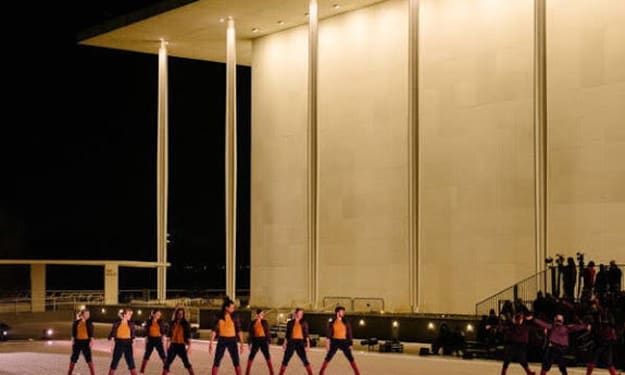
Why a Tiny Troupe Kept Its Kennedy Center Dates. AI-Generated.
Against a backdrop of mounting financial pressure and uncertainty in the performing arts world, a small touring theater troupe has chosen to keep its scheduled performances at the John F. Kennedy Center for the Performing Arts, defying expectations that it would cancel its appearances. The decision has drawn attention not only because of the venue’s prestige, but because it reflects a broader struggle facing independent artists navigating rising costs, political sensitivities, and shrinking audiences. The troupe, made up of fewer than a dozen performers and crew members, had quietly debated whether appearing at the nation’s most prominent cultural institution was financially and logistically viable. Travel expenses, accommodation, and production costs nearly exceeded what the group expected to earn from ticket sales. Yet in the end, the performers agreed that walking away would be a greater loss than staying. A Calculated Risk “We knew it might not make sense on paper,” said the troupe’s artistic director in an interview. “But artistically and symbolically, it mattered.” For the group, the Kennedy Center represented more than a paycheck. It offered visibility, legitimacy, and the chance to reach audiences that would otherwise never encounter their work. Several members said they worried that canceling would damage future opportunities and send a message of retreat at a time when small arts organizations already feel sidelined. The troupe’s performance dates had been booked months in advance, before rising inflation and uncertainty over arts funding reshaped touring budgets. By the time the show approached, the group faced a difficult choice: absorb the losses or withdraw entirely. Pressure from Multiple Directions The decision unfolded amid broader tensions surrounding programming at national cultural institutions. Some artists have canceled appearances at high-profile venues over political concerns or disagreements with donors and sponsors. Others fear that performing in such spaces risks criticism from audiences who see large institutions as disconnected from grassroots culture. Members of the troupe acknowledged these debates but said their choice was rooted in practicality rather than protest. “We didn’t want to turn this into a political statement,” one performer said. “We just wanted to perform.” Behind the scenes, the group pared back technical requirements, simplified sets, and relied on volunteer help from local supporters to reduce expenses. Friends in the theater community offered couches to sleep on and meals to stretch the troupe’s limited funds. The Value of Being Seen For many small companies, appearing at the Kennedy Center is considered a career milestone. Even a short run can open doors to grants, residencies, and future tours. Cultural economists note that prestige venues act as amplifiers: they provide recognition that cannot easily be replicated through regional shows or online exposure. “Visibility at a place like this can redefine a troupe’s trajectory,” said an arts policy analyst. “The risk is real, but so is the reward.” Audience turnout for the troupe’s opening night was modest but enthusiastic. Several attendees said they came specifically to support independent artists who were brave enough to take the stage despite financial uncertainty. A Statement Through Persistence While the troupe avoided framing its decision as political, the act of showing up carried symbolic weight. In a time when many productions are postponed or scaled back, their presence was interpreted by some as a quiet declaration that small-scale art still belongs on the biggest stages. Critics who reviewed the performance highlighted its rawness and intimacy, qualities that contrasted sharply with the large halls and formal atmosphere of the venue. One reviewer described the show as “proof that ambition does not depend on size.” Looking Ahead The troupe will leave Washington with little profit, but with renewed confidence and broader recognition. Members say the experience reinforced their belief that survival in the arts now depends on resilience and adaptability rather than financial security alone. “We didn’t come here expecting to win,” the artistic director reflected. “We came because we believe the work deserves to be seen.” Their decision to keep the Kennedy Center dates underscores a reality facing many small arts groups: even when the numbers don’t add up, the opportunity to perform on a national stage can outweigh the risks. In an uncertain cultural landscape, persistence itself becomes a form of expression.
By Fiaz Ahmed 22 days ago in Geeks
The Flame of Sunlight
The day the sun cracked, I was hanging laundry on the roof. Not a poetic “sunset” crack, either. It was a sound, a real sound, like ice giving way on a frozen river. The sky went white, then thin, then wrong—colors leaking through where blue used to be.
By abualyaanart22 days ago in Fiction
Labour Minister Faces Calls to Be Sacked Over False Claims Against Journalists. AI-Generated.
A senior figure in the Labour Party is facing mounting pressure to resign after making allegations against journalists that were later shown to be false, triggering a political backlash and renewed debate over press freedom and ministerial accountability within the UK government. The controversy erupted after the minister publicly accused a group of reporters of coordinating a campaign of misinformation and unethical conduct related to an ongoing policy dispute. The claims were circulated on social media and referenced in a televised interview, where the minister suggested that journalists had acted with “malicious intent” to undermine government reforms. However, subsequent reviews by independent media organizations and parliamentary officials found no evidence to support the allegations. Several of the journalists named by the minister released documentation showing their reporting was based on verified sources and official records. Political and Media Reaction Opposition parties swiftly condemned the remarks, arguing that the accusations amounted to an attack on free expression and professional journalism. Senior figures across the political spectrum warned that such statements risk damaging trust between government and the press at a time when public confidence in institutions is already fragile. “This is not just about a personal mistake,” said one opposition spokesperson. “It is about a minister using their office to smear journalists without proof. That is incompatible with democratic standards.” Media unions and press advocacy groups echoed those concerns, calling for a formal apology and an independent inquiry into how the claims were made. The National Union of Journalists described the comments as “reckless and dangerous,” adding that they could encourage harassment and intimidation of reporters. Calls for Dismissal Pressure intensified after legal experts noted that the minister’s statements could potentially expose the government to defamation claims. Several Labour backbenchers privately expressed discomfort, saying the episode distracted from key legislative priorities and risked overshadowing the party’s broader agenda. Public petitions calling for the minister’s dismissal gathered thousands of signatures within hours, reflecting growing frustration over what critics see as a lack of accountability for senior officials. A senior parliamentary source said the prime minister’s office is reviewing the matter and considering whether the minister’s conduct breached the ministerial code, which requires honesty and respect for the rule of law. Minister’s Response In a brief statement, the minister acknowledged that the claims were “based on incomplete information” and said they regretted the language used. However, they stopped short of issuing a full apology to the journalists involved. “I intended to defend the integrity of government policy, not to undermine the work of the media,” the statement read. “I accept that my comments caused concern and I will cooperate with any review process.” The partial retraction has done little to quiet critics, who argue that an apology without consequences sends the wrong message about political responsibility. Broader Implications The incident has reignited debate about the relationship between politicians and the press in the digital age. Analysts note that accusations can spread rapidly online, often before facts are fully established. When such claims come from senior officials, their impact is magnified. “This is a cautionary tale about how power and misinformation can intersect,” said a political communications expert. “Ministers have a duty to uphold democratic norms, including respect for independent journalism.” The controversy also highlights tensions within Labour as it seeks to present itself as a party of transparency and institutional reform. Any perception that ministers are willing to target journalists could undermine that message, particularly among younger voters and civil society groups. What Happens Next Downing Street has not yet indicated whether the minister will be formally disciplined or removed from office. Insiders say the decision will depend on the outcome of an internal review and whether further evidence emerges. For now, the episode continues to dominate headlines and parliamentary debate. Whether the minister survives politically may hinge on public reaction and the willingness of party leadership to enforce standards of conduct. As one senior MP put it privately: “This is not just a communications failure. It is a test of whether we truly believe in accountability when our own side gets it wrong.”
By Fiaz Ahmed 22 days ago in The Swamp