Latest Stories
Most recently published stories on Vocal.
How to Get Through the Rest of Winter. AI-Generated.
As winter stretches into its final months, many people are feeling the weight of cold, short days, and the cumulative fatigue of months spent indoors. With snowstorms, icy roads, and flu season still looming, navigating the remainder of winter requires both practical preparation and attention to mental well-being. Experts emphasize a combination of physical readiness, home safety, and emotional resilience as key to getting through the season unscathed. 1. Stay Physically Prepared Winter weather can present unexpected hazards, from icy sidewalks to sudden snowstorms. Health experts recommend: Layering clothing effectively: Thermal base layers, windproof jackets, gloves, and insulated boots can prevent hypothermia and frostbite. Wool and synthetic fabrics trap heat even when damp. Regular exercise: Even short daily walks or home workouts improve circulation and boost immunity. Indoor exercises like yoga or resistance training also combat seasonal lethargy. Vitamin D supplementation: Reduced sunlight in winter can affect mood and bone health. Supplements or fortified foods can help maintain energy and immune function. Additionally, drivers are advised to check car winterization, including tire tread, antifreeze levels, and battery health. Winter storms can immobilize vehicles, so a small emergency kit with blankets, food, water, and a flashlight is recommended. 2. Protect Your Home Many winter accidents occur at home, where icy entryways and faulty heating can pose risks. Key tips include: Heating system maintenance: Ensure furnaces, wood stoves, or space heaters are serviced and vented correctly to prevent fire or carbon monoxide exposure. Ice and snow management: Keep driveways and sidewalks clear using salt or sand. Even short walks on untreated surfaces can lead to serious injury. Emergency supplies: Power outages are common during snowstorms. Stock up on non-perishable foods, bottled water, batteries, and candles. Home preparation reduces stress and ensures safety when outdoor conditions worsen unexpectedly. 3. Mind Your Mental Health The “winter blues” or seasonal affective disorder (SAD) can affect mood and energy. Strategies to support mental well-being include: Light therapy: Sitting near a bright, full-spectrum light for 20–30 minutes daily can help combat low moods. Structured routines: Maintaining consistent sleep, work, and meal schedules supports circadian rhythms and reduces fatigue. Social connection: Even brief check-ins with friends or family over video or phone help maintain emotional health during extended indoor periods. Experts also recommend mindfulness exercises and journaling as ways to reduce stress and promote positivity. 4. Prepare for Flu and Cold Season With influenza, colds, and now seasonal COVID‑19 variants circulating, preventive health measures are critical: Vaccinations: Annual flu shots and updated COVID-19 boosters are recommended, especially for vulnerable populations. Hygiene: Frequent handwashing and avoiding touching the face can reduce viral spread. Rest and nutrition: Adequate sleep, hydration, and a diet rich in fruits, vegetables, and protein support immune defenses. 5. Plan for Winter Fun While safety and health are priorities, enjoying the season can make it more bearable. Outdoor activities like skiing, snowshoeing, or ice skating provide exercise and sunlight. Indoor hobbies, from cooking to reading or crafting, help stave off boredom. Planning small weekly treats — whether a cozy movie night or a warm bath — can bolster morale. 6. Stay Informed Finally, staying aware of weather forecasts and public safety advisories helps people anticipate storms and avoid unnecessary risks. Local authorities often issue warnings about ice, snow accumulation, and road closures, giving households time to plan accordingly. Conclusion Winter can feel long and arduous, but with physical preparedness, home safety measures, mental health strategies, and proactive health steps, it is possible to navigate the remaining months successfully. Planning for both expected challenges and opportunities for enjoyment ensures not just survival, but a season that can be manageable, productive, and even pleasurable.
By Fiaz Ahmed 22 days ago in Longevity
Living With Anxiety. AI-Generated.
Understanding Anxiety: What It Is and How It Feels Anxiety might seem like a big word, but it is actually a very common feeling. Imagine your mind spinning with worried thoughts or feeling “butterflies” in your stomach. In simple terms, anxiety is a feeling of unease, such as worry or fear. Everyone feels anxious at times, especially before something important like an exam, a job interview, or a big decision. These feelings are part of the body’s natural response to stress.
By Haroon Pasha22 days ago in Education
The Oldest, Largest, and Deepest Lake in the World
Exploring Earth’s Most Ancient and Massive Freshwater Giant Lake Baikal is often described as a freshwater sea because of its immense size and volume. Stretching over 600 kilometers in length and plunging to depths of more than 1,600 meters, it surpasses every other lake in age and depth. Unlike most lakes that form and disappear within thousands of years, Baikal has endured for millions, created by a continental rift that continues to widen today. This slow geological movement has allowed the lake to grow deeper over time. Its scale is so vast that it contains more water than all the Great Lakes of North America combined. Scientists regard it as one of the most important natural laboratories on Earth, preserving ancient life forms and climate records within its sediments. The surrounding mountains and forests enhance its isolation, helping protect its pristine condition.
By Muhammah Hanzalah22 days ago in Earth
US vs Iran’: How Advanced Is the USS Abraham Lincoln’s Drone Interception System?. AI-Generated.
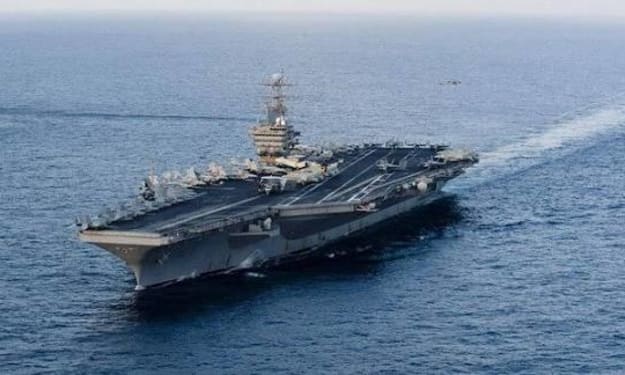
As tensions between the United States and Iran escalate over regional security and nuclear negotiations, attention has focused on the capabilities of U.S. military assets — particularly the aircraft carrier USS Abraham Lincoln — to detect and counter increasingly sophisticated drone threats. Recent incidents in the Arabian Sea have highlighted both the strengths and challenges of current U.S. defensive systems in protecting high-value naval vessels from unmanned aerial vehicles (UAVs) and low-cost swarm attacks. The War Zone +1 A Real-World Test On 4 February 2026, U.S. Central Command reported that an Iranian drone approached the Abraham Lincoln carrier strike group before being shot down by an F-35C fighter jet launched from the carrier’s air wing. The incident — described by U.S. officials as a self-defense action — underscores the current reliance on aircraft and conventional missile systems to defeat airborne threats in open water. The War Zone +1 The drone, identified in open-source reporting as a †Shahed-type UAV, appears to have been on a reconnaissance or potentially hostile trajectory toward the carrier group. Iranian forces later claimed the drone was on a “routine” mission Layered Defense: Beyond the F-35 The Lincoln’s best-known defensive measure against airborne threats is its carrier air wing, consisting of stealth fighters (F-35Cs), strike aircraft, and early-warning platforms that provide both offensive and defensive capabilities. These aircraft can patrol wide areas around the strike group, extend radar coverage, and intercept aerial threats at long ranges. The Times of India However, carriers do not operate in isolation. They are accompanied by a multi-layered protective network that includes escorts such as guided-missile destroyers and cruisers equipped with their own anti-air systems. These ships — typically Arleigh Burke-class destroyers — carry systems like: RIM-7 Evolved Sea Sparrow Missiles (ESSM) for short-to-medium range defense; Standard Missiles (SM-2/SM-6) for medium-long-range air defense; Phalanx Close-In Weapon System (CIWS) for last-ditch point defense; (*Philips Sea Sparrow and CIWS details are part of typical carrier group defenses.) The Aegis Combat System aboard escort ships allows integrative radar tracking, coordinated engagement, and layered protection that extends far beyond the carrier’s own systems. These combined assets are designed to detect, track, and destroy threats before they close on the carrier strike group. Emerging Counter-Drone Technology While traditional missile and fighter responses remain central, the U.S. Navy is actively developing more specialized counter–unmanned aerial systems (C-UAS) aimed at low-cost threats such as drones. Research efforts include: Directed energy weapons (lasers) — prototypes like the High Energy Laser With Integrated Optical Dazzler and Surveillance (HELIOS) have been tested on other U.S. Navy ships and offer the promise of low-cost per shot against small UAVs, small boats, and some missile threats. Marine Insight Hypervelocity Projectiles (HVP) — guided rounds that can be fired from existing naval guns and provide a more cost-effective interception layer than expensive interceptor missiles, especially against drones and small unmanned threats. National Security Journal These systems reflect a broader effort within the U.S. Department of Defense to improve counter-drone defenses across all branches, accelerating deployment timelines and integrating new technologies into existing platforms. DefenseScoop The Challenge of Drone Swarms Despite this technological progress, experts warn that rapid “saturation attacks” involving large numbers of inexpensive drones remain a key concern. Analysts argue that even advanced defenses can be strained if dozens or hundreds of Unmanned Aerial Vehicles arrive simultaneously — a tactic that Iran and allied groups could adopt based on swarm tactics seen elsewhere. A layered defense approach — relying on aircraft, missiles, and emerging tech — increases the probability of intercept, but no system is entirely foolproof. Modern military strategy acknowledges that asymmetric threats such as drone swarms require a mix of kinetic, electronic, and directed-energy responses. Strategic Implications The Abraham Lincoln’s current engagements demonstrate that U.S. naval forces possess robust defensive measures capable of reacting to individual aerial threats. But as UAV technology proliferates and adversaries experiment with swarm and loitering attack methods, the U.S. Navy’s counter-drone architecture must adapt quickly. The incident in the Arabian Sea illustrates both the capabilities and limitations of current systems. While traditional interceptors like fighter jets remain essential, future conflicts may hinge on how effectively carriers and their escorts integrate next-generation defenses against a new era of unmanned threats. Amazon Web Services, Inc.
By Fiaz Ahmed 22 days ago in The Swamp
🧭 Inside Iran’s Preparation for War and Plans for Survival. AI-Generated.
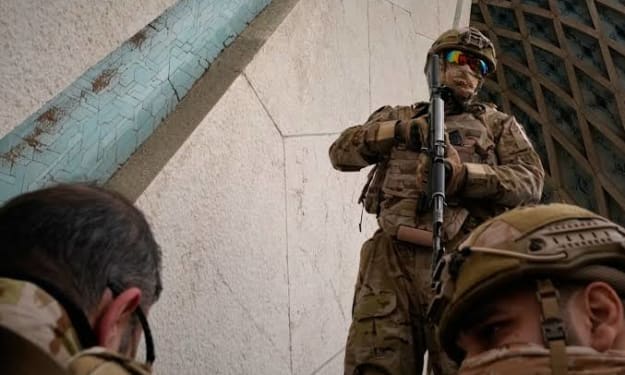
As tensions with the United States and its allies rise, the Iran is not only negotiating on the diplomatic front but also quietly preparing for the possibility of a long, drawn-out conflict. Iranian leaders, military officials, and strategic planners appear to be reinforcing both their defensive readiness and survival strategies, balancing threats from war with efforts to maintain national stability. Heightened Security Posture Amid Diplomatic Standoff According to defense reporting, the Iranian regime has been adjusting its military posture as talks with Washington falter and ultimatums are issued. Despite ongoing nuclear negotiations — including plans to draft a counterproposal — Tehran is simultaneously preparing for the possibility that diplomacy fails and hostilities break out. Sources say Iran’s strategic focus includes reinforcing its deterrence capabilities and planning for a protracted conflict if necessary. Officials in Tehran believe that a show of strength may increase their leverage at the negotiating table and decrease the likelihood of a successful punitive strike by external powers. Military Strategy and Defense Upgrades Iran’s leaders emphasize that they are prepared to defend their territory and interests but have repeatedly stated they do not intend to initiate a war. In speeches to military personnel, senior commanders stress defensive readiness while calling for regional stability. They assert that Iran has boosted its deterrent power, including improvements in ballistic missile capabilities, to ensure it can respond forcefully to aggression The ballistic-missile program is central to Tehran’s defense strategy. It remains the largest in the Middle East and serves as a pillar of deterrence, designed to offset conventional superiority by adversaries. The Iranian leadership calculates that a credible missile threat raises the costs of any potential attack on Iranian soil. Learning from Recent Conflicts Iran’s experience in the June 2025 “12-day war” with Israel and the U.S. has informed its strategic adjustments. Lessons from that conflict — particularly the vulnerability of fixed radar installations and the necessity of mobility and redundancy — are shaping modernization efforts across the Iranian military. New radar units, mobile air-defense deployments, and diversified surveillance systems are being prioritized to improve resilience and complicate potential air attacks by adversaries. The state has reportedly begun focusing on mobile radar units capable of rapid redeployment, use of artificial intelligence to integrate early warning systems, and expanded electronic warfare capabilities. These moves reflect a broader effort to create a more adaptable and survivable defense architecture. Missile Production and Force Expansion Even after Iran lost a significant portion of its missile launcher inventory during past conflicts, reports indicate that Tehran continues to scale up production. Analysts say Iran is producing hundreds of ballistic missiles per month, with a range of capabilities that could overwhelm regional air defenses. This sustained output underscores Tehran’s strategy of building quantity and dispersion alongside quality, making it harder for an opponent to suppress missile forces quickly. Proxy Mobilization and Regional Networks Another key element of Iran’s survival plan is the activation and coordination of its regional allied networks. Proxy groups and allied militias in Iraq, Lebanon, Yemen, and Syria have been mobilized to offer strategic depth and complicate any direct confrontation. This regional network can provide asymmetric pressure on adversaries and act as a deterrent by threatening broader escalation if Iran is attacked. Balancing War Preparation with Diplomacy Despite strong rhetoric and military readiness, Iranian diplomats continue to participate in negotiations. Officials have signaled they prefer a diplomatic solution, reiterating that Iran’s nuclear program doesn’t have a military purpose and that a deal is still attainable. The government maintains that constructive dialogue remains preferable to conflict, even as it prepares for worst-case scenarios. Survival Strategies Beyond the Battlefield Preparations for conflict are not limited to military measures. Iran appears to be reinforcing internal control mechanisms — including digital isolation strategies — to reduce the impact of outside influence and maintain resilience in the face of potential external pressure. Long-term plans include tightening control over internet infrastructure to manage information flows and ensure communications remain intact during crises. Looking Ahead: A Calculus of Caution Iran’s dual track of negotiation and preparation reflects a nuanced approach to survival in an unpredictable geopolitical environment. By reinforcing its defense infrastructure, upgrading missile and radar capabilities, mobilizing regional proxies, and enhancing internal security, Tehran is positioning itself to withstand external pressure while leaving room for diplomatic breakthroughs. Whether these preparations deter military action or simply postpone confrontation remains uncertain — but they underscore a comprehensive strategy aimed at ensuring Iran’s survival even in the face of war.
By Fiaz Ahmed 22 days ago in The Swamp
US vs Iran’: Can Yemen Houthis Hijack USS Abraham Lincoln if It Strikes Iran?. AI-Generated.
As the United States weighs potential military action against Iran amid heightened tensions over nuclear negotiations and regional hostilities, defence analysts are closely watching not just Tehran’s response but that of Yemen’s Houthi movement — the Iran-aligned armed group that has been targeting international shipping and signalling it may strike U.S. naval assets if Washington enters a conflict. While the idea of a direct “hijacking” of an aircraft carrier such as the USS Abraham Lincoln is highly implausible given modern naval defenses and U.S. military superiority, the Houthi threat underscores how a broader regional conflagration could pull in additional actors and complicate any American operations. Houthis: From Shipping Attacks to Threats on U.S. Ships Over the past several years, the Iran-backed Houthis — formally known as Ansar Allah — have launched repeated missile and drone strikes on commercial vessels and naval targets in the Red Sea, the Bab al-Mandeb strait, and the Gulf of Aden. The group claims these actions are in solidarity with Palestinians and in protest of Western and Israeli military policies. Since late 2023, the Houthis say they have attacked more than 100 ships, firing missiles and drones across one of the world’s most important shipping lanes. U.S. Central Command has responded by intercepting and destroying Houthi drones and missiles, including in self-defence operations, and has struck Houthi weapon storage and command facilities in Yemen to degrade those capabilities. Importantly, in June 2025, Reuters reported that the Houthis openly threatened to target U.S. ships — including warships — “if Washington joins strikes on Iran.” That declaration suggests that the group sees American involvement in a wider regional conflict as an impetus to escalate its own actions Geography and Capabilities: What the Houthis Can and Cannot Do The Houthis control significant territory in northern Yemen, including large coastal stretches on the Red Sea. They have used this geography to fire missiles, drones and even unmanned surface vessels at international shipping and naval assets. Analysts say their arsenal is a mix of short-range ballistic missiles, anti-ship cruise missiles, and armed drones — many believed to be of Iranian origin or design. However, these systems have limitations. While they can threaten unarmoured merchant vessels and pose risks to smaller craft, they lack the precision, range, and frequency needed to overwhelm a carrier strike group’s layered defenses. U.S. Navy carriers like the Abraham Lincoln are protected by: Aegis-equipped escort destroyers, capable of tracking and intercepting missiles and drones Carrier air wings, including fighters and early-warning aircraft Electronic warfare systems and point-defence weapons designed to defeat approaching threats These assets make a direct “hijack” or capture scenario nearly impossible; carriers are some of the most heavily defended platforms in the world. Threat vs. Capability Despite the group’s rhetoric, there is no verified event in which Houthis have successfully damaged or captured a U.S. aircraft carrier. When claims have been made — including assertions of targeting U.S. carriers with a combination of missiles and drones — U.S. military officials have either denied hits or confirmed only interception of various Houthi UAVs and missiles with no damage to warships. That said, the group’s pattern of attacks has forced Western navies to expend time, ammunition and strategic focus on patrols in the Red Sea rather than elsewhere. In 2024 and 2025, U.S. and allied forces conducted hundreds of air and cruise missile strikes against Houthi sites in response to repeated attacks. If the U.S. Strikes Iran A U.S. strike on Iran could significantly change the calculus. The Houthis would likely ramp up operations in the Red Sea and Gulf of Aden, viewing the conflict as part of a broader struggle involving Iran and its network of allied militias. Statements published by Yemen-based outlets and observers indicate that the group has linked its actions to wider geopolitical dynamics and said it will resume targeting Western shipping if cease-fires or restraint collapse. However, even in a worst-case scenario of heightened operations, analysts believe the Houthis would focus on swarming attacks using drones and missiles against commercial and lightly defended naval units — not the complex and extremely costly attempt to board or hijack an American carrier, which would be militarily unrealistic. Regional Strategic Fallout Even without realistic capability to strike a carrier directly, Houthi threats add a complicating factor. A broader Middle Eastern conflict could force the U.S. Navy to divide attention between protecting high-value national assets and countering opportunistic proxy attacks. It would also draw other Iran-aligned groups in Iraq, Lebanon and Syria into a wider vector of conflict, risking a multi-front crisis unlike any the region has seen since 2003.
By Fiaz Ahmed 22 days ago in The Swamp
OmniWar
In the beginning there was darkness. And then came Loki the God of Intoku. Without shape or form he lay in the void. He assumed he was asleep and tried to close his eyes and drift off to a pleasant dream. That was when he began to sink. The darkness was consuming him and he was being plunged into the abyss of the Hyper-verse known then only as “The Void”.
By Adam Stanbridge22 days ago in Fiction
Signal and Structure
Modern systems rarely collapse from dramatic failure. They erode when perception distorts and standards shift without acknowledgment. This series examines the quiet mechanics of stability — how clarity sharpens perception and how consistency reinforces trust. What holds structures together is rarely visible, but when it disappears, everything feels unstable.
By Flower InBloom22 days ago in Humans