Irshad Abbasi
Bio
Ali ibn Abi Talib (RA) said 📚
“Knowledge is better than wealth, because knowledge protects you, while you have to protect wealth.
Stories (389)
Filter by community
The Economic Cost of Empire: How British Rule Drained India’s Wealth
For nearly two centuries, the Indian subcontinent remained under British colonial rule. From the mid-18th century until 1947, British policies reshaped India’s political, social, and economic systems. While the British administration introduced railways, legal systems, and modern institutions, historians and economists widely argue that colonial rule resulted in a massive transfer of wealth from India to Britain. This economic extraction has often been described as the “drain of wealth,” a concept that attempts to estimate how much financial loss India experienced during colonial rule.
By Irshad Abbasi 38 minutes ago in History
When the Portuguese Turned the Tide of Indian History
The arrival of the Portuguese in India at the end of the 15th century marked a turning point in the history of the Indian Ocean and the Indian subcontinent. What began as an ambitious maritime expedition soon transformed into a powerful political and economic presence that reshaped trade routes, introduced new cultural influences, and altered the balance of power in the region.
By Irshad Abbasi about an hour ago in History
Hasan-i Sabbah’s Garden of Paradise: Legend or Historical Reality?
Among the many legends of medieval history, few stories are as fascinating and controversial as the tale of the “Garden of Paradise” associated with Hasan-i Sabbah. He was the founder and spiritual leader of the Nizari Ismaili movement in Persia during the 11th and early 12th centuries. From his mountain stronghold at Alamut Castle, Hasan-i Sabbah built a powerful and mysterious network of followers who became known in Western literature as the “Assassins.” One of the most enduring legends about him is the claim that he created a secret garden designed to resemble paradise, where young recruits were tricked into believing they had experienced heaven.
By Irshad Abbasi about an hour ago in History
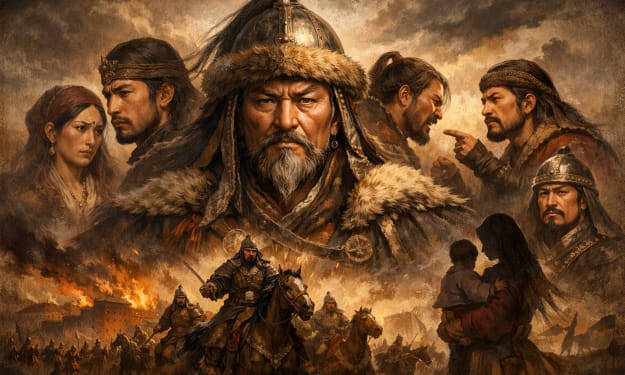
Father of Millions, Yet Not Always a Father to His Own Sons
Few figures in world history have left as profound a mark as Genghis Khan. Known for his extraordinary military genius and ruthless campaigns, he forged the largest contiguous empire the world had ever seen—the Mongol Empire. Yet beyond the battlefield and the politics of conquest lies a fascinating paradox: while Genghis Khan is believed to be the ancestor of millions of people today, his relationship with his own sons was complicated, strained, and sometimes filled with uncertainty.
By Irshad Abbasi about an hour ago in History
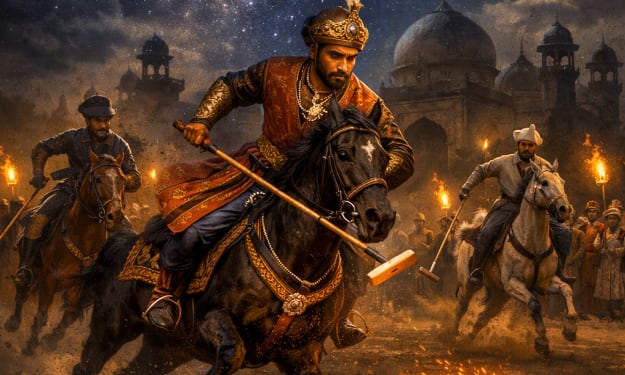
The Night Polo of Emperor Akbar: When a Glowing Ball Lit Up the Mughal Game
Among the many fascinating innovations associated with the Mughal Empire, one lesser-known yet remarkable story involves the love of sport displayed by the great emperor Akbar. Known for his administrative brilliance, military strength, and cultural openness, Akbar was also passionate about physical games—especially the ancient sport of polo, known in South Asia and Persia as chogan or chaugan. One of the most intriguing legends about him is that he introduced a glowing ball so the game could be played at night.
By Irshad Abbasi about 6 hours ago in History
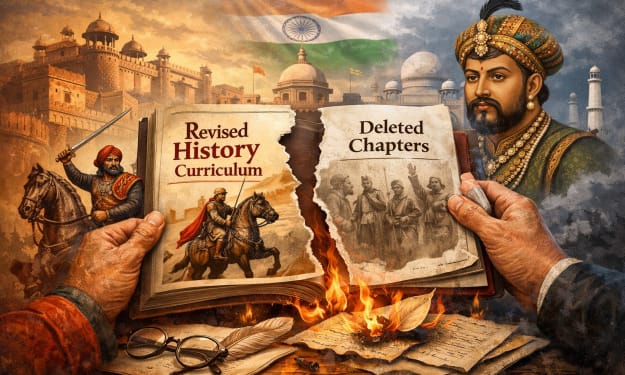
India: Rajasthan Government Accused of Trying to Rewrite History Curriculum
A fresh controversy has emerged in India after allegations that the government of the state of Rajasthan is attempting to alter school history curricula. Critics claim the proposed revisions could significantly change how historical events and figures are presented to students, raising concerns about political influence in education and the rewriting of history.
By Irshad Abbasi about 6 hours ago in History
Mughal History Removed from Indian School Curriculum
In recent years, the decision to remove significant portions of Mughal history from school textbooks in India has sparked a heated debate among historians, educators, politicians, and the general public. The move, introduced as part of broader curriculum revisions, has raised questions about how history should be taught and whether political ideologies are influencing the way the past is presented to future generations.
By Irshad Abbasi about 6 hours ago in History
Muhammad Shah “Rangila”: The Colorful Emperor of a Fading Empire
Among the later rulers of the Mughal Empire, Muhammad Shah Rangila stands out as one of the most colorful and controversial figures in South Asian history. Known for his love of music, dance, art, and luxury, he earned the nickname “Rangila,” meaning “the colorful” or “the pleasure-loving.” While his reign brought a cultural revival in some ways, it also coincided with a period of serious political decline in the Mughal Empire.
By Irshad Abbasi about 7 hours ago in History
When the British Challenged Aurangzeb Alamgir
The reign of Aurangzeb Alamgir (1658–1707) marked the last great expansion of the Mughal Empire, but it was also a period when new foreign powers were quietly testing the strength of the empire. Among these rising forces was the British East India Company, a commercial organization that had arrived in India with the intention of trade but gradually began to challenge the authority of the Mughal state.
By Irshad Abbasi about 10 hours ago in History
The Queen of Jhansi : The British Must Never Capture My Body”
In the long history of resistance against colonial rule in the Indian subcontinent, few figures shine as brightly as Rani Lakshmibai, the legendary Queen of Jhansi. Remembered for her courage, leadership, and unwavering determination, she became one of the most powerful symbols of defiance during the Indian Rebellion of 1857. Her story is not only about war but also about dignity, honor, and a final wish that echoed through history: the British must never capture her body.
By Irshad Abbasi about 11 hours ago in History
Qadir Bakhsh “Qadu Makrani”: Rebel Outlaw to the British, Heroic Defender to the People
Qadir Bakhsh Rind, widely remembered as Qadu Makrani, is one of the most fascinating and controversial figures in the history of resistance against colonial rule in South Asia. To the British colonial administration, he was a dangerous outlaw and a rebellious bandit. But to many local people in present-day Balochistan and Sindh, he became a symbol of courage, resistance, and protection of the oppressed.
By Irshad Abbasi about 11 hours ago in History
Ajab Khan Afridi: The Tribal Warrior Who Kidnapped a British Officer’s Daughter
The story of Ajab Khan Afridi and the kidnapping of a British woman is one of the most dramatic and controversial episodes from the history of the tribal areas during the British colonial period in South Asia. Taking place in the early 20th century along the rugged frontier between British India and Afghanistan, the incident captured the attention of both the British authorities and the local tribes, becoming a tale of resistance, revenge, and tribal honor.
By Irshad Abbasi about 14 hours ago in History