
Ajab Khan Afridi: The Tribal Warrior Who Kidnapped a British Officer’s Daughter
A dramatic story from colonial India where revenge, honor, and resistance against British rule turned a young Afridi tribesman into a legend of the frontier.

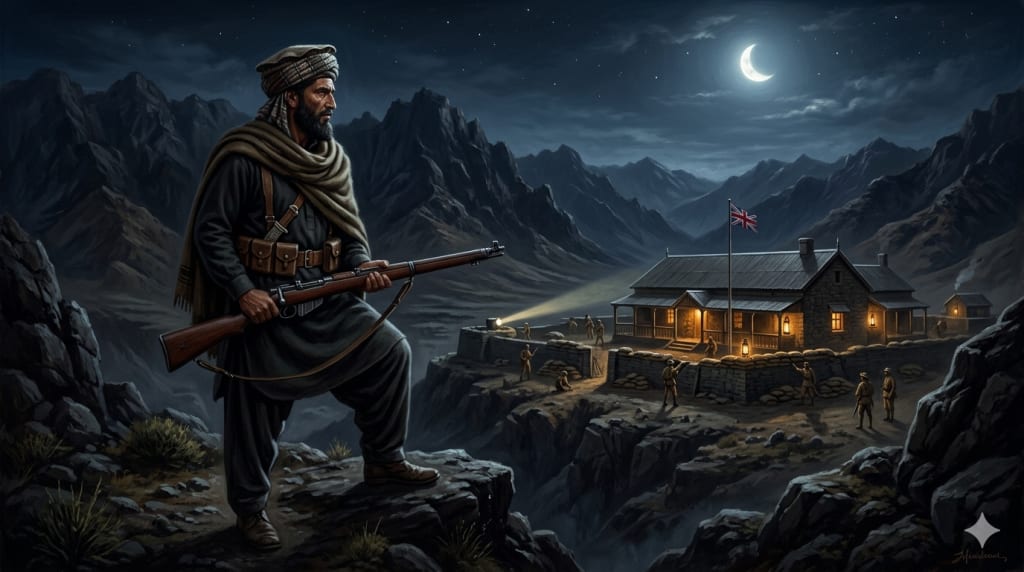
The story of Ajab Khan Afridi and the kidnapping of a British woman is one of the most dramatic and controversial episodes from the history of the tribal areas during the British colonial period in South Asia. Taking place in the early 20th century along the rugged frontier between British India and Afghanistan, the incident captured the attention of both the British authorities and the local tribes, becoming a tale of resistance, revenge, and tribal honor.
Ajab Khan Afridi belonged to the Afridi tribe, one of the prominent Pashtun tribes living in the mountainous region near Khyber Pass. These areas were part of the frontier region that the British struggled to control throughout their rule in the Indian subcontinent. The tribes of this region valued independence, tribal traditions, and the Pashtun code of honor known as Pashtunwali.
The incident that made Ajab Khan famous occurred in 1923 in the town of Kohat, which at that time was under British administration. According to historical accounts, tensions between local tribesmen and British officials had been growing for years due to harsh colonial policies, military operations, and what many locals saw as disrespect toward tribal customs.
The immediate trigger for the event reportedly involved a raid by British forces in a nearby village, where tribal families claimed that women were insulted or mistreated during a search operation. In Pashtun culture, the honor of women holds extreme importance, and any perceived insult can lead to serious retaliation.
Enraged by the incident, Ajab Khan Afridi decided to take revenge in a way that would shock the colonial authorities. On the night of April 14, 1923, he and a group of armed companions entered the British cantonment in Kohat. Their target was the house of a British military officer, Colonel Ellis.
During the daring nighttime raid, the group attacked the house and managed to kidnap the officer’s young daughter, Molly Ellis. The operation stunned the British administration because it occurred inside a heavily guarded cantonment area, which was considered secure.
After the kidnapping, Ajab Khan and his companions quickly escaped toward the rugged tribal mountains near the Afghan border. The British authorities immediately launched a massive search operation involving soldiers, intelligence agents, and local informants. However, the difficult terrain and the support Ajab Khan received from local tribes made it extremely challenging for the authorities to capture him quickly.
The kidnapping caused widespread panic and embarrassment for the British government. Newspapers across British India reported the story, portraying it as a serious challenge to colonial authority on the frontier.
Despite the tensions, historical accounts suggest that Molly Ellis was treated with respect during her captivity. According to some reports, Ajab Khan considered the kidnapping an act of revenge rather than cruelty. Tribal traditions required that a captured woman be protected, and many narratives claim that she was not harmed during the ordeal.
Negotiations and pressure from both tribal elders and British authorities eventually led to her release after several weeks. However, the British government continued its efforts to capture Ajab Khan. The authorities increased military operations in the tribal regions and used political pressure on local leaders.
Eventually, after years of pursuit and changing political circumstances, Ajab Khan Afridi surrendered to the authorities in the early 1920s. He was later imprisoned, bringing an end to one of the most sensational frontier stories of that era.
Over time, the story of Ajab Khan became part of local folklore in the Pashtun tribal belt. Some people viewed him as a symbol of resistance against colonial rule, while others saw the kidnapping as a dangerous act that escalated tensions between the tribes and the British administration.
Historians today interpret the incident as a reflection of the complicated relationship between the British colonial government and the fiercely independent Pashtun tribes of the frontier. The story illustrates how misunderstandings, cultural differences, and political tensions could quickly turn into dramatic confrontations.
Nearly a century later, the tale of Ajab Khan Afridi and the kidnapped British girl remains one of the most fascinating and debated stories from the history of the frontier region, symbolizing both rebellion and the powerful influence of tribal honor in Pashtun society.
About the Creator
Irshad Abbasi
Ali ibn Abi Talib (RA) said 📚
“Knowledge is better than wealth, because knowledge protects you, while you have to protect wealth.
Keep reading
More stories from Irshad Abbasi and writers in History and other communities.
The “Martyr of Spin Tangi”: Qazi Fazl Qadir, the Bannu Leader Whose Grave Was Kept Under Guard by the British
History remembers many heroes who stood against colonial rule, but some names remain hidden in the shadows despite their immense sacrifices. One such figure is Qazi Fazl Qadir, often remembered as the “Martyr of Spin Tangi.” He was a respected religious scholar, community leader, and a passionate opponent of British colonial rule in the region of Bannu, located in present-day Khyber Pakhtunkhwa, Pakistan. His courage and influence were so significant that the British authorities feared him even after his death, reportedly keeping his grave under guard.
By Irshad Abbasi about 11 hours ago in History
The Year 1905 in Review: Fun Facts, Trivia, and Historic Highlights
This quick read is a collection of fun facts, trivia, and historic events from the year 1905. Learn about the year’s top news stories and most influential people, notable inventions and sports facts, entertainment trivia and grocery prices, and much more.
By Gregory DeVictora day ago in History




Comments
There are no comments for this story
Be the first to respond and start the conversation.