politics
Politics does not dictate our collective cultural mindset as much as it simply reflects it; We've got to look in the mirror sometimes, and we've got one.
WHY ARAB STATES BEING TARGETED?
It is absolutely clear that they will go after every country that threatens Israel or is considered an existential or security threat to it. The agenda of Washington, D.C. is very clear: they will target every country that threatens Israel, and either destroy it through carpet bombing or erase it, just as they did with Atomic bombings of Hiroshima and Nagasaki.
By Ibrahim Shah about 13 hours ago in The Swamp
Emirati minister tells BBC Iran must end strikes on Gulf". AI-Generated.
An Emirati minister has issued a stark warning that Iran must immediately stop launching strikes against Gulf states, telling the BBC that continued attacks risk pushing the region toward a broader and more dangerous conflict. The comments come amid escalating tensions following missile and drone strikes linked to the ongoing confrontation between Iran and its adversaries. The warning was delivered during an interview discussing the recent wave of Iranian attacks targeting countries across the Gulf. According to regional officials, several nations—including the United Arab Emirates—have experienced missile and drone threats since the conflict intensified in late February. Authorities say the strikes have affected civilian infrastructure, energy facilities, and transport routes in multiple countries. Emirati officials stressed that the Gulf states have repeatedly attempted to avoid becoming direct participants in the conflict. However, they argue that Iran’s decision to target neighbouring countries has created a dangerous escalation that threatens regional stability. “We have been very clear that attacks on our region must stop,” the minister said during the interview. “The Gulf states are not seeking confrontation, but we cannot ignore actions that endanger our citizens, infrastructure, and economic stability.” The recent tensions stem from a rapidly expanding regional crisis that began after coordinated military strikes by the United States and Israel against Iranian targets earlier this year. In response, Iran launched a large number of missiles and drones aimed at various locations in the Middle East. Some of these strikes have reached Gulf states that host U.S. military bases or maintain close security partnerships with Washington. Officials in the UAE say their air defence systems have intercepted many incoming projectiles, preventing larger-scale damage. Nevertheless, the attacks have resulted in casualties and property destruction in several locations. Iranian missile and drone attacks have reportedly killed civilians and injured more than a hundred people in the UAE during the ongoing conflict. The Emirati minister emphasized that the Gulf region has invested heavily in economic growth, global trade, and innovation over the past two decades. Continued military escalation, he said, threatens to undermine that progress by creating uncertainty for international investors, shipping routes, and energy markets. The Gulf remains one of the world’s most important energy hubs, producing a significant share of global oil and gas supplies. Any prolonged instability could therefore have consequences far beyond the Middle East. Analysts warn that continued attacks near shipping lanes such as the Strait of Hormuz could disrupt global energy markets and raise fuel prices worldwide. Despite the tensions, Emirati leaders have signalled that they still favour diplomatic solutions. Officials say dialogue and negotiations remain the only sustainable path toward reducing the risk of a wider war. At the same time, the UAE has reinforced its message that it will defend its territory if attacks continue. In recent remarks, Mohamed bin Zayed Al Nahyan declared that the country is strong and capable of confronting threats, assuring citizens and residents that the government will protect them during the crisis. Other Gulf leaders have expressed similar concerns. Officials in several countries have warned that Iran’s actions risk destabilizing the entire region and drawing additional states into the conflict. In separate comments, the prime minister of Qatar described Iran’s strikes on neighbouring states as a dangerous miscalculation that could have severe economic consequences if the violence continues. Diplomats across the region are now working to prevent further escalation. Emergency meetings among members of the Gulf Cooperation Council have focused on coordinating defensive measures while also exploring potential diplomatic channels that could reduce tensions. The Emirati minister stressed that Gulf nations do not wish to see the conflict widen. However, he warned that patience among regional governments is wearing thin as attacks continue. “We have always supported stability and cooperation in the region,” he said. “But stability cannot exist if countries are launching missiles and drones at their neighbours.” For many observers, the situation highlights the fragile balance of power in the Middle East. While diplomatic efforts continue behind the scenes, the next steps taken by Iran and its regional rivals will likely determine whether the crisis moves toward negotiation—or further confrontation. As the conflict continues, Gulf leaders say their message remains simple: stop the strikes, return to diplomacy, and prevent the region from sliding into a wider war that could have consequences for the entire world.
By Fiaz Ahmed about 14 hours ago in The Swamp
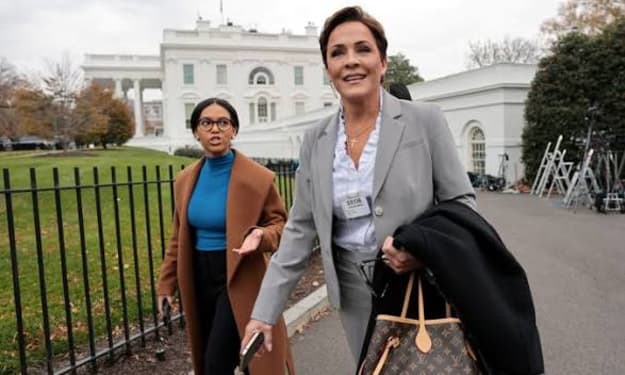
Trump names new head for VOA parent after court rebukes Kari Lake. AI-Generated.
A major leadership shift has taken place at the U.S. government agency that oversees international broadcasting after a federal court ruling invalidated the authority of a previous appointee. Donald Trump has nominated a new head to lead the organization that supervises Voice of America and several other global media outlets, marking a new chapter for American public diplomacy and international broadcasting. The new nominee, Sarah B. Rogers, currently serves as the U.S. undersecretary of state for public diplomacy and public affairs. She has been selected to lead the United States Agency for Global Media (USAGM), the independent federal agency responsible for overseeing international broadcasters funded by the U.S. government. Her nomination comes shortly after a federal judge ruled that the previous acting head, Kari Lake, had exercised authority without proper legal appointment. The decision follows weeks of controversy surrounding Lake’s tenure at the agency. A federal court concluded that she had not been legally authorized to serve as chief executive because she had not been formally nominated and confirmed for the role as required by federal law. As a result, actions taken during her time in charge—including sweeping layoffs and operational changes—were declared invalid by the court. The ruling was delivered by U.S. District Judge Royce Lamberth, who found that Lake’s leadership violated the Federal Vacancies Reform Act and constitutional rules governing senior federal appointments. The judge’s decision effectively nullified major policy changes made under her direction, including staff reductions at several media outlets operated by USAGM. The court case was brought by a group of journalists and employees connected to Voice of America who challenged Lake’s authority to restructure the agency. Many of the plaintiffs argued that the changes threatened the editorial independence and operational stability of U.S.-funded international broadcasters. Following the ruling, several journalists described the decision as a victory for press freedom and institutional integrity. The United States Agency for Global Media plays a significant role in American foreign policy communication. Created in 1999, the agency supervises multiple broadcasters that deliver news and information to audiences worldwide, especially in countries where independent journalism is restricted. These outlets include Radio Free Europe/Radio Liberty, Radio Free Asia, and the Middle East Broadcasting Networks. Among them, Voice of America is the most widely recognized. Founded during World War II, the broadcaster delivers news programming in multiple languages to global audiences and has long been considered a key tool of U.S. “soft power.” Its mission is to provide accurate, balanced journalism while promoting democratic values and open information. Rogers’ nomination is expected to bring a period of stabilization after months of uncertainty inside the agency. However, her appointment must still be confirmed by the U.S. Senate before she can formally assume the position. Until then, another Trump administration official, Michael Rigas, is expected to serve as acting chief executive. Supporters of Rogers describe her as a strong advocate of free speech and international communication, with experience in public diplomacy and government media strategy. Critics, however, have raised concerns about some of her past political positions and associations, suggesting that her leadership could shape the future direction of the agency’s editorial mission. Meanwhile, Lake has strongly criticized the court ruling and signaled her intention to challenge the decision. She has argued that the reforms introduced during her tenure were necessary to restructure the agency and reduce bureaucracy. Her supporters also claim that the changes were aimed at improving efficiency and strengthening U.S. messaging abroad. The controversy surrounding the leadership of USAGM reflects a broader debate over the role of government-funded international media in the modern geopolitical environment. As global information battles intensify and authoritarian governments expand their propaganda efforts, institutions like Voice of America remain central to the United States’ strategy for promoting independent journalism and democratic values worldwide. With Rogers’ nomination now before the Senate, the future direction of America’s global broadcasting system may soon become clearer. For now, the agency faces the challenge of restoring stability, rebuilding trust within its newsroom operations, and continuing its mission to deliver credible news to audiences around the world.
By Fiaz Ahmed about 15 hours ago in The Swamp
Tater Tots and Transgender Penguins:
I have my first cup of coffee for the day in hand, and my laptop on the coffee-table in front of me, opened to my favorite government tracking site: https://www.govtrack.us/. I’m settled into my favorite spot on the couch, with Kai my 2-year old Golden Retriever and trusty research partner next to me, just a couple of political junkies, who are cruising the internet, and looking for a political good-time. Ok... I'm the political-wonk... Kai's just there for the treats and belly-rubs... and then we find what we're looking for.
By Meko James about 20 hours ago in The Swamp
Iran’s Mojtaba Khamenei Vows to Fight in First Statement as Supreme Leader. AI-Generated.
The political landscape of the Middle East shifted dramatically after Mojtaba Khamenei issued his first statement as Iran’s new supreme leader. His message, delivered during a period of intense regional conflict and uncertainty, signaled a continuation of Iran’s hardline stance toward its adversaries and hinted at a prolonged geopolitical confrontation. Mojtaba Khamenei assumed leadership after the death of his father, Ayatollah Ali Khamenei, who had ruled Iran for decades. The transition occurred during one of the most volatile periods in the country’s modern history, following major military strikes and escalating tensions involving Iran, the United States, Israel, and several regional actors. The Assembly of Experts, the clerical body responsible for selecting Iran’s supreme leader, appointed Mojtaba to lead the Islamic Republic through what many analysts describe as the greatest crisis since the country’s 1979 revolution. � Al Jazeera A Defiant First Message In his first official remarks as supreme leader, Mojtaba Khamenei pledged that Iran would continue to resist its enemies and defend its sovereignty. His statement emphasized national unity, military resilience, and the determination to respond to foreign attacks. He vowed that Iran would not retreat under pressure and declared that the country would continue its struggle against what he described as aggression from outside forces. The message also included a warning that Iran could expand its military response if attacks against the country persist. Reports indicate that the statement reaffirmed Iran’s intention to keep strategic pressure on its adversaries, including maintaining restrictions around the Strait of Hormuz, one of the world’s most important oil transit routes. This narrow waterway carries a large portion of global energy shipments, meaning any disruption can significantly impact global markets and international trade. � AP News +1 By referencing this key maritime corridor, Khamenei’s remarks underscored Iran’s ability to influence global energy security and international economic stability. Continuing the Legacy of Resistance Mojtaba Khamenei’s speech also framed the ongoing conflict as part of a broader struggle for national survival and regional influence. He praised Iranian forces and allied groups across the Middle East for their role in resisting foreign intervention. The new supreme leader emphasized that the sacrifices of those killed in the conflict would not be forgotten, promising that Iran would avenge what he called the “martyrs” of the nation. This rhetoric mirrors the language often used by Iran’s leadership to mobilize public support and reinforce national solidarity during times of war. In addition to honoring those lost, he expressed gratitude to the Iranian military and security forces, describing them as defenders of the country’s independence and dignity. Regional and Global Reactions The leadership transition and the tone of Khamenei’s first statement have drawn strong reactions from around the world. Some governments expressed concern that the speech signals further escalation in the already tense regional conflict. Global leaders are closely watching the situation because the war has already disrupted energy markets and displaced millions of people across the region. Oil prices have risen sharply amid fears that instability in the Strait of Hormuz could interrupt the global supply of crude oil. � AP News Meanwhile, Iran’s allies and partners have voiced support for the new leader. Within Iran itself, the powerful Islamic Revolutionary Guard Corps quickly pledged loyalty and readiness to carry out his directives. This backing from Iran’s military establishment is widely seen as crucial to maintaining internal stability and consolidating Mojtaba Khamenei’s authority during the transition period. � Dawn Questions About the Future Although Mojtaba Khamenei has long been viewed as an influential figure behind the scenes in Iranian politics, his sudden elevation to supreme leader places him under intense scrutiny. Critics have argued that his appointment represents a dynastic shift in Iran’s political system, while supporters believe his leadership will ensure continuity during a time of crisis. Analysts say the coming months will be critical for determining how Iran navigates both domestic challenges and external pressure. The country faces significant economic strain due to sanctions, war-related damage, and political uncertainty. At the same time, Iran’s leadership must balance military responses with diplomatic strategies to prevent the conflict from expanding further across the region. A Nation at a Crossroads Mojtaba Khamenei’s first statement as supreme leader reflects a nation determined to resist external pressure but also confronting immense challenges. His words suggest that Iran’s current leadership intends to continue its confrontational posture, prioritizing resistance and national unity over compromise. Whether this approach will strengthen Iran’s position or deepen regional instability remains uncertain. What is clear, however, is that the leadership transition marks the beginning of a new chapter in Iran’s political history—one that will likely shape the Middle East’s future for years to come. As the world watches closely, the decisions made by Iran’s new supreme leader will play a pivotal role in determining whether the region moves toward further conflict or eventual stability.
By Jameel Jamaliabout 22 hours ago in The Swamp
In Defense Of Liars, Thieves, And Scumbags
We live in a world filled with those who are dishonest, untrustworthy, or act unethically. Just because you don't think so doesn't make it any less true. And in that world filled with those types of individuals, there are people who would still defend them to their last breath. It's a strange anomaly we are all witnessing more and more. But what can we do about it?
By Jason Ray Morton a day ago in The Swamp
Sons Were Suspects in Nearly One in Five Cases of Women Killed by Men in UK in Past Year. AI-Generated.
New data from the UK’s Femicide Census shows that in the past year nearly one in five women killed by men in the United Kingdom were allegedly murdered by their sons, highlighting a disturbing trend in what researchers call a largely under‑recognised form of matricide. The findings were released on International Women’s Day and have prompted renewed calls from campaigners and lawmakers for a stronger focus on family‑based violence prevention and mental health support. The Femicide Census is the most comprehensive ongoing database in the UK tracking women killed by men; it records every case where a man has been charged with the homicide of a woman. In the most recent year covered, the group identified 108 women killed by male suspects, and among those cases, 19 involved sons as the principal suspects. This figure—nearly 18 per cent—represents the highest recorded level of matricide in the 16‑year history of the project. Campaigners and researchers say the figures underline how domestic violence can take many forms. While much public attention rightly focuses on intimate partner violence, the Femicide Census data suggests that mother–child homicide—though rarer—must also be part of the conversation about violence against women and girls in the UK. “These are women who have given life to their children, and to see them killed by their own sons is deeply tragic and often preventable,” said Clarrie O’Callaghan, co‑founder of the Census. Understanding the Scale and Context Across the UK, official homicide statistics show that women are disproportionately likely to be killed by male relatives or partners. According to government data, in recent years over two‑thirds of female homicide victims were killed in domestic settings, and most of these killings were committed by men known to the victim. Common relationships for suspects include partners, ex‑partners, and other family members such as sons, fathers, or brothers. Domestic homicide statistics from the Office for National Statistics (ONS) show that among female victims, significant proportions were killed by family members, which include parents and children, reflecting the broader domestic violence issue in households. � ons.gov.uk Although matricide represents a small fraction of all homicides of women, its rise within the Femicide Census data has prompted questions about underlying causes. Researchers point to a range of complex factors that can contribute to these tragic outcomes, including poor mental health support, substance misuse, economic instability, and the absence of adequate crisis intervention resources for families in distress. Drivers Behind the Trend Experts on family violence and crime say that cases of matricide—particularly where sons kill their mothers—often involve a mix of social and personal stressors. A 2021 analysis of similar cases found that mental illness was implicated in more than half of documented matricides, including conditions such as depression, psychosis, and untreated psychiatric disorders. Campaigners argue that many individuals who go on to commit violence against their mothers or other relatives are living with untreated or poorly supported mental health issues. “The intersection of domestic stress, untreated mental health needs, and isolation can create explosive circumstances,” says a psychologist working with survivors of family violence. Without early intervention and sufficient community resources, warning signs can be missed. Other contributing factors cited by researchers include housing instability, economic pressure, and substance dependency—all of which can exacerbate tensions in family relationships and increase the risk of violent confrontations. These socio‑economic stressors are often overlapping and cyclical, making it difficult for families to break free without support. Government Response and Campaigner Demands In response to growing concern about violence against women and girls, the UK government unveiled a new strategy last year that includes £1bn in funding for prevention and victim support programs. However, women’s organisations and advocacy groups say the strategy, while a step forward, does not go far enough to address the full scale of femicide and domestic murder, including cases perpetrated by sons. MP Jess Phillips, a long‑standing campaigner on domestic violence issues, used International Women’s Day to read aloud the names of all 108 women killed by men in the past year—a symbolic gesture designed to highlight the human cost of these crimes. Phillips has called for more targeted funding for mental health services, community support schemes, and early intervention programs aimed at families at risk of extreme conflict. Women’s rights groups also argue that the existing data on domestic violence, homicide, and family violence is too limited and must be expanded to better capture nuanced patterns such as matricide. “We cannot meaningfully address violence against women if our understanding of it only focuses on partners and ex‑partners,” says a spokesperson for a leading advocacy organisation. A Broader Debate on Prevention The debate over how best to prevent femicide and family violence extends beyond criminal justice responses. Researchers and social workers emphasise the importance of early social support, accessible mental health care, and community programmes that strengthen family resilience and provide safe spaces for those in conflict. Without such systems in place, the risk of tragic outcomes remain unacceptably high. As discussions unfold in parliament and among advocacy groups, the focus on cases where sons are suspects in murders of women has highlighted not only the tragic loss of life but also the complex web of social factors that can lead to family violence. For policymakers, community leaders, and families alike, the challenge remains how to translate data into effective action that prevents future deaths and supports those at risk.
By Fiaz Ahmed a day ago in The Swamp