economy
Economy and the area of production, distribution, trade, and consumption of goods and services.
IndiGo, Air India Plan 58 Flights on March 4 Amid Airspace Disruptions. AI-Generated.
India’s two largest carriers — IndiGo and Air India — scheduled a combined 58 flights on March 4 despite widespread airspace disruptions caused by escalating regional tensions in the Middle East. The move reflects both airlines’ efforts to navigate unprecedented challenges in global aviation while maintaining critical connectivity for passengers and commerce. The disruption in airspace followed days of geopolitical volatility sparked by military actions in the Gulf region. Several countries, including Iran, Kuwait, and neighboring states, issued Notice to Airmen (NOTAMs) restricting flight paths in and around the Persian Gulf and the airspace above the Arabian Peninsula. These restrictions created a ripple effect that impacted routes connecting Europe, Asia, and the Middle East — a region that normally serves as a major hub for international air travel. Flight Planning amid Chaos Despite the uncertainties, IndiGo and Air India confirmed plans to operate dozens of flights via alternate routes and with revised schedules on March 4. According to aviation industry sources, IndiGo planned 38 flights while Air India scheduled 20 departures and arrivals — many of which involved long‑haul sectors to and from Europe, the Middle East, and Southeast Asia. The adjustments required careful rerouting around closed or restricted airspace, resulting in longer flight times and increased fuel consumption. “We are committed to minimizing disruption for our passengers,” an airline spokesperson told reporters. “Our operations teams have worked around the clock to implement revised flight plans in cooperation with Air Traffic Management (ATM) authorities. Safety remains our highest priority.” IndiGo and Air India were among several carriers that faced airspace closures throughout early March. Middle Eastern air navigation authorities had temporarily shut down large portions of their flight corridors due to military activity and heightened risk of unmanned aerial systems (UAS) and missile threats. As a result, flights that normally transit the Arabian Gulf corridor were diverted far south or north — via African or Central Asian air routes — in order to maintain safe operations. Impact on Passengers For travelers flying on March 4, the disruptions translated into longer flight durations, delayed departures, and revised connections. A number of passengers on IndiGo flights reported being notified of schedule changes up to 48 hours in advance. Many expressed frustration over longer journey times but acknowledged that safety concerns took precedence amid the volatile situation. “I was supposed to fly from Delhi to London in about 9 hours,” said one passenger who asked not to be named. “With the rerouting, it’s nearly 12 hours. It’s inconvenient, but everyone knows it’s because of what’s happening over there.” Similarly, a family flying with Air India from Mumbai to Frankfurt said their flight path took them over Central Asia instead of the usual Middle Eastern route. “It’s longer, but we are grateful the airline is doing all it can to keep us safe,” one traveler said. Costs and Operational Challenges The operational adjustments come at a financial toll for airlines. Rerouted flights require additional fuel, longer flight crew duty times, and potential overnight stays in remote locations. Fuel alone — often one of the largest costs for airlines — increased significantly due to the longer distances. In response, some carriers have already begun evaluating cost recovery measures, including applying fuel surcharges to affected international sectors. Airline industry analysts warn that prolonged airspace restrictions could drive up ticket prices if carriers are unable to absorb higher operational costs indefinitely. Nevertheless, both IndiGo and Air India reaffirmed that customers would not be penalized for disruptions beyond the airlines’ control. “We continue to prioritize passenger welfare,” one airline representative said. “Refunds, rebooking options, and customer support services are being offered proactively to all affected travelers.” Global Aviation Under Pressure The March 4 schedule marked one of the busiest days for Indian carriers since the onset of international airspace closures. While some regions remained closed or partially restricted, aviation authorities in Europe, South Asia, and Africa coordinated revised airway structures to ensure continuous safe corridors for airlines willing to operate under revised conditions. Experts note that the situation underscores the vulnerability of global aviation to geopolitical shocks. The Middle East — a crossroads for East–West aviation — normally facilitates efficient routes connecting South Asia with Europe and beyond. When that corridor is compromised, airlines must scramble to establish alternatives that balance safety, legality, and economic feasibility. “Efficient routing is the backbone of global airline operations,” said an aviation analyst. “When a key corridor like the Arabian Gulf becomes unavailable, the operational complexity rises dramatically. It’s a testament to airline planning teams that so many flights could still be scheduled on March 4.” Looking Ahead While the immediate situation remains fluid, both IndiGo and Air India said they are closely monitoring developments and working with international aviation bodies to assess future schedules. Authorities such as the International Civil Aviation Organization (ICAO) and regional air navigation service providers are coordinating efforts to reopen corridors as soon as it is safe. For passengers, flexibility and patience remain key. As long as regional airspace remains unpredictable, airlines and travelers alike must brace for adjustments that reflect the realities of an interconnected world in which geopolitics can swiftly reshape the skies.
By Fiaz Ahmed 10 days ago in Journal
How a Garage DIY Scaled to a $2M Product
Today, we’re bringing you the story of Swift Paws. The founder, Meghan, and her dad built the first prototype in their garage just so their dog Pretzel could practice lure coursing for specific dog lovers. But soon, more and more dog owners wanted the same for their dogs and even cats. So Meghan started to figure out how to turn it into a real product.
By Jingsourcing.com 10 days ago in Journal
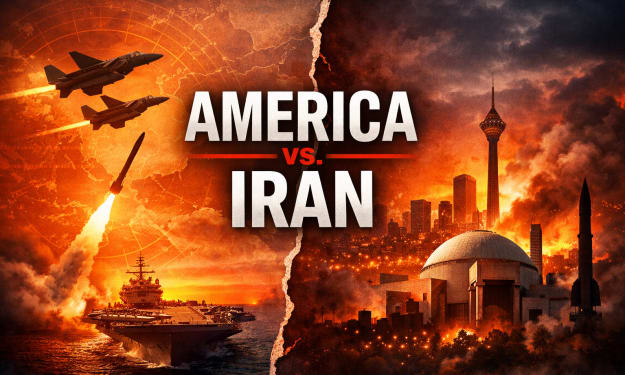
Why America Attacked Iran
“America Just Struck Iran — And the World Is Holding Its Breath” The United States and Israel are now engaged in direct military action against the Islamic Republic of Iran — a dramatic escalation that marks one of the most consequential shifts in American foreign policy in decades. The conflict, which erupted at the end of February 2026, has already reshaped geopolitics in the Middle East and sparked widespread debate over Washington’s objectives and justifications.
By Zakir Ullah10 days ago in Journal
The Empty Locker
I didn’t know his name at first. I only knew the silence. It was a Tuesday in October. The high school hallway buzzed with its usual chaos—backpacks slamming, laughter echoing, sneakers squeaking on linoleum. But one locker stayed shut. No one leaned against it. No one dropped off homework. Just a quiet space where a boy should have been.
By KAMRAN AHMAD12 days ago in Journal
The Suitcase in the Hallway
I didn’t pack lightly. The suitcase sat by the door for three days—half-full, then overflowing, then emptied again. I kept adding things I thought I’d need: my favorite coffee mug, the photo from last summer, the sweater that still smelled like home. Then I’d take them out, convinced they were too heavy, too sentimental, too much.
By KAMRAN AHMAD12 days ago in Journal
The Couple We All Watched Grow Up
I didn’t know them. But I felt like I did. For over a decade, they were part of my life—not as celebrities, but as characters in a story I watched unfold in real time. I saw them at seventeen, awkward and bright-eyed on red carpets, fumbling through interviews, hiding smiles behind their hands. I saw them navigate fame, heartbreak, and the slow, steady work of becoming adults—all while the world watched, judged, and claimed ownership of their journey.
By KAMRAN AHMAD12 days ago in Journal
Gold Rates Now Stable in Pakistan After Yesterday’s Decline. AI-Generated.
After a period of volatility that saw gold prices dip sharply in Pakistan’s bullion markets yesterday, traders and investors alike are breathing a collective sigh of relief as gold rates have stabilized today. What initially sparked concern among small investors and large traders alike has now given way to a more balanced market, one in which prices appear to have found a temporary equilibrium — at least for the time being.
By Sajida Sikandar14 days ago in Journal
War clouds in the Middle East — US, Israel and Iran face to face. AI-Generated.
oman: (special report)journalist malik sarfraz hussain awan. The Middle East is once again in the grip of severe military tension, where after joint air and missile attacks by the US and Israel on important military and strategic targets inside Iran, Iran retaliated vigorously, targeting not only Israel but also US military installations in the Gulf region. According to the initial military briefing, the Israel Defense Forces and the United States Armed Forces attacked various cities in Iran, including the capital Tehran, the industrial and defense center Isfahan, Qom, Kermanshah and other sensitive locations. According to the Israeli position, this operation was carried out to limit Iran’s growing missile and drone capabilities, while US officials called it a preemptive measure to defend their allies and stabilize the region. According to Iranian media, some military installations were damaged in the attacks and a few personnel were killed and injured, but the full damage estimate is still underway. Iran responded immediately by launching ballistic missiles and drones towards Israel through the Islamic Revolutionary Guard Corps and also attempted to target US bases in the Gulf countries. According to reports, alarm sirens were sounded and air defense systems were activated near the Al-Udeid Air Base in Qatar, the US Navy Fifth Fleet headquarters in Bahrain, and some military installations in Kuwait and the United Arab Emirates. Several missiles were claimed to have been destroyed in the air, while reports of limited material damage were also received. Israel said its defense system was largely effective, but explosions were heard in a few places. Iran has warned that if its territory is attacked again, the response will be more severe and widespread. The most immediate and significant impact of this military exchange was on the airspace of the entire region, where Iran completely closed its airspace and suspended all international and domestic flights. Israel also temporarily closed its airspace and stopped civilian flights as a precautionary measure. Iraq has been warned of becoming a potential missile passageway. Due to the fear, it immediately closed its airspace and dozens of flights were canceled. Jordan closed its airspace for a few hours as a precaution and later allowed limited flights. Qatar increased air surveillance, suspended some routes and issued special instructions to pilots. Bahrain announced restrictions on air traffic in view of the security situation. Kuwait diverted several international flights. The United Arab Emirates tightened surveillance in its northern airspace and instructed many aircraft to take alternative routes. Saudi Arabia did not announce a complete closure, but it imposed additional surveillance in the eastern sector and temporarily suspended some flights. Lebanon and Syria also issued alerts, while Turkey increased security measures in its eastern airspace. As a result of these extensive closures, flights from Europe to the Gulf and Asia had to take longer routes, which increased fuel costs and travel times. International airlines made urgent changes to schedules and canceled or postponed several flights, keeping in mind the safety of passengers. This extraordinary closure has practically turned the region into a military zone where defense systems are active 24 hours a day and radars are on full alert. Security is on high alert on the ground as well. An emergency has been declared in hospitals and civil defense agencies are mobilized. Oil prices fluctuated in global markets while investors adopted a cautious attitude. Activities on the diplomatic front have intensified and the United Nations Security Council has called an emergency meeting and appealed to the parties for an immediate ceasefire, restraint and diplomatic negotiations. In the Security Council meeting, some countries expressed concern over unilateral military actions, while others questioned Iran's missile program and regional role. The statement issued after the meeting said that the continuation of tensions in the region could pose a serious threat to global peace and security and that all relevant parties should abide by international law and the UN Charter. The UN Secretary-General also stressed that the civilian population and civilian aviation should be protected at all costs. Experts say that if these clashes are not limited, Lebanon, Syria, Iraq and the Gulf states could also be directly or indirectly involved in the conflict. According to military analysts, the two sides are currently sending each other messages through limited but symbolic use of force. However, in the event of any miscalculation or additional attacks, the situation could quickly turn into a full-scale war. The biggest question in the current situation is whether behind-the-scenes diplomatic efforts will succeed in reducing tensions or whether this crisis will take the form of a long and destructive regional conflict. The region is currently in a state of uncertainty, airspace closures remain partially in place, military preparations are increasing, and the eyes of the international community are focused on the next few days, which will determine the future of this crisis.
By Malik Sarfraz Hussain Awan14 days ago in Journal