economy
Economy and the area of production, distribution, trade, and consumption of goods and services.
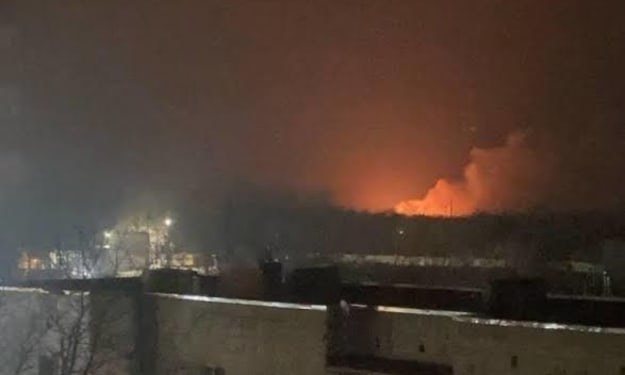
Drones Hit Oil Depot in Russia’s Tikhoretsk for Second Time in Four Days. AI-Generated.
Repeated attacks raise concerns about security and supply disruptions in southern Russia A strategic oil storage facility in Tikhoretsk, southern Russia, was struck by drones for the second time in just four days, prompting heightened security measures and raising questions about the resilience of the country’s energy infrastructure. The repeated attacks come amid ongoing regional tensions and signal a growing threat to critical industrial assets in the area. Local authorities reported that the latest drone strike occurred in the early hours of the morning, targeting storage tanks at the depot used to hold crude oil and refined petroleum products. While no casualties have been officially reported, the strikes caused fires and smoke that were visible from several kilometers away, leading to temporary evacuation of nearby workers. Emergency response teams were deployed immediately to contain the fires and secure the facility. The first attack, which occurred just four days prior, had already raised alarms about the vulnerability of oil storage and transportation hubs in the region. That incident caused minor structural damage but was sufficient to disrupt local operations and delay shipments. The recurrence of a drone strike underscores both the evolving tactics of attackers and the difficulty of defending static infrastructure from aerial threats. Russian officials have condemned the attacks and vowed to investigate the incidents thoroughly. According to statements from the regional administration, authorities are reviewing security footage and coordinating with national intelligence agencies to identify the perpetrators. While no group has claimed responsibility, analysts suggest that these strikes may be part of a broader strategy to target energy infrastructure as leverage in regional conflicts. Oil depots like the one in Tikhoretsk are critical nodes in the energy supply chain. They serve as storage points for crude and refined products before distribution to domestic markets and, in some cases, export terminals. Any disruption can have cascading effects on supply, logistics, and pricing, both locally and in wider markets dependent on Russian oil. The attacks have sparked concern among energy analysts. “Repeated strikes on key storage facilities are not just a symbolic act,” said Elena Sorokina, an energy security expert. “They can seriously affect operations, slow down deliveries, and potentially raise insurance and security costs for the industry. It also shows the growing sophistication of unmanned aerial systems as weapons.” Security measures at Russian energy facilities have traditionally focused on perimeter defenses, surveillance cameras, and human monitoring. The emergence of drone-based attacks presents a different challenge, as small, low-flying drones can evade traditional detection systems and strike targets with precision. Authorities are reportedly evaluating counter-drone technologies, including radar, signal jamming, and rapid response units to neutralize aerial threats before they reach critical infrastructure. In addition to technical challenges, the psychological and operational impact of repeated drone strikes should not be underestimated. Workers at the depot and nearby facilities have expressed concern over personal safety, while local communities worry about potential fires, explosions, and environmental hazards resulting from oil storage damage. Energy companies operating in Russia face the difficult task of balancing operational continuity with enhanced safety measures. Some have temporarily rerouted shipments or adjusted storage protocols to minimize risk, while others are accelerating the implementation of drone detection and mitigation systems. The timing of these strikes also has geopolitical implications. Energy infrastructure in southern Russia is strategically important, not only for domestic supply but also for regional and international energy flows. Disruptions in production and transport can influence global oil prices, trade patterns, and investor confidence. Experts note that such attacks are likely to continue unless robust preventive measures are implemented. “This is a wake-up call for the industry,” said Sorokina. “Facilities need to adapt to a new operational environment where unmanned aerial threats are part of the risk landscape. Ignoring it could lead to more severe consequences down the line.” While authorities work to secure the Tikhoretsk depot and other key facilities, the incidents highlight the broader vulnerability of critical energy infrastructure worldwide. As drone technology becomes more accessible and sophisticated, governments and companies will need to invest in detection, defense, and rapid response systems to prevent similar attacks from crippling essential services. For now, emergency crews remain on high alert, monitoring the depot and surrounding areas. Authorities have reiterated that ensuring the safety of personnel and preventing environmental damage is a top priority. Meanwhile, the energy sector closely watches the situation, aware that repeated disruptions could ripple through regional and global markets. The back-to-back drone strikes in Tikhoretsk serve as a stark reminder of how emerging technology is reshaping security threats to vital infrastructure and the continuing need for vigilance in protecting the facilities that fuel the world’s economy.
By Fiaz Ahmed 7 minutes ago in Journal
The Importance of Financial Awareness in Organizational Leadership
Organizations often focus heavily on innovation, marketing, and expansion when discussing success. While these factors are important, financial awareness is equally essential. Without a clear understanding of financial realities, even the most promising ideas can struggle to succeed.
By Carolina Guerrenoabout 9 hours ago in Journal
The Value of Financial Perspective in Modern Organizations
Financial leadership plays a significant role in shaping how organizations move forward. While many people associate finance primarily with reporting and accounting, the influence of financial perspective extends far beyond these traditional responsibilities. In today’s environment, organizations rely on thoughtful financial insight to guide decisions, manage uncertainty, and maintain stability.
By Carolina Guerrenoabout 9 hours ago in Journal
How does an individual become financially independent?
Financial independence is a dream many people quietly carry inside them. It means waking up without constant financial stress, knowing that your money is working for you instead of controlling your life. But reaching that point rarely happens by accident. It requires awareness, discipline, and smart decisions over time. The journey begins with understanding your spending habits. Many people struggle financially not because they earn too little, but because they never truly track where their money goes. Creating a simple budget can reveal surprising truths. When you clearly see how much you spend on food, transportation, entertainment, and daily needs, it becomes easier to take control of your financial direction. Once you understand your spending, the next step is learning to adjust it. Financial freedom often starts with small changes. Cutting unnecessary expenses, avoiding impulsive purchases, and saving even small amounts regularly can slowly transform your financial situation. Over time, these habits create a strong foundation for stability. Of course, saving alone is not always enough. Increasing your income can dramatically accelerate the path to financial independence. Some people pursue additional education or training to qualify for higher-paying careers. Others start side projects or freelance work to create extra income streams. When your income grows while your spending stays controlled, your financial security grows as well. Another essential step is building an emergency fund. Life is unpredictable, and unexpected expenses can appear without warning. A good starting goal is saving enough money to cover at least three to six months of essential living expenses. This safety net provides peace of mind and prevents financial setbacks during difficult times. Planning for the future is equally important. Retirement savings should begin as early as possible because time allows investments to grow. Even small contributions can become powerful over many years through compound growth. The key is consistency rather than perfection. Choosing the right accounts for saving and investing can also make a difference. Some accounts provide tax advantages that allow your money to grow more efficiently. The right financial tools depend on your personal goals, whether you are saving for retirement, education, or long-term investments. Debt management is another major part of financial independence. Not all debt is harmful, but high-interest debt can quickly become a heavy burden. Paying off expensive debt first often frees up money that can later be invested or saved. Learning the skill of negotiation can also quietly improve your finances. Many people hesitate to ask for better prices or discounts, yet businesses often expect negotiation. Even small savings from negotiating bills or purchases can accumulate over time. Financial knowledge is a lifelong process. Laws, markets, and opportunities change constantly. Staying informed about financial trends, taxes, and investment strategies helps you make better decisions for your future. Diversifying your investments is another powerful principle. Instead of placing all your money into a single asset, spreading investments across different areas reduces risk. A balanced financial portfolio might include stocks, bonds, real estate, or other assets that respond differently to economic changes. Taking care of your property is another overlooked aspect of financial stability. Maintaining homes, vehicles, and important belongings helps preserve their value and prevents costly repairs in the future. Living below your means is perhaps the most powerful habit of all. It means choosing a lifestyle that allows room for saving and investing rather than spending every dollar you earn. People who master this mindset often experience greater financial freedom and less stress. Finally, seeking guidance from a financial professional can sometimes be helpful. Advisors can assist in creating investment strategies, managing assets, and planning for long-term goals. Even simple advice can help clarify the best path forward. Financial independence is not achieved overnight. It grows slowly through consistent decisions, patience, and awareness. Each small improvement in budgeting, saving, and investing builds momentum over time. The journey may take years, but every step brings you closer to a life where money supports your goals rather than limiting them..
By Noman Khan about 11 hours ago in Journal
The War for Attention Is Exhausting — and Artists Are Feeling It
In the modern creative world, attention has become the most valuable currency. Every platform, every algorithm, and every scrolling feed competes for it. For artists, writers, musicians, and creators, the result often feels less like a creative renaissance and more like a battlefield. Instead of simply making meaningful work, many creators feel trapped in what can only be described as a war for attention.
By Navigating the Worldabout 18 hours ago in Journal
Trump Says Global Coalition Will Send Warships to Reopen Strait of Hormuz
A major escalation in the ongoing Iran conflict is unfolding as former U.S. President Donald Trump announced that multiple countries may deploy warships to protect commercial shipping through the Strait of Hormuz — one of the world’s most critical energy chokepoints.
By Navigating the Worldabout 19 hours ago in Journal
Protests Erupt in Cuba as Food and Energy Shortages Deepen
Rare anti-government protests have erupted across parts of Cuba as the island faces worsening shortages of food, fuel, and electricity. The demonstrations highlight the deep economic and humanitarian strain currently gripping the country and signal rising frustration among ordinary Cubans struggling with daily survival.
By Navigating the Worldabout 19 hours ago in Journal