Places
Hasan-i Sabbah’s Garden of Paradise: Legend or Historical Reality?
Among the many legends of medieval history, few stories are as fascinating and controversial as the tale of the “Garden of Paradise” associated with Hasan-i Sabbah. He was the founder and spiritual leader of the Nizari Ismaili movement in Persia during the 11th and early 12th centuries. From his mountain stronghold at Alamut Castle, Hasan-i Sabbah built a powerful and mysterious network of followers who became known in Western literature as the “Assassins.” One of the most enduring legends about him is the claim that he created a secret garden designed to resemble paradise, where young recruits were tricked into believing they had experienced heaven.
By Irshad Abbasi 9 minutes ago in History
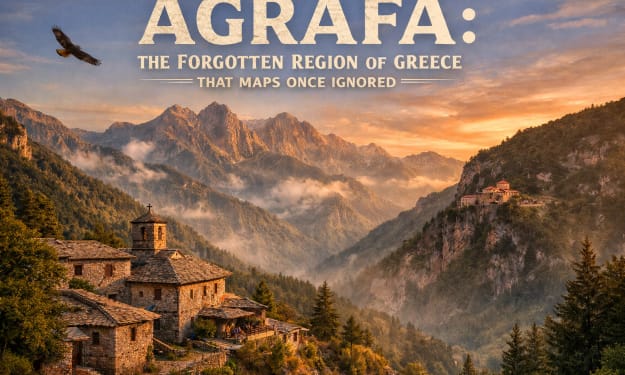
The Forgotten Region of Greece That Maps Once Ignored
High in the rugged mountains of central Greece, there lies a mysterious and historically fascinating region known as Agrafa. For centuries, this isolated land lived up to the meaning of its own name. The word “Agrafa” in Greek literally means “unwritten” or “unrecorded.” The region earned this unusual title because it was so remote and difficult to control that even powerful empires often ignored it, and in some cases, mapmakers did not even bother to include it on their maps.
By Irshad Abbasi about 14 hours ago in History
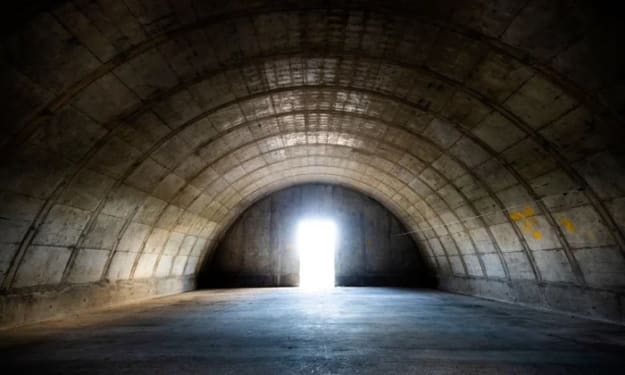
Bunker Stories: Fear, Survival, and Life Beneath the Earth
A bunker is more than concrete and steel buried beneath the ground. It is a place where fear, hope, and survival meet in silence. Throughout history, people have built bunkers for many reasons. Some prepared for war. Others feared disasters that could destroy cities and homes in minutes. Inside these underground spaces, life becomes different. Time moves slowly. The outside world feels distant and uncertain. Yet the idea of a bunker has always carried a strange mix of dread and comfort. It represents the worst possibilities humanity imagines, but also the determination to survive them. Understanding why people build bunkers and how they live inside them reveals something deep about human nature and the instinct to endure.
By Muqadas khanabout 15 hours ago in History
The Vasa: The 17th-Century Warship That Sank After Only 20 Minutes
In the early 17th century, European powers were fiercely competing to dominate the seas. Powerful naval fleets were considered symbols of national strength, and kings invested huge sums of money in building impressive warships. Among the most ambitious of these vessels was the Vasa, a magnificent ship built for the Swedish navy. Designed to be one of the most powerful warships of its time, the Vasa instead became famous for sinking after sailing for only about 20 minutes.
By Irshad Abbasi about 19 hours ago in History
The Ghost of the Indus: The Rise and Fall of the 'Dera Titanic'
The mighty Indus River has long been the lifeblood of South Asia, a winding giant that has witnessed the rise and fall of empires. Yet, tucked away on its banks in Southern Punjab lies a haunting reminder of a more recent, opulent era: the Indus Queen, often referred to locally as the "Titanic of Dera." Once a symbol of royal prestige and a vital lifeline for thousands, this legendary steamer now sits as a skeletal wreck, slowly being swallowed by the silt of time.
By Irshad Abbasi about 20 hours ago in History
The Colonial Powerhouse: Quetta’s British-Era Grid Station
The city of Quetta, often called the “Fruit Garden of Pakistan,” has a long and fascinating history shaped by trade, culture, and colonial influence. Among the lesser-known historical structures of the city is a British-era grid station that once played a crucial role in supplying electricity to the region. Built during the period of British colonial rule in the Indian subcontinent, this early electrical facility reflects a time when modern infrastructure was beginning to transform cities like Quetta.
By Irshad Abbasi about 23 hours ago in History
Iran’s Final Warning
Iran’s Final Warning Tensions in the Middle East have reached one of the most dangerous levels in recent years as Iran issued strong warnings to both the United States and Israel during the ongoing conflict. Iranian military leaders and political officials say that if the attacks against Iranian territory continue, the war could expand far beyond its current battlefield.
By Wings of Time a day ago in History
The Echoes of Al-Ula: Unveiling the Secrets of Saudi Arabia’s Hidden Civilizations
For decades, the vast deserts of the Arabian Peninsula were viewed by the outside world primarily through the lens of golden dunes and modern oil reserves. However, beneath the shifting sands of the Hijaz region lies a silent, stone-carved history that is finally beginning to speak. As Saudi Arabia opens its doors to the world, the "mysterious civilizations" of its past—most notably the Nabataeans and the Dadanites—are emerging from the shadows of myth into the light of archaeological wonder.
By Irshad Abbasi a day ago in History
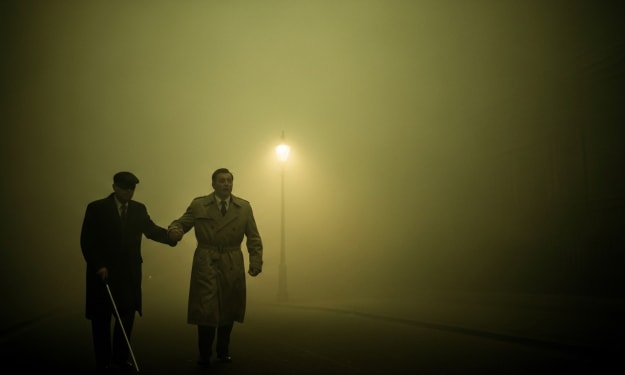
The London Smog of 1952: The "Great Smog" that killed 12,000 people in four days of absolute, yellow darkness.
The taste of a copper penny coated in rotten egg yolk. That was the first warning. It was Friday, December 5, 1952. A blind man led a sighted businessman across Euston Road, tapping his white cane against the invisible curb. The businessman couldn't see his own shoes. The air had turned into a thick, yellowish-green soup that smelled of burning hair and raw sulfur. It was not a fog. It was an executioner. Over the next four days, twelve thousand Londoners would choke to death in their own beds, murdered by the very fireplaces they lit to keep warm.
By The Chaos Cabinet2 days ago in History
Tilla Jogian: The Sacred Hill of Jhelum Where Kings, Saints, and Lovers Have Sought Their Prayers
In the rugged landscape of Punjab’s Potohar Plateau, overlooking the plains of Jhelum, rises a mysterious and historic hill known as Tilla Jogian. For centuries, this remote hilltop has drawn kings, saints, ascetics, and ordinary travelers who climb its steep paths seeking blessings, power, love, or spiritual enlightenment. The name “Tilla Jogian” literally means “Hill of the Yogis,” reflecting its long association with mystics who once meditated there in search of divine truth.
By Irshad Abbasi 2 days ago in History
Potohar Plateau: A Journey Through History, Flavor, and Rivers
The Potohar Plateau in northern Pakistan is a region rich in history, culture, and natural beauty. Stretching across parts of Punjab, including areas near Rawalpindi and Islamabad, this historic landscape offers travelers a unique blend of ancient forts, scenic rivers, and traditional cuisine. Among its many attractions, Rawat Fort, the magnificent Rohtas Fort, and the calm waters of the Soan River stand out as remarkable landmarks. Add to this the famous taste of Mian Ji’s Daal, a beloved local dish, and you have the perfect journey through the heart of Potohar.
By Irshad Abbasi 2 days ago in History
Iran’s Final Warning
Iran’s Final Warning Tensions in the Middle East have reached one of the most dangerous levels in recent years as Iran issued strong warnings to both the United States and Israel during the ongoing conflict. Iranian military leaders and political officials say that if the attacks against Iranian territory continue, the war could expand far beyond its current battlefield.
By Wings of Time 2 days ago in History