energy
How politicians and governments around the world are dealing with climate change, solar energy and harnessing renewable resources.
The next generation of dairy-free cheese may be made from rice.
Cheese is often the final "hard thing" to give up. Both vegans and others who wish to stay away from dairy because it bothers them miss it. The issue of allergies comes next. A lot of non-dairy cheeses contain gluten-based ingredients, and many rely on nuts. The "safe" options might quickly disappear if you have a gluten, dairy, or nut allergy.
By Francis Dami5 days ago in The Swamp
Doing the Wash
Congress. An entity of our government that is supposed to be working for us, is just a money laundering criminal endeavor. If you aren't paying attention to what our government does, then you are part of the problem.Money laundering is a crime, and we are funding it.
By Alexandra Grant6 days ago in The Swamp
The First Casualty Of War Is The Truth
It is often said that in times of war, the first casualty is the truth. When Donald Trump launched Operation Epic Fury, he said that the goal was to stop Iran from developing nuclear weapons. At the same time, when the head of the International Atomic Energy Agency (IAEA), Rafael Grossi, was asked about it, he said that they do not even have access to the sites. Therefore, they have no clear idea about what is happening there, and he appeared somewhat confused.
By Ibrahim Shah 6 days ago in The Swamp
U.S. strategic competition with China.
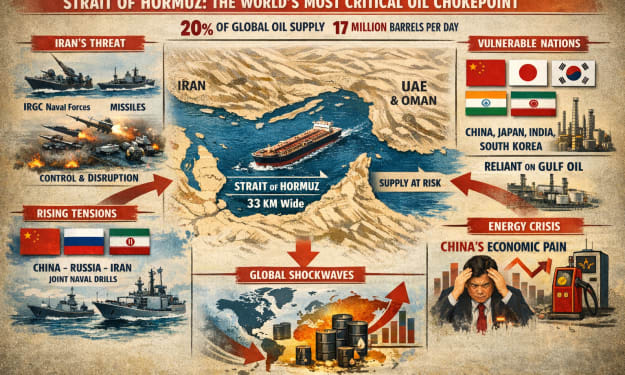
This war Stop being a medley story the moment the first oil tanker changed course in the Persian Gulf. What I mean is, Strait of Hormuz is the most important energy bottleneck on earth. Everybody knows it is the most important energy bottleneck on earth. And if it was the threat from Iran last time, this time Iran has partially done it. It is so narrow, IRGC has a lot of control over it. Just like in the Strait of Malacca, army/navy has control over it. Similarly, here the Iranians have control over it. And recently, China, Russia, and Iran have already conducted war games. So it is this narrow, 33 kilometers wide, you are hearing about it everywhere, everybody is talking about it. It is the width of a large city. So in this narrow passage, which holds 20% of the world's oil, one fifth of the world's oil and gas goes through, it is around 17 million barrels per day. There is no realistic alternative route except the Strait of Hormuz. If we close this passage, its consequences will not stop at any one border. Europe will pay, Japan will pay, India, South Korea, China, everybody pays the price. So a theory is floating around, which backs my argument that China is the target. It is that in Washington circles, there is a discussion going on, let's be honest, if this happens, what do we have to do? The hawkish people there say that this disruption should be allowed because it does not impact them as much as it impacts those countries, which I have just mentioned. So let's take this opportunity that the slowdown of China's energy supply can be slowed down. Trap Beijing in such an expensive moment as long as this congestion remains in the Strait of Hormuz, it remains closed, partially or completely. Iran keeps Beijing hit very badly from an energy security point of view. So the containment policy of China that is already going on is an added bonus. So imagine, on one hand, you are doing everything with technology and trade, imposing tariffs, treating them in the South China Sea, imagine all this. And from the other side, almost 90% of the oil and gas supplies go to China. If it is blocked for a few days, how badly it will hit China. So imagine, while the world is suffering, they are only having strategic designs in their minds.
By Ibrahim Shah 6 days ago in The Swamp
Iran Plunges Into Chaos After Khamenei’s Death
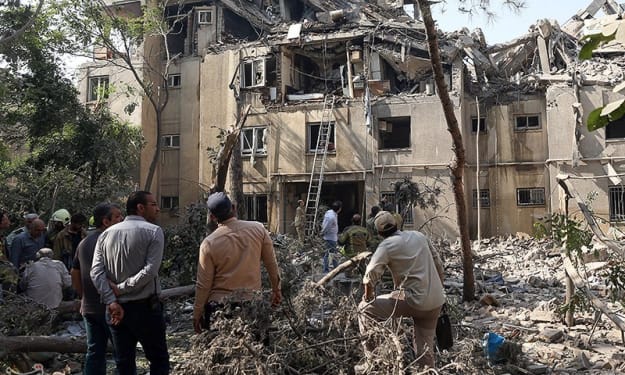
Iran erupted into unprecedented chaos after Supreme Leader Ayatollah Ali Khamenei was killed during targeted strikes on Feb. 28. Streets in Tehran filled with protesters, while retaliatory attacks hit U.S. bases in the Persian Gulf and the U.S. Embassy in Kuwait. Analysts warn that the violence could escalate into a wider regional crisis.
By Jacqueline Bowser11 days ago in The Swamp
No Escape, No Return. AI-Generated.
There are moments in life when the path behind us disappears and the road ahead is uncertain. In those moments, we find ourselves standing at a crossroads where turning back is no longer possible and moving forward feels frightening. This is the reality of a situation where there is no escape and no return. It is not just a dramatic phrase. For many people around the world, it represents the feeling of being trapped by circumstances, decisions, or consequences that cannot be undone. Whether in personal life, politics, war, relationships, or career choices, there are situations where the door behind us closes permanently. And when that happens, we are forced to confront the most difficult truth of all: the only way out is forward. The Moment When Everything Changes Every life has a turning point. Sometimes it happens quietly, like the decision to leave a job, move to a new city, or end a relationship. Other times it arrives suddenly, like an unexpected crisis or a mistake that changes everything. At first, we may believe that things can go back to the way they were. We tell ourselves that this situation is temporary, that we can fix it, undo it, or somehow return to the comfort of the past. But eventually reality becomes clear. Some doors close forever. And when they do, the past becomes a place we can remember but never revisit. Why Humans Fear the Point of No Return Psychologists often describe the fear of irreversible decisions as one of the deepest anxieties people experience. Human beings naturally prefer options. We like to believe that we can change our minds, correct mistakes, and reverse difficult situations. The idea of a point of no return challenges that sense of control. When we reach a moment where there is no escape and no return, we face three powerful emotions: Fear of the unknown Regret about the past Uncertainty about the future These emotions can feel overwhelming. Yet they are also part of what pushes people to grow, adapt, and discover strength they never knew they had. History Is Full of “No Return” Moments The idea of no escape and no return is not only personal—it is also historical. Entire nations have faced moments when decisions led them into situations that could not be undone. Wars, revolutions, economic crises, and political transformations often begin with a single decision that changes the course of history. Once that decision is made, events move forward like a chain reaction. History reminds us that once a society crosses a certain line, going back to the previous reality becomes impossible. Instead, the world must adapt to the new one. In many ways, progress itself is built on these irreversible moments. The Personal Battles We Fight Alone While history records the major turning points of nations, the quiet turning points of individuals often go unnoticed. A student who fails an important exam. A worker who loses their job. A person who makes a mistake that affects their reputation. A family that must rebuild after a loss. These experiences can feel like personal disasters. In those moments, people often believe they are trapped in circumstances that cannot be escaped. But within these difficult moments lies an important truth: the absence of escape does not mean the absence of possibility. Why Moving Forward Is the Only Choice When there is no return, the only direction left is forward. This realization can be terrifying at first. But it can also be liberating. When we accept that the past cannot be changed, we stop wasting energy trying to rewrite it. Instead, we begin focusing on what can still be built in the future. Many of the most successful people in the world reached their achievements only after facing situations that seemed impossible to recover from. Failure, loss, and hardship often become the foundation of resilience. The Strength Hidden in Difficult Situations Human beings are remarkably adaptable. History shows that people who survive the most difficult circumstances often emerge stronger, wiser, and more determined than before. The reason is simple: hardship forces us to grow. When life removes the option of turning back, we discover abilities we never realized we possessed. Courage, patience, creativity, and determination often appear when they are needed the most. The absence of escape can reveal the presence of strength. Learning to Accept the Irreversible One of the hardest lessons in life is learning to accept things that cannot be changed. People often spend years replaying past mistakes, wondering what might have happened if they had made a different decision. But dwelling on the past rarely provides answers. Instead, it keeps us trapped in a cycle of regret. Acceptance does not mean approving of what happened. It simply means recognizing that the past cannot be rewritten. Once we accept this truth, we free ourselves to focus on what still lies ahead. The Power of Responsibility Another important part of moving forward is taking responsibility. Sometimes the situations we face are caused by our own choices. Other times they are the result of events beyond our control. In either case, accepting responsibility for how we respond is essential. Responsibility gives us power. When we accept that we cannot change the past but can shape the future, we begin to regain control over our lives. Instead of seeing ourselves as victims of circumstance, we become authors of the next chapter. Stories of Transformation Throughout the world, there are countless stories of individuals who faced moments with no escape and no return. Entrepreneurs who lost everything and rebuilt their companies. Athletes who suffered career-ending injuries but found new paths in life. Refugees who fled war and created new futures in unfamiliar countries. These stories remind us that the end of one chapter does not mean the end of the story. Sometimes the most powerful transformations begin exactly at the moment when the old path disappears. Why the Future Still Matters When people feel trapped, they often lose sight of the future. Yet the future is the one thing that remains open, even when everything else feels closed. The future contains possibilities that cannot yet be seen. New opportunities, relationships, discoveries, and achievements often appear when people least expect them. Moving forward does not guarantee success, but refusing to move forward guarantees stagnation. Turning Fear Into Motivation Fear is a natural response to uncertainty. However, fear can also be transformed into motivation. Instead of allowing fear to paralyze us, we can use it as energy that pushes us to prepare, learn, and improve. The realization that there is no return can motivate people to work harder, think more creatively, and pursue goals with greater determination. Sometimes the most powerful motivation comes from knowing that failure is not an option. The Courage to Continue Courage is often misunderstood. Many people believe courage means the absence of fear. In reality, courage means continuing despite fear. When there is no escape and no return, courage becomes essential. It is the quiet decision to take another step forward even when the path is uncertain. It is the determination to keep moving even when the destination is unclear. And it is the belief that the future can still hold meaning, even after the past has closed its doors. Conclusion: The Road That Only Moves Forward Life rarely offers perfect choices. Instead, it presents us with challenges, decisions, and consequences that shape who we become. At some point, everyone encounters a moment where turning back is impossible. These moments may feel overwhelming, but they also mark the beginning of transformation. When there is no escape and no return, the only direction left is forward. And sometimes, that single direction leads us to places we never imagined we could reach.
By Zahid Hussain12 days ago in The Swamp
U.S. National Security Strategy (General Framework)
Here’s an overview of the United States’ national security policy and strategy toward Pakistan, Greenland, and Venezuela under the current (2025-26) administration — based on official strategy documents and reporting on major developments.
By Ibrahim Shah 15 days ago in The Swamp
What resources does Venezuela have — apart from the world’s most oil?
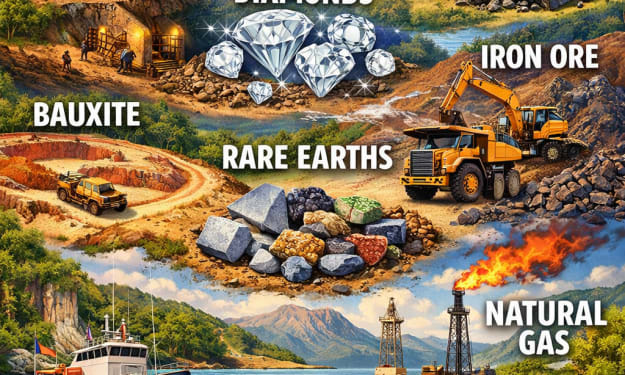
Largest known oil reserves Venezuela has the world’s largest proven oil reserves, estimated at 303 billion barrels as of 2023, more than five times the amount the United States has, which is 55.25 billion barrels.
By Ibrahim Shah 16 days ago in The Swamp
America’s labor Shortages Impact On Economy
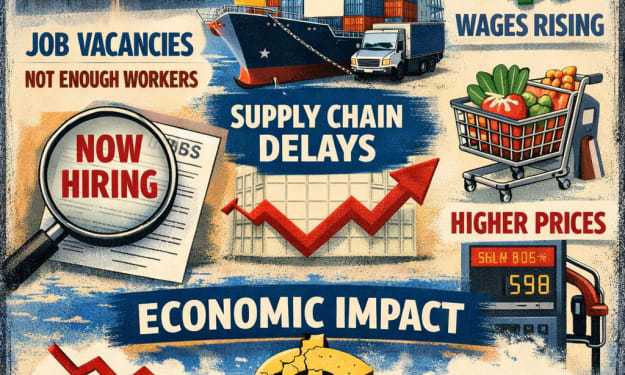
The U.S. economy in 2026 is navigating a peculiar set of crosscurrents. On one hand, job growth has slowed, yet labor markets in key sectors remain stubbornly tight. On the other, a policy of intensified immigration enforcement 2026 is underway, aiming to significantly reduce the nation’s undocumented population. This creates a direct collision between immigration policy and economic necessity, forcing a difficult national conversation about trade-offs that are often overshadowed by political rhetoric.
By Ibrahim Shah 19 days ago in The Swamp
The Protection-of-Innocence Reciprocity Doctrine. AI-Generated.
Core Moral Premise The highest duty of any legitimate social order is the protection of innocent life. Innocent life has absolute moral primacy. Any system that systematically insulates predators, tolerates predatory asymmetry, rewards hypocrisy, or allows aggressors to retain insulation has inverted its purpose and forfeited legitimacy. Truth, justice, reciprocity, humility, mercy, forgiveness, and vertical accountability are structural necessities rather than optional virtues. Vertical accountability means recognition of and submission to a moral law higher than oneself. Authority must flow toward those who most consistently demonstrate sustained competence in moral and epistemic discipline. This competence is shown through observable conduct and trajectory over time, not through doctrinal label, tribal identity, credential alone, or self-profession.
By Peter Thwing - Host of the FST Podcast21 days ago in The Swamp