
He Paid For 3 Dinners. Then He Asked Her To Buy Dessert.
A viral post about an awkward third-date standoff proves we are still completely lost when it comes to modern dating etiquette.


Ah, the third date. In the timeline of modern romance, it is traditionally a milestone. The first date is for establishing basic chemistry. The second is for seeing if the conversation flows without the aid of first-date adrenaline. By the third date, you are usually moving from "strangers interviewing each other" into the territory of a genuine connection.
But for one 33-year-old man and his 30-year-old Hinge date, the third date was where the romantic connection came to a screeching, uncomfortable halt — all over a post-dinner treat.
Taking to the "AskMenAdvice" subreddit, the man recounted a story that has since sparked a fiery debate about gender roles, silent expectations, and the dreaded politics of picking up the check.
The setup was simple. The first two dates went incredibly well. The man happily paid for both dinners and drinks, noting in his post that he didn’t think much of it and is generally fine covering the costs early on.
For their third date, they went out to dinner again. Once again, he footed the bill. Afterward, the pair decided to keep the evening going and grab dessert nearby. But when they got to the counter to order, the vibe shifted drastically.
"I expected she might offer to grab dessert since I had paid for everything so far," he wrote. "But she didn’t reach for her wallet at all. Instead she kind of looked at me like she expected me to pay again."
Sensing the hesitation, his date broke the silence. "Did you expect me to pay or something?" she asked.
He replied honestly. He told her that while he didn't necessarily expect her to pay, he thought it would have been nice if she had at least offered, considering he had covered three dinners and drinks. To him, offering to buy the dessert would have been a small gesture of reciprocation.
Her response? A heated back-and-forth in the middle of a dessert shop. According to the original poster, she told him that when a man invites a woman out, he should expect to pay. Furthermore, she informed him that bringing up money or expecting financial reciprocity this early in a courtship is a major "turn-off."
"From my perspective, it wasn’t really about the cost of the dessert," the man explained to Reddit. "It was more about the principle of showing some effort or appreciation. The vibe definitely changed after that conversation."
He ended his post with a question that immediately divided the internet: Was it unreasonable to expect some kind of reciprocity by the third date?
Naturally, the internet had thoughts. And the reactions perfectly encapsulate the massive disconnect between men and women in the current dating landscape.
On one side of the digital aisle, readers fiercely defended the man, dragging the woman for a sense of entitlement. Many commenters pointed out the hypocrisy of modern dating, where women demand equality in the workplace and relationships, but suddenly revert to 1950s gender roles when the waiter drops the leather booklet on the table.
For this camp, the issue wasn't about the $10 or $15 it would have cost to buy a couple of slices of cake. It was about the "wallet reach" — the universal, polite pantomime of offering to contribute. Many argued that by the third date, a partner who isn't even offering to cover the tip, the parking, or the post-dinner coffee is treating the person they are dating like a free meal ticket, not an equal.
But not everyone was entirely on the man's side. A vocal subset of readers took issue with his approach.
The "whoever asks, pays" rule is a hill many daters are willing to die on. If he planned the dates and did the inviting, this camp argued, he should expect to pay for the evening he orchestrated. Some commenters pointed out that bringing up a tally of who paid for what while standing at a cash register comes across as transactional.
Others pointed out the danger of "silent contracts" in dating. The man went into the dessert shop harboring a silent expectation of how his date should behave to prove she appreciated him. When she failed the test she didn't know she was taking, he felt resentful.
Regardless of whose side you take, the viral standoff highlights a collective exhaustion with dating in 2024. Men are feeling the financial strain of performing the role of "provider" on app dates that rarely go anywhere, craving a sign that they are valued for their company, not their credit limit. Meanwhile, women are navigating a landscape of low-effort dating, often using a man's willingness to pay as a litmus test for his generosity and serious intent.
In the end, maybe the dessert shop argument was a blessing in disguise for the Hinge couple. It revealed a fundamental mismatch in their values around money, communication, and partnership.
Because if a couple of cupcakes is enough to ruin the vibe completely, the relationship probably wasn't going to survive the actual hard stuff anyway.
About the Creator
Opinion
A dedicated space for bold commentary and honest reflections on the world around us. Whether you agree or dissent, my goal is always to get you thinking.
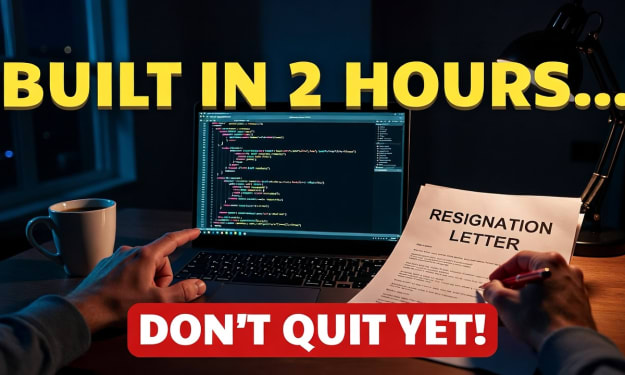
The AI Trap: Why Building an App in 2 Hours Won’t Let You Quit Your Job
It was 11:45 PM on a Tuesday when my phone lit up. The caller ID showed Tarek, a buddy I’ve known since our college days. Tarek is a senior front-end developer at a mid-sized tech company, the kind of guy who is usually asleep by 10 PM because his brain is fried from endless Jira tickets and pointless zoom meetings.
By John Arthor4 days ago in Humans



Comments
There are no comments for this story
Be the first to respond and start the conversation.