Latest Stories
Most recently published stories in History.
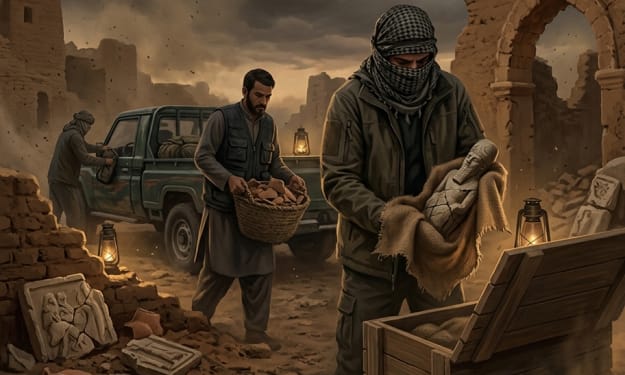
Islamic State Accused of Involvement in Antiquities Smuggling
The illegal trade in antiquities has long been a shadowy but profitable enterprise, and in recent years it has gained global attention due to the involvement of extremist groups. Among these groups, the so-called Islamic State (IS) has been widely accused by international investigators and cultural heritage experts of participating in the looting and smuggling of priceless historical artifacts. These activities not only threaten humanity’s shared cultural heritage but also provide a significant source of funding for militant operations.
By Irshad Abbasi about 11 hours ago in History
The Lioness of Brittany: How Jeanne de Clisson Became the Most Feared Pirate in Medieval France
The transformation of Jeanne Louise de Belleville from aristocratic wife and mother into the most feared pirate of the fourteenth century began on a summer day in 1343 when she stood at the edge of a crowd in Paris and watched her husband's head fall from the executioner's block, an execution ordered by King Philip VI of France based on accusations of treason that Jeanne knew with absolute certainty were fabricated lies designed to seize her family's lands and wealth, and in that moment of unbearable grief and rage something fundamental shifted in her soul, transforming a woman who had been raised in privilege and educated in the genteel arts expected of noblewomen into an instrument of vengeance who would spend the next thirteen years hunting French ships across the English Channel and making the French nobility regret the day they decided to murder her husband and destroy her family. History has largely forgotten Jeanne de Clisson, relegating her extraordinary story to footnotes in academic texts about medieval warfare and piracy, but in her own time she was legendary and terrifying, known as the Lioness of Brittany, commanding a fleet of warships painted entirely black with blood-red sails that announced her presence and her intentions to every French vessel unfortunate enough to encounter her on the open sea.
By The Curious Writerabout 12 hours ago in History
Birthplace of the Buddha Threatened by Rising Air Pollution
Lumbini, located in the southern plains of Nepal near the border with India, is one of the most sacred sites in the world for Buddhists. It is widely recognized as the birthplace of Gautama Buddha, the founder of Buddhism who lived more than 2,500 years ago. The site, centered around the Maya Devi Temple and its surrounding sacred garden, attracts hundreds of thousands of pilgrims and tourists every year. However, this historically and spiritually significant location is now facing an alarming threat: increasing air pollution.
By Irshad Abbasi about 14 hours ago in History
Aunt Sophie Campbell, A Smoky Mountain Legend in Appalachia
In the heart of the Great Smoky Mountains lived a woman whose legacy endured long after her passing, a woman who embodied the spirit of rugged ridges, mountain folklore, and genuine hospitality. Her name was Aunt Sophie Campbell, one of the most beloved figures in the region. Known for talent, warmth, and resilience, Aunt Sophie became a true Smoky Mountain legend.
By Tim Carmichaelabout 15 hours ago in History
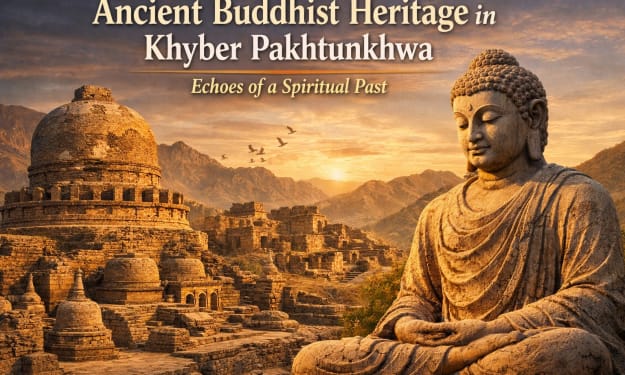
Ancient Buddhist Heritage in Khyber Pakhtunkhwa: Echoes of a Spiritual Past
The province of Khyber Pakhtunkhwa in present-day Pakistan is widely known for its rugged mountains, vibrant cultures, and strategic historical importance. Yet beneath its modern landscape lies a remarkable legacy that dates back more than two thousand years: the heritage of Buddhism. Scattered across valleys, hills, and ancient cities are centuries-old Buddhist monuments—stupas, monasteries, sculptures, and archaeological sites—that reflect the region’s deep connection with one of the world’s oldest religions.
By Irshad Abbasi about 17 hours ago in History
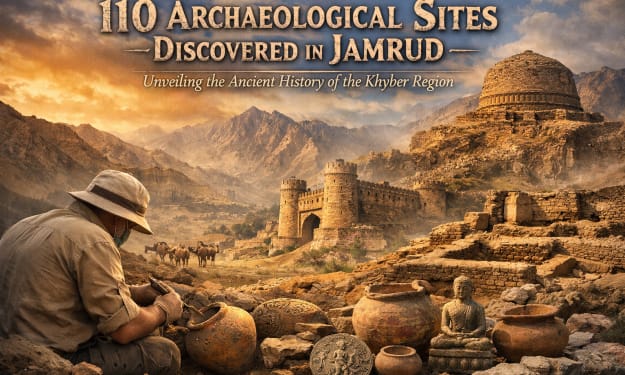
A Window into the Ancient History of the Khyber Region
The historic town of Jamrud has recently gained renewed attention after archaeologists reported the discovery of 110 archaeological sites in and around the region. Located at the mouth of the famous Khyber Pass, Jamrud has long been known as a strategic and cultural crossroads between South Asia, Central Asia, and the Middle East. The newly identified sites provide remarkable evidence that the region was home to vibrant human activity stretching back thousands of years.
By Irshad Abbasi about 17 hours ago in History
History of New York
1. Early Times New York was originally inhabited by Native American tribes, mainly the Lenape people. They lived off rivers, lakes, and forests, relying on hunting, fishing, and farming for survival. Life was simple, connected closely with nature.
By Fawad Ahmadabout 18 hours ago in History
Why Is the Modi Government Searching for the Tomb of Dara Shikoh?
In recent years, discussions about the legacy of the Mughal Empire have become increasingly prominent in India. One intriguing development is the reported effort by the government led by Narendra Modi to locate the burial site of the Mughal prince Dara Shikoh. The search has sparked debate among historians, politicians, and the public alike. Many observers see it as part of a broader attempt to reinterpret India’s past and highlight figures who symbolize cultural harmony.
By Irshad Abbasi a day ago in History
From Repeated Defeats to the Founder of the Mughal Empire
In the early sixteenth century, the political landscape of Central and South Asia was shaped by ambition, warfare, and shifting alliances. Among the many princes struggling for power during this period was Zahir‑ud‑Din Muhammad Babur, a young Timurid ruler whose life was defined by repeated setbacks. Ironically, it was these failures that ultimately pushed him toward the Indian subcontinent, where he would establish the Mughal Empire, one of the most influential empires in world history.
By Irshad Abbasi a day ago in History
The Bloody Red Queen
Mary 1st of England—often remembered by the nickname “Bloody Mary”—was one of the most controversial monarchs in English history. Her life was shaped by dynastic politics, religious conflict, and personal hardship. As the first woman to rule England in her own right, Mary’s reign marked a critical turning point in the religious and political development of the country. Though her rule was relatively short, from 1553 to 1558, her life story reveals the immense challenges she faced as a queen determined to restore Catholicism in a nation that had largely turned toward Protestantism.
By Dragon Matthew Wood - Hillmana day ago in History
Shaping South Asia’s Historical Narrative
In the annals of South Asian history, few figures evoke as much discussion and debate as Mahmud of Ghazni. The ruler of the Ghaznavid Empire, Mahmud (971–1030 CE), is remembered not only for his military campaigns but also for his repeated raids into the Indian subcontinent, culminating in the infamous attack on the Somnath Temple in 1025 CE. This episode has become a central reference point in the region’s historical narrative, influencing perceptions of conquest, religion, and politics for centuries.
By Irshad Abbasi a day ago in History