Biographies
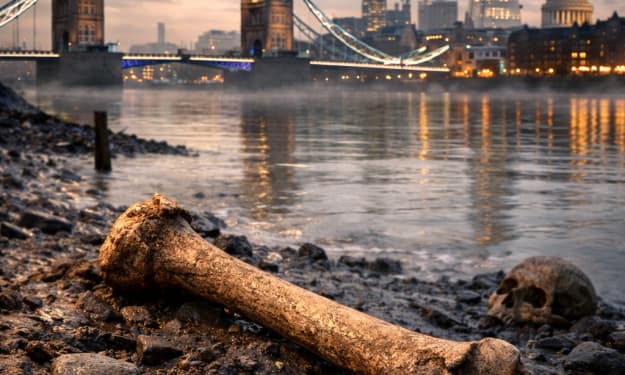
Ancient Secrets Beneath the Thames: 5,000-Year-Old Human Bone Discovered in London
The muddy banks of the River Thames in London have long been known as a treasure trove of history, yielding countless artifacts from different eras. Recently, archaeologists and researchers were astonished by the discovery of a human bone believed to be around 5,000 years old, dating back to prehistoric Britain. This remarkable find sheds new light on the ancient communities that once lived along the river and raises intriguing questions about their rituals, lifestyles, and relationship with the Thames.
By Irshad Abbasi about 4 hours ago in History
Once Wealthy Estates Now Lost to Ruins
In the tropical landscapes of southern Yucatán, Mexico, the ruins of once-grand haciendas stand quietly among overgrown fields and crumbling stone walls. These estates were once the heart of a booming industry built around a plant that locals called “green gold.” For decades, the production of sisal fiber brought enormous wealth to the region, transforming the economy and shaping the lives of thousands of people. Today, however, many of these estates lie abandoned, their glory fading into history.
By Irshad Abbasi about 4 hours ago in History
Aunt Sophie Campbell, A Smoky Mountain Legend in Appalachia
In the heart of the Great Smoky Mountains lived a woman whose legacy endured long after her passing, a woman who embodied the spirit of rugged ridges, mountain folklore, and genuine hospitality. Her name was Aunt Sophie Campbell, one of the most beloved figures in the region. Known for talent, warmth, and resilience, Aunt Sophie became a true Smoky Mountain legend.
By Tim Carmichaelabout 8 hours ago in History
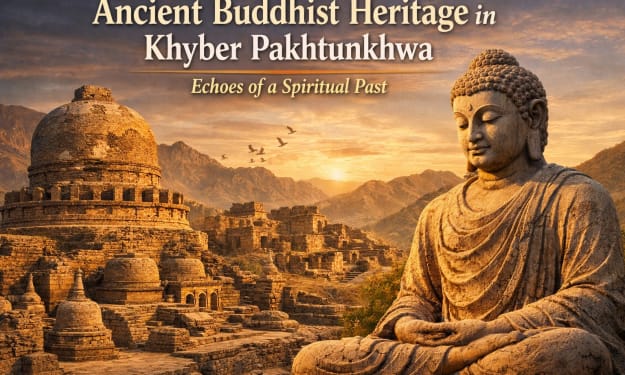
Ancient Buddhist Heritage in Khyber Pakhtunkhwa: Echoes of a Spiritual Past
The province of Khyber Pakhtunkhwa in present-day Pakistan is widely known for its rugged mountains, vibrant cultures, and strategic historical importance. Yet beneath its modern landscape lies a remarkable legacy that dates back more than two thousand years: the heritage of Buddhism. Scattered across valleys, hills, and ancient cities are centuries-old Buddhist monuments—stupas, monasteries, sculptures, and archaeological sites—that reflect the region’s deep connection with one of the world’s oldest religions.
By Irshad Abbasi about 11 hours ago in History
Why Is the Modi Government Searching for the Tomb of Dara Shikoh?
In recent years, discussions about the legacy of the Mughal Empire have become increasingly prominent in India. One intriguing development is the reported effort by the government led by Narendra Modi to locate the burial site of the Mughal prince Dara Shikoh. The search has sparked debate among historians, politicians, and the public alike. Many observers see it as part of a broader attempt to reinterpret India’s past and highlight figures who symbolize cultural harmony.
By Irshad Abbasi about 19 hours ago in History
From Repeated Defeats to the Founder of the Mughal Empire
In the early sixteenth century, the political landscape of Central and South Asia was shaped by ambition, warfare, and shifting alliances. Among the many princes struggling for power during this period was Zahir‑ud‑Din Muhammad Babur, a young Timurid ruler whose life was defined by repeated setbacks. Ironically, it was these failures that ultimately pushed him toward the Indian subcontinent, where he would establish the Mughal Empire, one of the most influential empires in world history.
By Irshad Abbasi about 19 hours ago in History
Shaping South Asia’s Historical Narrative
In the annals of South Asian history, few figures evoke as much discussion and debate as Mahmud of Ghazni. The ruler of the Ghaznavid Empire, Mahmud (971–1030 CE), is remembered not only for his military campaigns but also for his repeated raids into the Indian subcontinent, culminating in the infamous attack on the Somnath Temple in 1025 CE. This episode has become a central reference point in the region’s historical narrative, influencing perceptions of conquest, religion, and politics for centuries.
By Irshad Abbasi about 21 hours ago in History
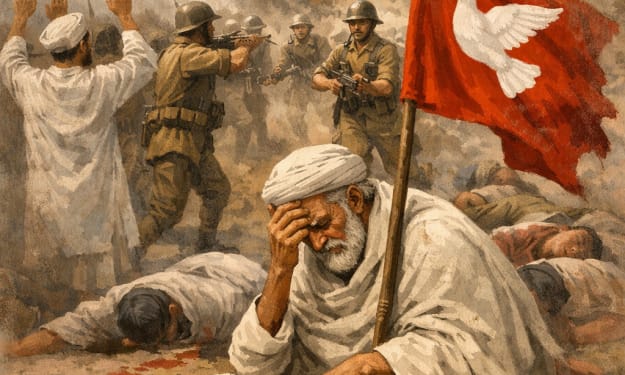
When Hundreds of Khudai Khidmatgars Were Slaughtered in Charsadda
The Babra Massacre stands as one of the most harrowing episodes in the history of the Indian subcontinent’s struggle against colonial oppression. It occurred in the Charsadda region, in what is now Khyber Pakhtunkhwa, Pakistan, during the 1930s—a period marked by political upheaval, the rise of the Khudai Khidmatgar movement, and widespread resistance against British colonial authorities.
By Irshad Abbasi about 21 hours ago in History
When Bullets Silenced a Peaceful Crowd
On April 13, 1919, a quiet garden in the city of Amritsar became the site of one of the most horrifying incidents in the history of British colonial rule in India. The event, now known as the Jallianwala Bagh Massacre, shocked the world and exposed the brutal reality of imperial power.
By Irshad Abbasi about 21 hours ago in History
The Reluctant Nationalist
In the turbulent history of South Asia’s struggle against colonial rule, few figures stand as uniquely as Abdul Ghaffar Khan. Known to many as the “Frontier Gandhi,” Khan was a Pashtun leader who devoted his life to nonviolence, social reform, and the dignity of his people. Yet what makes his story even more remarkable is that he was often described as a “reluctant nationalist.” Rather than chasing political power or personal glory, Abdul Ghaffar Khan saw nationalism as a responsibility forced upon him by the suffering of his people.
By Irshad Abbasi about 22 hours ago in History
Playbill Pulse : Joe Turner’s Come and Gone Preview-Cedric the Entertainer Challenges Himself on Broadway by NWO Sparrow
Joe Turner’s Come and Gone: Cedric the Entertainer’s Challenging Broadway Role by NWO Sparrow Exploring the discipline, silence, and emotional depth required to bring Joe Turner’s Come and Gone to life
By NWO SPARROWabout 23 hours ago in History