Shoaib Afridi
Stories (55)
Filter by community
The Night I Stayed Awake
Most nights pass quietly and without much thought. We finish our daily routines, turn off the lights, and drift into sleep, hoping to wake up refreshed for another day. But sometimes there are nights that feel different. Nights when sleep refuses to come. Nights when the mind becomes louder than the world around it. For me, it was the night I stayed awake, staring at the ceiling while countless thoughts moved through my mind. When Sleep Refuses to Come It began like any ordinary evening. I finished dinner, spent some time on my phone, and prepared to go to bed. The house was quiet, and the lights were off. Normally, this is the moment when my mind begins to slow down. But that night, something felt different. I turned off the lamp beside my bed and closed my eyes, expecting sleep to arrive within minutes. Instead, my mind began replaying the entire day. Small conversations. Things I should have said differently. Tasks I had postponed. Worries about the future. The more I tried to ignore these thoughts, the louder they became. The Silence of the Night There is something unique about the middle of the night. During the day, life moves quickly. There are distractions everywhere—phones, work, conversations, and responsibilities. These distractions keep our minds busy and prevent us from thinking too deeply. But at night, when everything becomes quiet, those thoughts return. As the hours passed, the silence in my room felt heavier. I could hear the faint ticking of the clock on the wall and the occasional sound of a car passing outside. It felt like the world had paused. But my mind hadn’t. Thinking About Life Lying awake in the darkness gives you a strange perspective on life. Without the distractions of the day, you begin to think about things you usually ignore. Questions appear that you don’t normally ask yourself. Am I moving in the right direction? Am I making the most of my time? Am I appreciating the people around me enough? These questions are not always comfortable, but they are important. That night, I realized how rarely we allow ourselves to pause and reflect on our lives. The Weight of Worries Part of what kept me awake that night was worry. Everyone carries some level of worry—about work, family, finances, or the uncertainty of the future. Most of the time, we push these worries aside because we are busy dealing with daily responsibilities. But when the world becomes quiet, those worries often return. The challenge is learning how to face them without letting them control us. As I lay there staring at the ceiling, I slowly began to understand that worrying endlessly doesn’t solve anything. It only steals the peace of the present moment. A Different Kind of Night Eventually, I stopped trying to force myself to sleep. Instead, I sat up in bed and looked out the window. The street outside was calm, illuminated only by a few distant lights. For a moment, everything felt still. And in that stillness, something unexpected happened. My thoughts began to settle. The worries that had seemed overwhelming earlier now felt smaller, almost manageable. Sometimes the mind simply needs time to process everything it has been carrying. A Lesson From a Sleepless Night That night taught me something valuable. Sleep is important, of course. But occasionally, a sleepless night can also offer a rare opportunity for reflection. It allows us to step away from the noise of daily life and reconnect with our thoughts. It gives us the chance to examine our worries, our goals, and the direction we are heading. In a strange way, that quiet night helped me feel more clear about my life than many busy days ever had. Morning Arrives Eventually, the sky outside began to brighten. The first light of morning slowly filled the room, and the world started waking up again. Birds began to chirp, and distant sounds of early traffic appeared. Ironically, that was the moment when sleep finally began to arrive. But by then, I didn’t feel frustrated anymore. Instead, I felt calm. Final Thoughts We often think of sleepless nights as something negative, something to avoid at all costs. And while rest is essential for our health, not every restless night is meaningless. Sometimes, those quiet hours allow us to reflect on our lives in ways we rarely do during the day. The night I stayed awake reminded me that life is not only about rushing from one task to another. Sometimes, it’s about pausing, listening to our thoughts, and learning from the silence. And occasionally, the lessons we discover in the quiet darkness of the night stay with us long after the sun rises.
By Shoaib Afridiabout 24 hours ago in Psyche
Rain on the Window
The rain started quietly. At first, it was just a soft tapping against the glass — the kind of sound you barely notice if you’re busy with life. But tonight, the house was silent. So the rain became louder. Not in volume, but in meaning. Each drop touched the window like a small memory trying to come back.
By Shoaib Afridia day ago in Psyche
The Empty Chair
There is a chair in our living room that no one sits in anymore. It’s not broken. The wood is still strong, the cushion still soft enough to be comfortable. From the outside, it looks like just another piece of furniture in the house. But for me, it means something entirely different. It is the empty chair. And every time I see it, a flood of memories comes rushing back.
By Shoaib Afridi2 days ago in Humans
The Day I Saw My Father Cry
Most of us grow up believing that our parents are unbreakable. As children, we see them as pillars of strength—people who always know what to do and how to solve every problem. Especially fathers. They are often seen as the strong ones, the protectors, the people who never show weakness. For most of my life, I believed that about my father. Until the day I saw him cry.
By Shoaib Afridi3 days ago in Families
Woman Receives a $2.3 Million Bank Transfer by Mistake
Sometimes life throws the most unexpected surprises our way. For one woman, a routine day managing her finances turned into a situation she could never have imagined. A single bank notification changed everything, presenting her with an enormous sum of money that didn’t belong to her — and the decision she made next stunned everyone who heard the story.
By Shoaib Afridi4 days ago in FYI
Man Buys a $20 Couch at a Thrift Store — Then Finds $100,000 Hidden Inside
Sometimes life-changing moments arrive when we least expect them. A simple decision, a random purchase, or an ordinary day can suddenly turn into a story that feels almost unbelievable. For one man, what started as a routine trip to a thrift store became a moment he would remember for the rest of his life. It all began with a couch that cost just twenty dollars. A Simple Purchase Jason Miller was a 28-year-old delivery driver who had recently moved into a small apartment in a quiet neighborhood. Like many young people starting out on their own, he was trying to save as much money as possible. His apartment was mostly empty except for a small table and a bed. One weekend, he decided it was finally time to buy a couch. But buying new furniture was expensive, and Jason didn’t have much to spare after paying rent and bills. So he did what many people do when money is tight—he visited a local thrift store. The store was filled with old furniture, secondhand decorations, and shelves of forgotten items waiting for someone to give them a new home. Jason slowly walked through the aisles, checking price tags and imagining what might fit in his apartment. Then he noticed it. In the corner of the store sat an old beige couch. It wasn’t perfect. The fabric looked slightly worn, and the cushions were a little soft. But the price tag caught his attention immediately. $20. Jason couldn’t believe it. For that price, it felt like a great deal. After thinking about it for a few minutes, he paid for the couch and arranged to bring it home that afternoon. At the time, he thought he had simply found a cheap piece of furniture. He had no idea the couch was hiding a secret.
By Shoaib Afridi4 days ago in Fiction
Even If This Love Disappears from the World Tonight
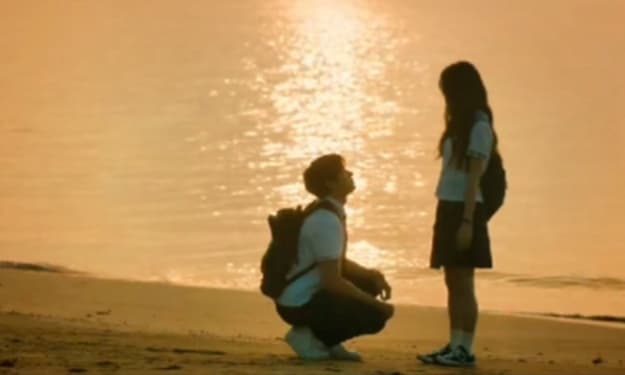
Some films entertain us for a moment, while others leave a quiet mark on our hearts. Even If This Love Disappears from the World Tonight is one of those rare stories that stays with viewers long after the final scene. It is not just a romantic film—it is a touching reflection on love, memory, and the fleeting nature of life’s most meaningful moments. Directed by Takihisa Zeze, the film tells a gentle yet emotional story about two teenagers who discover love under unusual circumstances. Through their journey, the film explores an important question: what happens when love exists, but memory cannot hold onto it?
By Shoaib Afridi6 days ago in Confessions
I Was Not Raised to Be Silent
The Voice Within I was not raised to be silent. I was not raised to bow or shrink when the world told me to. Sparking Through Fear I was raised to speak even when my voice trembled. To speak even when it echoed against walls that refused to listen.
By Shoaib Afridi6 days ago in Poets
Guard Your Battery, Lose Your Humanity
I used to think my phone was my lifeline. In Amsterdam, where rain slicks the cobblestones and bikes fly by like they're late for something important, my screen was the one constant: notifications buzzing through tram rides, endless scrolls while waiting for koffie at a brown café, quick checks at red lights on the Keizersgracht. It felt safe. Controlled. Connected. Until it didn't. By early 2026, I was exhausted in a way sleep couldn't fix. My anxiety had crept up quietly — heart racing in crowds, that low hum of dread when the battery dipped below 20%. I blamed the city, the weather, work. But deep down, I knew the truth: I'd outsourced my presence to a rectangle in my pocket. I was here, but never really here. So on a drizzly February morning, I made a rule that felt ridiculous: no phone in public for 30 days. Pocket, bag, or leave it at home — but never in hand when outside my apartment. If I needed directions or music, tough. The goal wasn't total detox; it was forcing myself to look up, be bored, and — if the moment felt right — talk to someone. One stranger conversation a day if it happened naturally. No forcing, just availability. What broke first was the fidgeting. Days 1–10: The Withdrawal Hits Hard The first week was brutal. At the Albert Cuyp Market, my hand kept reaching for my pocket like a phantom limb. Without the screen to hide behind, every line felt exposed. I noticed things I'd ignored for years: the way an old man feeds pigeons near the Nieuwmarkt, the precise rhythm of bike bells, the smell of fresh stroopwafels mixing with canal water. I also noticed people. Everyone else was doing what I'd been doing — heads down, thumbs moving. On the 2 tram toward Centraal, a carriage full of silent faces lit by blue light. No one spoke. No one looked up. It hit me: we're all in our own little bubbles, floating through the same beautiful city. By day 5, boredom turned into restlessness. Waiting for coffee at a spot on the Prinsengracht, I had nothing to do but watch. A woman in a red coat struggled with her umbrella in the wind. Our eyes met. She laughed first. "This weather," she said. I replied, "It builds character, right?" We chatted for two minutes about nothing — the rain, the best waterproof jackets. It felt awkward, electric, alive. That tiny exchange cracked something open. My anxiety didn't vanish, but it lost its grip for a moment. Days 11–20: The City Starts Talking Back Halfway through, the experiment shifted from punishment to curiosity.
By Shoaib Afridi6 days ago in Fiction
Guard Your Battery, Lose Your Humanity
I used to think my phone was my lifeline. In Amsterdam, where rain slicks the cobblestones and bikes fly by like they're late for something important, my screen was the one constant: notifications buzzing through tram rides, endless scrolls while waiting for koffie at a brown café, quick checks at red lights on the Keizersgracht. It felt safe. Controlled. Connected. Until it didn't. By early 2026, I was exhausted in a way sleep couldn't fix. My anxiety had crept up quietly — heart racing in crowds, that low hum of dread when the battery dipped below 20%. I blamed the city, the weather, work. But deep down, I knew the truth: I'd outsourced my presence to a rectangle in my pocket. I was here, but never really here. So on a drizzly February morning, I made a rule that felt ridiculous: no phone in public for 30 days. Pocket, bag, or leave it at home — but never in hand when outside my apartment. If I needed directions or music, tough. The goal wasn't total detox; it was forcing myself to look up, be bored, and — if the moment felt right — talk to someone. One stranger conversation a day if it happened naturally. No forcing, just availability. What broke first was the fidgeting. Days 1–10: The Withdrawal Hits Hard The first week was brutal. At the Albert Cuyp Market, my hand kept reaching for my pocket like a phantom limb. Without the screen to hide behind, every line felt exposed. I noticed things I'd ignored for years: the way an old man feeds pigeons near the Nieuwmarkt, the precise rhythm of bike bells, the smell of fresh stroopwafels mixing with canal water. I also noticed people. Everyone else was doing what I'd been doing — heads down, thumbs moving. On the 2 tram toward Centraal, a carriage full of silent faces lit by blue light. No one spoke. No one looked up. It hit me: we're all in our own little bubbles, floating through the same beautiful city. By day 5, boredom turned into restlessness. Waiting for coffee at a spot on the Prinsengracht, I had nothing to do but watch. A woman in a red coat struggled with her umbrella in the wind. Our eyes met. She laughed first. "This weather," she said. I replied, "It builds character, right?" We chatted for two minutes about nothing — the rain, the best waterproof jackets. It felt awkward, electric, alive. That tiny exchange cracked something open. My anxiety didn't vanish, but it lost its grip for a moment. Days 11–20: The City Starts Talking Back Halfway through, the experiment shifted from punishment to curiosity.
By Shoaib Afridi7 days ago in Fiction
30 Days Talking to Strangers in Amsterdam — Day 17 Ended My Panic Attacks
The Stranger Who Answered Back How talking to one stranger every single day for 30 days in Amsterdam quietly ended my panic attacks I used to think Amsterdam was the loneliest city on earth. You know the feeling — you’re surrounded by 900,000 people, bikes whizzing past, trams dinging, canal water lapping at your feet… and still feel completely invisible. My panic attacks had gotten so bad by January 2026 that I’d started avoiding the tram altogether. Heart racing at red lights, palms sweating in the rain, convinced everyone could see I was one deep breath away from falling apart. So on February 1st I made a stupid promise to myself: talk to one stranger every single day for 30 days. No small talk rules. No “nice weather” cop-outs. One real sentence. One genuine question. Nothing more. I had no idea that promise would save my life. The Awkward First Ten Days Day 1 was humiliating. I stood at the Albert Cuyp Market like a statue until a woman in a bright yellow raincoat picked up the last bunch of tulips. “Those are beautiful,” I blurted. She smiled, said “They’re for my mother’s grave,” and walked away. I wanted to disappear into the cobblestones. Day 3: A guy locking his bike near the Rijksmuseum. I asked how his day was going. He answered in perfect English, “Tired, man. My wife left yesterday.” I froze. He laughed at my face and said, “Relax, it’s been two years. You’re the first person who’s asked in months.” By day 8 I was getting braver. A barista at my usual spot on De Pijp told me her dream of opening a cat café in Portugal. On day 10 an old lady on the 12 tram scolded me for not offering my seat — then spent the next six stops telling me about her husband who died in 1998 and how she still sets the table for two. Every conversation felt like jumping off a cliff. My chest still tightened. My voice still shook. But something tiny was shifting. I was no longer invisible to the city — and the city was no longer invisible to me. The Day Everything Changed Day 17. A grey Thursday. I was exhausted, rain pouring sideways, and seriously considering quitting the whole stupid experiment. I ducked into Vondelpark under a big oak tree near the rose garden. There he was — sitting on a wet bench in a wool coat that had seen better decades. Silver hair, bright blue eyes, holding a small thermos like it was the only warm thing left in the world. I sat. Heart hammering. Then I did what I’d been doing for seventeen days straight. “Excuse me… do you mind if I ask what you’re drinking?” He looked at me for a long moment, like he was deciding whether I was worth the words. Then he smiled — the kind of smile that reaches the eyes first. “Turkish coffee,” he said in a thick Dutch accent. “My wife taught me. She died eleven years ago today.” I swallowed. “I’m so sorry.” He waved it away gently. “Don’t be. She would have liked you. You’re the first person in months who’s looked me in the eye instead of at their phone.” We talked for forty-three minutes. His name was Hendrik. He’d been a ship captain on the IJ for thirty-seven years. Lost his wife to cancer. Raised two daughters who now live in Australia. And then he said the sentence that cracked my entire life open: “You know what I learned after she was gone? Panic is just the mind trying to live tomorrow today. The only thing you can control is this moment — and whether you’re brave enough to share it with someone.” He tapped my knee. “You’re scared right now. I can see it in your shoulders. But you still sat down and asked an old man about his coffee. That’s how you win against the fear, jongen. One small yes at a time.” I cried on the tram home. Not pretty tears — ugly, snotty, shoulder-shaking ones. For the first time in two years, the tightness in my chest wasn’t panic. It was relief. The Last Thirteen Days & What Actually Changed The rest of the month felt different. I stopped forcing conversations and started enjoying them. A Syrian refugee who bakes the best pistachio baklava near Nieuwmarkt. A teenage girl practicing guitar by the canals who let me record her song. A stressed-out delivery cyclist who ended up inviting me for a beer after his shift. My panic attacks didn’t vanish overnight — but they lost their power. When the racing heart came, I heard Hendrik’s voice: This moment. Share it. So I would turn to whoever was nearest and ask one small question. Every single time, the fear shrank. By day 30 I wasn’t the same person who started. I smiled at strangers without thinking. I slept through the night. I even took the tram during rush hour without counting exits. What I Wish I’d Known Sooner Talking to strangers didn’t fix me. It reminded me I was never broken — just disconnected. In a city as beautiful and busy as Amsterdam, it’s ridiculously easy to feel alone. We all walk around wearing invisible headphones. But when you take them off for thirty days and actually see people, something magical happens. You realise every single person is carrying their own quiet storm — and most of them are desperate for someone to notice. Hendrik was right. The panic wasn’t in my chest. It was in the story that I had to do life alone. Your Turn I’m not saying you have to talk to a stranger every day for a month (though… why not?). Start smaller. Next time you’re waiting for coffee, on the tram, or sitting on a bench in Vondelpark — look up. Smile. Ask one real question. You might just meet the stranger who answers back. And who knows? They might be carrying exactly the words you’ve been waiting your whole life to hear.
By Shoaib Afridi7 days ago in Motivation