
United States Cardiovascular Devices Market Size & Forecast 2026–2034
Rising Demand for Advanced Heart Care Technologies Fuels Market Growth Across the United States

Cardiovascular diseases remain one of the most significant public health concerns worldwide, and the United States is no exception. As heart-related disorders continue to affect millions of Americans, the demand for advanced diagnostic and therapeutic technologies is growing rapidly. Cardiovascular devices—ranging from pacemakers and stents to wearable heart monitors—play a vital role in diagnosing, monitoring, and treating these life-threatening conditions.
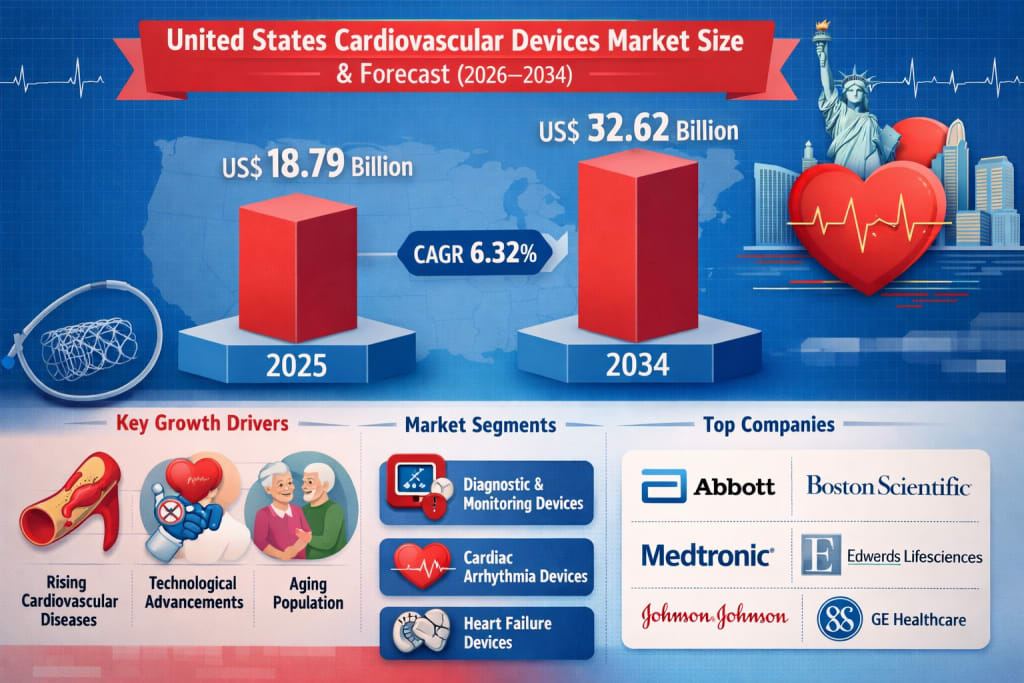
According to Renub Research, the United States Cardiovascular Devices Market is expected to grow from US$ 18.79 Billion in 2025 to US$ 32.62 Billion by 2034, expanding at a Compound Annual Growth Rate (CAGR) of 6.32% from 2026 to 2034. This strong growth trajectory is driven by multiple factors including the rising prevalence of cardiovascular diseases, a rapidly aging population, technological innovation, and the growing demand for minimally invasive procedures.
With an advanced healthcare infrastructure, strong reimbursement systems, and continuous investment in medical innovation, the United States remains one of the most important markets for cardiovascular technologies worldwide.
United States Cardiovascular Devices Market Outlook
Cardiovascular devices are specialized medical instruments designed to diagnose, monitor, and treat diseases affecting the heart and blood vessels. These devices play a crucial role in modern cardiology by enabling physicians to manage complex cardiac conditions effectively and improve patient outcomes.
Common cardiovascular devices include pacemakers, implantable cardioverter defibrillators (ICDs), stents, catheters, heart valves, and cardiac monitoring systems. While some of these devices are used for short-term diagnostic purposes, others are implantable solutions that provide long-term treatment and support for patients with chronic heart conditions.
These technologies are widely used to treat conditions such as coronary artery disease, heart failure, arrhythmias, and blocked arteries. In recent years, innovations in cardiovascular technology have significantly improved treatment efficiency and patient recovery time.
In the United States, the widespread adoption of cardiovascular devices is largely driven by the high prevalence of heart disease. Factors such as sedentary lifestyles, obesity, hypertension, diabetes, and smoking contribute significantly to the rising burden of cardiovascular conditions. As awareness about heart health increases and diagnostic capabilities improve, early detection and treatment are becoming more common, further expanding the use of cardiovascular devices.
Moreover, minimally invasive procedures have transformed the way cardiovascular diseases are treated. Compared with traditional surgeries, these procedures reduce hospital stays, lower complication risks, and improve patient recovery times. As a result, hospitals and healthcare providers across the country are increasingly adopting advanced cardiovascular technologies.
Growth Drivers of the United States Cardiovascular Devices Market
Rising Prevalence of Cardiovascular Diseases
One of the most important drivers of the cardiovascular devices market is the growing prevalence of cardiovascular diseases (CVDs). Heart disease remains one of the leading causes of death globally and continues to pose a major health challenge in the United States.
Globally, cardiovascular diseases claim approximately 17.9 million lives each year, highlighting the enormous burden placed on healthcare systems. Lifestyle factors such as physical inactivity, poor dietary habits, smoking, and stress significantly increase the risk of developing heart disease.
Chronic conditions like diabetes, hypertension, and obesity further accelerate the development of cardiovascular disorders. As the number of patients diagnosed with heart-related conditions continues to grow, healthcare providers are increasingly relying on advanced cardiovascular devices for accurate diagnosis and effective treatment.
These devices are critical for early detection, real-time monitoring, and timely medical intervention. Hospitals and cardiac centers across the United States are adopting sophisticated cardiovascular technologies to enhance patient care and improve survival rates.
Technological Advancements and Medical Innovation
Technological innovation is another key factor driving the growth of the U.S. cardiovascular devices market. Continuous advancements in medical technology have led to the development of more efficient, accurate, and patient-friendly devices.
Modern cardiovascular technologies include implantable pacemakers, drug-eluting stents, wearable cardiac monitors, and minimally invasive catheter systems. These innovations not only improve treatment precision but also significantly enhance patient comfort and recovery.
Minimally invasive cardiac procedures are becoming increasingly popular because they reduce surgical trauma, shorten hospital stays, and lower healthcare costs. Patients benefit from quicker recovery times and reduced complication risks compared with traditional open-heart surgeries.
Digital technologies are also transforming cardiac care. Remote monitoring systems allow physicians to track patients’ heart activity in real time, enabling early detection of abnormalities and faster medical response.
For example, in December 2025, MedTech company vTitan Corporation launched vCardio, a single-lead wearable cardiac monitor designed for point-of-care diagnostics. The device integrates hardware innovation with cloud-based artificial intelligence analytics, demonstrating how digital technologies are shaping the future of cardiovascular healthcare.
Aging Population and Increasing Healthcare Spending
Demographic changes are another major contributor to the expansion of the cardiovascular devices market. The United States is experiencing a rapid increase in its elderly population, which naturally leads to higher demand for cardiac care.
Individuals aged 65 years and older are significantly more likely to develop heart disease due to age-related physiological changes and increased exposure to chronic conditions. According to demographic projections, the U.S. population aged 65 and above is expected to reach 80 million by 2040.
Even more notable is the growth of the 85+ age group, which is projected to nearly quadruple between 2000 and 2040. This demographic shift will inevitably increase the need for advanced cardiac treatments and medical devices.
The United States also has one of the highest healthcare expenditures in the world. High spending enables hospitals and healthcare systems to invest heavily in modern medical technologies, including cardiovascular diagnostic and therapeutic devices.
Government-supported programs and insurance coverage further enhance patient access to cardiac treatments. Early screening initiatives, preventive healthcare programs, and improved healthcare accessibility are all contributing to increased adoption of cardiovascular devices.
Challenges Facing the U.S. Cardiovascular Devices Market
High Cost of Cardiovascular Devices and Procedures
Despite strong growth prospects, the cardiovascular devices market faces certain challenges. One of the most significant obstacles is the high cost associated with advanced cardiovascular devices and surgical procedures.
Implantable devices such as pacemakers, defibrillators, and ventricular assist devices can be extremely expensive. In addition to device costs, patients must also cover expenses related to hospitalization, surgical procedures, post-operative care, and follow-up treatments.
These high costs can limit access to advanced cardiac treatments, particularly for individuals without comprehensive insurance coverage. Healthcare institutions may also face financial constraints when investing in new medical technologies.
For smaller hospitals and clinics, adopting advanced cardiovascular equipment may require significant capital investments, which can slow market expansion.
Strict Regulatory Requirements and Approval Processes
Another key challenge for cardiovascular device manufacturers is the stringent regulatory environment in the United States. Regulatory authorities enforce strict safety and efficacy standards to protect patient health.
Before entering the market, cardiovascular devices must undergo extensive clinical testing and regulatory evaluation. This process can be both time-consuming and expensive, delaying product launches and increasing development costs.
Manufacturers must invest heavily in research, clinical trials, and regulatory compliance. In cases where safety concerns arise, companies may face product recalls, legal challenges, or reputational damage.
While these regulations are essential for ensuring patient safety, they can sometimes slow innovation and make it difficult for smaller companies to compete in the market.
Key Market Segments Driving Growth
Cardiovascular Diagnostic and Monitoring Devices
Diagnostic and monitoring devices represent one of the fastest-growing segments of the cardiovascular devices market. These technologies enable healthcare providers to detect heart abnormalities at early stages and manage chronic cardiac conditions effectively.
Devices such as electrocardiograms (ECG), Holter monitors, cardiac event monitors, and wearable heart monitoring systems allow physicians to track heart rhythms and evaluate cardiovascular health continuously.
The growing prevalence of chronic diseases such as hypertension, diabetes, and obesity has increased the demand for continuous cardiac monitoring. Wearable technologies and remote monitoring systems are particularly gaining popularity, as they allow patients to track their heart health outside hospital settings.
Remote patient monitoring has become an essential component of modern healthcare, enabling physicians to respond quickly to potential cardiac complications.
Cardiac Arrhythmia Devices
Cardiac arrhythmia devices are another major segment within the U.S. cardiovascular devices market. These devices are designed to treat irregular heart rhythms such as atrial fibrillation and bradycardia.
If left untreated, arrhythmias can lead to serious complications including stroke and heart failure. Devices such as pacemakers, implantable cardioverter defibrillators (ICDs), and cardiac resynchronization therapy (CRT) systems help regulate heart rhythms and restore normal cardiac function.
Technological improvements have significantly enhanced the performance, battery life, and safety of these devices. Minimally invasive implantation procedures have also improved patient acceptance and reduced recovery times.
As the aging population continues to grow, the demand for cardiac rhythm management devices is expected to increase steadily.
Heart Failure Devices
Heart failure devices are becoming increasingly important in the treatment of advanced cardiac conditions. Heart failure occurs when the heart cannot pump blood effectively, leading to symptoms such as fatigue, shortness of breath, and reduced quality of life.
Devices such as ventricular assist devices (VADs), implantable cardiac resynchronization therapy devices, and heart pumps provide mechanical support to improve heart function.
Technological advancements have resulted in smaller, safer, and more efficient devices. These innovations are helping patients live longer and maintain better quality of life.
With rising cases of chronic diseases and an expanding elderly population, the demand for heart failure management technologies continues to grow.
Regional Insights Across Key U.S. States
Several U.S. states represent major markets for cardiovascular devices due to their advanced healthcare systems and large patient populations.
California remains one of the largest markets because of its strong healthcare infrastructure and significant presence of medical technology companies. The state is also a hub for medical research and innovation.
New York has a large concentration of hospitals and academic medical centers specializing in cardiac care. High urban population density and lifestyle-related health risks contribute to strong demand for cardiovascular devices.
Washington is seeing steady growth driven by healthcare investments and increasing adoption of digital health technologies such as wearable monitoring devices.
Massachusetts stands out as a global leader in medical research and biotechnology innovation. Renowned hospitals and research institutions in the state actively adopt advanced cardiovascular technologies and contribute to new device development.
Competitive Landscape
The U.S. cardiovascular devices market is highly competitive and includes several major global medical technology companies. These companies focus heavily on research and development to introduce innovative solutions and maintain their market leadership.
Key companies operating in the market include:
Abbott Laboratories
Boston Scientific Corporation
Edwards Lifesciences
Cardinal Health Inc.
Medtronic PLC
GE Healthcare
Johnson & Johnson Services Inc.
Siemens Healthcare GmbH
These organizations are continuously investing in next-generation technologies such as AI-enabled diagnostics, minimally invasive cardiac devices, and digital health platforms.
Final Thoughts
The United States cardiovascular devices market is entering a period of sustained growth driven by demographic trends, technological advancements, and increasing awareness about heart health.
With cardiovascular diseases continuing to affect millions of Americans, the need for advanced diagnostic and therapeutic devices will remain strong. Innovations in minimally invasive procedures, wearable monitoring technologies, and digital health solutions are expected to transform cardiac care in the coming years.
As healthcare providers increasingly prioritize early diagnosis, preventive care, and personalized treatment, cardiovascular devices will play a central role in improving patient outcomes and reducing the burden of heart disease across the United States.
Given these trends, the U.S. cardiovascular devices market is well positioned to expand significantly through 2034, offering new opportunities for innovation, investment, and improved patient care.
About the Creator
Automotive Actuators Market Size and Forecast 2026–2034
Automotive Actuators Market Outlook The global automotive industry is rapidly transforming as vehicles become increasingly electrified, connected, and automated. Within this evolving ecosystem, automotive actuators play a crucial role in enabling modern vehicle functions. According to Renub Research, the global Automotive Actuators Market is expected to grow from US$ 21.18 Billion in 2025 to US$ 34.91 Billion by 2034, expanding at a compound annual growth rate (CAGR) of 5.71% between 2026 and 2034.
By shibansh kumar4 days ago in Trader
Stanislav Kondrashov on Nikkei Volatility and the Global Economic Signals Behind It
The beginning of the week has brought renewed turbulence across several major financial markets. Indices such as the Nikkei 225 in Japan, Germany’s DAX, Switzerland’s SMI, and the Dow Jones in the United States have all shown sudden movements that reflect a broader atmosphere of economic uncertainty.
By Stanislav Kondrashov3 days ago in Trader



Comments
There are no comments for this story
Be the first to respond and start the conversation.