
Philippines Jewellery Market 2026: Rising Luxury Demand, E-Commerce Growth & Cultural Significance
How increasing disposable incomes, digital retail expansion and evolving fashion trends are transforming the Philippines’ jewellery industry

Philippines Jewellery Market Overview
The Philippines jewellery market is an important segment of the country’s fashion and luxury goods industry, encompassing a wide range of products such as gold jewellery, silver jewellery, diamond jewellery and fashion accessories. Jewellery holds significant cultural and emotional value in the Philippines, commonly used for personal adornment, gifting and ceremonial occasions such as weddings and celebrations. With increasing consumer spending and evolving fashion preferences, the demand for both fine jewellery and affordable fashion jewellery continues to grow.
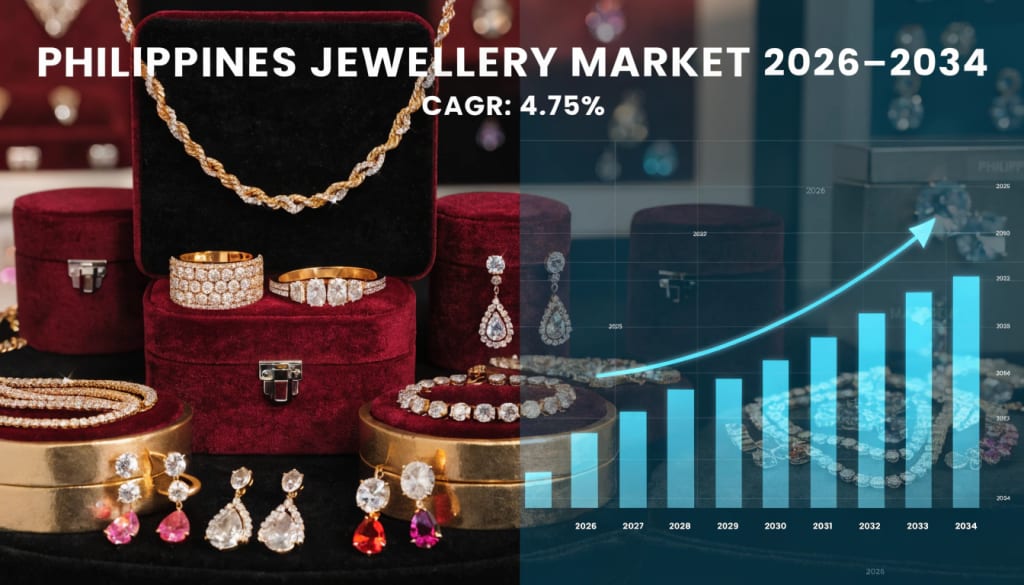
According to IMARC Group, the Philippines jewellery market size reached USD 7,680.2 Million in 2025 and is projected to reach USD 11,813.3 Million by 2034, exhibiting a compound annual growth rate (CAGR) of 4.75% during 2026–2034. Market growth is driven by rising disposable incomes, expanding middle-class populations and growing interest in premium fashion accessories and luxury goods.
Additionally, the rapid expansion of online retail platforms and increasing popularity of personalized jewellery designs are supporting the continued development of the jewellery market in the Philippines.
Key Market Drivers
Rising Disposable Income and Middle-Class Expansion
Economic growth in the Philippines has led to higher household incomes and improved purchasing power. As a result, consumers are increasingly spending on lifestyle products such as jewellery, particularly for special occasions and fashion accessories.
Growing Popularity of Online Jewellery Retail
E-commerce platforms and social media marketplaces are transforming how consumers purchase jewellery. Online platforms allow customers to explore a wide variety of jewellery designs, compare prices and purchase products conveniently from home.
Increasing Demand for Personalized and Designer Jewellery
Consumers are increasingly interested in customized jewellery pieces that reflect their personal style or commemorate special occasions. Personalized designs such as engraved rings, custom necklaces and unique gemstone combinations are becoming increasingly popular.
Cultural Importance of Gold Jewellery
Gold jewellery holds strong cultural significance in the Philippines, especially for weddings, festivals and traditional celebrations. Many consumers also view gold jewellery as a form of long-term investment and wealth preservation.
Request a Sample Report with the Latest 2026 Data & Forecasts
What the Opportunities Are
The Philippines jewellery market presents strong opportunities as fashion trends, digital retail and sustainability initiatives continue to reshape the industry.
Expansion of Online and Direct-to-Consumer Jewellery Brands
Jewellery companies are increasingly launching direct-to-consumer brands that sell products through digital platforms. This strategy allows brands to reach broader audiences while reducing retail distribution costs.
Growth of Lab-Grown and Ethically Sourced Gems
Consumers are becoming more conscious about sustainability and ethical sourcing practices. Demand for lab-grown diamonds and responsibly sourced gemstones is increasing among younger buyers.
Rising Demand for Affordable Fashion Jewellery
Fashion jewellery made from alternative materials such as stainless steel, brass and plated metals is gaining popularity due to its affordability and trendy designs.
Expansion of Luxury Jewellery Segment
Luxury jewellery brands are expanding their presence in the Philippines as affluent consumers seek premium accessories and designer pieces.
Increasing Tourism and Retail Development
Tourism growth and expanding retail infrastructure—including shopping malls and luxury boutiques—are creating new opportunities for jewellery retailers to attract both domestic and international buyers.
Integration of Digital Design and Manufacturing Technologies
Technological advancements such as 3D jewellery design and computer-aided manufacturing are allowing jewellers to create more intricate designs while improving production efficiency.
Recent News and Developments
February 2025: Industry analysts highlighted that Filipino jewellery designers are increasingly combining traditional craftsmanship with modern design techniques, helping local brands compete in the global luxury accessories market.
October 2025: Southeast Asia’s jewellery industry, including the Philippines, reported growing export potential and competitive manufacturing capabilities, supported by skilled artisans and rising international demand for handcrafted jewellery.
December 2025: The Philippines jewellery market reached USD 7,680.2 Million in 2025 and is projected to reach USD 11,813.3 Million by 2034, driven by expanding e-commerce platforms, increasing consumer spending, and demand for ethically sourced gems.
January 2026: Jewellery brands increasingly focused on customized and personalized jewellery designs, as Filipino consumers show growing interest in unique pieces and bespoke luxury accessories.
Why You Should Know About the Philippines Jewellery Market?
The Philippines jewellery market remains a key part of the country’s fashion and luxury retail sectors. Jewellery continues to play an important role in personal style, cultural traditions and investment preferences among Filipino consumers.
With projected growth from USD 7,680.2 Million in 2025 to USD 11,813.3 Million by 2034, the market demonstrates strong long-term expansion supported by rising incomes, digital retail innovation and evolving consumer preferences.
As jewellery brands continue to innovate with sustainable materials, personalized designs and digital retail strategies, the Philippines jewellery industry is expected to remain a dynamic and competitive segment of the country’s fashion and luxury goods market.
About the Creator
Keep reading
More stories from Manisha Dixit and writers in Trader and other communities.
Philippines Vision Care Market 2026: Rising Eye Disorders, Digital Eye Strain & Advanced Eyewear Adoption
Philippines Vision Care Market Overview The Philippines vision care market is an essential segment of the country’s healthcare and optical products industry. Vision care includes products and services such as eyeglasses, contact lenses, intraocular lenses, eye examinations and corrective vision procedures. These solutions help diagnose, manage and correct vision problems while supporting overall eye health. With increasing digital device usage and rising awareness about preventive healthcare, the demand for vision care products and services continues to grow across the Philippines.
By Manisha Dixitabout 7 hours ago in Trader
Australia Power Cables Market Growth, Forecast, and Strategic Insights by 2034
Power cables form the backbone of modern electrical infrastructure, enabling the transmission and distribution of electricity across cities, industries, and homes. As Australia continues to expand its energy infrastructure and transition toward renewable energy sources, the demand for advanced and reliable power cable systems is increasing rapidly.
By Amélie Belleabout 7 hours ago in Trader




Comments
There are no comments for this story
Be the first to respond and start the conversation.