
Orthodontics Market Size and Forecast 2026–2034: Digital Innovation and Clear Aligners Transform Global Dental Care
Rising aesthetic awareness, digital orthodontic technologies, and increasing demand for clear aligners are accelerating growth across the global orthodontics industry.

Orthodontics Market Outlook 2026–2034
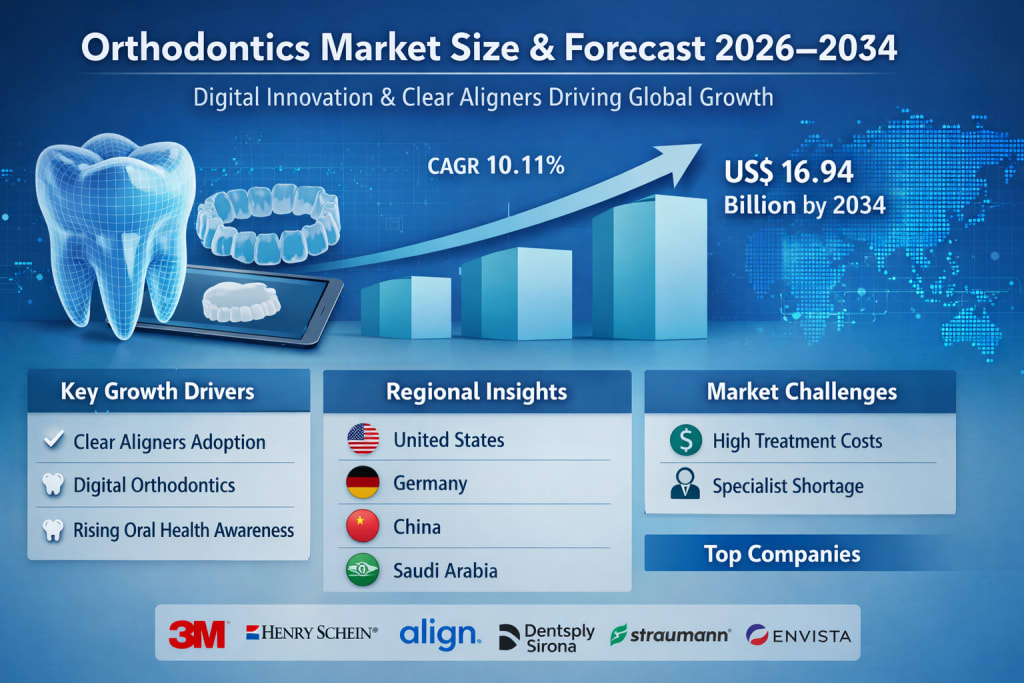
The global orthodontics market is experiencing a major transformation driven by technological innovation, growing aesthetic awareness, and expanding access to dental care worldwide. According to Renub Research, the Orthodontics Market is expected to grow from US$ 7.12 billion in 2025 to US$ 16.94 billion by 2034, registering a CAGR of 10.11% between 2026 and 2034.
This growth trajectory reflects the increasing demand for advanced orthodontic treatments such as clear aligners, digitally guided braces, and AI-powered diagnostic systems. Patients today are seeking solutions that improve both dental function and cosmetic appearance, and orthodontic providers are responding with highly personalized and technology-driven treatments.
In both developed and emerging economies, awareness about oral health and facial aesthetics continues to rise. Meanwhile, digital dentistry—supported by innovations such as 3D imaging, computer-aided design systems, and tele-orthodontics—is reshaping how orthodontic services are delivered. These trends collectively reinforce the momentum of the orthodontics market as it evolves into one of the most dynamic segments of modern dentistry.
Orthodontics Industry Overview
Orthodontics is a specialized field of dentistry focused on diagnosing, preventing, and correcting irregularities in teeth alignment and jaw structure. Orthodontists use appliances such as braces, aligners, retainers, and other corrective devices to gradually reposition teeth and optimize bite alignment.
Proper orthodontic treatment offers numerous benefits beyond cosmetic enhancement. It helps prevent oral health complications such as tooth decay, gum disease, abnormal tooth wear, jaw pain, and speech difficulties. By improving bite alignment and facial symmetry, orthodontic care contributes significantly to long-term dental health and overall well-being.
Modern orthodontic practices are increasingly powered by advanced digital technologies. Digital scanners now replace traditional dental impressions, while artificial intelligence assists in treatment planning and simulation. Three-dimensional imaging and 3D printing technologies allow orthodontists to create customized aligners and braces tailored to each patient’s dental anatomy.
These innovations significantly improve treatment precision, reduce discomfort, and shorten overall treatment timelines. As orthodontic solutions become more comfortable, discreet, and efficient, the market continues to expand across multiple age groups—from children and teenagers to adults seeking aesthetic improvements later in life.
Growth Drivers for the Orthodontics Market
Digital Transformation and Clear Aligner Adoption
One of the most significant drivers of orthodontics market expansion is the rapid adoption of digital workflows and clear aligner treatments. Traditional metal braces are increasingly being complemented—or replaced—by transparent aligners that offer a more discreet and comfortable orthodontic solution.
Digital scanners, AI-powered treatment planning software, and 3D printing technologies allow orthodontists to design customized aligners with remarkable precision. These innovations improve treatment predictability and reduce the need for repeated adjustments, resulting in fewer clinic visits and enhanced patient satisfaction.
Patients, particularly working professionals and adults, are increasingly drawn to orthodontic treatments that integrate seamlessly with their lifestyle. Clear aligners can be removed for eating and cleaning, making them far more convenient than conventional braces.
Industry collaborations are also accelerating technological progress. In November 2023, Vivos Therapeutics, Inc. formed a strategic partnership with Ormco to integrate IVOS CARE technologies with Spark Clear Aligners. This initiative aims to improve treatment efficiency, comfort, and predictability through advanced digital orthodontic solutions.
As clinics continue investing in digital dentistry infrastructure, the adoption of high-precision orthodontic systems is expected to grow rapidly, further fueling global market expansion.
Integrated Oral-Care Ecosystems and Strategic Partnerships
Another important driver of orthodontics market growth is the emergence of integrated oral-care ecosystems. Leading dental technology companies are increasingly collaborating to provide comprehensive dental solutions that combine orthodontic treatment with preventive and cosmetic care.
Patients today prefer streamlined care experiences that integrate orthodontic correction with oral hygiene products, whitening services, and long-term dental maintenance programs. As a result, companies are forming strategic alliances to create interconnected product portfolios and digital platforms.
A notable example occurred in February 2023, when Koninklijke Philips N.V. partnered with Candid Care Co. to expand access to a broad range of oral-care products and orthodontic services. The collaboration aims to deliver more holistic dental care solutions through advanced digital monitoring and treatment systems.
These partnerships not only improve patient outcomes but also enhance workflow efficiency for dental professionals. Integrated systems enable remote monitoring, digital consultations, and streamlined treatment planning—capabilities that are increasingly essential in modern orthodontic practice.
The growth of these collaborative ecosystems is strengthening the orthodontics industry by improving accessibility, convenience, and treatment effectiveness.
Rising Oral Health Awareness and Preventive Dentistry
Global awareness of oral health is increasing rapidly, contributing significantly to orthodontics market growth. Educational campaigns, school dental programs, and improved healthcare access are encouraging individuals to seek orthodontic evaluation at earlier stages.
Early detection of dental misalignment allows orthodontists to implement corrective measures before complications worsen. As a result, more children and adolescents are receiving orthodontic treatment during formative developmental years.
At the same time, adult orthodontics is expanding as people prioritize facial aesthetics and long-term dental health. Advances in discreet orthodontic solutions—such as clear aligners and lingual braces—make treatment more appealing to adults who previously avoided orthodontic care.
Technological innovations are also improving treatment efficiency. Next-generation orthodontic tools now include:
Self-ligating brackets
3D-printed orthodontic appliances
AI-driven treatment simulations
Digital impression systems
Remote monitoring platforms
Tele-orthodontics is another emerging trend that enables patients to consult orthodontists remotely, improving access in rural or underserved areas. Combined with rising incomes in emerging economies, these developments are significantly expanding the global orthodontics market.
Challenges in the Orthodontics Market
High Treatment Costs and Limited Affordability
Despite strong demand, orthodontic treatment remains relatively expensive for many patients. Advanced orthodontic technologies—including digital imaging systems, intraoral scanners, and 3D printers—require substantial investment from dental clinics.
These costs are often reflected in treatment pricing, particularly for premium solutions such as clear aligners and customized braces. For many individuals, orthodontic care represents a major financial commitment.
Insurance coverage for orthodontic treatment also varies widely across countries. While children’s orthodontic care is sometimes partially covered, adult orthodontics is frequently excluded from standard insurance plans. This limitation reduces accessibility for patients seeking aesthetic dental corrections later in life.
Smaller dental clinics may also struggle to adopt advanced technologies due to financial constraints, creating competitive disparities within the industry.
Shortage of Orthodontic Specialists and Regulatory Complexity
Another challenge affecting the orthodontics market is the limited availability of specialized orthodontic professionals. Orthodontic training requires additional years of advanced education beyond general dentistry, resulting in a relatively small global workforce.
In many regions, particularly rural areas and developing countries, there is a shortage of qualified orthodontists. This imbalance can lead to long waiting times and restricted access to specialized dental care.
Additionally, the rapid evolution of digital orthodontic technologies requires ongoing professional training. Dental practitioners must continuously update their skills to effectively use advanced tools such as AI-based treatment planning systems and digital scanning equipment.
Regulatory differences across countries also complicate market expansion. Medical device approvals, licensing requirements, and compliance standards vary significantly between regions, sometimes delaying product launches and limiting international distribution.
These factors present operational challenges for both orthodontic providers and manufacturers.
Regional Market Insights
United States Orthodontics Market
The United States represents one of the most advanced orthodontics markets globally. Strong consumer demand for aesthetic dental treatments and widespread adoption of digital orthodontic technologies continue to drive market growth.
American dental clinics frequently utilize innovations such as AI-guided treatment planning, digital impressions, and 3D printing technologies. Adult orthodontics is particularly prominent in the U.S., as patients increasingly seek discreet treatments that enhance their smile and facial appearance.
The presence of major dental technology companies and research institutions further strengthens innovation and product development within the U.S. orthodontics industry.
Germany Orthodontics Market
Germany’s orthodontics market benefits from a robust healthcare system, high dental care standards, and strong emphasis on preventive dentistry. Orthodontic treatment for children and adolescents is widely supported by health insurance programs.
German orthodontic clinics are early adopters of digital dentistry technologies, including CAD/CAM workflows, robotic wire bending, and 3D imaging systems. Collaboration between universities, dental laboratories, and manufacturers also fosters continuous innovation in orthodontic research and treatment techniques.
China Orthodontics Market
China has emerged as one of the fastest-growing orthodontics markets in the world. Rapid urbanization, rising disposable incomes, and growing interest in aesthetic dentistry are driving demand for orthodontic services across the country.
Clear aligners have become particularly popular among younger consumers who prefer convenient and subtle orthodontic solutions. Meanwhile, local manufacturers are expanding production of affordable aligners and digital orthodontic technologies tailored to domestic demand.
Government initiatives promoting oral health awareness are further supporting the expansion of orthodontic care throughout China.
Saudi Arabia Orthodontics Market
Saudi Arabia is becoming an important orthodontic market in the Middle East due to rising healthcare investments and strong consumer interest in cosmetic dental procedures.
The country’s young population and increasing focus on appearance contribute to growing demand for orthodontic treatments such as clear aligners and advanced braces. Expansion of private dental clinics and modernization of healthcare infrastructure are improving accessibility to orthodontic services.
International dental technology companies are also strengthening their presence in the region through partnerships with local distributors and healthcare providers.
Recent Developments in the Orthodontics Market
The orthodontics industry continues to evolve through strategic collaborations and product innovations:
November 2024: The International Orthodontics Foundation partnered with the ADA Forsyth Institute to advance orthodontic research, technology development, and professional training worldwide.
August 2024: Angelalign Technology Inc. collaborated with The Lubrizol Corporation to develop advanced materials for next-generation clear aligners, improving durability and treatment performance.
January 2024: Henry Schein, Inc. introduced the Carriere Motion Pro bite corrector, designed to treat Class II and Class III malocclusions while reducing treatment duration.
December 2023: BRACES ON DEMAND partnered with EasyRx to streamline orthodontic workflows using integrated digital imaging and 3D-printed custom braces.
Market Segmentation
By Product Type
Instruments
Supplies
By Age Group
Adults
Children
By End Users
Hospitals
Dental Clinics
Others
By Region
North America
United States
Canada
Europe
France
Germany
Italy
Spain
United Kingdom
Belgium
Netherlands
Turkey
Asia-Pacific
China
Japan
India
South Korea
Thailand
Malaysia
Indonesia
Australia
New Zealand
Latin America
Brazil
Mexico
Argentina
Middle East & Africa
Saudi Arabia
UAE
South Africa
Key Companies in the Orthodontics Market
Major companies shaping the global orthodontics industry include:
3M Corporation
Henry Schein, Inc.
Dentsply Sirona
Align Technology, Inc.
Straumann AG
Danaher Corporation
Envista Holdings Corporation
These companies focus on technological innovation, strategic partnerships, and digital dentistry solutions to strengthen their global market presence.
Final Thoughts
The orthodontics market is entering a transformative phase characterized by digital innovation, increasing aesthetic awareness, and expanding access to dental care. The growing popularity of clear aligners, AI-driven treatment planning, and 3D printing technologies is reshaping orthodontic practice worldwide.
With strong growth projected through 2034, orthodontic solutions are becoming more precise, comfortable, and accessible to a broader patient population. As dental technology continues to advance and global oral health awareness rises, the orthodontics market is expected to remain a key driver of innovation within the broader dental healthcare industry.
For both healthcare providers and patients, the future of orthodontics promises faster treatments, personalized care, and improved dental outcomes across the globe.
About the Creator
Stanislav Kondrashov on the U.S. Dollar’s Rebound and the New Balance of Global Safe-Haven Assets
Periods of global uncertainty often reshape the behaviour of currencies and commodities. In recent weeks, the U.S. dollar has shown renewed strength, particularly against currencies such as the euro and the Swiss franc. This shift has drawn attention because it suggests that the dollar may once again be acting as a stabilising force during a time of international tension and economic caution.
By Stanislav Kondrashov4 days ago in Trader
Australia Testing & Commissioning Market 2026: Infrastructure Expansion, Renewable Energy Projects & Regulatory Compliance
Australia Testing & Commissioning Market Overview The Australia testing and commissioning market plays a crucial role in ensuring that infrastructure, industrial systems and energy projects operate safely, efficiently and in compliance with regulatory standards before becoming fully operational. Testing and commissioning services involve verifying the performance of electrical, mechanical and control systems across sectors such as construction, transportation, power generation and utilities.
By Amyra Singh2 days ago in Trader




Comments
There are no comments for this story
Be the first to respond and start the conversation.