
Organic Food Market Size & Forecast 2026–2034
Global Organic Food Market to Reach US$ 586.33 Billion by 2034 as Demand for Healthy and Sustainable Food Surges

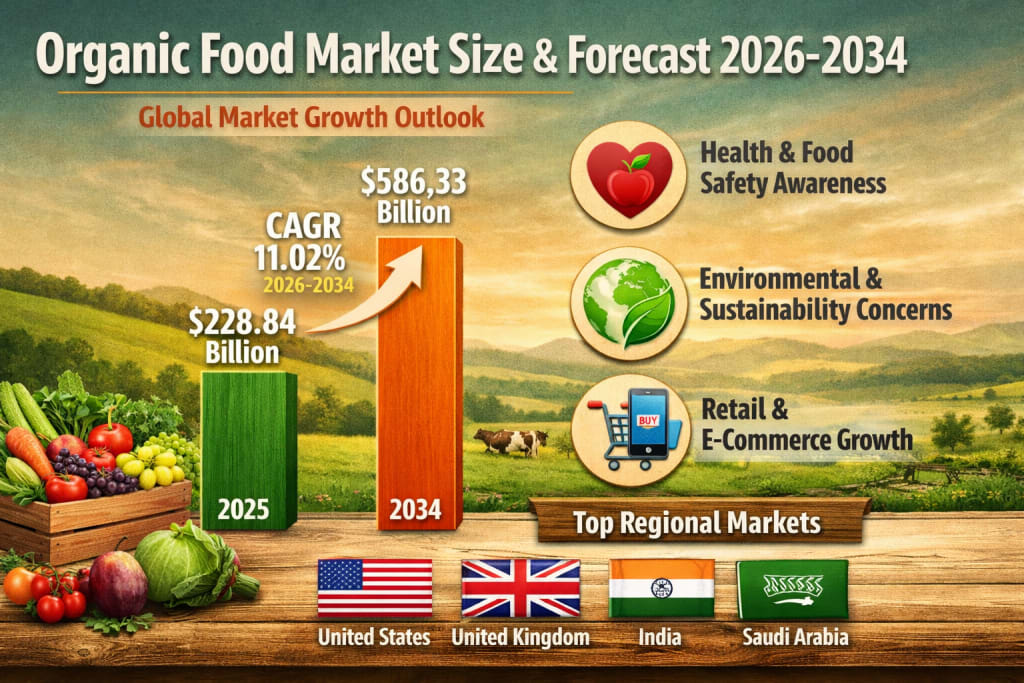
The global organic food market is experiencing remarkable growth as consumers increasingly prioritize health, environmental sustainability, and chemical-free food choices. According to market analysis by Renub Research, the organic food market is projected to grow from US$ 228.84 Billion in 2025 to US$ 586.33 Billion by 2034, expanding at a Compound Annual Growth Rate (CAGR) of 11.02% between 2026 and 2034.
This strong growth trajectory reflects the rising awareness among consumers regarding the health benefits of organic food and the environmental advantages of sustainable farming practices. As modern consumers become more mindful about food safety, nutrition, and ecological impact, organic food products are rapidly transitioning from niche offerings to mainstream dietary staples worldwide.
Organic Food Market Outlook
Organic food refers to agricultural products produced through natural farming practices without the use of synthetic fertilizers, pesticides, genetically modified organisms (GMOs), antibiotics, or artificial additives. Instead, organic farming relies on sustainable methods such as crop rotation, natural fertilizers like compost and manure, and biological pest control.
These practices not only enhance soil fertility but also preserve biodiversity and maintain ecological balance. Organic foods are considered healthier because they avoid exposure to harmful chemicals commonly used in conventional agriculture.
Over the past decade, organic food has gained tremendous popularity worldwide. Consumers increasingly associate organic products with better nutrition, higher food safety standards, and environmentally responsible production methods.
Developed regions such as North America and Europe currently dominate global organic food consumption due to strong consumer awareness and well-established distribution networks. However, emerging markets in Asia-Pacific and Latin America are witnessing rapid growth as rising incomes and urban lifestyles encourage healthier eating habits.
Growth Drivers of the Organic Food Market
Rising Consumer Awareness About Health and Food Safety
One of the most significant drivers fueling the expansion of the organic food market is growing consumer awareness regarding health and food safety.
In recent years, many consumers have become concerned about the potential health risks associated with conventional farming practices, including exposure to synthetic pesticides, chemical fertilizers, and genetically modified crops. As a result, organic food is increasingly perceived as a safer and more natural alternative.
Organic foods are often associated with higher nutritional value, improved taste, and fewer harmful residues. This perception has contributed to a growing shift toward healthier dietary choices.
Lifestyle-related health conditions such as obesity, diabetes, cardiovascular diseases, and metabolic disorders have also increased worldwide. In response, many consumers are adopting preventive health strategies by incorporating organic food products into their diets.
Parents are particularly inclined to choose organic foods for their children, believing they offer safer nutrition free from harmful chemicals.
For example, in January 2023, a report by the health insurance provider Bupa Group revealed that more than 78% of adults in the United Kingdom expressed health concerns, with weight management and mental well-being ranking among the top priorities. This growing awareness is influencing consumer food choices and supporting the expansion of organic food markets globally.
Increasing Environmental and Sustainability Concerns
Environmental sustainability has become a central factor influencing food purchasing decisions. Organic farming plays an important role in promoting sustainable agricultural practices by reducing pollution, preserving soil health, and supporting biodiversity.
Unlike conventional agriculture, organic farming avoids synthetic inputs and instead relies on natural processes to maintain soil fertility and control pests. These practices help reduce soil degradation, water contamination, and greenhouse gas emissions associated with chemical-intensive farming.
Consumers are becoming more conscious of environmental challenges such as climate change, soil depletion, and water scarcity, prompting them to support sustainable agricultural systems.
According to a 2023 report by the Soil Association Certification, the organic market in the United Kingdom continued to grow despite economic pressures. Organic sales increased by 1.6% in 2022, while the foodservice segment experienced an impressive 152% growth in sales, highlighting the expanding demand for sustainable food options.
Governments and environmental organizations are also encouraging organic agriculture through certification programs, incentives, and educational initiatives aimed at promoting eco-friendly farming methods.
Food manufacturers and retailers are responding to this trend by introducing a wider range of organic products to meet the rising demand for sustainable food options.
Expanding Availability Through Retail and E-Commerce Channels
Another key factor driving the growth of the organic food market is the expanding availability of organic products through multiple retail channels.
In the past, organic food products were primarily sold in specialized health stores or local farmers' markets. Today, they are widely available in supermarkets, hypermarkets, convenience stores, and online platforms, making them more accessible to a broader consumer base.
Major retail chains have significantly increased their organic product offerings to meet growing demand. Improved supply chains and global distribution networks have also made organic products more widely available across developed and emerging economies.
The rise of e-commerce platforms has further accelerated organic food consumption by enabling consumers to purchase organic products conveniently from home. Online marketplaces allow consumers to compare prices, read product reviews, and access a wider variety of certified organic items.
Companies are also expanding their organic product portfolios globally. For instance, in July 2025, Indian FMCG company LT Foods announced the expansion of its organic business arm Nature Bio Foods Limited into the Business-to-Consumer (B2C) segment in Europe, strengthening its presence in the global organic food retail market.
This growing retail presence, combined with effective marketing strategies and increased consumer awareness, is significantly contributing to the expansion of the organic food industry.
Challenges Facing the Organic Food Market
Higher Cost Compared to Conventional Food Products
Despite its growing popularity, the organic food market still faces several challenges. One of the most significant barriers is the higher cost associated with organic food production.
Organic farming typically requires more labor, specialized practices, and natural fertilizers, which increase production costs. Additionally, organic farms often produce lower yields compared to conventional farming systems.
These factors contribute to higher retail prices for organic food products. As a result, organic foods may be less accessible to price-sensitive consumers, particularly in developing countries.
Although high-income consumers and health-conscious individuals are willing to pay premium prices for organic products, affordability remains a challenge for broader market adoption.
Improving organic farming efficiency, supporting organic farmers, and expanding large-scale organic production could help reduce costs and improve accessibility.
Limited Supply and Complex Certification Processes
Another major challenge facing the organic food market is limited supply combined with complex certification requirements.
Organic farming must meet strict standards and certification processes to ensure compliance with organic production guidelines. Farmers are often required to follow organic practices for several years before their products can receive official certification.
Additionally, organic farming is more vulnerable to pests, diseases, and climate-related risks, which may affect crop yields and supply stability.
Limited organic farmland availability and logistical challenges related to storage and transportation can also restrict market supply.
However, governments, agricultural institutions, and environmental organizations are actively promoting organic farming through training programs, financial incentives, and certification support to encourage farmers to adopt sustainable agricultural practices.
Organic Fruits and Vegetables Market
Organic fruits and vegetables represent the largest segment within the global organic food market.
Consumers increasingly prefer fresh produce grown without chemical pesticides or synthetic fertilizers. Organic fruits and vegetables are widely perceived as healthier and more nutritious alternatives to conventionally grown produce.
The demand for chemical-free fresh produce is particularly strong among health-conscious consumers, families, and individuals focused on preventive healthcare.
Organic fruits and vegetables are now widely available in supermarkets, farmers’ markets, and online retail platforms. Governments are also supporting organic farming expansion, leading to increased organic farmland across several regions.
This segment continues to grow rapidly as consumer interest in clean-label and natural foods increases worldwide.
Organic Meat Market
The organic meat segment is also witnessing steady growth due to increasing awareness about food quality, animal welfare, and health benefits.
Organic meat comes from livestock raised without antibiotics, synthetic hormones, or genetically modified feed. Animals are typically raised in natural environments and provided with organic feed and humane living conditions.
Growing concerns about antibiotic resistance and chemical contamination in conventional livestock farming are encouraging consumers to shift toward organic meat products.
The demand for organic meat is particularly strong in developed countries where consumers are willing to pay premium prices for ethically produced food products.
Retailers and foodservice companies are expanding their organic meat offerings to meet rising consumer demand.
Organic Beverages Market
Organic beverages have emerged as one of the fastest-growing segments in the organic food industry.
This category includes organic juices, tea, coffee, plant-based drinks, dairy beverages, and functional drinks made without synthetic chemicals or artificial additives.
Consumers increasingly prefer organic beverages because they align with health-focused lifestyles and clean-label consumption trends.
The rising popularity of plant-based diets and functional drinks has also contributed to the growth of organic beverage consumption worldwide.
Manufacturers are continuously launching innovative organic beverages, further expanding product variety and attracting new consumers.
Distribution Channels Driving Organic Food Sales
Convenience Stores
Convenience stores have become an important retail channel for organic food products. Their accessible locations and extended operating hours make them attractive for quick purchases.
These stores increasingly offer organic snacks, beverages, packaged foods, and fresh produce to meet the growing demand for convenient yet healthy food options.
Urbanization and busy lifestyles are encouraging consumers to seek ready-to-eat organic foods, prompting convenience stores to expand their organic product offerings.
Online Retail Stores
Online retail platforms are among the fastest-growing distribution channels for organic food products.
The growth of e-commerce has transformed how consumers purchase food, providing access to a wide range of organic products with detailed product information and customer reviews.
Online shopping also offers convenience through home delivery services and competitive pricing.
Digital marketing campaigns and health awareness initiatives are further encouraging consumers to explore organic food options through online platforms.
Regional Market Insights
United States
The United States remains one of the largest and most developed markets for organic food globally. High consumer awareness regarding health, sustainability, and food safety continues to drive demand.
In April 2025, Walmart partnered with actor Glen Powell’s brand Smash Kitchen to introduce a range of organic condiments free from high-fructose corn syrup and artificial additives.
Such collaborations highlight the growing commercial interest in organic food innovation.
United Kingdom
The organic food market in the United Kingdom is expanding steadily as consumers increasingly seek environmentally friendly and healthy food options.
Organic fruits, vegetables, dairy products, and packaged foods are gaining popularity among consumers concerned about chemical exposure and sustainability.
In July 2024, Kallo, a snack brand certified as a B Corp by Ecotone UK, introduced a new range of organic veggie dips made with natural ingredients.
India
India's organic food market is growing rapidly due to rising health awareness, increasing disposable incomes, and government initiatives supporting organic agriculture.
Urban consumers are increasingly choosing organic fruits, vegetables, grains, and packaged foods due to concerns about pesticide exposure and food safety.
The expansion of specialty organic stores and e-commerce platforms has improved product availability across the country.
In March 2024, Jivamrit Organic launched a diverse range of organic products aimed at promoting healthier culinary choices among Indian consumers.
Saudi Arabia
Saudi Arabia’s organic food market is also expanding as consumers focus on healthier lifestyles and premium food products.
Government initiatives promoting sustainable agriculture and food security are supporting organic farming development.
In 2024, the Royal Commission for AlUla launched seasonal events encouraging sustainable consumption of organic fruits such as mangoes, grapes, figs, and citrus fruits to support local farmers and organic agriculture.
Final Thoughts
The global organic food market is entering a transformative phase driven by health consciousness, environmental sustainability, and evolving consumer lifestyles.
With the market projected to reach US$ 586.33 Billion by 2034, organic food is no longer considered a niche segment but a rapidly expanding pillar of the global food industry.
While challenges such as higher prices and certification complexities remain, technological advancements, improved farming practices, and supportive government policies are expected to strengthen the organic ecosystem.
As consumers continue to prioritize healthier diets, sustainable agriculture, and ethical food production, the organic food market is poised to play a critical role in shaping the future of global food consumption.
About the Creator
United States Liquid Biopsy Market Size & Forecast 2025–2034
The United States Liquid Biopsy Market is expected to witness remarkable growth in the coming years, driven by the increasing demand for non-invasive cancer diagnostic technologies. Liquid biopsy is rapidly emerging as a revolutionary diagnostic tool because it enables doctors to detect cancer through simple blood tests instead of traditional surgical procedures.
By Sakshi Sharmaabout 5 hours ago in Trader
Australia Drones Market Growth, Forecast, and Strategic Insights 2034
Drones, also known as unmanned aerial vehicles (UAVs), are rapidly transforming industries across Australia. Once primarily used for military applications, drones are now widely deployed in sectors such as agriculture, construction, logistics, mining, and emergency response. Their ability to capture real-time aerial data, monitor large areas efficiently, and perform tasks in hazardous environments has made them a valuable technological tool for businesses and government agencies alike.
By Rashi Sharmaa day ago in Trader




Comments
There are no comments for this story
Be the first to respond and start the conversation.