
Netherlands Steel Tubes Market 2026: Infrastructure Demand, Industrial Manufacturing & Energy Applications
How construction growth, energy infrastructure and industrial engineering are driving steel tube demand in the Netherlands

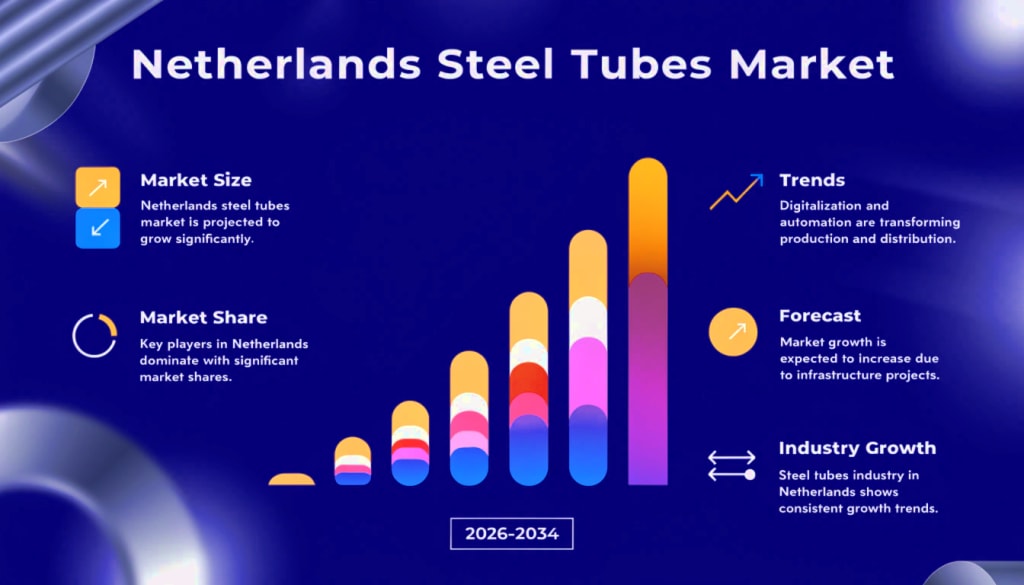
The Netherlands steel tubes market is a vital component of the country’s advanced industrial and construction ecosystem. Steel tubes are widely used across multiple industries including construction, oil and gas infrastructure, manufacturing and automotive engineering. These cylindrical steel products play a critical role in transporting fluids, supporting structural frameworks and manufacturing mechanical components.
According to market estimates, the Netherlands steel tubes market size reached USD 1.00 Billion in 2025 and is projected to reach USD 1.27 Billion by 2034, exhibiting a CAGR of 2.41% during 2026–2034. The steady growth reflects ongoing infrastructure development, industrial expansion and technological advancements in steel manufacturing processes.
Steel tubes are used extensively in modern infrastructure because of their strength, durability and resistance to high pressure. They are manufactured using either seamless or welded production methods depending on their intended applications. These materials are essential for industries that require reliable structural components or pipelines for transporting liquids and gases.
The Netherlands has a well-developed industrial sector that relies heavily on steel products for manufacturing and infrastructure development. The broader steel industry in the country reached USD 10.24 Billion in 2025 and is expected to grow to USD 13.61 Billion by 2034, driven by demand from construction, automotive and manufacturing sectors. (IMARC Group)
What’s Driving Market Growth?
Development of Infrastructure and Expansion of Construction
A major factor propelling the steel tubes market in the Netherlands is the continuous construction and infrastructure advancement. Steel pipes are commonly utilized in construction frameworks, scaffolding structures, and structural supports because of their strength and longevity.
Urban development initiatives in significant Dutch cities demand contemporary building materials capable of enduring environmental pressures and ensuring lasting structural stability. Steel tubes provide outstanding load-bearing strength and resistance to corrosion, making them suitable for construction uses.
Moreover, improvements to infrastructure—such as bridges, transit systems, and public utilities—persist in driving the need for steel tubes in various engineering endeavors.
Energy Systems and Pipeline Uses
Steel tubes are essential in energy infrastructure, especially in pipelines for moving oil, gas, and industrial fluids. High-pressure pipelines need robust steel pipes that can endure severe operational circumstances.
Worldwide, the steel tube sector is significantly impacted by advances in the energy industry since pipelines depend on steel tubes for the drilling, transport, and distribution of oil and gas resources. In Europe, the modernization of energy infrastructure and cross-border pipeline networks persist in generating a need for specialized steel tubes.
Industrial Manufacturing and Engineering
The Netherlands has a strong industrial manufacturing sector that relies heavily on steel components. Steel tubes are used in mechanical engineering, machinery manufacturing and industrial equipment production.
Manufacturers use steel tubes in applications such as pressure vessels, heat exchangers and mechanical systems. Their versatility makes them essential materials in sectors such as automotive manufacturing, shipbuilding and heavy engineering.
As industrial automation and advanced manufacturing technologies expand, demand for high-quality steel components is expected to grow steadily.
Technological Advancements in Steel Production
Innovation in steel manufacturing technologies is improving the quality, efficiency and sustainability of steel tubes. Modern production methods allow manufacturers to produce stronger and more lightweight steel tubes while reducing environmental impact.
Market Segmentation & Key Insights
By Product Type
The Netherlands steel tubes market includes various types of steel tubes depending on manufacturing processes:
• Seamless steel tubes
• Welded steel tubes
• Electric resistance welded (ERW) tubes
• Spiral welded tubes
Seamless tubes are typically used in high-pressure environments such as oil and gas pipelines, while welded tubes are commonly used in construction and structural applications.
By Material Type
Steel tubes are produced using different material compositions:
• Carbon steel tubes
• Stainless steel tubes
• Alloy steel tubes
Carbon steel tubes dominate the market because they offer strong mechanical properties at relatively lower costs.
By Application
Steel tubes are widely used across several industries, including:
• Construction and infrastructure
• Oil and gas pipelines
• Automotive manufacturing
• Industrial machinery and engineering
• Water distribution systems
The construction and infrastructure sector remains a major consumer due to the extensive use of structural steel components.
By Distribution Channel
Steel tubes are supplied through multiple sales channels such as:
• Direct industrial procurement
• Construction material suppliers
• Steel distributors and wholesalers
• Export trading networks
Large infrastructure projects often procure steel tubes directly from manufacturers to meet project specifications.
What the Opportunities Are?
Sustainable Steel Production
Environmental sustainability is becoming increasingly important in the European steel industry. Companies are investing in low-carbon steel production methods and recycling technologies to reduce environmental impact.
For example, initiatives such as hydrogen-based steel production are being explored to significantly reduce carbon emissions in steel manufacturing.
These sustainability initiatives present opportunities for companies that adopt eco-friendly production technologies.
Renewable Energy Infrastructure
Renewable energy projects such as offshore wind farms require extensive steel infrastructure including support structures and pipeline systems. Steel tubes are essential components in these installations.
As Europe accelerates its transition toward renewable energy, demand for steel components used in wind turbines, solar infrastructure and energy storage systems is expected to increase.
Advanced Engineering Applications
High-precision steel tubes are increasingly used in specialized engineering applications such as aerospace components, high-performance automotive systems and industrial robotics.
Manufacturers that develop high-quality specialized steel tubes can tap into growing demand from advanced technology industries.
Expansion of Circular Economy Practices
The Netherlands has strong environmental policies promoting circular economy principles. Recycling scrap steel and reusing materials in steel production can help reduce waste and improve sustainability.
Recent News and Developments in Netherlands Steel Tubes Market
May 2025: Industrial manufacturers in the Netherlands increased investments in advanced steel production technologies aimed at improving efficiency and reducing environmental impact.
2025: Infrastructure and construction projects across the Netherlands continued to drive demand for structural steel products including pipes and tubes.
2025: European steel producers accelerated sustainability initiatives, including investments in electric arc furnace technologies and hydrogen-based steel production.
Why Should You Know About Netherlands Steel Tubes Market?
The Netherlands steel tubes market highlights the importance of industrial materials in supporting infrastructure development and economic growth. Steel tubes are fundamental components in construction, energy transportation and manufacturing systems.
For investors and industrial stakeholders, the market offers stable long-term growth supported by infrastructure investment, industrial modernization and sustainable manufacturing trends.
For engineering companies and steel manufacturers, understanding demand patterns and technological innovations in steel production can help maintain competitiveness in the evolving European industrial landscape.
Ultimately, the Netherlands steel tubes market demonstrates how traditional industrial materials continue to play a crucial role in modern economies. As infrastructure projects expand and industries adopt advanced manufacturing technologies, steel tubes will remain essential materials supporting engineering innovation and economic development.
About the Creator
Thomas
Market Research Analyst | Industry Trends & Forecasting | Turning market data into clear, actionable business insights across global sectors.
Mexico E-Commerce Platform Market Growth, Trends, and Future Opportunities 2026-2034
Mexico E-Commerce Platform Market Growth, Trends, and Future Opportunities The Mexico e-commerce platform market is undergoing a major transformation as digital technologies reshape how consumers shop and businesses sell online. Rapid internet penetration, widespread smartphone adoption, and improving logistics infrastructure are accelerating the shift toward digital commerce across the country. As online shopping becomes increasingly convenient and accessible, e-commerce platforms are emerging as a critical component of Mexico’s retail ecosystem.
By Kim Soo hyun7 days ago in Trader
Becca
"Everything is so... flat." Denille said stupidly as she looked around her new neighborhood. She looked around at the muted desert where even the smallest sign of life seemed to have given up. The plant life was shrubs that were half cooked by the heat and where there should have been a lawn, a mess of white rocks laid glistening in the sun. Even the sky looked stretched thin, like the sun had ironed it smooth. She’d moved from Riverside, where at least there were hills, but here in Barstow, everything felt baked and brittle.
By Sara Wilson7 days ago in Fiction




Comments
There are no comments for this story
Be the first to respond and start the conversation.