
Hormone Replacement Therapy Market Size & Forecast 2026–2033
Rising Aging Population and Advancements in Hormone Therapies Driving Global Market Growth

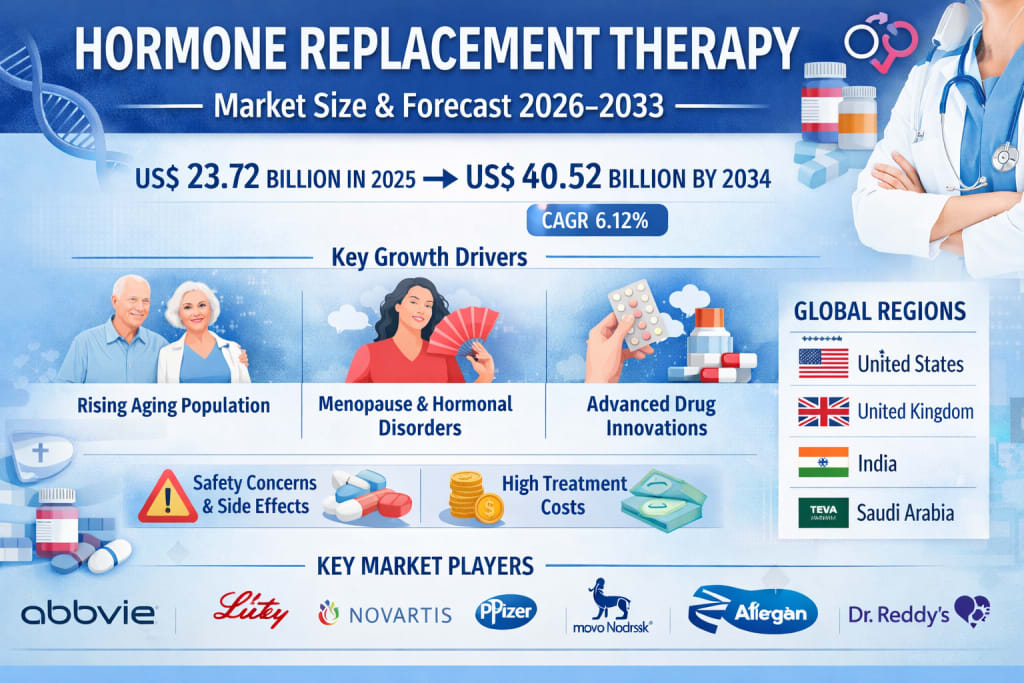
The global Hormone Replacement Therapy (HRT) market is witnessing steady expansion as healthcare systems increasingly focus on improving quality of life for aging populations. According to Renub Research, the Hormone Replacement Therapy market is projected to grow from US$ 23.72 Billion in 2025 to US$ 40.52 Billion by 2034, expanding at a compound annual growth rate (CAGR) of 6.12% between 2026 and 2034.
This growth reflects several global trends, including the rising aging population, increasing awareness of hormonal health, and the development of advanced hormone-based treatment solutions. With millions of individuals experiencing menopause, thyroid disorders, and hormonal imbalances, demand for effective and personalized hormone therapies continues to rise.
Hormone Replacement Therapy has evolved from traditional hormone supplementation into a sophisticated healthcare approach designed to improve long-term wellbeing. As healthcare systems worldwide focus more on preventive medicine and personalized treatment plans, the HRT market is becoming a key segment within the broader pharmaceutical and healthcare industry.
Understanding Hormone Replacement Therapy
Hormone Replacement Therapy is a medical treatment used to replenish hormones when the body produces insufficient amounts. This condition commonly occurs due to aging, menopause, endocrine disorders, or medical treatments affecting hormone production.
HRT is most widely associated with menopause treatment in women. During menopause, levels of estrogen and progesterone decline significantly, often leading to symptoms such as hot flashes, night sweats, mood changes, sleep disturbances, and decreased bone density. Hormone therapy helps restore hormonal balance and alleviate these symptoms.
Beyond menopause management, hormone replacement therapy is also used in several other medical conditions. Men experiencing low testosterone levels may require hormone therapy to restore energy levels, muscle mass, and overall health. Similarly, individuals with thyroid disorders may rely on hormone replacement to regulate metabolism and bodily functions.
HRT can be delivered through multiple methods depending on patient preference and medical requirements. These include oral tablets, transdermal patches, gels, creams, injections, and implants. The availability of multiple treatment options has made hormone therapy more accessible and adaptable to individual patient needs.
Key Growth Drivers of the Hormone Replacement Therapy Market
Rising Aging Population and Increasing Menopause Cases
One of the most significant drivers of the hormone replacement therapy market is the rapidly growing aging population. As global life expectancy increases, more individuals are experiencing age-related hormonal changes that require medical intervention.
According to the United Nations, women aged 50 years and older represented approximately 22% of the global female population in 2011. Within a decade, this share increased to 26%, reflecting the growing number of women entering menopause.
In 2020, the total number of women aged 50 years and above worldwide reached 985 million. This figure is expected to increase dramatically to 1.65 billion by 2050, highlighting the increasing demand for healthcare solutions addressing menopausal health.
Menopause typically occurs between the ages of 45 and 55. During this stage, estrogen and progesterone levels decline significantly, triggering a range of physical and emotional symptoms. Hormone replacement therapy helps alleviate these symptoms and significantly improves quality of life.
Additionally, male aging-related hormonal changes are also contributing to market growth. Older men experiencing declining testosterone levels often seek hormone therapy to restore vitality and maintain overall health.
As longevity continues to increase globally, the need for effective hormone management solutions will remain a major driver of the HRT market.
Increasing Awareness and Acceptance of Hormonal Health Treatments
Public awareness regarding hormonal health has improved significantly in recent years. Educational campaigns, medical research, and healthcare advocacy groups have helped normalize conversations around menopause, thyroid disorders, and testosterone deficiency.
Patients are increasingly recognizing that hormonal imbalances can affect multiple aspects of health, including sleep quality, mood stability, bone strength, and cardiovascular health. As a result, more individuals are seeking professional medical advice to address these concerns.
Healthcare professionals are also becoming more proactive in recommending hormone replacement therapy for eligible patients. Preventive treatment strategies are helping reduce long-term health risks such as osteoporosis, cardiovascular disease, and metabolic disorders associated with hormone deficiencies.
Global awareness initiatives have further accelerated market growth. For example, European Hormone Day, launched in May 2022 by the European Society of Endocrinology and the ESE Foundation, aims to highlight the importance of hormone health.
Similarly, professional networks such as the European Women in Endocrinology (EUWIN) initiative promote research, education, and support in hormone-related healthcare.
These awareness efforts are helping reduce social stigma around hormonal treatments and encouraging patients to explore available medical options.
Advancements in Drug Formulations and Personalized Therapies
Technological innovation is playing a major role in transforming the hormone replacement therapy market. Pharmaceutical companies are investing heavily in research and development to create safer, more effective hormone therapy solutions.
Traditional oral hormone therapies often carried concerns related to side effects and inconsistent hormone levels. However, modern delivery systems such as transdermal patches, topical gels, and slow-release implants provide more controlled hormone release and improved patient safety.
Personalized medicine is another emerging trend shaping the HRT market. Healthcare providers can now tailor hormone therapy based on individual patient characteristics such as age, hormone levels, genetic factors, and overall health conditions.
Bioidentical hormones—designed to closely mimic naturally occurring hormones in the human body—are also gaining popularity due to their improved compatibility and reduced risk of adverse effects.
In October 2025, Hims & Hers Health, Inc. expanded its healthcare platform by introducing specialized treatment plans for women experiencing perimenopause and menopause. The initiative provides personalized hormone therapy options based on individual health profiles and treatment preferences.
These innovations are improving patient confidence in hormone therapies and contributing significantly to market growth.
Challenges Facing the Hormone Replacement Therapy Market
Safety Concerns and Potential Side Effects
Despite advancements in treatment technology, safety concerns remain a major challenge for the hormone replacement therapy market.
Some clinical studies suggest that long-term hormone therapy may increase the risk of certain health conditions, including breast cancer, blood clots, stroke, and cardiovascular complications. These findings have made both patients and healthcare providers more cautious about prescribing hormone treatments.
Additionally, individual reactions to hormone therapy can vary widely. Some patients may experience side effects such as headaches, nausea, mood swings, or weight gain.
As a result, healthcare professionals often conduct thorough medical evaluations before recommending hormone replacement therapy. While these precautions improve patient safety, they may also slow the overall adoption of HRT treatments.
Ongoing medical research aims to develop safer formulations with lower risks, but patient concerns continue to influence treatment decisions.
High Treatment Costs and Limited Accessibility
The cost of hormone replacement therapy can also limit market growth, particularly in developing regions where healthcare infrastructure remains limited.
Advanced hormone therapies, personalized treatment programs, and long-term therapy requirements can create financial challenges for patients. In countries with limited insurance coverage, treatment costs may become a significant barrier.
Healthcare access disparities also affect the availability of hormone therapies in certain regions. Rural populations may face challenges accessing specialized endocrinologists or hormone treatment clinics.
Although generic hormone medications offer more affordable alternatives, gaps in awareness and healthcare accessibility continue to restrict widespread adoption in low- and middle-income countries.
Addressing these challenges through improved healthcare infrastructure, government support programs, and affordable treatment options will be essential for future market expansion.
Regional Insights: Global Expansion of Hormone Replacement Therapy
United States
The United States remains one of the largest markets for hormone replacement therapy due to advanced healthcare infrastructure and high patient awareness. Menopause management, thyroid disorders, and testosterone deficiency treatments are widely available through specialized clinics and healthcare providers.
In February 2026, the U.S. Food and Drug Administration (FDA) announced label updates for several hormone replacement therapy products to clarify risk considerations and improve patient safety information.
United Kingdom
The United Kingdom is also experiencing strong demand for hormone therapies. Public healthcare support and growing awareness campaigns about menopause management are encouraging women to seek medical treatment.
In August 2025, Gedeon Richter UK introduced Nalvee, a dydrogesterone-only hormone therapy tablet, providing healthcare professionals with an additional treatment option for women receiving estrogen therapy.
India
India’s hormone replacement therapy market is expanding due to improving healthcare infrastructure and increasing awareness about hormonal disorders. Urbanization, better diagnostic capabilities, and the growth of hospitals and pharmacies are contributing to greater treatment accessibility.
In May 2024, Jagsonpal Pharmaceuticals launched MemUp, India’s first hormone replacement therapy combining bioidentical estradiol and progesterone in a single oral capsule.
Saudi Arabia
Saudi Arabia is witnessing increasing demand for hormone therapy due to growing healthcare investments and improved access to specialized medical services.
In January 2026, the Medi-Gyn Hormone Health Center announced the first Menopause Awareness and Education Event in the country, highlighting the increasing focus on women’s health and preventive medicine.
Competitive Landscape
The hormone replacement therapy market is highly competitive, with several global pharmaceutical companies actively developing innovative treatment solutions.
Key market players include:
Abbott Laboratories
Bayer AG
Eli Lilly & Company
Novartis AG
Novo Nordisk A/S
Pfizer Inc.
AbbVie Inc. (Allergan plc)
Teva Pharmaceutical Industries Ltd
Dr. Reddy’s Laboratories Ltd
These companies are investing in research and development, expanding product portfolios, and forming strategic partnerships to strengthen their global market presence.
Final Thoughts
The global Hormone Replacement Therapy market is entering a new phase of growth driven by demographic changes, technological advancements, and increased awareness of hormonal health.
With the aging population expanding worldwide, the demand for effective hormone treatments will continue to grow in the coming decades. Innovations in personalized medicine, safer drug formulations, and improved healthcare accessibility are expected to shape the future of the HRT industry.
While safety concerns and treatment costs remain challenges, ongoing research and healthcare investments are helping address these barriers. As societies place greater emphasis on healthy aging and preventive healthcare, hormone replacement therapy will play an increasingly important role in improving patient wellbeing and quality of life.
For healthcare providers, pharmaceutical companies, and policymakers, the evolving hormone therapy landscape offers both opportunities and responsibilities in shaping the future of global endocrine healthcare.
About the Creator
Keep reading
More stories from shibansh kumar and writers in Trader and other communities.
United States Processed Meat Market Size and Forecast 2025–2033
United States Processed Meat Market Size and Forecast 2025–2033 The United States processed meat market is projected to reach US$ 168.5 billion by 2033, rising from US$ 117.9 billion in 2024, expanding at a CAGR of 4.05% during 2025–2033. The market continues to grow steadily as consumers increasingly seek convenient, flavorful, and protein-rich food options that fit modern lifestyles.
By shibansh kumara day ago in Trader



Comments
There are no comments for this story
Be the first to respond and start the conversation.