
Female Infertility Market: Advancements, Trends, and Future Growth Opportunities
The Female Infertility Market is gaining significant attention as the global prevalence of infertility continues to rise due to lifestyle changes, delayed pregnancies, and increasing health complications. Advances in reproductive technologies, growing awareness about fertility treatments, and improved healthcare infrastructure are driving market expansion. Fertility clinics, pharmaceutical innovations, and assisted reproductive technologies are playing a key role in helping millions of couples address infertility challenges worldwide.


Female Infertility Market
The female infertility market has experienced steady growth in recent years as infertility becomes a growing health concern across many regions of the world. Infertility affects millions of women globally and is defined as the inability to conceive after a year of regular unprotected intercourse. A combination of biological, lifestyle, and environmental factors contributes to this condition, creating a strong demand for advanced diagnostic methods and effective treatment solutions.
With increasing awareness about reproductive health and fertility treatments, the healthcare industry has invested heavily in research, technology, and specialized fertility clinics. These developments are improving treatment success rates and making fertility care more accessible to patients.
Get Insights on the Global Female Infertility Market Size— Access the Sample Report
Growing Prevalence of Infertility
One of the major factors driving the growth of the female infertility market is the rising prevalence of infertility among women. Modern lifestyles, increasing stress levels, poor dietary habits, and environmental pollution are contributing to reproductive health issues. In addition, many women are choosing to delay pregnancy due to career priorities, financial planning, or personal reasons. However, fertility naturally declines with age, particularly after the mid-30s, which increases the likelihood of infertility challenges.
Medical conditions such as polycystic ovary syndrome (PCOS), endometriosis, hormonal imbalances, and uterine abnormalities also play a significant role in female infertility. As the number of diagnosed cases continues to rise, the demand for fertility treatments and specialized reproductive healthcare services is expanding worldwide.
Technological Advancements in Fertility Treatments
Technological innovation is transforming the female infertility market by improving diagnosis and treatment outcomes. Assisted reproductive technologies (ART) have become one of the most widely used solutions for infertility treatment. Procedures such as in vitro fertilization (IVF), intrauterine insemination (IUI), and egg freezing provide couples with new opportunities to conceive.
Among these, IVF remains one of the most advanced and widely adopted fertility treatments. Continuous improvements in laboratory techniques, embryo selection methods, and genetic screening technologies are helping increase the success rates of IVF procedures. The development of cryopreservation techniques has also allowed patients to store eggs or embryos for future use, providing greater flexibility in family planning.
In addition to ART procedures, pharmaceutical companies are developing fertility drugs designed to regulate hormones and stimulate ovulation. These medications play a crucial role in many fertility treatments and are widely used in fertility clinics around the world.
Expanding Fertility Clinics and Healthcare Infrastructure
Another key factor supporting the growth of the female infertility market is the expansion of fertility clinics and reproductive health centers. Many healthcare providers are establishing specialized fertility centers equipped with advanced diagnostic tools and highly trained medical professionals.
These clinics offer comprehensive fertility services, including hormone testing, ultrasound imaging, genetic screening, and personalized treatment plans. The availability of such specialized services is helping patients receive accurate diagnoses and effective treatments tailored to their individual needs.
Furthermore, governments and healthcare organizations in several countries are promoting fertility awareness campaigns and supporting reproductive healthcare initiatives. These efforts are encouraging more women to seek medical consultation and explore fertility treatment options.
Increasing Awareness and Social Acceptance
Social awareness about infertility and reproductive health has improved significantly in recent years. In the past, infertility was often considered a sensitive or stigmatized topic in many societies. Today, open discussions about fertility challenges and treatment options are becoming more common.
Educational programs, online health platforms, and social media campaigns are helping spread information about fertility health and treatment possibilities. As a result, more individuals and couples are seeking professional medical assistance for infertility issues.
The growing acceptance of fertility treatments has also contributed to the rising demand for advanced reproductive technologies. Couples who once hesitated to pursue treatment are now more willing to explore medical solutions to achieve parenthood.
Regional Market Trends
The female infertility market is expanding across several regions, although the growth patterns vary depending on healthcare infrastructure, awareness levels, and economic conditions. North America and Europe currently represent some of the largest markets for fertility treatments due to well-developed healthcare systems and strong adoption of advanced reproductive technologies.
Meanwhile, the Asia-Pacific region is emerging as one of the fastest-growing markets. Rising healthcare investments, increasing infertility awareness, and improving access to fertility clinics are contributing to rapid market growth in countries such as China, India, and Japan.
In addition, medical tourism related to fertility treatments is becoming increasingly popular, with many patients traveling internationally to access affordable and high-quality fertility care.
Future Outlook
The future of the female infertility market looks promising as research continues to drive innovation in reproductive medicine. Advances in genetic screening, artificial intelligence in embryo selection, and personalized fertility treatments are expected to improve success rates and patient outcomes.
At the same time, increasing awareness about reproductive health, expanding healthcare infrastructure, and ongoing technological developments will continue to support the growth of the global infertility treatment industry.
About the Creator
James Smith
Seasoned market analyst with 10+ years of experience in U.S. economic trends and stock market insights.
Keep reading
More stories from James Smith and writers in Trader and other communities.
The Wireless Mouse Market: Driving Innovation and Comfort in the Digital Era
Market Growth and Drivers The global wireless mouse market was valued at USD 2.27 Billion in 2024 and is projected to reach USD 4.36 Billion by 2033, growing at a CAGR of 7.10% (2025-2033). Growth is fueled by demand for ergonomic designs, seamless connectivity, portable devices, hybrid work setups, gaming innovations, and widespread adoption of wireless technologies.
By James Smitha day ago in Trader
United States Chocolate Market Size & Forecast 2026–2034
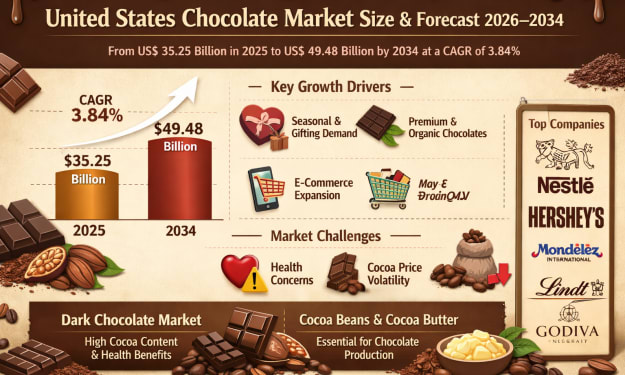
The United States Chocolate Market is projected to experience steady expansion over the coming years, reflecting the enduring popularity of chocolate among American consumers. According to Renub Research, the market is expected to grow from US$ 35.25 Billion in 2025 to US$ 49.48 Billion by 2034, registering a compound annual growth rate (CAGR) of 3.84% during the forecast period from 2026 to 2034.
By Sakshi Sharmaabout 15 hours ago in Trader
Liontown Share Price Insights: What Could Drive Its Next Big Move?
The liontown share price has been attracting attention from investors eager to understand its next steps. Watching the liontown share price closely can help identify trends and possible opportunities in the lithium sector. Many traders now wonder: what could drive its next big move?
By John.doe798a day ago in Trader
Top tipple tricks
Been thinking a lot about drinking, lately. Not least because of a recent episode of over-indulgence and the inevitable after effects. Some readers may recall the earlier articles I wrote about beating the booze. Here I set out an experiment in techniques for cutting down on my alcohol intake. The experiment was successful, the techniques worked, and I have armed myself with an arsenal of weapons in the war against the demon drink. I have yet to fire the first round however. It's all a question of timing (perhaps procrastination).
By Raymond G. Taylor5 days ago in Psyche



Comments
There are no comments for this story
Be the first to respond and start the conversation.