
Fast Food Market Size and Forecast 2026–2034
Rising Demand for Convenience and Urban Lifestyles Driving Global Market Expansion

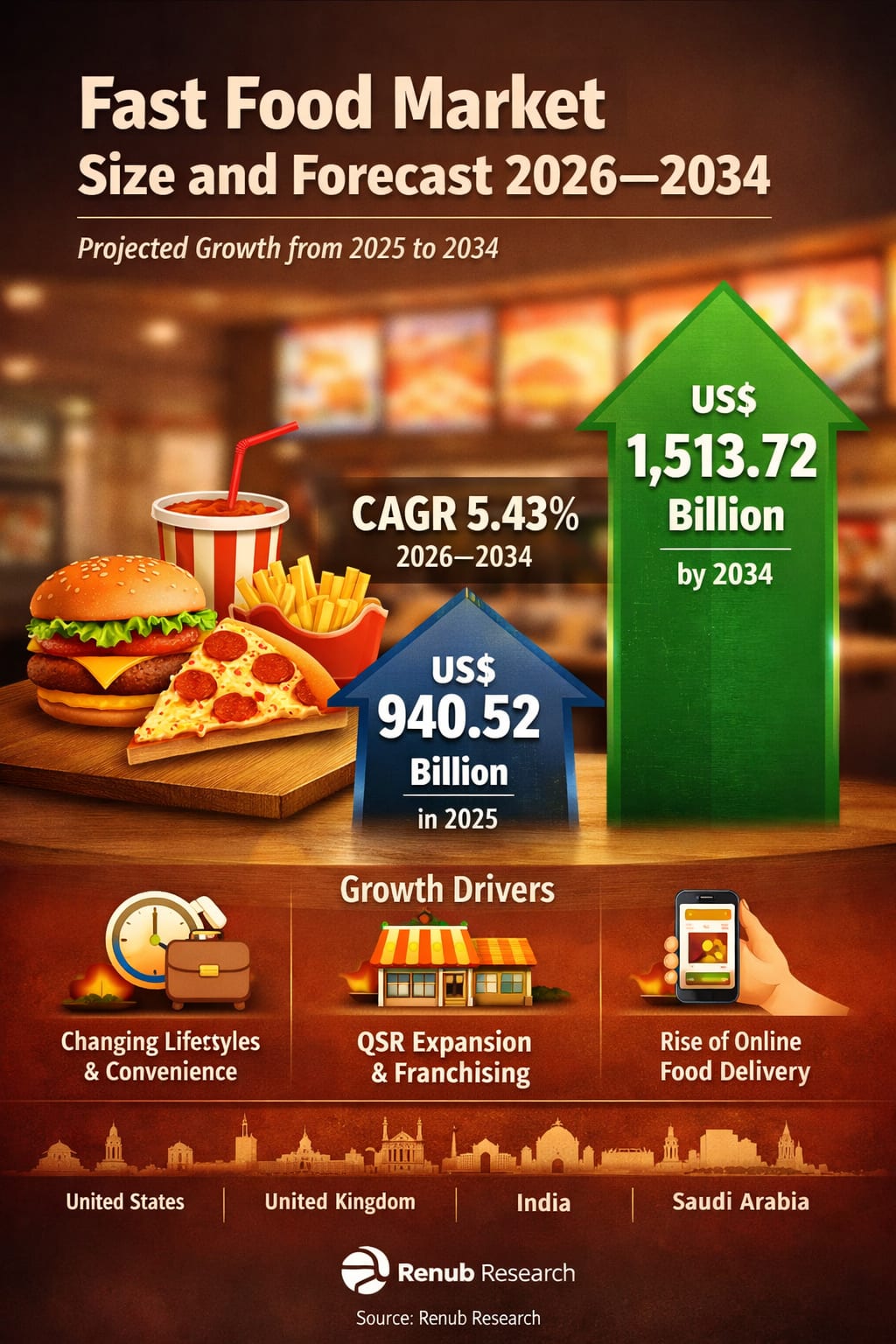
The global fast food market is expected to experience steady growth during the forecast period as changing consumer lifestyles, increasing urban populations, and growing demand for quick and convenient meals reshape food consumption patterns worldwide. The expansion of quick-service restaurant chains, rapid adoption of online food ordering platforms, and continuous innovation in menu offerings are also contributing to the industry’s sustained growth.
According to industry analysis by Renub Research, the fast food market is projected to reach US$ 1,513.72 Billion by 2034, expanding from US$ 940.52 Billion in 2025, growing at a Compound Annual Growth Rate (CAGR) of 5.43% from 2026 to 2034. The increasing preference for ready-to-eat meals and on-the-go dining options continues to fuel global demand.
Fast food refers to food items that are prepared quickly and are usually served in quick-service restaurants, drive-through outlets, food courts, kiosks, and takeaway counters. These meals are designed to offer convenience, affordability, and speed of service. Most fast food items require minimal preparation time and are suitable for customers seeking quick meals during busy schedules.
Typical examples of fast food include hamburgers, pizzas, fried chicken, sandwiches, tacos, noodles, and fries. These products are generally standardized in taste and preparation methods so that customers receive consistent flavors across different locations. Fast food brands also offer value meals, combo deals, and customizable menu options to attract a wider consumer base.
Globally, the popularity of fast food has increased significantly due to urbanization, busy lifestyles, and a growing working population. For many consumers, fast food offers an affordable and accessible dining solution. The presence of multinational fast food brands across multiple countries has also increased accessibility to standardized food options.
Furthermore, the rise of digital food ordering platforms and delivery services has enhanced customer convenience, making it easier for consumers to order food from home or work. As the global food service industry continues shifting toward convenience-based models, fast food remains one of the most dynamic and rapidly evolving segments of the industry.
Growth Drivers of the Fast Food Market
Changing Lifestyles and Increasing Demand for Convenience
One of the major drivers supporting the growth of the fast food market is the changing lifestyle of modern consumers. With increasing urbanization, long working hours, and busy daily routines, many people have limited time to prepare meals at home.
Fast food offers a quick and convenient alternative that allows individuals to enjoy meals without investing significant time in cooking. This is particularly appealing to students, working professionals, and young consumers living in urban areas.
The growing participation of women in the workforce has also contributed to changing food consumption habits. As dual-income households become more common, the demand for convenient dining options continues to increase.
For example, a report from the German trade magazine Lebensmittel Zeitung in June 2025 highlighted rising consumer demand for convenient food products. According to data from NielsenIQ, pasta products such as gnocchi recorded a 6.9% increase in sales between April 2024 and April 2025, reflecting broader demand for easy-to-prepare or ready-to-eat food items.
Companies like Hilcona AG, a Liechtenstein-based food manufacturer, are capitalizing on this trend by offering innovative convenience food products designed for modern cooking appliances such as air fryers.
As time efficiency continues to influence consumer behavior, fast food demand is expected to remain strong across global markets.
Expansion of Quick-Service Restaurant Chains and Franchising
The global expansion of quick-service restaurants (QSRs) is another important factor driving the fast food market. Major restaurant chains are increasingly adopting franchise-based expansion strategies to enter new geographic markets and reach a larger consumer base.
Franchising allows companies to grow rapidly while maintaining brand consistency. It also enables local entrepreneurs to operate outlets under established global brands, improving market penetration.
In addition, fast food companies are expanding into smaller cities and emerging markets, where rising disposable incomes and urbanization are increasing demand for modern food service outlets.
The development of shopping malls, highway service stations, airports, and commercial complexes has also increased the number of fast food outlets worldwide. These locations provide ideal environments for quick dining experiences, further supporting industry growth.
In June 2025, PAR Technology, a U.S.-based restaurant technology company, launched an advanced cloud-based platform designed to help fast food restaurants manage operations more efficiently. The platform provides real-time insights into sales, inventory management, and workforce optimization, enabling restaurant operators to improve productivity and customer experience.
Such technological advancements are helping fast food companies streamline operations and scale their businesses more effectively.
Growth of Online Food Delivery and Digital Ordering Platforms
Digital technology has significantly transformed the fast food industry. The widespread adoption of smartphones and internet connectivity has led to the rapid growth of online food delivery services and mobile ordering platforms.
Consumers can now order fast food through mobile applications, restaurant websites, and third-party delivery platforms with just a few clicks. This convenience has significantly increased food consumption, particularly among urban populations.
Online ordering platforms often provide promotional offers, discounts, and loyalty programs, encouraging repeat purchases and enhancing customer engagement.
In January 2026, a digital information platform was introduced in the United States that provides consumers with access to fast food menus, pricing details, and nutritional information. Such platforms enhance transparency and allow customers to make informed purchasing decisions.
The integration of digital ordering systems, mobile payments, and home delivery services continues to reshape the fast food market, making food more accessible than ever before.
Challenges in the Fast Food Market
Growing Health Awareness and Nutritional Concerns
Despite its popularity, the fast food industry faces increasing challenges due to growing consumer awareness about health and nutrition.
Many fast food items contain high levels of fats, sugar, and sodium, which have been associated with various health concerns such as obesity, cardiovascular diseases, and diabetes. As consumers become more health-conscious, some are reducing their consumption of traditional fast food products.
This shift has encouraged fast food companies to introduce healthier alternatives, including low-calorie meals, plant-based options, and menu items with reduced sodium and fat content.
Although these innovations help address consumer concerns, balancing health trends with taste and affordability remains a significant challenge for fast food operators.
Rising Operational Costs and Supply Chain Pressures
Fast food companies also face increasing operational costs related to raw materials, labor, packaging, and logistics. Fluctuations in food ingredient prices, rising wages, and higher transportation costs can significantly affect profit margins.
Supply chain disruptions caused by global events, geopolitical tensions, or transportation challenges can further complicate business operations.
Restaurants must carefully manage costs while maintaining competitive pricing and product quality. Achieving this balance remains a key challenge for many companies operating in the fast food sector.
Pizza and Pasta Segment
Pizza and pasta represent one of the most popular segments in the global fast food industry. These products are widely consumed due to their versatility, affordability, and universal appeal.
Pizza and pasta dishes can be easily customized with various toppings and ingredients, allowing brands to adapt flavors according to regional preferences while maintaining standardized preparation processes.
The rise of online food delivery platforms has further increased the popularity of pizza and pasta, as these products travel well and maintain quality during delivery.
Additionally, innovations such as gluten-free crusts, plant-based toppings, and healthier ingredient alternatives have expanded consumer interest in this segment. As urban populations grow and demand for convenient meals increases, pizza and pasta will continue to play a major role in the fast food market.
Burgers and Sandwiches Segment
Burgers and sandwiches remain one of the most dominant categories in the fast food industry. These products are widely popular due to their convenience, portability, and strong flavor profiles.
Consumers appreciate burgers and sandwiches because they are easy to eat on the go and are available in a wide variety of flavors and combinations. Major fast food brands continue to introduce innovative menu items, including plant-based burgers, gourmet sandwiches, and healthier ingredient options.
As the global working population grows and demand for quick meals increases, the burgers and sandwiches segment is expected to maintain its strong market presence.
Fast Food Full-Service Restaurants
Full-service fast food restaurants cater to consumers who want a balance between convenience and a traditional dining experience. While food preparation remains relatively quick, customers are provided with table service and a more comfortable dining environment.
These restaurants are particularly popular among families and groups looking for casual dining experiences. A diverse menu selection, affordable pricing, and comfortable ambiance make full-service fast food restaurants attractive to many customers.
As consumers increasingly seek dining experiences that combine convenience with social interaction, this segment is expected to maintain steady demand.
Fast Food Quick-Service Restaurants
Quick-service restaurants represent the largest and fastest-growing segment of the fast food market. These establishments focus on delivering meals quickly and at affordable prices.
Drive-through services, takeaway counters, and digital ordering systems have significantly improved the efficiency of quick-service restaurants. The franchising model used by many QSR brands allows them to expand rapidly across multiple markets.
The increasing demand for fast, affordable meals ensures that quick-service restaurants will continue to play a central role in the growth of the global fast food market.
Regional Market Insights
United States Fast Food Market
The United States remains one of the largest and most mature fast food markets globally. The country’s busy lifestyles, high disposable income levels, and strong culture of eating out contribute to the industry’s continued expansion.
The U.S. market is home to many globally recognized fast food chains specializing in burgers, pizzas, fried chicken, and sandwiches. Drive-through services and advanced digital ordering platforms further enhance convenience for consumers.
Growing health awareness has also encouraged brands to introduce plant-based menu options and healthier alternatives.
In September 2024, Starbucks announced a sustainability initiative aimed at reducing its carbon footprint by 50% by 2030. The company plans to source 100% of its coffee from ethical suppliers and invest in renewable energy, aligning with increasing consumer demand for environmentally responsible practices.
United Kingdom Fast Food Market
The United Kingdom fast food market is experiencing steady growth as changing lifestyles increase demand for convenient meal options. Busy work schedules and urban living have encouraged consumers to rely more on takeaway and delivery services.
Food delivery platforms have played a significant role in expanding the market by providing easy access to restaurant meals. At the same time, growing interest in healthier food options has encouraged fast food companies to introduce more nutritious menu offerings.
Regulations related to nutritional labeling are also influencing product development within the industry.
Starbucks announced plans to invest USD 32.78 million to open 100 new outlets across the United Kingdom, reflecting the strong growth potential of the market.
India Fast Food Market
India’s fast food market is expanding rapidly due to urbanization, a young population, and changing dietary habits. International fast food chains are increasingly expanding into tier-2 and tier-3 cities, where rising incomes and urban lifestyles are driving demand.
Localization of menus to suit Indian tastes has played a crucial role in the success of global brands. Food delivery applications and digital ordering platforms have further accelerated market growth.
In December 2024, Burger King opened its first outlet at City Centre Mall in Raipur and announced another outlet in Shanker Nagar. The launch included promotional events, digital ordering facilities, and exclusive deals to attract consumers in the region.
Saudi Arabia Fast Food Market
The fast food market in Saudi Arabia is driven by a young population, increasing purchasing power, and strong demand for international food brands.
Urbanization and tourism have contributed to the expansion of the food service industry, while consumers increasingly seek premium quality fast food experiences.
In February 2023, Alshaya Group opened a new production facility in Saudi Arabia to supply freshly baked food products to over 400 Starbucks stores across the country.
Market Segmentation
By Product
Pizza/Pasta
Burgers/Sandwiches
Chicken
Asian/Latin American
Seafood
Others
By Application
Full-Service Restaurants
Quick-Service Restaurants
Catering
Others
By Region
North America, Europe, Asia-Pacific, Latin America, and Middle East & Africa.
Key Companies
Starbucks Corp.
Papa John’s International Inc.
Domino’s Pizza Inc.
Wendy’s
Performance Food Group
Yum! Brands, Inc.
Restaurant Brands International Inc.
Kentucky Fried Chicken (KFC)
Each company is evaluated based on company overview, key personnel, recent developments, SWOT analysis, and revenue performance.
Final Thoughts
The global fast food market continues to evolve as consumer lifestyles become increasingly fast-paced and convenience-focused. Urbanization, digital ordering platforms, and the expansion of quick-service restaurant chains are expected to drive steady growth in the coming years.
While challenges such as health concerns and rising operational costs remain, innovation in menu offerings, sustainable practices, and technology integration will help fast food companies maintain competitiveness.
As the industry adapts to changing consumer preferences, the fast food market is expected to remain a vital component of the global food service sector through 2034.
About the Creator
Genetic Testing Market Set to Reach US$ 50.29 Billion by 2034 as Personalized Medicine Gains Global Momentum
Genetic Testing Market Size and Forecast 2026–2034 The global Genetic Testing Market is experiencing significant expansion as healthcare systems increasingly adopt precision medicine and preventive diagnostics. According to Renub Research, the market is projected to grow from US$ 21.84 billion in 2025 to US$ 50.29 billion by 2034, representing a compound annual growth rate (CAGR) of 9.71% from 2026 to 2034.
By Sakshi Sharmaabout 16 hours ago in Trader
Philippines Vape Market 2026: Youth Adoption, Flavor Innovation & Expanding Digital Retail
Philippines Vape Market Overview The Philippines vape market has emerged as a rapidly expanding segment of the country’s consumer goods and lifestyle industry. Vape products—including e-cigarettes, disposable vape devices, pod systems and flavored e-liquids—are widely used as alternatives to traditional tobacco smoking. Many consumers view vaping as a potentially less harmful option compared to conventional cigarettes, which has contributed to its rising popularity across younger demographics and adult smokers.
By Manisha Dixitabout 23 hours ago in Trader




Comments
There are no comments for this story
Be the first to respond and start the conversation.