
Ethiopia Livestock Market 2026: Agricultural Backbone, Protein Demand & Export Opportunities
How population growth, agricultural modernization and export demand are shaping Ethiopia’s livestock sector

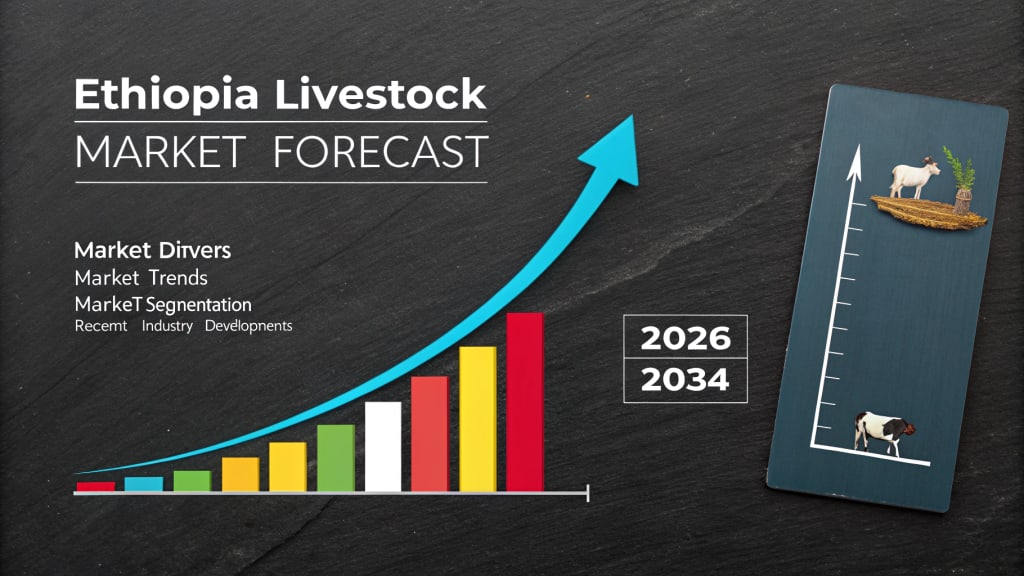
The Ethiopia livestock market remains one of the most important pillars of the country’s agricultural economy, supporting millions of farmers and contributing significantly to food security, employment and exports. Livestock production in Ethiopia includes cattle, sheep, goats, poultry and camels, forming an essential component of rural livelihoods and national economic activity.
According to market estimates, the Ethiopia livestock market size reached USD 870.11 Million in 2025 and is projected to reach USD 972.86 Million by 2034, growing at a CAGR of 1.25% during 2026–2034. This steady growth reflects increasing demand for animal-based food products, government investment in livestock productivity programs and expanding export opportunities in regional markets.
Ethiopia has one of the largest livestock populations in Africa, making the sector critical for agricultural output and rural income. Livestock products such as meat, milk, hides and skins are widely consumed domestically while also serving as important export commodities. As the country continues to modernize agricultural practices and improve supply chains, the livestock sector is gradually transitioning from traditional subsistence farming toward more market-oriented production systems.
What’s Driving Market Growth?
Increasing Demand for Animal-Based Foods
The rising population and urban development are boosting the need for protein-dense foods like meat, dairy, and eggs. With increasing incomes and changing eating habits, consumers are adding more animal-based products to their everyday meals.
Urban populations especially propel the demand for processed and packaged meat products available via contemporary retail outlets. This movement promotes farmers and agribusiness firms to increase production and enhance livestock management techniques.
Programs for the Development of Livestock by the Government
The Ethiopian government has launched various agricultural development programs designed to enhance livestock productivity and bolster the value chain of the sector. Initiatives like national livestock master plans concentrate on improving breeding methods, veterinary care, animal nutrition, and access to markets.
Investment programs initiated by the government, along with assistance from international development organizations, are facilitating the modernization of livestock infrastructure and enhancing productivity in rural farming communities.
These efforts aim to enhance Ethiopia's livestock industry, making it more efficient and competitive in the market.
Export Opportunities in Regional Markets
Ethiopia’s large livestock population and strategic geographic location provide strong opportunities for exporting live animals and livestock products. Regional markets in the Middle East and North Africa represent major destinations for Ethiopian livestock exports.
Countries such as the United Arab Emirates and Saudi Arabia import large volumes of live animals and meat products, creating valuable trade opportunities for Ethiopian producers.
Export demand encourages improvements in livestock quality, processing infrastructure and supply chain logistics.
Gradual Shift Toward Commercial Livestock Farming
Traditionally, livestock farming in Ethiopia has been dominated by smallholder farmers using traditional production methods. However, the sector is gradually shifting toward more commercialised systems with improved breeding techniques, feed management and veterinary care.
Market Segmentation & Key Insights
By Animal Type
The Ethiopia livestock market includes several major animal categories:
• Cattle
• Sheep
• Goats
• Poultry
• Camels
Cattle represent the largest segment due to their importance for meat, dairy production and agricultural labor in rural communities.
By Product Type
Livestock production generates a wide range of agricultural products, including:
• Meat products
• Milk and dairy products
• Eggs
• Hides and skins
Meat and dairy products dominate the market as demand for animal-based nutrition continues to rise among consumers.
By Farming System
Livestock farming in Ethiopia is typically divided into three primary systems:
• Traditional smallholder farming
• Pastoral and agro-pastoral systems
• Commercial livestock production
Smallholder farmers account for the majority of livestock production, though commercial farming is gradually expanding.
By Distribution Channel
Livestock products reach consumers through various supply channels:
• Local livestock markets
• Food processing companies
• Retail and wholesale markets
• Export trading networks
Improved supply chains and modern processing facilities are expected to strengthen market efficiency and product quality.
What the Opportunities Are?
Improving Livestock Productivity
One of the biggest opportunities in Ethiopia’s livestock sector lies in improving productivity through better breeding, nutrition and animal health management.
Investments in veterinary services, modern feeding systems and improved livestock genetics can significantly increase production efficiency and profitability for farmers.
Expansion of Livestock Processing Industry
Developing modern slaughterhouses, meat processing facilities and dairy processing plants can help Ethiopia capture greater value from its livestock resources.
Processing industries also enable the production of higher-value products such as packaged meat, dairy products and leather goods.
Technology-Driven Livestock Farming
Digital technologies are gradually entering the livestock sector, including livestock monitoring systems, data analytics and precision livestock farming tools. These technologies help farmers monitor animal health, track productivity and optimise feeding practices.
Technology adoption can improve efficiency while reducing production risks for farmers.
Export Market Expansion
The growing demand for meat and livestock products in international markets provides significant opportunities for Ethiopia’s livestock exporters.
Improving product quality, meeting international standards and expanding cold-chain logistics can help Ethiopian producers increase exports and strengthen global competitiveness.
Recent News and Developments in Ethiopia Livestock Market
May 2025: Agricultural authorities emphasised the expansion of livestock development programs aimed at improving productivity and strengthening Ethiopia’s livestock value chain.
Aug 2025: Development organisations increased funding for livestock infrastructure projects focused on veterinary services, breeding programs and rural agricultural training.
Nov 2025: Export demand from Middle Eastern markets continued to support Ethiopia’s livestock trade, encouraging investments in livestock supply chains and processing facilities.
Why Should You Know About Ethiopia Livestock Market?
The Ethiopia livestock market highlights the importance of agriculture in driving economic growth and supporting rural livelihoods. Livestock farming not only provides food security but also generates employment and export revenue for the country.
For investors and agribusiness companies, the market presents opportunities in livestock processing, agricultural technology, veterinary services and export trade.
For policymakers and agricultural planners, strengthening the livestock sector is essential for improving rural incomes, supporting national food supply and expanding Ethiopia’s agricultural exports.
Ultimately, the Ethiopia livestock market demonstrates how agriculture continues to shape the country’s economic development. As productivity improvements, government initiatives and export demand continue to drive the sector forward, livestock production will remain a cornerstone of Ethiopia’s agricultural and economic future.
About the Creator
Thomas
Market Research Analyst | Industry Trends & Forecasting | Turning market data into clear, actionable business insights across global sectors.
Philippines Travel & Tourism Market 2026: Eco-Tourism Expansion, Digital Travel Platforms & Infrastructure Growth
Philippines Travel & Tourism Market Overview The Philippines travel and tourism market plays a vital role in the country’s economic development, supporting employment, infrastructure investment and international trade. The sector includes a wide range of services such as transportation, accommodation, travel agencies, tour operations and hospitality services. Known for its tropical islands, cultural heritage and biodiversity, the Philippines attracts millions of domestic and international tourists each year.
By Manisha Dixit3 days ago in Trader
AI Governance Market: Trends, Drivers, and Strategic Outlook for Responsible AI Adoption
AI Governance Market: An In‑Depth Analysis Artificial intelligence is no longer a futuristic concept—it has become integral to business operations, public services, and everyday digital experiences. As AI systems assume roles in decision‑making, customer interactions, and automated processes, stakeholders are increasingly concerned about unintended consequences, ethical risks, data privacy, and regulatory compliance. The AI governance market has emerged in response to these needs, offering businesses and public institutions a way to manage the complex ecosystem of AI development and deployment.
By James Smith2 days ago in Trader




Comments
There are no comments for this story
Be the first to respond and start the conversation.