
Canada Foodservice Market Set for Robust Growth Through 2034 Amid Urbanization and Digital Transformation
Rising demand for convenience, premium dining, and digital ordering platforms propels the industry toward US$ 141.9 Billion by 2034

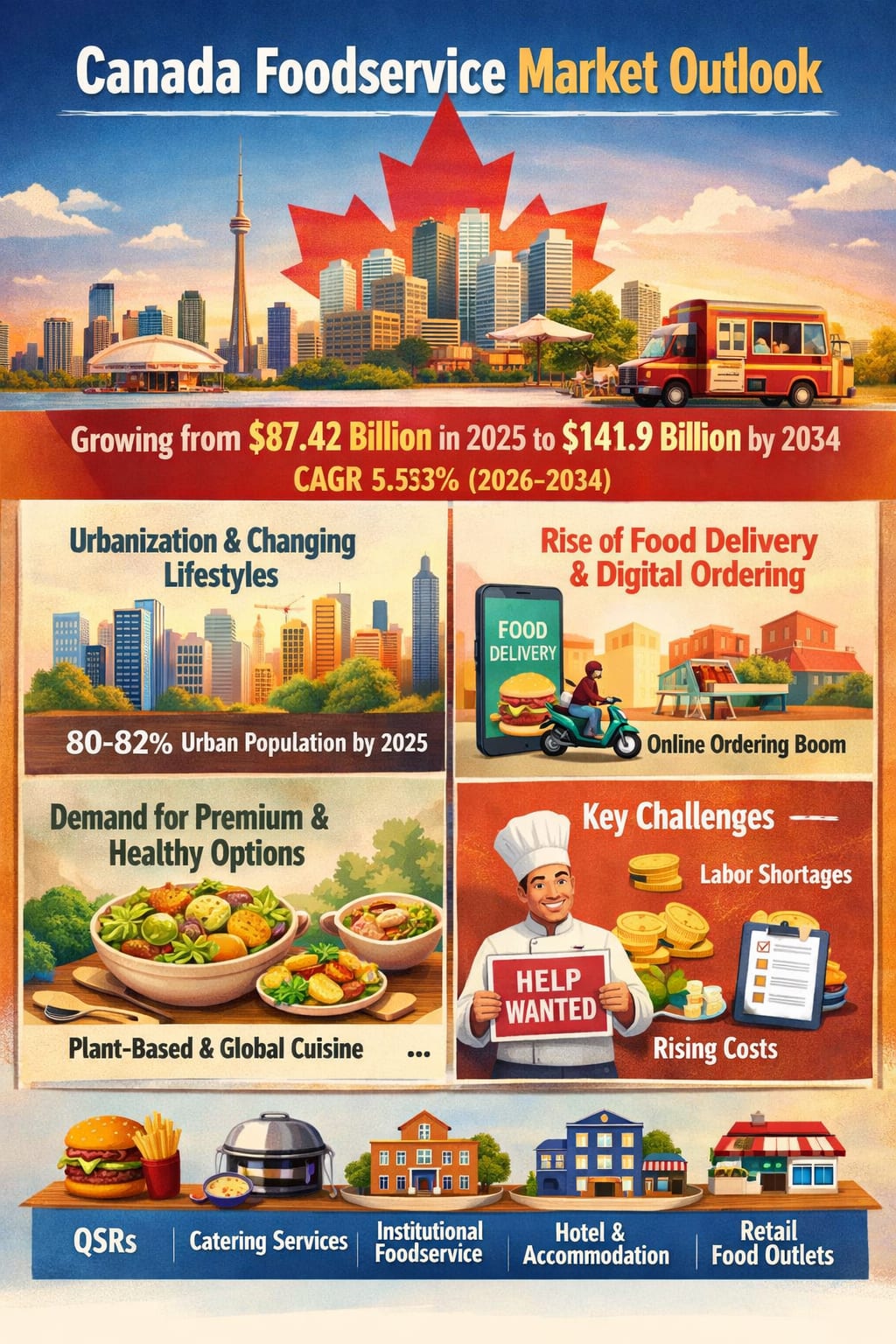
The Canada foodservice market is entering a dynamic growth phase, supported by urban expansion, evolving consumer lifestyles, and rapid digital adoption. According to Renub Research, the Canada Foodservice Market is anticipated to grow from US$ 87.42 Billion in 2025 to US$ 141.9 Billion by 2034, registering a compound annual growth rate (CAGR) of 5.53% from 2026 to 2034.
This sustained growth trajectory reflects deeper structural shifts in how Canadians eat, socialize, and access food services. From bustling metropolitan centers to smaller provinces, foodservice has become an integral part of both daily living and economic activity.
Canada Foodservice Market Outlook
Foodservice refers to the preparation and serving of food and beverages for consumption outside the home. It includes restaurants, cafés, quick-service restaurants (QSRs), full-service restaurants, caterers, food trucks, institutional foodservice providers, retail food counters, and digital delivery platforms.
In Canada, foodservice is woven into everyday life. It supports professional engagements, family gatherings, tourism, and institutional requirements such as schools, hospitals, and aged care facilities. Canadians increasingly rely on foodservice not only for convenience but also for culinary exploration and social experiences.
As disposable income rises and lifestyles become more fast-paced, consumers are spending more on dining out and ordering in. The demand for variety, speed, and personalized experiences is reshaping the industry landscape.
Key Growth Drivers in the Canada Foodservice Market
1. Urbanization and Changing Lifestyles
Canada’s urban population continues to expand steadily. By 2025, approximately 80–82% of Canadians reside in urban areas, with the national population nearing 41.5 million. The country’s 41 major census metropolitan areas collectively account for over 31 million residents.
Urban living fosters time-constrained lifestyles. Working professionals, students, and dual-income households increasingly depend on foodservice establishments for convenience. Commuting patterns, extended work hours, and social dining culture further amplify demand.
As more Canadians live in metropolitan regions, foot traffic to restaurants, cafés, and quick-service outlets continues to rise. Urban density also supports food delivery networks and digital food ecosystems, strengthening overall industry performance.
2. Expansion of Food Delivery and Digital Ordering Platforms
The rapid growth of digital ordering systems and food delivery platforms has significantly transformed Canada’s foodservice landscape. Mobile apps, contactless payments, and cloud kitchens have made food access easier and more flexible.
Restaurants can now extend their reach beyond physical locations, targeting customers across broader geographies. Data-driven marketing, loyalty programs, and targeted promotions have enhanced customer retention and order frequency.
A notable example of international expansion includes Fazoli’s, which entered the Canadian market in April 2024 through a franchise agreement to open 25 restaurants over the next decade, beginning in Alberta.
Technology adoption is expected to remain a long-term growth catalyst, ensuring digital channels play an increasingly dominant role in revenue generation.
3. Rising Demand for Premium, Diverse, and Health-Conscious Offerings
Canadian consumers are demonstrating a growing appetite for premium dining experiences, multicultural cuisine, and health-forward menu options.
The country’s diverse population has fueled demand for international flavors and fusion cuisine. Simultaneously, wellness trends are driving increased consumption of plant-based, organic, and sustainably sourced food products.
Healthy quick-service brands are capitalizing on this shift. In October 2025, Heal Wellness, a concept under Happy Belly Food Group, secured its first location in Montreal, targeting an opening in early 2026.
Consumers are increasingly willing to pay more for quality ingredients, innovative menus, and elevated dining experiences—boosting average ticket sizes and overall market value.
Challenges Facing the Canada Foodservice Market
Rising Operating Costs and Labor Shortages
Escalating food ingredient prices, rental costs, utilities, and transportation expenses are compressing profit margins across the industry. Additionally, labor shortages and rising minimum wages are creating operational strain, particularly for small and independent operators.
Recruitment, retention, and training costs have increased, impacting service efficiency and financial sustainability. Cost control remains a critical strategic priority for businesses nationwide.
Intense Competition and Shifting Consumer Expectations
The market features strong competition from local independents, regional chains, and global giants. Consumers now expect high-quality food, fast service, digital convenience, and sustainability commitments.
Brand loyalty has weakened, with customers frequently switching between platforms and restaurants. Operators must continuously innovate through menu upgrades, digital investments, and experiential differentiation to remain competitive.
Segment Analysis
Quick-Service Restaurants (QSR)
The QSR segment represents one of the fastest-growing components of Canada’s foodservice market. Convenience, affordability, and speed make QSRs especially popular among students and working professionals.
Major brands shaping this segment include:
McDonald's
Restaurant Brands International Inc.
Yum! Brands Inc.
A&W Food Services of Canada Inc.
Digital ordering, drive-through innovation, and value pricing strategies continue to strengthen QSR dominance within the overall market.
Caterers Market
Foodservice catering plays a vital role in corporate events, weddings, institutional contracts, and large-scale gatherings. With in-person events rebounding strongly, catering services are witnessing renewed demand.
Customization, dietary specialization, premium presentation, and sustainable sourcing are key differentiators in this segment. Long-term contracts and bulk food preparation models offer stable revenue streams.
Accommodation Foodservice
Hotels, resorts, and lodging facilities operate in-house restaurants, banquet services, and room-service operations. This segment is closely tied to tourism, business travel, and leisure activity.
As Canada’s hospitality industry continues recovering and expanding, accommodation-based foodservice is expected to experience steady growth, especially in urban tourism hubs.
Institutional Foodservice
Institutional foodservice includes schools, universities, hospitals, nursing homes, military facilities, and workplace cafeterias.
With Canada’s aging population and expanding healthcare infrastructure, demand for consistent, nutritious, and affordable large-scale meal services remains strong. Nutrition compliance, food safety standards, and sustainability practices are central to this segment’s evolution.
Retail Foodservice
Retail foodservice encompasses ready-to-eat meals sold within supermarkets, convenience stores, and large retail chains. Fresh bakery items, hot meals, deli counters, and beverages form core offerings.
Retailers are increasingly competing with traditional restaurants by offering cost-effective, convenient meal solutions. The blending of grocery shopping and dining convenience has strengthened this category’s contribution to market growth.
Provincial Insights
Ontario: Canada’s Foodservice Powerhouse
Ontario remains the largest provincial market, supported by high population density, cultural diversity, and strong consumer spending. Urban centers drive heavy demand for QSR, casual dining, institutional catering, and digital food delivery.
Technology adoption rates are high, reinforcing Ontario’s leadership in market expansion.
British Columbia: Wellness and Sustainability Leader
British Columbia stands out for its health-conscious and environmentally aware consumer base. Demand for organic, plant-based, and sustainable options is particularly strong. Tourism further supports accommodation and premium dining segments.
Alberta: Urban Growth and Energy Economy Influence
Alberta’s strong urban base, high disposable income levels, and busy professional workforce contribute to robust foodservice demand. Drive-through services and meat-based menus remain highly popular.
Saskatchewan: Stable and Value-Oriented Growth
Saskatchewan’s foodservice market grows steadily, supported by local consumption patterns, educational institutions, and healthcare facilities. Quick-service and family dining formats dominate due to value-conscious consumers.
Competitive Landscape
The Canadian foodservice industry includes both domestic and international players. Companies covered under comprehensive analysis include:
Starbucks Corp
Domino's Pizza Inc.
The Wendy’s Co.
Seven & I Holdings Co. Ltd
MTY Food Group Inc.
Performance Food Group Company
Papa John's International Inc.
Berkshire Hathaway
Each company is evaluated across five viewpoints: overview, key personnel, recent developments, SWOT analysis, and revenue performance.
Market Segmentation Overview
By Restaurant Type:
Commercial
Quick-Service Restaurants (QSRs)
Full-Service Restaurants
Caterers
Drinking Places
Non-Commercial
Accommodation Foodservice
Institutional Foodservice
Retail Foodservice
Other Foodservice
By Province
Newfoundland and Labrador
Prince Edward Island
Nova Scotia
New Brunswick
Quebec
Ontario
Manitoba
Saskatchewan
Alberta
British Columbia
Yukon
Northwest Territories
Nunavut
Final Thoughts
The Canada Foodservice Market is on a clear upward trajectory, supported by urbanization, lifestyle evolution, digital transformation, and diversified culinary demand. With market value projected to climb from US$ 87.42 Billion in 2025 to US$ 141.9 Billion by 2034, the sector demonstrates resilience and long-term opportunity.
While rising operational costs and intense competition present challenges, innovation, technology integration, and premium positioning will define the next phase of growth.
About the Creator
Genetic Testing Market Set to Reach US$ 50.29 Billion by 2034 as Personalized Medicine Gains Global Momentum
Genetic Testing Market Size and Forecast 2026–2034 The global Genetic Testing Market is experiencing significant expansion as healthcare systems increasingly adopt precision medicine and preventive diagnostics. According to Renub Research, the market is projected to grow from US$ 21.84 billion in 2025 to US$ 50.29 billion by 2034, representing a compound annual growth rate (CAGR) of 9.71% from 2026 to 2034.
By Sakshi Sharmaa day ago in Trader




Comments
There are no comments for this story
Be the first to respond and start the conversation.