
We have been preparing’: Why the Boots on the Ground in Iran Could Be Kurdish
Kurdish opposition groups may serve as the de facto ground force in the Iran conflict, reflecting decades of preparation and strategic interest from the U.S., even as risks of escalation and regional instability loom.

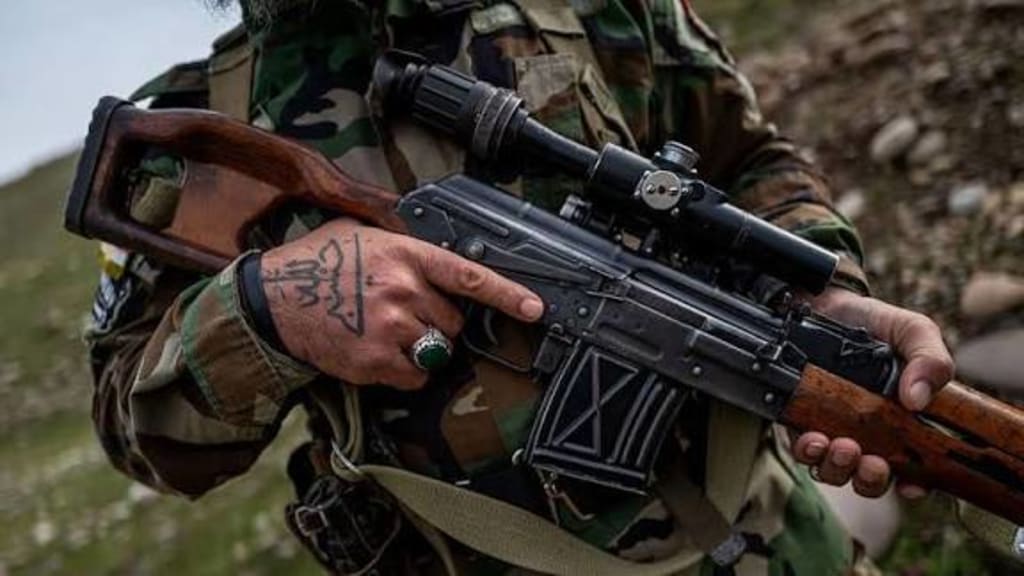
As the U.S. and Israel continue their air campaign against Iran, a growing number of analysts, officials, and local actors are discussing the possibility that Kurdish forces — not American troops — could become the “boots on the ground” in any future ground‑based phase of the conflict. This prospect has emerged not from sudden instability, but from decades of Kurdish political and military organisation, regional dynamics, and evolving strategic interests.
Who Are the Kurds in This Context?
The Kurds are an ethnic group of roughly 30–40 million people spread across Turkey, Iraq, Syria, and Iran, with no sovereign state of their own, though they maintain autonomous regions in Iraq and parts of Syria and Turkey. In Iran, Kurds make up about 10 percent of the population, concentrated in the western provinces. Over many decades they have resisted the centralised rule of Tehran and engaged in intermittent armed struggle.
In recent days, Kurdish Iranian opposition groups based in northern Iraq — including factions like the Kurdistan Freedom Party (PAK), the Kurdistan Democratic Party of Iran (KDPI), and others — have suggested they are ready for operations across the border should conditions allow. Leaders have told international media they “have been preparing for this” for many years, but insist they have not yet launched significant forces into western Iran.
Hatha Alyoum English
Why Kurdish Groups Are Being Talked About as a Ground Force
With the current conflict so far conducted primarily from the air — with U.S. and Israeli jets striking military targets inside Iranian territory — policymakers in Washington and Jerusalem have reportedly been reluctant to commit conventional forces into a protracted ground campaign inside Iran. Leaving foreign boots on Iranian soil would risk a major escalation. Instead, Kurdish forces, with historical grievances and existing organisation, are seen by some as a proxy ground force that could help stretch Iran’s military resources and open a new pressure front against Tehran.
According to multiple news reports, the U.S. has engaged with Kurdish groups about the possibility of their involvement, including logistics and potential cooperation against Iranian security forces. Kurdish fighters, many of whom fought alongside U.S. forces in conflicts against ISIS, are considered among the most structured opposition elements capable of acting in rugged terreno north of Iran’s border.
Preparation, Caution, and Conditions
Despite this talk, Kurdish leaders themselves have emphasised that any actual rollout of forces would be cautious and highly conditional. One Kurdish commander told the BBC that they would not move without airspace control and assurances that Iranian regime weapons stocks were neutralised ahead of time, acknowledging that without such measures any operation would be “suicidal.”
This cautious stance reflects lessons learned from decades of Kurdish struggles against better‑equipped national armies. Iran’s security forces — including the Islamic Revolutionary Guard Corps — have overwhelming firepower and are already targeting Kurdish positions near the border, according to Iranian statements, even accusing Kurdish groups of preparing to infiltrate.
Potential Strategic Benefits and Risks
For U.S. and Israeli strategists, Kurdish involvement could offer several theoretical advantages:
Stretch Iranian forces by forcing Tehran to defend multiple fronts simultaneously, rather than focusing its full attention on external airstrikes.
Exploit existing ethnic tensions within Iran by encouraging internal dissent against the central government.
Use Kurdish territorial knowledge to harass regime forces in terrain where conventional armies may be less effective.
The Defense Post
However, these potential benefits come with significant risks. Iran has already intensified attacks on Kurdish opposition positions, and an insurgency could draw neighbouring Iraq deeper into the conflict, destabilising the broader region. The semi‑autonomous Kurdish government in Iraq has officially denied involvement in any ground operations against Iran, underscoring the delicacy of the situation and the risk of unwanted escalation.
Historical Context Matters
The idea of Kurdish fighters entering Iran is rooted in long‑standing resistance movements and periodic clashes along Iran’s western frontier. Historically, Kurdish factions inside Iran have engaged in intermittent conflict with Tehran, most recently during localized insurgencies. Their diaspora communities in Iraq have long maintained ties and networks that could facilitate mobilisation if conditions align.
But past alliances with external powers — including the United States — have also bred mistrust among Kurdish leaders, who recall shifting geopolitical commitments. This history complicates any decision to act purely as an auxiliary force for another power’s strategic aims.
What Comes Next?
At present, there is no confirmed large‑scale deployment of Kurdish fighters inside Iran, nor official acknowledgment from Iraqi Kurdish authorities that they will participate in ground combat. However, the combination of Kurdish preparedness, geopolitical interest from U.S. and Israeli planners, and the strained internal dynamics within Iran make the Kurdish factor an important variable in future iterations of the conflict.
If Kurdish forces do move into Iranian territory, it would mark a significant escalation — not just militarily, but ethnically and politically — introducing new complexities into an already volatile regional confrontation.
About the Creator
Fiaz Ahmed
I am Fiaz Ahmed. I am a passionate writer. I love covering trending topics and breaking news. With a sharp eye for what’s happening around the world, and crafts timely and engaging stories that keep readers informed and updated.
Keep reading
More stories from Fiaz Ahmed and writers in The Swamp and other communities.
Trump fires Noem as frustrations build among White House officials, GOP lawmakers
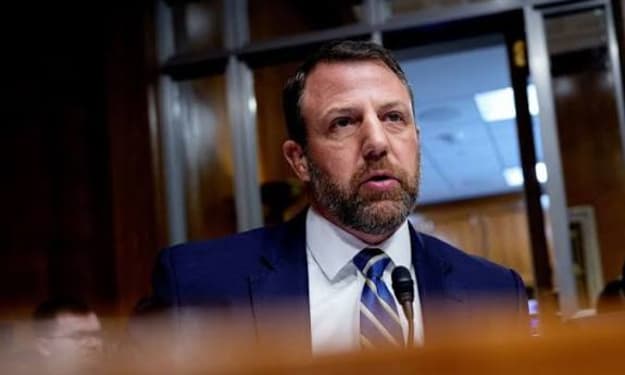
In a dramatic shake-up inside the U.S. administration, President Donald Trump has dismissed Homeland Security Secretary Kristi Noem after mounting criticism from both White House officials and members of the Republican Party. The decision marks the first major cabinet departure of Trump’s current term and highlights growing tensions inside the administration over immigration policy, spending controversies, and internal management of the Department of Homeland Security. The White House confirmed that Trump plans to nominate Oklahoma Senator Markwayne Mullin as Noem’s replacement. The senator, a Republican known for his strong support of the administration’s security agenda, is expected to undergo Senate confirmation hearings in the coming weeks before formally assuming the role. Rising tensions inside the administration Noem’s removal comes after weeks of growing frustration among senior officials and lawmakers who questioned her leadership of the Department of Homeland Security (DHS). Critics argued that the agency had struggled to manage several politically sensitive issues, particularly the administration’s aggressive immigration enforcement strategy and its response to domestic security incidents. During recent congressional hearings, Noem faced intense questioning from both Republican and Democratic lawmakers. Members of Congress pressed her on spending decisions, including controversial advertising contracts and costly departmental projects that had drawn scrutiny from oversight committees. The hearings exposed divisions within the Republican Party, with some GOP lawmakers expressing concern that the controversy was damaging the administration’s broader security agenda. Although Trump initially defended Noem publicly, sources within Washington suggested that patience inside the White House had been wearing thin. Several officials reportedly believed that the ongoing controversies were becoming a political distraction at a time when the administration wanted to emphasize border enforcement and national security achievements. A key architect of immigration enforcement Noem had been a central figure in implementing Trump’s hardline immigration policies. As Homeland Security secretary, she oversaw large-scale immigration enforcement operations and border security measures that formed the cornerstone of the administration’s domestic policy agenda. Supporters credited her with aggressively pursuing the administration’s goal of tightening border controls and accelerating deportations of undocumented migrants. However, critics argued that some of the operations created chaos in local communities and strained relations between federal authorities and state governments. The department also faced criticism following incidents tied to federal enforcement operations, including controversial raids and confrontations that sparked public protests in several American cities. These incidents intensified political pressure on the administration and further fueled debate over the direction of U.S. immigration policy. Trump offers new role despite dismissal Despite removing her from the cabinet, Trump publicly praised Noem’s service and announced that she would take on a new diplomatic role as Special Envoy for the “Shield of the Americas.” The initiative is expected to focus on strengthening security cooperation across the Western Hemisphere, including efforts to combat narcotics trafficking, improve border coordination, and enhance regional law-enforcement partnerships. In a social media statement announcing the change, Trump thanked Noem for her contributions and highlighted what he described as “spectacular results” on border security during her tenure. The president said the new role would allow her to continue supporting the administration’s security objectives in Latin America and the Caribbean. Noem later acknowledged the transition and expressed gratitude for the opportunity to serve in the administration. She emphasized that the Department of Homeland Security had made “historic accomplishments” during her leadership and pledged to continue supporting Trump’s policies in her new position. Political implications ahead The leadership change could reshape the political dynamics surrounding immigration and homeland security in Washington. By nominating Senator Mullin, Trump appears to be seeking a figure with strong ties to congressional Republicans who can help stabilize relations between the administration and lawmakers. Analysts say the move may also be an effort to reset the administration’s message on national security ahead of upcoming legislative battles. Immigration enforcement remains one of the most divisive issues in U.S. politics, and the White House is likely hoping that new leadership at DHS will shift attention away from internal controversies and back toward policy goals. Whether the shake-up will ease tensions within the administration remains uncertain. However, Noem’s departure underscores the intense political pressures surrounding homeland security policy and the fragile alliances that often shape decision-making at the highest levels of government.
By Fiaz Ahmed 8 days ago in The Swamp
A Gathering of Evil Bosses
“I’m the queen of chin jutting while I smooth my hair, attacking, insulting, and deflecting to protect my appointer.” “Oh, please, Blondi, my hair is curled, highlighted, and longer than yours. I feature television commercials telling immigrants that we will give them a free plane ride home, and if they voluntarily turn themselves in, they will be allowed to legally apply for re-entry. It runs everywhere, and I look good in it! You can’t compete because of your blond hair. Mine is nicer, and my lips are prettier than yours.”
By Andrea Corwin 23 days ago in The Swamp
Analysis Of US-ISR- IRAN WAR
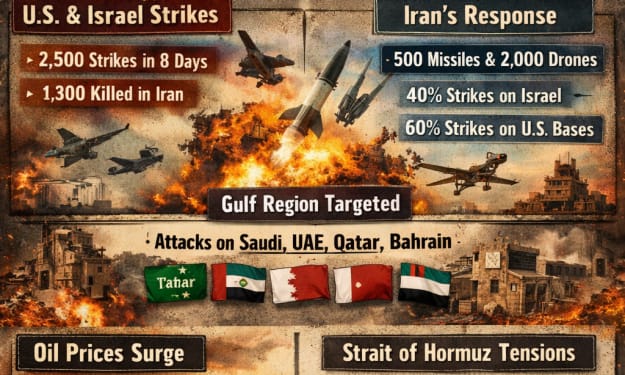
The situation is ongoing, and if I were to summarize the details—because data is coming very late—it's totally difficult to confirm the casualties and how much damage has been done so far. Many reporters, particularly those on Al Jazeera, are stating that footage from both Hezbollah and Israel is not being released. Similarly, in the UAE, there is an effort to prevent influencers and various reporters from sharing information. People are afraid because their business capital is at risk. Additionally, two important things that I discussed in my last blog about the "magazine depth problem" are now being acknowledged by Western media. They also agree that this war won't last for many days and will have to rely on limited strikes. Trump, however, has also stated that there is no end game for this operation, Epic Fury.
By Ibrahim Shah 2 days ago in The Swamp
TUS NUA - ch 53
TUS NUA – ch 53 New Beginnings – Mia and Midnight (*)(*)(*) Finola knew Ali’s brother-in-law needed to put his mind at rest. She fed her arm through his and led him outside. “We’ll sit here. If you like, I can put a block around us so our conversation will be private.”
By Margaret Brennan5 days ago in Fiction


Comments
There are no comments for this story
Be the first to respond and start the conversation.