
Visualizing the Escalation of the US-Israeli War with Iran One Week In
A week after hostilities erupted, the conflict between the United States, Israel, and Iran has rapidly expanded across multiple fronts—transforming from targeted strikes into a regional confrontation with global implications.
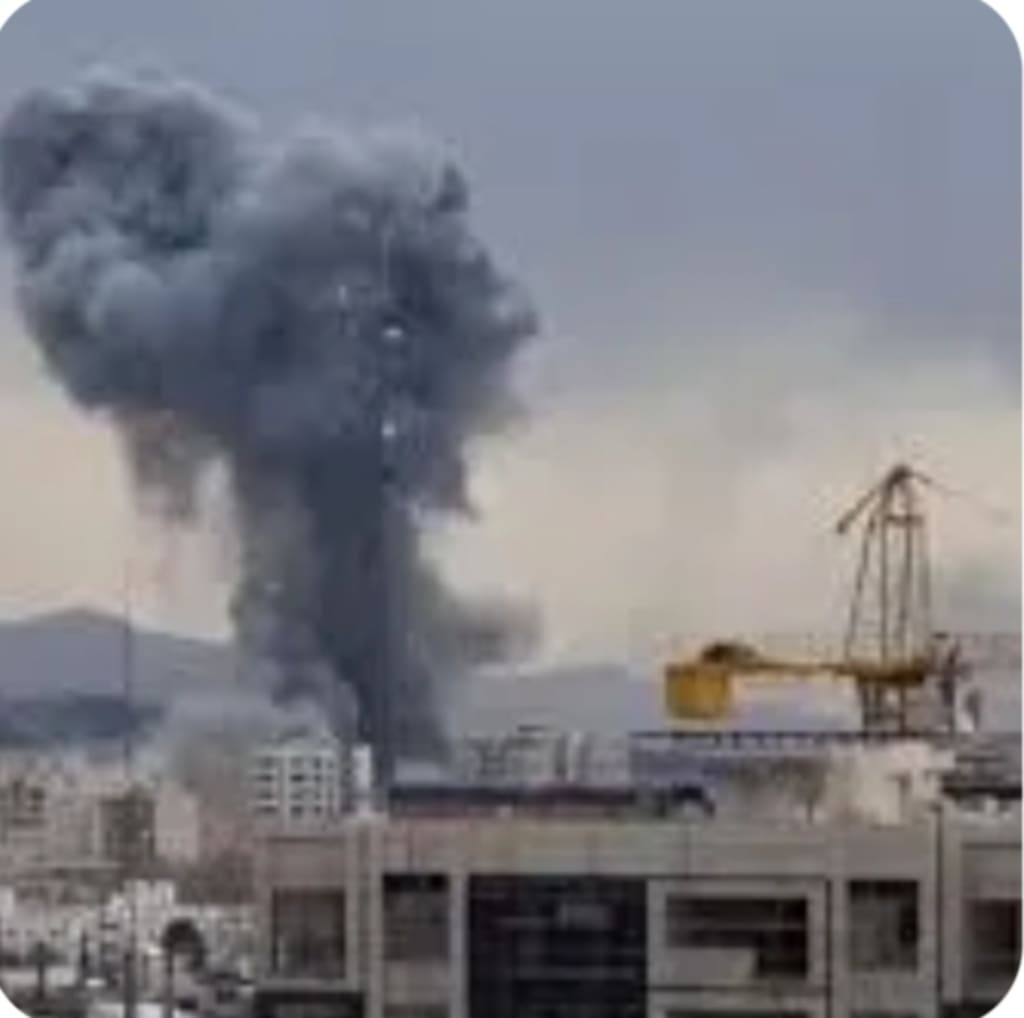
The First Week That Changed the Middle East
In just seven days, the confrontation involving Iran, Israel, and the United States has evolved from isolated attacks into one of the most serious geopolitical crises in years. What began as targeted strikes against military facilities has now expanded into a multi-front conflict involving airstrikes, missile attacks, naval confrontations, and cyber operations.
Each day of the first week introduced new developments that intensified the crisis. Military operations spread across several countries, alliances hardened, and global markets began reacting to the growing uncertainty.
Visualizing the escalation during the first seven days helps illustrate how quickly a regional confrontation can spiral into a broader conflict.
Day 1: Initial Strikes and Shockwaves
The conflict began when Israeli forces launched a series of coordinated airstrikes targeting Iranian military infrastructure. According to Israeli officials, the attacks focused on missile launch sites, weapons storage facilities, and command centers believed to support Iran’s regional military operations.
Within hours, the strikes triggered alarm across the region. Iranian authorities condemned the attacks and vowed retaliation, while neighboring countries began monitoring their airspace and strengthening border security.
Although initial reports suggested the attacks were limited in scope, analysts quickly warned that Iran was unlikely to leave the strikes unanswered.
Day 2: Iran Responds with Missiles and Drones
The second day of the conflict marked the beginning of Iran’s retaliation. Iranian forces launched a series of ballistic missiles and drones toward Israeli territory and strategic targets linked to Western military operations in the region.
Air defense systems in Israel intercepted many of the incoming projectiles, but several strikes reportedly caused damage and injuries.
The attacks demonstrated Iran’s ability to launch coordinated strikes from multiple locations. For observers, the escalation signaled that the conflict was no longer limited to covert or indirect confrontation.
Day 3: The United States Enters the Conflict
By the third day, the United States had become directly involved.
American forces stationed in the region conducted strikes against Iranian military assets, including radar installations, missile systems, and naval infrastructure. U.S. officials said the operations were intended to protect American personnel and allied forces.
One of the most dramatic developments occurred when a U.S. submarine reportedly targeted an Iranian naval vessel in a strategic waterway. The incident marked one of the most direct confrontations between American and Iranian forces in recent years.
The entry of the United States significantly raised the stakes of the conflict, turning it into a broader geopolitical confrontation.
Day 4: The Conflict Expands to Lebanon
On the fourth day, fighting spread beyond Iran and Israel.
Israeli forces launched operations against positions associated with Hezbollah in southern Lebanon. Hezbollah, which has close ties to Iran, responded with rocket fire toward northern Israel.
The clashes revived fears of a repeat of the 2006 Lebanon War, a devastating conflict that caused widespread destruction and displacement.
With multiple fronts now active, the conflict began to resemble a regional war rather than a limited confrontation.
Day 5: Naval Tensions and Energy Market Shock
As the fighting intensified, attention turned toward the strategic shipping routes of the Persian Gulf.
The Strait of Hormuz—one of the world’s most important oil transit corridors—became a focal point of concern.
Reports of naval deployments, maritime patrols, and potential threats to commercial shipping caused global energy markets to react immediately. Oil prices surged as traders worried about the possibility of disruptions to global supply.
The economic ripple effects of the conflict quickly reached markets far beyond the Middle East.
Day 6: Diplomatic Maneuvers and Regional Anxiety
By the sixth day, diplomatic efforts intensified as countries across the world attempted to prevent further escalation.
Several governments urged restraint and called for negotiations. Gulf nations, many of which host U.S. military bases, expressed concern about becoming caught in the crossfire.
Iran’s leadership attempted to ease regional tensions by issuing statements aimed at reassuring neighboring countries that it did not seek to expand the war.
At the same time, military activity continued, showing how difficult it can be to de-escalate once armed confrontations begin.
Day 7: A War with Multiple Fronts
One week into the conflict, the situation had grown far more complex than many initially expected.
Airstrikes continued in Iran, missile exchanges persisted between Iran and Israel, and clashes involving Hezbollah kept the northern Israeli border on high alert. Naval forces from several countries remained active in regional waters.
The conflict had effectively evolved into a multi-theater confrontation involving land, air, and sea operations.
Military analysts noted that each new front increased the risk of accidental escalation or miscalculation.
Humanitarian Consequences Emerging
Beyond the strategic and political implications, the human impact of the conflict has been severe.
Airstrikes and missile attacks have caused casualties and damage to infrastructure in several cities. Civilians across the region have experienced air-raid warnings, disruptions to transportation, and shortages of essential services.
Humanitarian organizations warn that if the conflict continues, the number of displaced people could rise significantly.
The first week of fighting has already placed enormous pressure on healthcare systems and emergency response teams.
Global Political Reactions
Governments around the world have reacted with concern to the rapidly escalating crisis.
The United Nations has called for an immediate ceasefire and urged all parties to prioritize diplomatic solutions. Several major powers have offered to mediate discussions aimed at preventing a broader war.
However, the deep strategic rivalry between Iran and Israel—combined with the involvement of the United States—makes reaching a diplomatic breakthrough extremely challenging.
What the First Week Reveals
The first seven days of the conflict provide a stark illustration of how quickly geopolitical tensions can escalate.
What began as targeted military strikes quickly expanded into a regional confrontation involving multiple actors and strategic locations. Each new development created additional risks and uncertainties.
For analysts and policymakers, visualizing this rapid escalation highlights the fragile nature of stability in the Middle East.
As the conflict moves into its second week, the central question remains whether diplomatic efforts can contain the crisis—or whether the pattern of escalation will continue.
The answer will likely determine not only the future of the region but also the stability of global politics in the months ahead.
About the Creator
A Gathering of Evil Bosses
“I’m the queen of chin jutting while I smooth my hair, attacking, insulting, and deflecting to protect my appointer.” “Oh, please, Blondi, my hair is curled, highlighted, and longer than yours. I feature television commercials telling immigrants that we will give them a free plane ride home, and if they voluntarily turn themselves in, they will be allowed to legally apply for re-entry. It runs everywhere, and I look good in it! You can’t compete because of your blond hair. Mine is nicer, and my lips are prettier than yours.”
By Andrea Corwin 23 days ago in The Swamp
Italy to Help Defend Gulf Allies as Europe Is Sucked Into Conflict It Did Not Seek
Italy is preparing to provide defensive military support to Gulf allies as the conflict involving the United States and Iran spreads across the Middle East, a development that is increasingly drawing European powers into a crisis they had hoped to avoid. The decision reflects both strategic necessity and political caution: Rome insists it does not want to enter a war, yet it is under mounting pressure to protect allies, energy supplies, and its own citizens in the region. Italian Prime Minister Giorgia Meloni has made clear that her government’s goal is to help stabilize the situation without committing Italy to direct combat. Speaking to Italian media, she emphasized that Rome “is not at war and does not want to go to war,” but acknowledged that defensive support for partner countries may be unavoidable as regional tensions intensify. The crisis erupted after a series of escalating attacks between Iran and U.S.-aligned forces across the Middle East. Iranian missile and drone strikes targeting facilities and infrastructure in several Gulf countries have heightened fears of a broader regional conflict. In response, Gulf governments have requested additional defensive capabilities from Western partners, including air-defense systems designed to intercept missiles and drones. Italy is now considering providing air-defense equipment and technical support to help Gulf nations protect critical infrastructure and civilian areas. Italian officials say the move is primarily defensive and aimed at protecting lives rather than expanding the war. At the same time, the Italian government has raised its own military alert levels. Defense Minister Guido Crosetto told lawmakers that Italy must be prepared for unexpected developments as tensions continue to rise. According to officials, thousands of Italian citizens live or work in Gulf countries, and more than 2,000 Italian troops were already stationed in the region before the current crisis began. Beyond the Gulf itself, the conflict is also spilling into the Mediterranean. European governments are increasingly concerned about the security of shipping routes and strategic bases. Italy, along with Spain, France, and the Netherlands, plans to deploy naval assets to help protect the island of Cyprus and safeguard maritime traffic in nearby The decision highlights how quickly a regional war can ripple outward. Drone attacks have already struck a British military base on Cyprus, raising alarms across European capitals that the fighting could threaten vital transportation routes and energy supplies. For Europe, the crisis presents a difficult balancing act. Many European leaders have tried to distance themselves from the original escalation between the United States, Israel, and Iran. Yet their close ties with Gulf states—combined with economic dependence on Middle Eastern energy and trade—make complete neutrality almost impossible. European governments are therefore leaning toward a strategy of limited defensive involvement. By helping protect shipping lanes, airspace, and allied infrastructure, they hope to prevent further destabilization without becoming full participants in the war. Italy’s approach reflects that broader European dilemma. Rome is attempting to reassure allies while avoiding steps that could escalate the conflict. Officials insist that providing air-defense systems and naval patrols is fundamentally different from sending combat forces into active battle. Still, the situation remains volatile. Analysts warn that continued attacks or miscalculations could quickly expand the scope of the conflict. Any direct strike on European personnel or territory could force governments to reconsider their cautious approach. For now, Italy is positioning itself as a defender of regional stability rather than a combatant. But the unfolding crisis illustrates how interconnected global security has become. Even a conflict that begins thousands of kilometers away can rapidly pull Europe—and the world—into its orbit. As the war continues to evolve, European leaders will face increasing pressure to decide how far they are willing to go to support their allies while avoiding a wider confrontation that few originally sought.
By Fiaz Ahmed 7 days ago in The Swamp



Comments
There are no comments for this story
Be the first to respond and start the conversation.