
Qatari Minister Says ‘Regional Countries Are Not an Enemy of Iran’
Qatar urges dialogue as minister stresses that Gulf nations are not adversaries of Iran. Al‑Khulaifi calls for de-escalation and diplomacy amid escalating Middle East tensions. Doha emphasizes regional cooperation and peaceful solutions over conflict with Tehran. Qatari minister highlights the importance of dialogue to maintain Gulf stability and security. Gulf states seek negotiations as Qatar positions itself as a mediator in the Iran conflict.

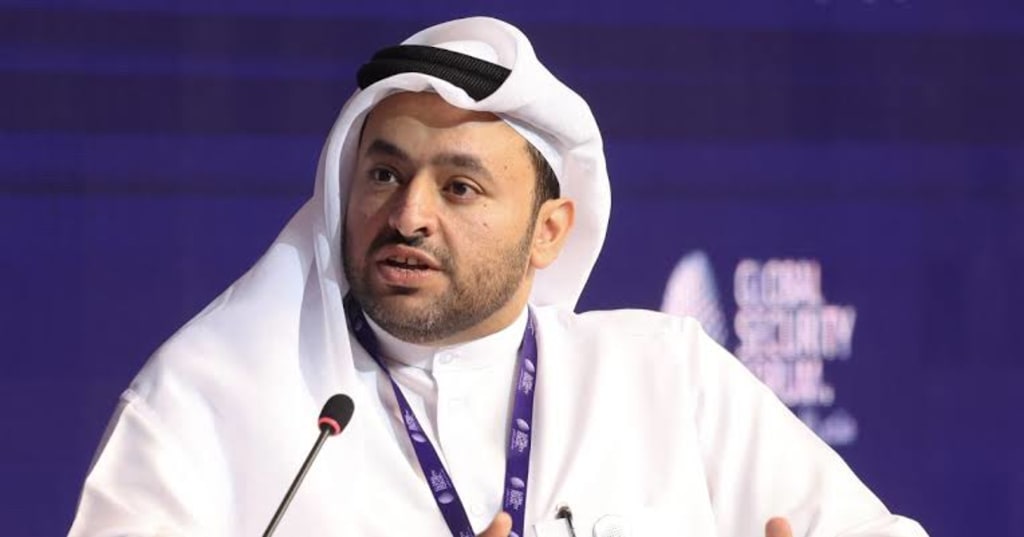
In an increasingly tense Middle East environment dominated by the ongoing conflict between the United States, Israel and Iran, Qatar’s government has issued strong diplomatic signals aimed at de‑escalation. Mohammed bin Abdulaziz al‑Khulaifi, Qatar’s minister of state for foreign affairs, stated that “regional countries are not an enemy of Iran” and urged Tehran and Washington alike to pursue negotiations instead of continued hostilities — a message that reflects Doha’s cautious but proactive diplomatic stance amid spiraling violence.
Al‑Khulaifi gave the comments in an exclusive interview with Al Jazeera, underscoring Qatar’s deep concern over attacks that have affected multiple Gulf states since the conflict escalated. The minister emphasized that the current hostilities “benefit no one” and warned that continued military exchanges will only deepen the crisis across the region. He called for an immediate reduction in violence and a return to diplomatic channels, insisting that sustainable peace can only come through dialogue rather than force.
Qatar — historically a key proponent of mediation in Middle Eastern conflicts — has long positioned itself as a neutral actor capable of bridging gaps between rival states. Prior to the outbreak of intense fighting, Doha had played a role in facilitating communications between Tehran and Western capitals, including the United States. However, al‑Khulaifi noted that Qatar and neighbouring Oman cannot continue to act as mediators while under direct attack by Iran, pointing out that the Gulf states’ security must be ensured before they can meaningfully serve as intermediaries.
“The regional countries are not an enemy of Iran, and the Iranians are not understanding that idea,” al‑Khulaifi said, echoing a broader Gulf concern that the conflict’s expansion will drag neighbouring nations into a wider and more destructive confrontation. He stressed that Iran’s recent strikes against Gulf territories — including missile and drone attacks — undermine diplomatic trust and complicate efforts to reduce tensions.
Qatar’s remarks have been coupled with strong condemnations of attacks on its own infrastructure. Doha has denounced recent Iranian strikes as violations of its sovereignty, and foreign ministry officials have reiterated the country’s right to defend itself under international law. These incidents have heightened Doha’s fears that regional hostilities could destabilize both security and economic stability, particularly given the strategic importance of the Gulf’s energy sector.
The minister also highlighted concerns about the Strait of Hormuz, the crucial chokepoint for global oil and gas flows. Al‑Khulaifi warned that disruptions in this corridor, as a result of military actions, could have catastrophic economic consequences beyond the Middle East, affecting global supply chains and energy markets. “Freedom of movement through the waterway is very critical,” he noted, emphasizing the far‑reaching implications of the conflict.
In explaining Doha’s diplomatic strategy, al‑Khulaifi made clear that while Qatar seeks peaceful resolutions, it also remains in close communication with the United States. He said that Doha has encouraged Washington to pursue peace and to consider a return to negotiations with Tehran. “Our line of communication is always open with our colleagues in the United States,” he said, emphasizing the importance of sustained dialogue between all parties to halt further escalation.
Qatar’s appeal for de‑escalation comes amidst a broader regional backdrop of concern. Gulf Cooperation Council (GCC) members, including Saudi Arabia, the United Arab Emirates and Kuwait, have all warned about the risks of the conflict spreading beyond its current theaters. Some leaders have reiterated that military action cannot be the basis for long‑term peace and have called for diplomacy as the only viable path forward.
While Doha’s diplomatic messaging has been consistent, analysts note that the situation on the ground remains volatile. Iran’s retaliatory strikes, following U.S. and Israeli operations, have continued to impact civilian infrastructure and key security targets in Gulf states. This has raised questions about whether diplomatic efforts can gain traction while active hostilities persist.
In response to these pressures, Qatar has sought to strengthen its diplomatic posture by reaffirming its commitment to peace and underscoring that its stance is not adversarial toward Iran. Rather, Doha’s message is rooted in regional stability: Gulf states do not seek confrontation, and existing tensions must be resolved through dialogue.
As the conflict evolves, Qatar’s statements reflect a nuanced attempt to balance national security concerns with broader calls for peace, reinforcing that enduring stability in the Middle East depends on communication, negotiation, and mutual understanding among all stakeholders.
About the Creator
Fiaz Ahmed
I am Fiaz Ahmed. I am a passionate writer. I love covering trending topics and breaking news. With a sharp eye for what’s happening around the world, and crafts timely and engaging stories that keep readers informed and updated.
Keep reading
More stories from Fiaz Ahmed and writers in The Swamp and other communities.
She was working with no complaints’: Why Ananya Panday and Kareena Kapoor are defending Deepika Padukone’s 8-hour work rule; expert on the impact of support
A debate sweeping through the Hindi film industry has ignited discussions not just about work schedules but also about work‑life balance, gender roles, and support for mothers in demanding careers. At the center of it all is Deepika Padukone — one of Bollywood’s biggest stars — and her reported preference for an eight‑hour structured workday after becoming a mother. While the topic has drawn controversy and polarized opinions online, prominent actresses Ananya Panday and Kareena Kapoor Khan have publicly defended Padukone’s stance, stressing the importance of flexibility and understanding for working mothers. The conversation gained traction following a viral discussion about Padukone’s work preferences after she welcomed her child. Traditionally, film shoots in India — much like in Hollywood — involve long, often unpredictable hours. Actors can regularly work 12‑hour days or more, and schedules are set with little regard for personal limitations or caregiving responsibilities. Critics argued that putting a time limit on working hours might appear unreasonable in an industry known for its hectic production pace. However, Panday and Kapoor both challenged this notion. During a recent media interaction, Ananya Panday emphasized that Padukone’s career history contradicts any assumption that she has always demanded short hours. Panday recalled working with Padukone before she became a mother, noting that there were no complaints or requests for limited hours at that time. “She was working, coming for workshops, no complaints, no asking for anything in that sort of way,” Panday said, highlighting that the key difference now is Padukone’s new role as a parent and the priorities that come with it. Similarly, Kareena Kapoor Khan drew on her own experience balancing a high‑profile career with raising her two children. Speaking candidly, Kapoor outlined the realities of motherhood and the practical need for advance planning when shooting abroad or for long‑term projects. She explained how clear communication with production teams and support from family members helped her manage both responsibilities successfully. “If you’ve children and as a mother you’re not able to give that much time, you should be allowed to have that freedom to express that to the producers well in advance,” Kapoor said, advocating for empathy and openness between actors and filmmakers. These supportive voices reflect a broader cultural shift in how careers — especially in creative industries — are viewed and structured. According to clinical psychologist Rasshi Gurnani, the early years of motherhood involve “significant psychological, emotional, and biological adjustments,” including hormonal shifts, sleep disruptions, and attachment formation with the child. Expecting a strict return to an unyielding schedule immediately after childbirth can increase stress, anxiety, and emotional strain for many women. Supportive workplace arrangements — such as structured hours, flexibility, and gradual reintegration — are seen by experts not as concessions but as adaptive strategies that help maintain productivity while respecting life changes. Gurnani notes that when organizations or teams implement such flexibility, outcomes often improve, with helped individuals remaining engaged, creative, and loyal over the long term. The public response to the debate reveals deep social undercurrents. For years, women in the workforce — whether in film, business, or service sectors — have grappled with expectations to choose between professional ambition and familial duties. Bollywood, as a high‑visibility industry, mirrors those broader societal tensions, making the Padukone debate about working hours resonate far beyond celebrity gossip columns. Veteran actors like Supriya Pathak have also weighed in, echoing the sentiment that the challenges women face are different and often more complex. She highlighted that balancing multiple responsibilities simultaneously is a reality for many women, and that respectful, considerate work environments can help ease the strain. While some critics argue that structured hours could complicate film production logistics, Padukone’s supporters stress that negotiation and understanding are part of professional collaboration. Having a conversation about schedules upfront, they say, can prevent stress, enhance mutual respect, and even improve performance outcomes. Ultimately, the debate isn’t merely about a specific number of hours on set. It symbolizes a growing recognition of women’s diverse roles, evolving workplace expectations, and the power of industry leaders to influence change. With backing from fellow actresses like Panday and Kapoor, Padukone’s stance may help normalize dialogues around balanced work lives — not just for stars but for all women navigating careers and family responsibilities.
By Fiaz Ahmed 2 days ago in The Swamp
A Gathering of Evil Bosses
“I’m the queen of chin jutting while I smooth my hair, attacking, insulting, and deflecting to protect my appointer.” “Oh, please, Blondi, my hair is curled, highlighted, and longer than yours. I feature television commercials telling immigrants that we will give them a free plane ride home, and if they voluntarily turn themselves in, they will be allowed to legally apply for re-entry. It runs everywhere, and I look good in it! You can’t compete because of your blond hair. Mine is nicer, and my lips are prettier than yours.”
By Andrea Corwin 23 days ago in The Swamp
Becca
"Everything is so... flat." Denille said stupidly as she looked around her new neighborhood. She looked around at the muted desert where even the smallest sign of life seemed to have given up. The plant life was shrubs that were half cooked by the heat and where there should have been a lawn, a mess of white rocks laid glistening in the sun. Even the sky looked stretched thin, like the sun had ironed it smooth. She’d moved from Riverside, where at least there were hills, but here in Barstow, everything felt baked and brittle.
By Sara Wilson7 days ago in Fiction




Comments
There are no comments for this story
Be the first to respond and start the conversation.