
Iran Says Oil Will Reach $200 a Barrel, Warns of “Continuous Strikes”
Tehran signals prolonged escalation in the Middle East conflict and predicts severe consequences for global energy markets.
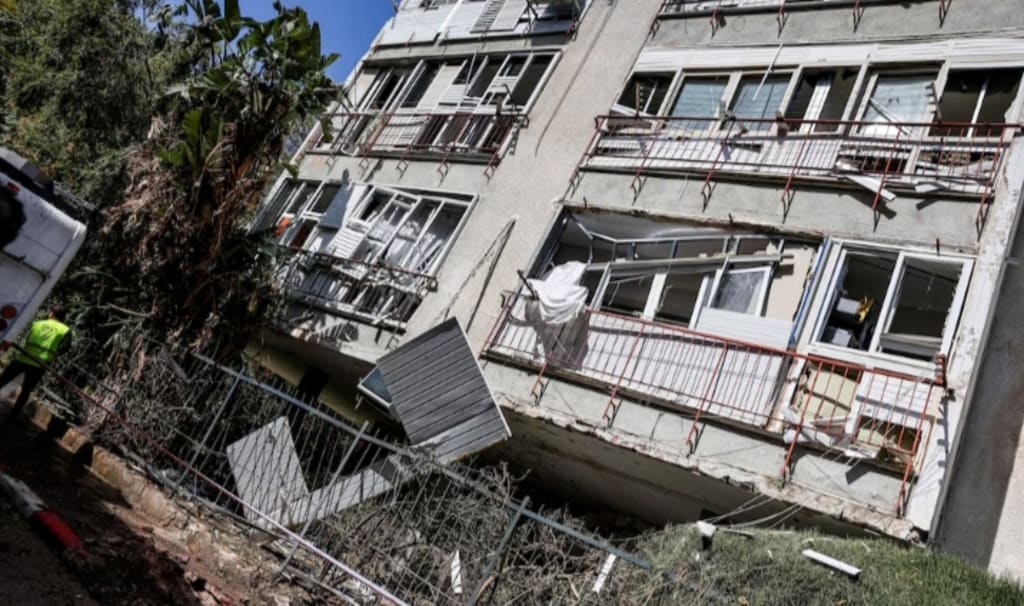
Rising Tensions and a Stark Warning
As the conflict in the Middle East intensifies, officials in Iran have issued a stark warning to the global community. Iranian leaders say that continued military pressure on their country could send global oil prices soaring to $200 per barrel, while also pledging what they described as “continuous strikes” against enemies in the region.
The statement reflects growing tensions between Iran and its adversaries, including the United States and Israel, as military confrontations escalate across the region. Iranian officials argue that any further attacks on their territory will trigger sustained retaliation targeting both military infrastructure and economic assets.
The warning has rattled energy markets and intensified fears that the ongoing conflict could severely disrupt global oil supplies.
Oil as a Strategic Weapon
Energy resources have long played a central role in geopolitical conflicts, and Iran’s latest message highlights how oil markets could become a powerful strategic tool during the war.
Iran is one of the world’s major oil producers and sits near one of the most critical chokepoints for global energy shipments: the Strait of Hormuz. Roughly a fifth of the world’s oil supply passes through this narrow waterway.
If hostilities escalate further, disruptions in this region could dramatically reduce the amount of oil reaching international markets.
Iranian officials have suggested that continued military attacks could lead to actions that directly affect shipping lanes, energy infrastructure, or oil production facilities across the Gulf region.
Such disruptions could quickly push prices toward the $200 level mentioned in Iran’s warning.
Markets React to the Threat
Even before any actual disruption occurs, the mere possibility of supply shocks can cause oil prices to surge.
Energy markets are highly sensitive to geopolitical risks, particularly when they involve major producing regions. Analysts say that threats to shipping routes or refineries can create uncertainty that drives speculation and price spikes.
Recent weeks have already seen significant volatility in oil markets due to rising tensions between Iran and its adversaries. Traders are closely monitoring developments in the Gulf to determine whether the conflict could interfere with global supply chains.
A jump to $200 per barrel would represent one of the most dramatic increases in oil prices in modern history, potentially surpassing previous spikes during major geopolitical crises.
Iran’s Strategy of Deterrence
Iran’s warning about “continuous strikes” appears to be part of a broader strategy aimed at deterring further military actions against the country.
By signaling a willingness to prolong the conflict and expand its scope, Iran hopes to increase the perceived cost of continuing military operations against it.
This approach relies on the idea that sustained attacks on economic or strategic targets could pressure opponents into reconsidering their strategies.
Iranian leaders have emphasized that they will not surrender under pressure and are prepared to respond to any attack with additional strikes.
Supporters of this strategy within Iran argue that strong deterrence is necessary to protect the country’s sovereignty and discourage foreign intervention.
Impact on the Global Economy
The possibility of oil prices reaching $200 per barrel is alarming for governments and businesses around the world.
Energy costs affect nearly every sector of the global economy, from transportation and manufacturing to food production and electricity generation.
A sudden surge in oil prices could lead to higher fuel costs, increased inflation, and slower economic growth.
Countries that rely heavily on imported energy would be particularly vulnerable. Higher energy prices could also strain government budgets and increase the cost of living for millions of people.
Financial markets are already showing signs of anxiety, with investors closely watching the Middle East for signs of further escalation.
Military Escalation Across the Region
The warning from Iran comes amid a series of escalating military actions across the Middle East.
Missile strikes, drone attacks, and air raids have been reported in multiple countries, raising fears that the conflict could expand into a broader regional war.
Both sides appear determined to demonstrate strength while avoiding actions that might trigger an uncontrollable escalation.
However, the complexity of the situation makes it difficult to predict how events will unfold.
With multiple actors involved and several potential flashpoints, even a single miscalculation could significantly worsen the situation.
Diplomatic Efforts and International Pressure
As tensions rise, governments around the world are urging restraint and calling for diplomatic solutions to the crisis.
International organizations and regional leaders have warned that continued escalation could destabilize not only the Middle East but also the global economy.
Diplomatic channels remain open, but progress toward negotiations has been slow.
Many analysts believe that economic pressure, combined with the risks posed by prolonged conflict, may eventually push both sides toward discussions aimed at de-escalation.
However, the current rhetoric from all parties involved suggests that the situation may become more volatile before it improves.
The Role of Energy Security
The crisis highlights the importance of energy security in international relations.
Countries around the world are increasingly aware of the risks associated with heavy dependence on oil supplies from politically unstable regions.
Some governments have begun accelerating investments in alternative energy sources and diversifying their supply chains to reduce vulnerability to geopolitical shocks.
Nevertheless, oil remains a critical component of the global energy system, and disruptions in major producing regions can have immediate and widespread effects.
What Happens Next?
The coming weeks will likely be crucial in determining whether Iran’s warning becomes reality.
If military operations continue and tensions rise further, the risk of supply disruptions and price spikes will grow.
On the other hand, successful diplomatic efforts could ease tensions and stabilize markets.
For now, energy traders, governments, and businesses are preparing for multiple scenarios as the crisis unfolds.
Conclusion
Iran’s prediction that oil could reach $200 per barrel, combined with its warning of continuous strikes, underscores the seriousness of the current Middle East conflict.
The statement highlights how deeply interconnected geopolitics and global energy markets have become.
While the situation remains fluid, the potential consequences of prolonged conflict are enormous.
Whether through military escalation or diplomatic resolution, the decisions made in the coming weeks could shape not only the future of the Middle East but also the stability of the global economy.
About the Creator
A Gathering of Evil Bosses
“I’m the queen of chin jutting while I smooth my hair, attacking, insulting, and deflecting to protect my appointer.” “Oh, please, Blondi, my hair is curled, highlighted, and longer than yours. I feature television commercials telling immigrants that we will give them a free plane ride home, and if they voluntarily turn themselves in, they will be allowed to legally apply for re-entry. It runs everywhere, and I look good in it! You can’t compete because of your blond hair. Mine is nicer, and my lips are prettier than yours.”
By Andrea Corwin 23 days ago in The Swamp
Royal Navy Crowsnest airborne surveillance helicopters deployed to Cyprus
Deployment strengthens British monitoring capability in the Eastern Mediterranean amid regional tensions. The United Kingdom has deployed a number of airborne surveillance helicopters equipped with the advanced Crowsnest radar system to Cyprus, strengthening its ability to monitor activity across the Eastern Mediterranean. The move comes as regional tensions continue to rise and the UK enhances its military readiness to support allies and protect strategic interests. The helicopters, operated by the Royal Navy, are part of Britain’s airborne early-warning capability designed to detect aircraft, ships and potential threats over long distances. Mounted on AgustaWestland Merlin HM2 helicopters, the Crowsnest system provides radar coverage that significantly extends the situational awareness of naval forces operating at sea. Strategic Deployment to Cyprus The aircraft have been deployed to the UK’s sovereign base areas in Cyprus, which serve as a critical hub for British military operations in the Middle East and Mediterranean region. From these bases, the helicopters can monitor wide swathes of airspace and maritime routes stretching across the eastern Mediterranean. Military officials say the deployment is designed to enhance intelligence gathering and early warning capabilities during a period of heightened regional uncertainty. The Eastern Mediterranean has become an increasingly important strategic area due to ongoing conflicts, shipping routes and the presence of multiple international military forces. The move also supports broader British defence efforts in the region, particularly as the UK positions naval assets to respond quickly to potential crises. What the Crowsnest System Does The Crowsnest system represents the Royal Navy’s latest generation of airborne surveillance technology. It is designed to provide airborne early warning and control, enabling naval commanders to detect and track aircraft, missiles and ships far beyond the radar horizon of surface vessels. Unlike traditional ship-based radar systems, airborne platforms can scan a much larger area because of their higher altitude. This allows the radar to identify potential threats earlier and provide commanders with more time to respond. Mounted beneath the Merlin helicopter’s fuselage, the Crowsnest radar can rotate and scan the surrounding airspace while transmitting data back to ships, command centers and allied forces. Military analysts say this capability is especially important for protecting high-value naval assets such as aircraft carriers and amphibious ships. Support for Carrier Operations The helicopters are closely linked with the operations of the HMS Prince of Wales, one of the UK’s two large aircraft carriers. Crowsnest-equipped helicopters typically operate as part of a carrier strike group, providing the airborne surveillance necessary to detect incoming threats before they reach the fleet. By deploying the helicopters to Cyprus, the Royal Navy can maintain surveillance coverage even when the carrier itself is not immediately present in the region. The move also ensures that trained crews and equipment are positioned close to potential operational areas. Defence officials have stressed that such deployments are routine components of the UK’s global military posture, though they often become more visible during periods of geopolitical tension. Importance of the Cyprus Bases The United Kingdom maintains two sovereign base areas on Cyprus — RAF Akrotiri and Dhekelia — which have long served as forward operating locations for British and allied forces. Their proximity to the Middle East allows rapid response to developments in several strategically sensitive regions. These bases have been used for surveillance missions, humanitarian operations, evacuation efforts and coalition military campaigns over the years. Aircraft operating from Cyprus can monitor maritime traffic in the Mediterranean and provide support to naval forces operating further south or east. With tensions in the Middle East continuing to fluctuate, the bases remain one of Britain’s most important overseas defence installations. Enhancing Regional Monitoring The deployment of the Crowsnest helicopters reflects the increasing importance of surveillance and early warning in modern military operations. Detecting threats early allows commanders to coordinate defensive measures, deploy intercepting aircraft, or adjust naval formations before hostile forces approach. For the Royal Navy, maintaining a robust surveillance network is essential for safeguarding both British forces and allied vessels operating in the region. Preparedness in an Uncertain Environment While British officials have not indicated that the helicopters are preparing for immediate combat operations, the deployment highlights the UK’s readiness to respond to evolving security challenges. By positioning airborne surveillance assets close to potential areas of instability, the UK ensures it can monitor developments in real time and support allied forces if required. As geopolitical tensions persist across several parts of the Middle East and Eastern Mediterranean, the presence of advanced systems like Crowsnest underscores the role of technology and preparedness in maintaining maritime security.
By Fiaz Ahmed 5 days ago in The Swamp
Becca
"Everything is so... flat." Denille said stupidly as she looked around her new neighborhood. She looked around at the muted desert where even the smallest sign of life seemed to have given up. The plant life was shrubs that were half cooked by the heat and where there should have been a lawn, a mess of white rocks laid glistening in the sun. Even the sky looked stretched thin, like the sun had ironed it smooth. She’d moved from Riverside, where at least there were hills, but here in Barstow, everything felt baked and brittle.
By Sara Wilson7 days ago in Fiction



Comments
There are no comments for this story
Be the first to respond and start the conversation.