
How the Special Election to Replace Marjorie Taylor Greene Is Testing the Power of Trump’s Endorsement
Georgia’s High-Stakes Race Could Reveal the True Weight of Trump’s Influence in Republican Politics Candidates Navigate Loyalty and Local Priorities as Voters Decide Whether Trump’s Backing Still Matters The Contest to Replace Greene Serves as a Litmus Test for Trump’s Kingmaker Role in the GOP Election Spotlight Examines How Much Impact a Former President’s Endorsement Holds in 2026 Trump’s Support Faces Its Toughest Test Yet in a Contested Republican Primary
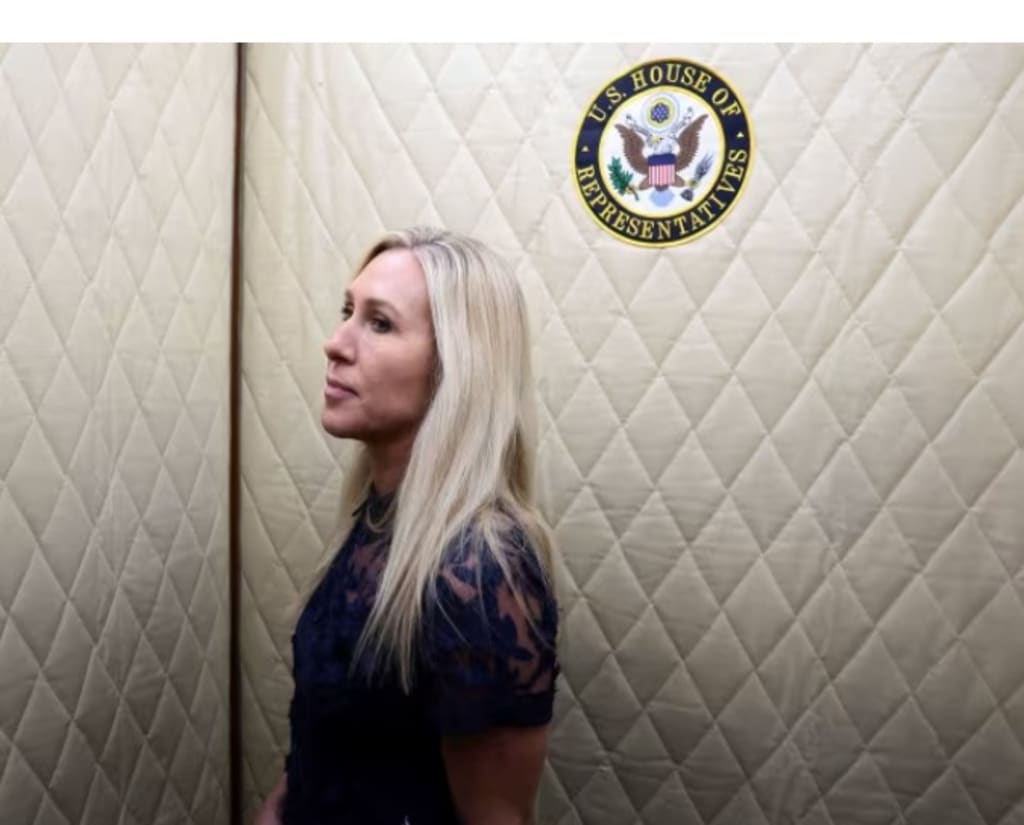
The upcoming special election to replace U.S. Representative Marjorie Taylor Greene is shaping up as a high-stakes contest that could reveal the true weight of former President Donald Trump’s endorsement in Republican politics. Greene, a polarizing figure known for her outspoken support of Trump and far-right positions, resigned her seat under circumstances that have intensified scrutiny on her district and the candidates vying to succeed her. As contenders align themselves either with or against Trump’s influence, political observers are closely watching how much his backing will actually sway voters in a shifting electoral landscape.
A Vacant Seat, a High-Profile Contest
The congressional district formerly held by Greene, located in Georgia, has been a focal point of national attention for years due to Greene’s controversial stances on a variety of issues, from pandemic policies to conspiracy theories. With her departure, the Republican Party faces a unique opportunity to demonstrate both the strength of its internal coalitions and its adaptability in appealing to a broader electorate.
Several candidates have already declared their intention to run, each navigating the tricky balance between aligning with Trump’s base and appealing to moderate voters. Trump’s early endorsements, made public through his social media channels and statements to conservative outlets, have sparked debate about whether his support is a decisive factor or a potential liability in a competitive primary.
The Trump Factor: Influence or Overreach?
Trump’s endorsements have historically carried significant weight within Republican primaries. Candidates backed by the former president have often enjoyed early fundraising advantages, heightened media visibility, and instant credibility with conservative voters. However, recent elections suggest that his influence may be encountering limits, especially in districts where local issues or candidate personalities carry substantial sway.
In the Greene replacement race, Trump has already signaled support for one prominent candidate who has cultivated a strong relationship with the former president. While this endorsement can generate enthusiasm among loyal voters, political analysts caution that overreliance on Trump’s name could alienate independents or more pragmatic Republicans concerned about extremism or national scrutiny.
Moreover, several competing candidates are deliberately distancing themselves from Trump’s shadow, emphasizing local experience, bipartisan achievements, or pragmatic governance. Their strategy aims to attract voters who may appreciate Trump’s agenda in principle but are wary of candidates tied too closely to national controversies or the former president’s polarizing image.
Voter Behavior Under the Spotlight
The election offers a real-time laboratory for understanding Republican voter behavior in 2026. Surveys indicate that Trump retains a loyal following in Georgia, but the electorate is also highly attentive to the dynamics within the party. Some voters may prioritize loyalty to Trump as a measure of ideological purity, while others may focus on candidates’ individual qualifications, policy positions, and ability to navigate national attention.
Another layer of complexity is the presence of independent and moderate voters in the district, who, while smaller in number than core Republican voters, can become decisive in runoffs. The degree to which Trump’s endorsement motivates these voters—or discourages them—may ultimately determine whether the candidate he backs emerges victorious.
Candidates Walk a Fine Line
Candidates in the race are acutely aware of the stakes. Those embracing Trump’s endorsement highlight it prominently in campaign materials, advertising, and public appearances, portraying themselves as defenders of his agenda and loyal allies to conservative voters. Meanwhile, challengers who avoid or downplay Trump’s influence stress policy expertise, local community engagement, and independent judgment, signaling that they are capable of leadership beyond partisan loyalty.
This strategic divergence underscores a key question in contemporary Republican politics: is Trump’s influence concentrated primarily among the party’s base, or does it still have the capacity to dictate outcomes in competitive primaries and general elections? The Greene replacement race may provide one of the clearest answers yet.
National Implications
Although this election is focused on a single congressional district, its implications extend far beyond Georgia. If Trump’s endorsed candidate wins easily, it could reinforce his role as the kingmaker of Republican politics and shape strategy in future elections across the country. Conversely, if a candidate succeeds without—or even against—Trump’s support, it may signal that his influence is no longer unassailable, encouraging other Republicans to cultivate independent power bases.
Political observers also note that media coverage of the race is magnifying its significance. National outlets are framing the contest as a referendum not only on Greene’s legacy but also on Trump’s continuing role within the GOP. Every debate, advertisement, and public appearance is scrutinized for signals about party alignment, voter priorities, and ideological trends.
Fundraising and Grassroots Mobilization
Another key test in this special election will be the ability of candidates to leverage fundraising networks and grassroots support. Trump’s endorsement often comes with access to donor lists and activist networks that can be mobilized quickly. However, local organizers and long-standing community leaders may rival this influence, demonstrating the continuing importance of on-the-ground political engagement.
In past contests, candidates relying solely on national endorsements without strong local connections have struggled to maintain momentum. This election will reveal whether the combination of Trump’s endorsement and local infrastructure is sufficient to secure victory, or whether independent grassroots energy can overcome even high-profile backing.
What to Watch
As the campaign unfolds, several factors will determine the outcome. The effectiveness of messaging around Trump’s endorsement, the ability to appeal to local priorities, turnout among loyalists versus moderate voters, and fundraising dynamics will all play crucial roles. Analysts will be especially attentive to polling trends, early voting patterns, and candidate debates, which may provide insight into the electorate’s evolving attitudes toward Trump and his role in Republican politics.
Ultimately, the special election to replace Marjorie Taylor Greene represents more than a race for a congressional seat—it is a microcosm of a larger political question. Can Trump’s endorsement still dictate outcomes in a post-Greene landscape, or are Republican voters increasingly willing to chart their own course? The answer could have reverberations for upcoming primaries, midterms, and even the 2028 presidential election.
The coming months will provide clarity on this critical question, as candidates compete, voters weigh their choices, and the Republican Party continues to navigate its path between loyalty to Trump and the evolving priorities of its electorate. The outcome in Georgia may be the first major signal of whether Trump remains the decisive force he once was—or whether new dynamics are reshaping the GOP’s future.
About the Creator
Keep reading
More stories from Jameel Jamali and writers in The Swamp and other communities.
Mamdani Chooses His Words Carefully After Alleged Terror Attack
In the tense hours following an alleged terror attack, public figures often find themselves under intense scrutiny. Every word spoken carries weight, and even a small misstatement can fuel controversy or misunderstanding. In the wake of the recent incident, political figure Mamdani has taken a notably cautious approach, choosing his words carefully while addressing the public, the media, and concerned communities.
By Jameel Jamali2 days ago in The Swamp
A Gathering of Evil Bosses
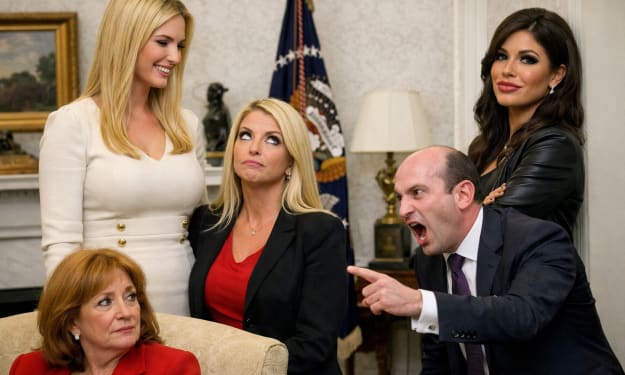
“I’m the queen of chin jutting while I smooth my hair, attacking, insulting, and deflecting to protect my appointer.” “Oh, please, Blondi, my hair is curled, highlighted, and longer than yours. I feature television commercials telling immigrants that we will give them a free plane ride home, and if they voluntarily turn themselves in, they will be allowed to legally apply for re-entry. It runs everywhere, and I look good in it! You can’t compete because of your blond hair. Mine is nicer, and my lips are prettier than yours.”
By Andrea Corwin 23 days ago in The Swamp
Becca
"Everything is so... flat." Denille said stupidly as she looked around her new neighborhood. She looked around at the muted desert where even the smallest sign of life seemed to have given up. The plant life was shrubs that were half cooked by the heat and where there should have been a lawn, a mess of white rocks laid glistening in the sun. Even the sky looked stretched thin, like the sun had ironed it smooth. She’d moved from Riverside, where at least there were hills, but here in Barstow, everything felt baked and brittle.
By Sara Wilson7 days ago in Fiction


Comments
There are no comments for this story
Be the first to respond and start the conversation.