
Australia Grants Asylum to 5 Iranian Women’s Soccer Players After Trump Pressure
A dramatic intersection of sports, politics, and human rights leads Australia to offer protection to Iranian athletes fearing persecution at home.
Introduction
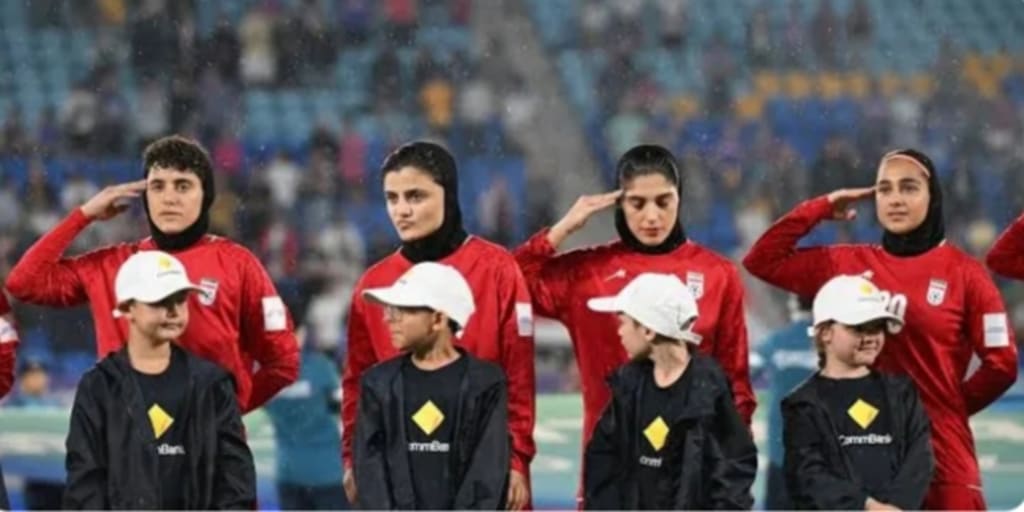
In a decision that has drawn international attention, Australia has granted asylum to five members of an Iranian women’s soccer team who said they feared persecution if they returned to Iran.
The move comes after pressure from Donald Trump, who publicly urged Western allies to provide protection for athletes and activists facing potential retaliation amid the escalating conflict in the Middle East.
The case has sparked a global conversation about the safety of female athletes, the role of political pressure in humanitarian decisions, and the broader struggle for women’s rights in Iran.
The Players Seek Protection
The five players, members of a semi-professional women’s soccer team from Iran, reportedly requested asylum after traveling abroad for an international sporting event.
According to officials and advocacy groups, the athletes expressed fears that returning to Iran could place them at risk of arrest, harassment, or other punishment.
Their concerns stemmed from a combination of political tensions and restrictions that Iranian authorities have historically placed on women’s participation in sports.
Women athletes in Iran often face strict regulations regarding dress codes, travel permissions, and public appearances. Violating these rules can lead to disciplinary actions, including suspensions or legal consequences.
For the players involved, the decision to seek asylum represented a life-changing step away from their home country in pursuit of safety and freedom.
Trump’s Public Appeal
The issue gained international attention after Donald Trump publicly called on Western governments to protect Iranian athletes who might face retaliation for speaking out or leaving the country.
Trump argued that countries with strong democratic traditions should provide safe haven for individuals who fear persecution under authoritarian regimes.
His comments came during a period of heightened tensions between the United States and Iran, as diplomatic relations deteriorated and military confrontations intensified.
While Trump’s remarks were primarily directed at highlighting human rights concerns, they also added political pressure on allied governments to respond.
Within days, Australia announced that it would grant asylum to the five players after reviewing their claims and determining that they faced credible risks if forced to return home.
Australia’s Humanitarian Decision
Australia has long maintained an asylum system designed to protect individuals fleeing persecution based on political beliefs, religion, gender, or social status.
Government officials said the Iranian players met the criteria for protection under international refugee law.
The decision allows the athletes to remain in Australia legally and begin rebuilding their lives without the immediate threat of deportation.
Advocates for refugee rights praised the move, describing it as a significant step toward protecting women who face discrimination or danger in restrictive environments.
Human rights organizations also emphasized the importance of supporting female athletes who challenge social barriers in countries where women’s participation in sports remains controversial.
Women’s Sports and Social Restrictions in Iran
Women’s sports in Iran have experienced both progress and controversy over the past several decades.
Despite strict regulations, Iranian women have competed internationally in sports ranging from soccer and basketball to martial arts and weightlifting.
However, female athletes must follow government-mandated dress codes and often face limitations on travel, sponsorships, and media exposure.
For some athletes, participating in international competitions has created opportunities to advocate for greater equality and visibility for women in sports.
At the same time, critics argue that athletes who challenge restrictions risk facing political pressure once they return home.
The five players who sought asylum reportedly believed that their participation abroad and their public statements about women’s rights could place them under scrutiny if they returned to Iran.
International Reaction
The asylum decision has generated mixed reactions globally.
Human rights organizations and many Western leaders praised Australia for offering protection to the athletes. They described the move as a powerful message supporting freedom and gender equality.
Sports organizations also expressed solidarity with the players, emphasizing that athletes should be able to compete without fear of political retaliation.
However, Iranian officials criticized the decision, arguing that it was politically motivated and part of broader efforts to undermine the country’s reputation internationally.
Some Iranian media outlets suggested that foreign governments were using athletes as political tools during a period of geopolitical tension.
The Athletes’ Future in Australia
For the five players, asylum represents both a new opportunity and a difficult transition.
Leaving their home country means separation from family members, friends, and the communities where they built their athletic careers.
However, it also opens the door to new possibilities.
Sports organizations in Australia have reportedly begun exploring ways to support the athletes, including opportunities to continue playing soccer at amateur or professional levels.
Advocacy groups are also working to ensure that the players receive housing, education, and career support as they adjust to life in a new country.
For many refugee athletes, rebuilding a career in sports can be an important part of adapting to a new environment and maintaining a sense of identity.
Politics, Sports, and Human Rights
The situation highlights the complex relationship between sports and global politics.
Athletes have increasingly become symbols in broader struggles involving human rights, freedom of expression, and political identity.
From Olympic protests to asylum requests, sports often intersect with social movements and geopolitical conflicts.
In this case, the involvement of political leaders such as Donald Trump added another layer to the story, turning a personal decision by five athletes into an international issue.
While some critics argue that political pressure should not influence asylum decisions, others believe it can help bring attention to urgent humanitarian cases.
A Symbolic Moment for Women’s Rights
Beyond the political debate, the case has become a symbol of the broader struggle for women’s rights in restrictive environments.
For many supporters, the decision to grant asylum reflects a commitment to protecting individuals who challenge inequality and discrimination.
Female athletes often face unique barriers, including cultural expectations, institutional restrictions, and limited access to resources.
By granting asylum to the Iranian players, Australia has taken a stand that many advocates believe will encourage other governments to support women seeking freedom and opportunity.
Conclusion
Australia’s decision to grant asylum to five Iranian women’s soccer players highlights the powerful intersection of sports, politics, and human rights.
What began as a personal plea for safety quickly evolved into an international story involving diplomatic pressure, gender equality, and the global role of athletics.
For the athletes themselves, the decision offers a chance to pursue their dreams without fear.
For the world, it serves as a reminder that the playing field is not always separate from politics—and that the courage of athletes can sometimes spark conversations far beyond the boundaries of sport.
About the Creator
Parallel Protests
I haven't written for quite some time, but I have A LOT of thoughts about yesterday's protest rally against our government's involvement and complicity in America's war on Iran, on the harbourside of my home city Bristol, and I need to put them somewhere. My gorgeous girlfriend is always a loving and listening ear and sharing it all with her will always be a healthy and happy way of processing the mental and emotional weight, but getting it straight in my brain to share means writing it all down in straight lines, so, here we are and thanks for being here.
By Steph Cole9 days ago in The Swamp
U.S. Military Turns Down Requests to Escort Tankers Through Hormuz
The United States military has reportedly declined several recent requests from commercial shipping operators seeking naval escorts through the strategically vital Strait of Hormuz, a decision that highlights growing complexity in the security landscape of the Gulf and raises concerns among global energy markets. Officials within the United States Department of Defense confirmed that while the U.S. Navy continues to monitor maritime activity closely, it has not expanded its escort operations for commercial oil tankers moving through the narrow waterway. The decision comes as tensions between Iran and the United States remain elevated, particularly following a series of incidents involving merchant vessels in the Gulf region. The Strait of Hormuz, located between Iran and Oman, is one of the most critical chokepoints in global energy trade. Roughly one-fifth of the world’s oil supply passes through the narrow corridor each day, making any disruption there a potential shock to international markets. Tanker operators and energy companies have grown increasingly anxious after reports of drone sightings, harassment of commercial ships, and electronic interference affecting navigation systems. According to defense officials familiar with internal discussions, the Pentagon determined that expanding direct escorts could risk escalating already delicate tensions in the region. Instead, the U.S. Navy is continuing its broader patrol mission under the multinational maritime security framework led by the U.S. Fifth Fleet, headquartered in Manama, Bahrain. A senior defense official, speaking on condition of anonymity due to the sensitivity of the matter, said that escorting every tanker passing through the strait would place enormous strain on naval resources and could create expectations that Washington may not be able to sustain over the long term. “Commercial vessels routinely transit the strait under existing security arrangements,” the official said. “Our forces remain present, vigilant, and capable of responding to threats, but continuous escorts are not currently part of our operational posture.” The policy echoes a similar approach adopted in recent years, when the United States launched the International Maritime Security Construct to coordinate patrols with allied navies and enhance maritime surveillance rather than provide full-time convoy protection. Nevertheless, the refusal has unsettled some shipping companies and energy traders who fear that the absence of guaranteed escorts could expose vessels to potential interference. Insurance premiums for tankers traveling through the Gulf have already fluctuated in response to the rising geopolitical risk. Security analysts note that Iran has repeatedly warned it could disrupt shipping through the strait if its own oil exports face further restrictions or military pressure. While Tehran has denied direct involvement in attacks on merchant vessels, Western governments have accused Iranian forces of conducting harassment operations through the Islamic Revolutionary Guard Corps naval units. Regional tensions have also been heightened by broader confrontations linked to the Israel–Hamas war and its ripple effects across the Middle East. Several Iran-aligned groups in the region have targeted shipping routes and military installations, raising fears that maritime commerce could become a wider battlefield. Despite declining escort requests, U.S. officials insist that the Navy remains committed to protecting freedom of navigation. Warships, surveillance aircraft, and drones continue to operate throughout the Gulf, tracking vessel movements and responding to suspicious activity. The U.S. military presence in the region has been a cornerstone of maritime security since the late 1980s, when Washington launched Operation Earnest Will to escort Kuwaiti tankers during the Iran–Iraq War. That operation marked one of the largest naval convoy efforts since the Second World War and underscored the strategic importance of the Strait of Hormuz. Today’s security challenges, however, are far more complex. Rather than large-scale naval battles, threats often involve asymmetric tactics such as fast attack boats, drones, cyber interference, and mines—methods designed to create disruption without triggering open conflict. Energy analysts warn that even minor incidents in the Strait of Hormuz can have outsized economic consequences. Oil prices tend to react sharply to any perceived threat to the waterway, given its central role in transporting crude from major producers such as Saudi Arabia, United Arab Emirates, and Kuwait. For now, shipping companies appear to be adjusting their risk calculations rather than halting operations. Most vessels continue to transit the strait under standard security protocols, while governments across the region maintain close communication with naval forces to monitor the situation. Diplomats say the U.S. decision not to expand escort missions may also reflect a broader effort to avoid sending signals that could further militarize the Gulf’s shipping lanes. Washington has repeatedly emphasized that its objective is deterrence and stability rather than confrontation. Still, the decision leaves the maritime industry navigating an uncertain environment. As geopolitical rivalries intensify and global energy flows remain heavily dependent on the Strait of Hormuz, the balance between security and escalation will continue to shape one of the world’s most strategically important waterways.
By Fiaz Ahmed about 21 hours ago in The Swamp
Worth the Wait: Puerto Viejo, Costa Rica
Beach bumming in a small Caribbean beach town sounded like a perfect way to end our 6-month trip through Mexico and Central America. Or so we thought. The foul, fishy stench of rotten seaweed hit our nostrils as we stepped from the cramped bus and looked out at a rather depressing, empty, and underwhelming black sand beach. It was pouring with rain, and we had to quickly fish out our ponchos. We thought, this couldn’t be it, could it?
By Sh*t Happens - Lost Girl Travel6 days ago in Wander

Comments
There are no comments for this story
Be the first to respond and start the conversation.