
When Silence Becomes Power: The Psychology of Staying Calm in Toxic Environments
How awareness, emotional discipline, and quiet observation expose manipulation and protect your mental strength.

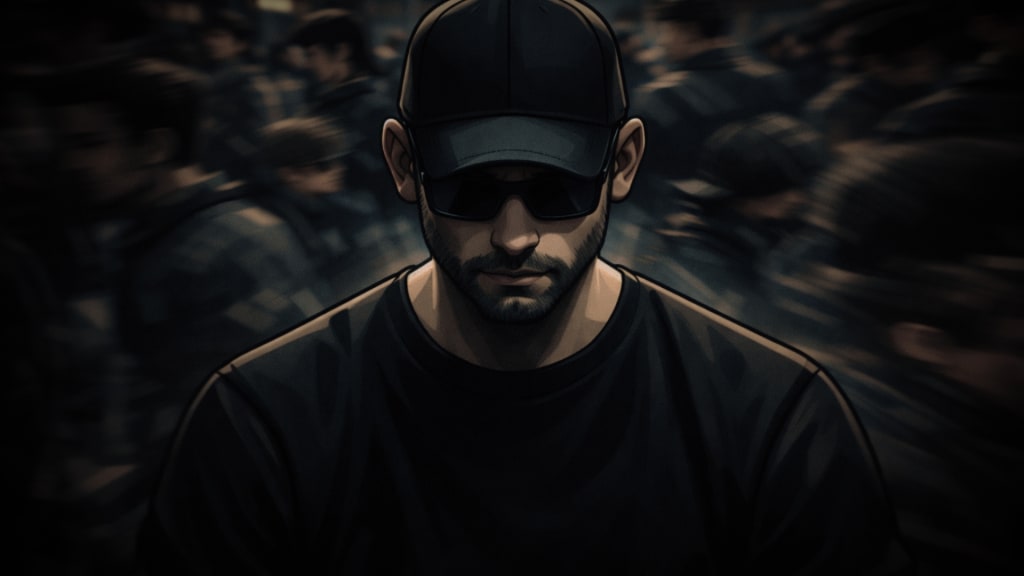
Sometimes the most dangerous battles in life are the ones no one else can see.
They don’t happen on stages, in headlines, or in dramatic confrontations. They happen quietly—inside conversations, environments, and subtle interactions where people test boundaries, measure reactions, and observe how much pressure a mind can carry before it breaks.
The strange part is that most people involved in these situations don’t even realize they’re part of the game.
Some think they’re helping.
Some believe they’re defending a cause.
And some simply follow the energy of the room.
But when you learn to step back, observe patterns, and control your reactions, something interesting happens.
The noise begins to reveal itself.
The Quiet Strength: Protecting Your Mind in a Noisy World
In a world that constantly demands our attention, strength is often misunderstood. Many people imagine strength as something loud—something aggressive, confrontational, or dominating. But real strength, especially when it comes to mental health, is rarely loud.
Real strength is quiet.
It is the ability to stay grounded when the environment around you becomes chaotic. It is the discipline to remain calm when others try to provoke reactions. And most importantly, it is the awareness to recognize when the space around you is healthy for your growth—or quietly toxic.
Over time, I’ve come to understand that protecting your mental health goes far beyond motivational quotes or positive thinking. Motivation is powerful, but awareness is essential. Awareness of the people around you, the patterns of behavior you encounter, and the subtle signals that reveal the true nature of an environment.
Because toxic environments rarely announce themselves openly.
They rarely introduce themselves as hostility. Instead, they often appear disguised as normal interactions, workplace dynamics, or social situations that slowly test your emotional balance.
One of the earliest red flags appears when people begin treating you as if you are less aware than you actually are.
It’s a strange psychological dynamic that many people overlook. Someone—or sometimes a group—may subtly act as though they are more perceptive, more informed, or more intelligent than you. The goal is rarely about truth. In many cases, it is about observing your reactions.
In unhealthy environments, individuals sometimes create small psychological “tests.” These situations may appear harmless on the surface—comments, jokes, subtle provocations, or repeated behaviors designed to measure how you respond under pressure.
What makes this dynamic even more complex is that the people orchestrating these situations are not always the ones interacting with you directly.
Often, those who wish to manipulate a situation prefer to remain in the background. Instead of acting openly, they may rely on others to carry certain behaviors forward. Sometimes those individuals are loyal followers, coworkers, or acquaintances who believe they are helping with something meaningful.
Other times, they may simply be unaware participants.
In many cases, people can be recruited—sometimes subtly, sometimes unknowingly—to deliver messages, carry certain behaviors, or test boundaries. They may believe they are contributing to something positive or defending a shared cause. They may even believe their actions serve a noble purpose.
But the reality can be very different.
What appears to be cooperation may actually be serving someone else’s unhealthy agenda—an agenda that feeds on emotional reactions, confusion, and psychological pressure.
Understanding this pattern can be incredibly empowering.
Because once you recognize it, you realize something important: you don’t have to participate in the game.
One of the strongest strategies for protecting your mental health is learning how to observe without reacting immediately.
Many toxic dynamics depend entirely on emotional responses. The moment someone succeeds in provoking anger, frustration, or defensiveness, they gain control over the situation. But when you remain calm, composed, and aware, the entire dynamic changes.
Silence can sometimes be more powerful than confrontation.
There are moments when someone may intentionally repeat behaviors they believe disturb you. They might think persistence will eventually force a reaction. But something interesting happens when that reaction never comes.
The tension shifts.
Frustration begins to move back toward those who initiated the situation.
And over time, people who rely on manipulation often reveal themselves—not because you exposed them, but because their own impatience exposes them.
This is why emotional discipline is one of the strongest forms of self-protection.
Remaining calm is not weakness. It is strategy.
Being observant is not paranoia. It is awareness.
And refusing to engage in unnecessary psychological battles is not surrender—it is self-respect.
Another powerful form of protection is clarity. When you find yourself in environments that feel psychologically unstable or emotionally draining, it can help to keep track of patterns and events. Not out of suspicion or revenge, but out of awareness.
Patterns tell stories.
And awareness gives you control over your own narrative.
But perhaps the most important realization is this: your energy should always be invested in building your life, not defending yourself from every distraction placed in your path.
The world is full of people silently fighting their own battles. Some struggle with anxiety. Others with self-doubt. Many with environments that quietly challenge their mental resilience.
That’s why conversations about mental health matter.
Because strength is not about proving that you are smarter than someone else.
Strength is about mastering yourself.
Maintaining your direction even when others try to divert your focus. Protecting your peace even when chaos surrounds you. Choosing growth over reaction.
For me, this philosophy eventually evolved into a simple idea:
Fate may place obstacles in your path, but your response to those obstacles is always yours to control.
That belief became something deeper—a mindset I call #IBeatFATE.
Not because life is easy. And not because adversity disappears.
But because true victory is not about defeating others.
True victory is learning how to rise above the noise, protect your mind, and keep moving forward with clarity, purpose, and strength.
And sometimes, the strongest warriors are the quiet.
Eventually, you realize something that changes everything.
The loudest people in a toxic environment are rarely the strongest ones.
The ones pulling strings behind the scenes are rarely the wisest.
True strength belongs to the person who sees the patterns…
understands the game…
and still chooses not to become part of it.
Because the greatest victory in life is not exposing every hidden agenda around you.
It’s building a life so strong, so focused, and so intentional…
that none of those agendas can stop your path.
And when that moment comes, you understand a simple truth:
Fate can place obstacles in your way.
But mastering your mind is how you beat it.
About the Creator
Lyon Gaber
Self-made actor | filmmaker | producer | screenwriter
Founder of #IBeatFATE
— Powered by People.
Website: www.LyonheartStudios.net
IMDb: https://imdb.me/lyongaber
IG: @L7onheart
Keep reading
More stories from Lyon Gaber and writers in Motivation and other communities.
I Woke Up at 5 AM for 7 Days — Here’s the Honest Truth Nobody Talks About
I remember staring at the ceiling at 4:57 AM, my alarm threatening to shatter the silence of my room. Two minutes away from the most agonizing hour I had ever voluntarily committed to, my mind screamed at me: Go back to bed. Sleep is safe. Success can wait.
By Imran Pisani3 days ago in Motivation
The Night I Almost Gave Up — And the 5 Truths That Pulled Me Back
There's a moment most people never talk about. Not the breakdown. Not the hospital. Not the dramatic rock bottom you see in movies. It's quieter than that. It's 2 a.m., the house is still, everyone you love is asleep — and you're sitting on the bathroom floor wondering not how to end things, but how to keep going.
By Mahveen khan5 days ago in Motivation




Comments
There are no comments for this story
Be the first to respond and start the conversation.