
Meal Portion Control Tips
If people could just learn to control their meal portions, they could stop cycling through the diet de jours.

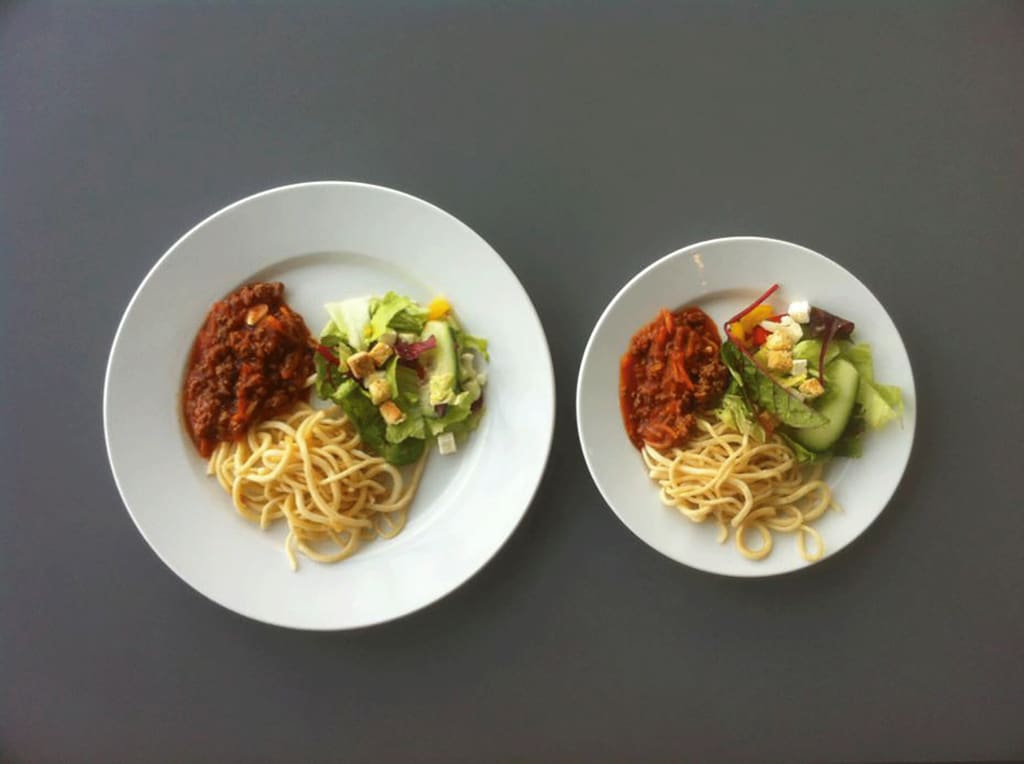
Most weight-conscious Americans know the hazards of overeating: Too-fat bodies age faster and are at higher risk for life-threatening diseases. But calorie-counters who focus more on what they take in with their eyes may have to worry less about what they put into their mouths. Visual cues, or the way food is presented, can actually decrease appetite and leave us feeling satisfied with less food or spur us to stuff ourselves, says Maria Simonson, Ph.D., professor emeritus of Johns Hopkins Medical Institution. She's referring to plate sizes, patterns and other table-setting details, and Calculates that smart choices can save you about 250 calories a day—the equivalent of losing a pound every two weeks.
Just as kids gulp down milk to get to the bunny design at the bottom of the cup, adults often eat up to uncover the decoration on dinner plates, according to Simonson. Plain plates, therefore, are a safer bet, provided they come in the right color. Pastels and white tend to tame the appetite; bright colors have been proven to trigger it.
"If you use a small bowl, you may even end up eating less," says Simonson. "Eating from a bowl that's almost overflowing, no matter what its size, is more likely to leave you feeling satisfied than eating from one that is half empty."
The slower we eat, the more likely we are to hear—and heed—our stomach's "I'm full" signals. Hence the case for several plates: They make a meal last longer. Plus, when meals are served as a series of courses, or even just on a number of plates all at once, it seems like there's more of it, even if there really isn't. Simonson's suggestion: Serve main courses on salad-size plates (the small-bowl theory again) and side dishes on even smaller bread plates.
Place mats should be standard table dress-ups for dieters, Simonson says, because they create a border that sets “mental limitations" on what's there for the eating. Tablecloths suggest everything on the table is fair game. Silverware sets up a similar boundary. The more formal the place setting (i.e., the more knives, forks and spoons expanding out from the plate), the more strategically defined— and portion-controlled—the eating area. Finally, save romantic candlelight for special occasions. Says Simonson: "People eat more in a dimly lit room."
About the Creator
James Porterson
Former obese teen turned nutritionist. Enjoys writing about staying active and proper nutrition.
Keep reading
More stories from James Porterson and writers in Longevity and other communities.
Plaque is Wack
Dental plaque doesn't seem like the stuff controversies are made of. No one says anything good about it, and everyone agrees that the gum disease and tooth loss connected with the plaque buildup that tends to occur as we grow older are avoidable. “There's no reason you have to face the loss of teeth at any age," says Peter Robinson, D.D.S., professor of periodontics. "Aging does not mean you have to have periodontal disease."
By James Porterson9 years ago in Longevity
Italy Weighs Options as Damaged Russian LNG Tanker Drifts in the Mediterranean
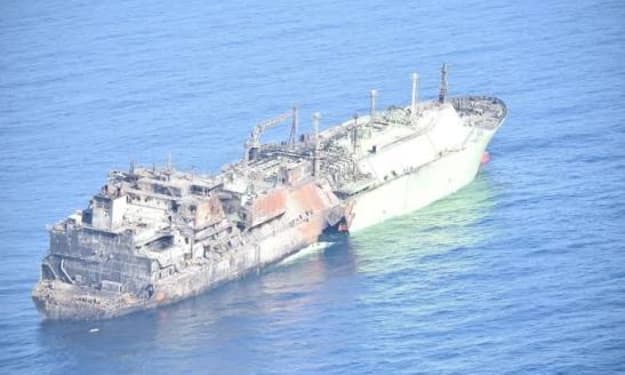
Italian authorities are urgently assessing their options after a damaged Russian liquefied natural gas (LNG) tanker was reported drifting in the central Mediterranean, raising fears of an environmental disaster and diplomatic complications at a time of heightened geopolitical tension. The vessel, believed to have suffered structural damage during a storm several days ago, has been moving slowly westward under limited control, prompting concern among coastal states and maritime monitoring agencies. Italian coast guard officials confirmed late Thursday that the tanker, carrying thousands of tons of LNG, had transmitted distress signals indicating propulsion failure and potential hull damage. While the ship’s crew has reportedly managed to stabilize onboard systems, experts warn that prolonged drifting could increase the risk of further damage, especially if rough weather returns. Authorities in Rome are now considering whether to allow the tanker to enter an Italian port for emergency repairs or to coordinate an offshore stabilization operation. Either option carries significant political and environmental implications. Officials familiar with the discussions say the Italian government is balancing three primary concerns: maritime safety, environmental protection, and compliance with European sanctions related to Russia’s energy sector. Although LNG shipments themselves are not universally banned under European measures, any assistance to a Russian energy vessel could spark political backlash within the European Union. “This is a highly delicate situation,” said one maritime security analyst based in southern Europe. “Italy has an obligation to prevent environmental damage in its waters, but there are also strong political sensitivities when a Russian energy asset is involved.” The tanker reportedly departed from an Arctic export terminal earlier this month and was en route to an undisclosed destination when it encountered severe weather conditions in the eastern Mediterranean. Satellite tracking services show the vessel slowing dramatically after issuing technical alerts, eventually losing most of its propulsion capability. Italian maritime patrol aircraft and naval vessels have been dispatched to monitor the situation. Early assessments suggest the LNG cargo remains intact within the ship’s cryogenic storage tanks, which are designed to withstand significant stress. However, maritime engineers caution that structural weaknesses in the vessel’s hull could pose long-term risks if not addressed quickly. “If the containment systems fail, the result could be a major gas release,” explained an LNG safety consultant who previously worked with European shipping regulators. “While LNG does not create oil slicks like crude oil, a large release can still cause fires, explosions, and serious environmental disruption.” The drifting tanker is currently believed to be located several hundred kilometers south of the Italian mainland but within a heavily trafficked maritime corridor used by cargo ships traveling between the Suez Canal and major European ports. Italian officials have already issued navigational advisories to nearby commercial vessels, urging them to maintain distance from the damaged ship. Diplomatic channels have also been activated. Italian officials are reportedly in contact with Russian maritime authorities as well as the vessel’s operating company to determine responsibility for rescue and repair operations. Under international maritime law, ships in distress must be assisted when safety or environmental risks are present, regardless of nationality. However, the political dimension of the case complicates matters. Since Russia’s invasion of Ukraine, European governments have taken increasingly strict positions on Russian energy shipments, even when formal sanctions allow limited trade. Environmental organizations have also entered the debate, warning that delays in responding could increase the risk of an accident. Several Mediterranean conservation groups issued a joint statement urging Italy and neighboring states to coordinate a rapid intervention. “The Mediterranean is one of the world’s most fragile marine ecosystems,” the statement said. “Any industrial accident involving LNG transport could have serious ecological consequences.” Shipping industry representatives, meanwhile, argue that humanitarian and environmental safety considerations must take precedence over politics. Maritime insurers have indicated that emergency port access is a standard safety measure in situations involving damaged vessels. Inside the Italian government, discussions are believed to involve the ministries of transport, environment, foreign affairs, and defense. A final decision could determine whether the tanker is escorted toward a designated Italian harbor or kept offshore while international salvage teams attempt repairs at sea. Local authorities in several southern Italian ports have already been quietly consulted about their capacity to host the vessel should Rome approve entry. Such a move would require extensive safety protocols, including restricted harbor zones and standby emergency services. Weather forecasts for the coming days may influence the decision. Meteorological agencies predict shifting winds across parts of the central Mediterranean, conditions that could either push the tanker closer to European coastlines or move it into deeper waters farther from shipping lanes. For now, Italian surveillance aircraft continue to track the ship’s slow drift while naval units remain on standby nearby. As policymakers debate the next step, the drifting tanker has become an unexpected symbol of the complicated intersection between energy security, geopolitics, and environmental risk in Europe’s increasingly contested maritime space. The coming days may determine whether the incident ends as a controlled maritime rescue—or escalates into a broader regional crisis.
By Fiaz Ahmed about 2 hours ago in Longevity



Comments
There are no comments for this story
Be the first to respond and start the conversation.