
Havana Syndrome Unmasked: The Black Market Russian Microwave Weapon Captured In a DHS Sting
Yes, the syndrome is real and the mystery is finally explained

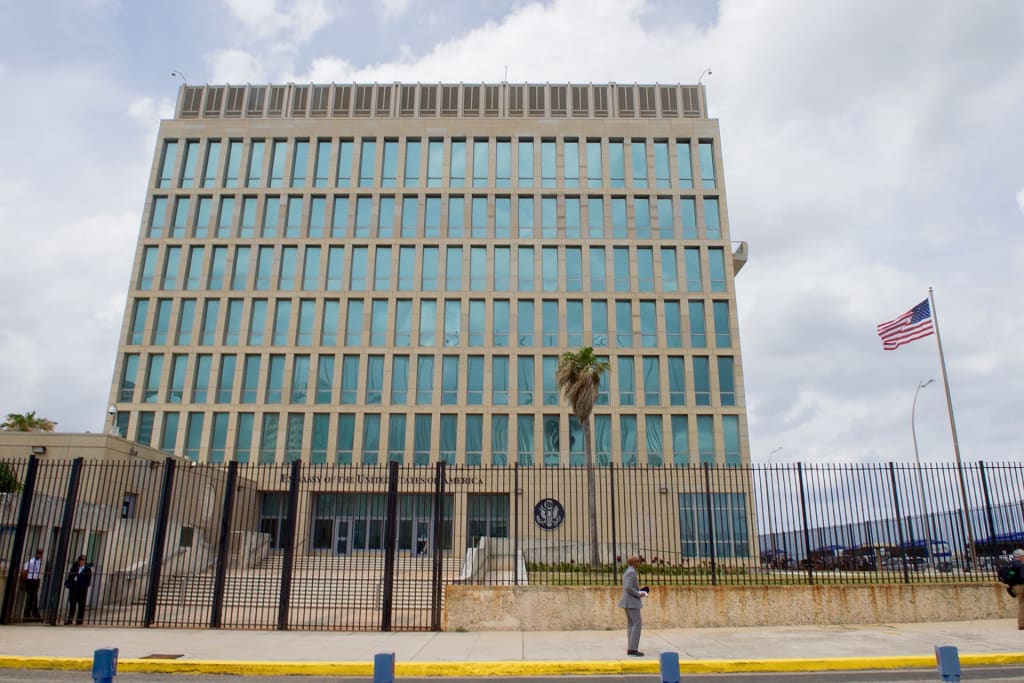
For nearly a decade, American diplomats, intelligence officers, and military personnel have reported a terrifying experience: an invisible attack that leaves them with debilitating brain injuries, chronic pain, and life-altering neurological damage.
What began in 2016 as a cluster of strange incidents in Havana, Cuba, has since spread across the globe—from Vienna and Guangzhou to Washington itself. Victims describe sudden pressure in the head, piercing sounds only they can hear, vertigo, nausea, and long-term cognitive fog.
Many have been forced out of service entirely.
For years, the official narrative wavered between scepticism and speculation.
Some experts dismissed it as mass hysteria or stress-induced illness. Others quietly pointed to directed-energy weapons. Some diplomatic staff were quietly criticised as hypchondriacs.
Then, on 9 March 2026, the long-running investigation by US programme '60 Minutes' dropped a revelation that shifts the entire story from mystery to hard evidence.
The Pentagon, working through undercover agents from the Department of Homeland Security’s Homeland Security Investigations unit, acquired and tested a portable Russian-origin microwave device that precisely replicates the symptoms of Havana Syndrome.
The operation itself reads like a spy thriller, one I wish I'd written myself. But I did write about the technology way back in 2010, in my first novel, 'Gate of Tears'.
In the final months of the Biden administration in 2024, HSI agents infiltrated a Russian criminal network on the black market. Their target: a previously unknown, backpack-sized weapon capable of projecting pulsed microwaves.
The price tag exceeded $15 million, fully funded by the Pentagon. The device was not a crude prototype; it contained Russian components and was concealable, man-portable, and operable on standard battery power.
It could penetrate windows and drywall from hundreds of feet away without leaving a trace.
What happened next was methodical and chilling.
For more than a year, Pentagon laboratories conducted controlled tests on animals—rats and sheep—using the exact technology recovered in the operation. The results, according to multiple sources briefed on the matter, were unmistakable: the subjects developed neurological injuries identical to those reported by human victims.
Brain lesions, cognitive impairment, persistent headaches, balance disorders—the full spectrum of Havana Syndrome symptoms appeared under laboratory conditions.This is no longer theoretical.
The science behind it draws on well-established principles of microwave interaction with the human body. Pulsed radio-frequency energy can induce the so-called Frey effect, creating perceived sounds inside the skull through rapid thermal expansion of brain tissue. At higher intensities or specific pulse patterns, it can cause actual cellular damage, inflammation, and disruption of the blood-brain barrier.
For years, sceptics inside the CIA and elsewhere argued that any weapon powerful enough to cause such harm would need to be the size of a lorry. This device proves otherwise: compact, efficient, and devastatingly effective.The timing and sourcing add layers of geopolitical intrigue.
Previous joint reporting by 60 Minutes, The Insider, and Der Spiegel had already linked Havana Syndrome to Russia’s GRU Unit 29155—the same elite military intelligence group implicated in the UK Salisbury novichok poisonings and other covert Russian operations. The newly acquired weapon aligns with that pattern. It is not an official Kremlin-issue item handed to diplomats, but its components and design strongly suggest derivation from Russian directed-energy research programmes.
That it has now leaked onto the black market raises a darker possibility: Moscow may have lost control of its own technology.
If undercover American agents could purchase one from gangsters, then rogue actors, private mercenaries, or hostile states could do the same.The human cost remains the most haunting element.
Hundreds of cases have been documented, including senior CIA officers, White House staff, FBI agents, and their families. Former intelligence officer Marc Polymeropoulos, one of the most prominent victims, has spoken publicly about the hope this development brings after years of dismissal. Many sufferers describe not just physical pain but professional betrayal—the sense that their own government was slow to believe them.
Internal CIA debates have been fierce, with some factions accused of deliberately downplaying evidence to avoid diplomatic fallout. The new findings are already being called “the biggest cover-up of my adult life” by insiders frustrated at the pace of acknowledgement.Yet questions linger.
The device was not traced to any specific attack; it serves as proof of concept rather than courtroom evidence. No foreign government has been formally accused in this latest chapter. Congress is now demanding briefings, and pressure is mounting for declassification and victim compensation. The Pentagon, meanwhile, is quietly reshaping its approach to anomalous health incidents, focusing on treatments and countermeasures.In the broader landscape of modern espionage, this story marks a watershed.
Directed-energy weapons have moved from science fiction to street-level black-market reality. They require no bullet, no explosive residue, and no obvious perpetrator—just a beam, a target, and plausible deniability.
As tensions rise in regions from the Middle East to Eastern Europe, the proliferation risk is acute. What happens when non-state actors acquire similar technology? How do we protect diplomats and intelligence personnel in an era where the battlefield can be a hotel room or embassy corridor?
For the victims, the 60 Minutes report is more than headline news; it is validation. After years of being told their injuries might be psychosomatic, they now have laboratory proof that the pain was real and the weapon exists. The investigation does not claim to solve every case—some incidents may still stem from other causes—but it confirms that a subset, perhaps a significant one, resulted from deliberate attack.
As the United States grapples with this new reality, the Havana Syndrome saga offers a sobering lesson in the evolution of conflict. Traditional espionage relied on dead drops and coded messages. Today’s shadow wars are fought with invisible energy that slips past metal detectors and security sweeps. The device now in American hands is both a defensive breakthrough and a warning: the technology is out there, and it is no longer confined to state laboratories.
The coming months will test whether Washington treats this as a one-off intelligence coup or the opening chapter of a new arms race. Victims and analysts alike are watching closely. For the first time in nearly a decade, the invisible enemy has a face—and it is disturbingly portable.
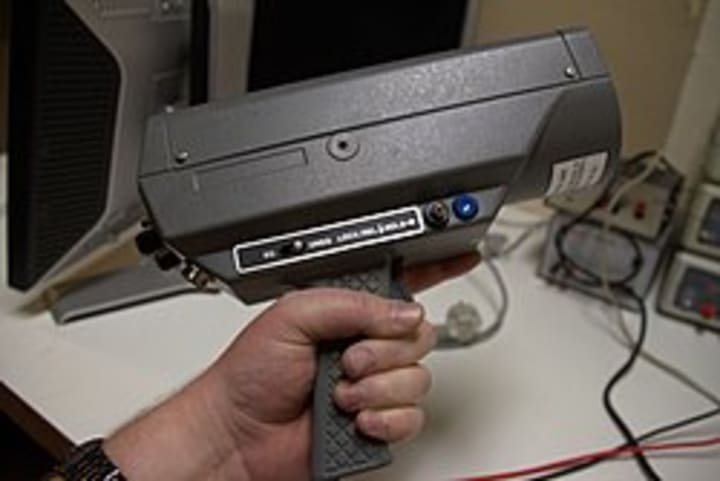
When I was a boy we called them 'ray-guns' and they featured in sci-fi comics. Now they are real and dangerous. And, I believe, easy to build, requiring no specialised microchips, just a more powerful and evolved variation on that well known device, the radar speed gun.
About the Creator
James Marinero
I live on a boat and write as I sail slowly around the world. Follow me for a story diet of Tech, AI, Geopolitics and more as the world is rapidly changing. I also write techno thrillers, with six to my name. More of my stories on Medium
Keep reading
More stories from James Marinero and writers in Journal and other communities.
Ukraine's P1SUN Drone Interceptor Sold to the US for Gulf Defence
Oh, the irony of it all. The sale of Ukrainian P1SUN interceptor drones to the US is a hugely significant event. This agreement, which involves the delivery of an initial 1,000 units to the Middle East, reflects the urgent requirement for cost-effective solutions to counter prolific loitering munitions such as the Iranian-designed Shahed series.
By James Marinero5 days ago in Journal
The Hyaluronic Acid Market Is Quietly Changing the Way We Think About Skincare
There is a moment most of us know well. Standing in the skincare aisle, bottle in hand, squinting at the ingredient list. Somewhere near the top, almost always, you will find it: hyaluronic acid.
By Harvey Specterabout 2 hours ago in Journal



Comments
There are no comments for this story
Be the first to respond and start the conversation.