
7 Signs Your Workspace Is Quietly Working Against Your Team
The majority of workplace issues are not readily apparent.
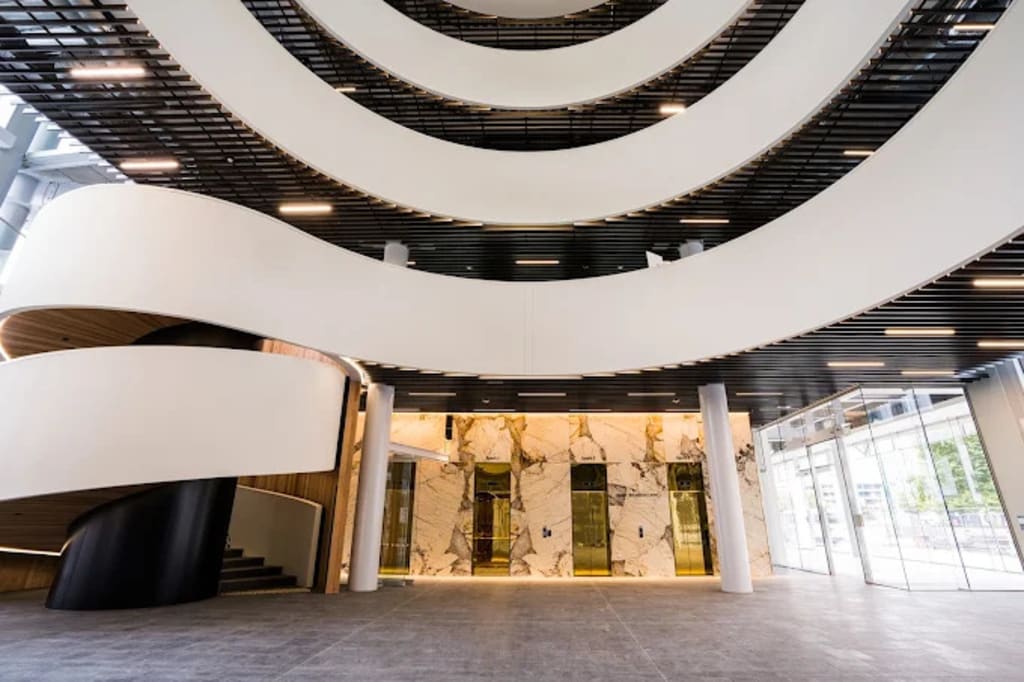
They manifest in more subtle ways. a group that has trouble concentrating. meetings that overflow into the corridors. Employees whose workplaces are too distracting seek out quiet areas. customers who enter and receive the correct address but a less than ideal impression.
People frequently place the wrong blame first when a workspace is working poorly. They point the finger at workflow, motivation, communication, and even culture. However, sometimes the true problem is less complicated than that.
Occasionally, the actual space gets in the way.
Here are seven indicators that your workspace can be subtly undermining your team.
1. People are always looking for somewhere else to work
If workers frequently travel to another area, accept calls from the car, or search for a quiet place to concentrate, it is obvious that the main workspace is not providing enough support.
In order to do their jobs well, people shouldn't have to leave a respectable workplace.
2. Noise is affecting focus more than anyone wants to admit
Noise is one of the most common and easily accepted problems at work. People become used to background noise, phones ringing, chairs scratching, and ongoing discussions throughout the day.
But just because a team has become used to noise does not mean that it is safe. Inadequate acoustic control can make even simple tasks appear more challenging than they should, increase weariness, and slightly affect focus.
3. Collaboration feels awkward instead of natural
Although structure has a significant impact on how easily individuals connect, collaboration is frequently viewed as a cultural issue.
The environment may be acting against the conduct the company wants more of if team members avoid brief chats because there is nowhere convenient to meet or if every interaction feels like it upsets someone else.
The finest workplaces allow for both natural contact and concentrated work.
4. The layout no longer reflects how the business actually operates
Many companies expand into areas that were intended for a previous iteration of themselves. Teams grow, jobs shift, technology advances, and formerly effective methods begin to seem ineffective.
A workstation that worked well for a company five years ago can now be slowing it down. Friction increases quickly when personnel, tools, and workflow are out of alignment with the layout.
5. Clients or visitors get the wrong impression
A team's mood is not the only thing that a workstation influences. It also affects how people view a company.
If the area is out-of-date, disorganised, untidy, or inconsistent with the brand, visitors will notice. Even if the service is excellent, the environment may trigger concerns before a word is spoken.
Many companies don't realise how crucial first impressions are.
6. Everyday tasks take longer than they should
When workers have to constantly move around obstacles, wait for shared spaces, or work around poor storage and challenging access points, inefficiency becomes a daily occurrence.
These are the kinds of issues that frequently go unrecognised because they seem regular. However, minor design flaws eventually result in significant productivity losses.
Friction is eliminated in a well-planned setting. It is the result of a badly conceived one.
7. The team has stopped expecting the space to improve
This could be the most significant red flag of all.
It's not always a sign that all is OK when people cease bringing up issues with the workspace. Sometimes it indicates that they have come to terms with the discomfort. They have adjusted, reduced expectations, and discovered solutions.
That does not imply that the area is functional. It indicates that the team is making up for it.
Businesses are frequently shocked by how much may change when they view their environment as a tool that should actively assist performance rather than just a place to work, according to Corva Commercial Interiors' commercial interior consultants.
In actuality, a workspace should serve purposes beyond simply housing a team. They should be able to operate efficiently, communicate effectively, and accurately represent the company.
If you recognise any of these symptoms, your people might not be the problem.
It can be your area.
About the Creator
Russian ‘Shadow Fleet’ LNG Tankers Reroute After Blast Sinks ‘Arctic Metagaz’ in Mediterranean
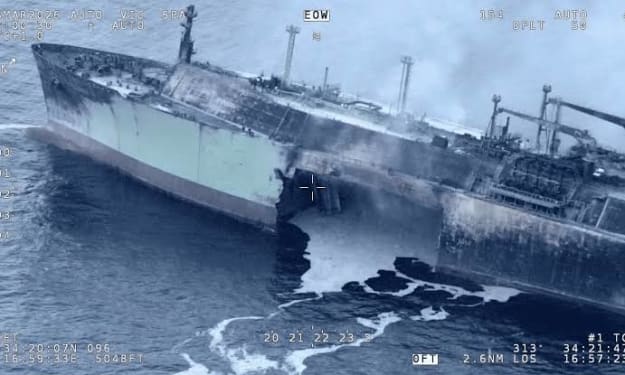
One of Russia’s sanctioned liquefied natural gas (LNG) carriers has sunk in the Mediterranean Sea, prompting remaining vessels tied to the Kremlin’s so‑called “shadow fleet” to halt, delay, or change routing as fears grow about the safety of key shipping corridors. The incident — which Moscow says was caused by a Ukrainian naval drone attack — highlights escalating risks to maritime energy transport as Russia’s energy exports face mounting pressure from conflict and sanctions. The Arctic Metagaz, an LNG tanker linked to Russia’s Arctic LNG 2 export project, was destroyed off the coast of Libya — roughly 150 nautical miles north of Malta — after experiencing powerful explosions and catching fire in early March. Italian and Libyan maritime authorities confirmed the vessel sank following a major blaze that engulfed it late on March 3, though all 30 crew members were safely evacuated by rescue teams. Russia Blames Ukrainian Drones In statements released after the sinking, the Russian Ministry of Transport accused Ukraine of directing a drone attack from the Libyan coast using naval unmanned boats, marking what Moscow described as an act of “international terrorism and maritime piracy.” Ukrainian officials have not publicly commented on the accusation. While state media narratives frame the incident as a deliberate strike on Russian energy infrastructure, independent verification of the attack’s cause remains limited. Some analysts note that Moscow’s sanctioned vessels, often operating outside Western restrictions, have become symbolic targets because of their role in bypassing sanctions aimed at cutting Russia’s energy revenue. A Blow to Russia’s Shadow Fleet Logistics The sinking of Arctic Metagaz has had an immediate impact on the operations of Russia’s “shadow fleet” — a collection of older tankers that transport hydrocarbons for sanctioned energy projects, such as Arctic LNG 2, around the world. The fleet has already been constrained by Western sanctions that limit access to insurance, financing, and port services, leaving only a small number of vessels able to carry cargo. Tracking data shows that several other Russian LNG carriers altered their movements in response to the blast. The Arctic Pioneer, which was transiting north through the Suez Canal at the time of the explosion, appears to have held offshore near Port Said for over 48 hours. Meanwhile, the Arctic Vostok, originally sailing westward across the eastern Indian Ocean, changed course and began heading south, possibly preparing to circumvent the Suez Canal by way of the Cape of Good Hope at Africa’s southern tip. Such deviations represent a rare and costly departure from established Arctic LNG‑to‑Asia routes. Circumnavigating Africa adds thousands of nautical miles — and weeks — to voyages, significantly increasing fuel costs, crew time, and delivery schedules. For a fleet already stretched thin, these disruptions could weaken Russia’s ability to sustain consistent LNG exports. Broader Energy Market Ripples The Arctic LNG 2 project was already running at a fraction of its full capacity due to logistical limitations and sanctions. This latest incident underscores how fragile those supply chains have become and how geopolitics can impact global energy flows far from conflict zones. Analysts warn that if other vessels begin to avoid the Mediterranean entirely, the additional transit time will reduce the number of voyages each tanker can complete in a year, tightening shipments to buyers — especially in East Asia — and potentially driving up LNG prices. Some industry observers say that Russia may have to rely increasingly on direct Arctic routes in summer months or seek alternative buyers closer to its production hubs. However, these options remain limited given fleet size and sanctions constraints. Risks to Shipping and Regional Security The incident also highlights the increasing vulnerability of energy tankers in contested waters. As global geopolitical tensions intersect — from the Ukraine war to Middle Eastern instability — commercial vessels are frequently caught between military actions and international sanctions regimes. Cruise ships, cargo carriers, and LNG tankers alike face heightened risk of unexpected attacks or collateral damage when navigating strategic chokepoints such as the Mediterranean and Suez transit route. Environmental concerns also linger following the sinking. Although LNG tankers carry less oil than typical crude carriers, authorities in the region continue to monitor the site for potential gas release or secondary impacts on marine ecosystems. Meanwhile, shipping insurers and charterers are reassessing risk models for vessels traveling near conflict zones. Looking Ahead For Moscow, the loss of Arctic Metagaz complicates an already strained export strategy and could prompt broader changes in how Russia moves LNG to global markets. Whether remaining tankers will continue to transit high‑risk corridors or adopt longer, safer routes around Africa remains an open question. The decision will hinge on geopolitical developments, insurance availability, and how both Russian and Western authorities respond to this high‑profile maritime incident.
By Fiaz Ahmed 7 days ago in Journal
Worth the Wait: Puerto Viejo, Costa Rica
Beach bumming in a small Caribbean beach town sounded like a perfect way to end our 6-month trip through Mexico and Central America. Or so we thought. The foul, fishy stench of rotten seaweed hit our nostrils as we stepped from the cramped bus and looked out at a rather depressing, empty, and underwhelming black sand beach. It was pouring with rain, and we had to quickly fish out our ponchos. We thought, this couldn’t be it, could it?
By Sh*t Happens - Lost Girl Travel7 days ago in Wander



Comments
There are no comments for this story
Be the first to respond and start the conversation.