
Rickard Sagirbay on Philosophy, Science, and Human Potential: or, Intelligence, Stoicism, and Spiritual Inquiry
How does Rickard Sagirbay integrate science, Stoic philosophy, and metaphysical beliefs such as reincarnation into a framework for intellectual growth and human potential?


Rickard Sagirbay is a Swedish author and online writer of Turkish family origin, born in 1984, who blends philosophy, metaphysics, science, and self-development. Active in niche high-IQ communities including OLYMPIQ, ISPE, and Mensa, he is a multilingual thinker interested in truth, logic, reincarnation, and human potential. His bibliography includes numerous self-published titles, among them "The AI-integrated Human Evolution" and "2150 The World Upside Down." Sagirbay emphasizes endurance, personal transformation, and intellectual growth, often framing life as a struggle through darkness toward greater insight, resilience, and evolving self-understanding in both mind and spirit over time.
In this interview, Scott Douglas Jacobsen speaks with Swedish author Rickard Sagirbay about science, philosophy, and the evolution of personal wisdom. Rickard Sagirbay reflects on the importance of scientific reasoning while maintaining openness to philosophical and spiritual inquiry, including Stoicism, Buddhism, and the possibility of reincarnation. He discusses intelligence as biologically constrained yet improvable through disciplined training, citing cognitive tools like BrainHQ and theories from Charles Spearman and Howard Gardner. The conversation explores maturation, emotional discipline, and resilience, as Rickard Sagirbay describes a lifelong journey from rebellious youth toward reflective self-mastery, intellectual humility, and the continuous refinement of mind and character.
Scott Douglas Jacobsen: Science plays a larger role in the view of the world for you. How have standards for belief, evidence, and truth, evolved for you?
Rickard Sagirbay: Science plays an essential role in modern civilization. Much of the certainty we rely upon in society—whether in engineering, medicine, or technology—rests upon scientific methods and evidence. When an architect designs a building or a doctor prescribes medicine, sound scientific reasoning is indispensable.
One figure who strongly influenced my view on the balance between reason and progress is Mustafa Kemal Atatürk. Atatürk emphasized that nations must build their future upon science, rational thinking, and education. I share that view deeply: science is one of humanity’s most powerful tools for understanding reality and making responsible decisions.
However, I also believe that human life cannot be reduced entirely to empirical measurement. Freethinking, intuition, philosophy, and even religious belief have always coexisted with science. Philosophy and religion have often intertwined throughout history, shaping ethical frameworks and guiding moral reflection. A healthy society should allow individuals the freedom to hold different beliefs and perspectives, provided that discourse remains respectful and does not incite violence or hatred.
Communication itself is essential to civilization. When people stop engaging in dialogue—especially with those who disagree with them—society begins to fragment. In my younger years, I sometimes approached discussions as contests of persuasion: trying to prove who was right and who was wrong. With time and experience, particularly after turning forty, I realized that intellectual maturity often lies elsewhere. It lies in mastering oneself—maintaining composure, listening carefully, and not allowing emotion to overwhelm reason.
This perspective resonates with the Stoic tradition, founded by Zeno of Citium. Stoicism teaches emotional discipline and rational clarity, though achieving such balance is often easier said than done. I certainly do not claim perfection in this regard; like most people, I have experienced moments when emotions overcame reason. Yet maturity gradually brings greater poise. The same person who once reacted impulsively can, with time and reflection, learn to remain calm and deliberate.
Another area that has deeply shaped my thinking concerns intelligence and human potential. Through long-term use of the cognitive training platform BrainHQ—where I have accumulated more than 130,000 stars over countless hours—I began to reflect more deeply on the nature of intelligence itself.
It is widely accepted that differences in intelligence exist between individuals, and genetics clearly play an important role in shaping cognitive capacity. This reality is comparable to physical training: when people go to the gym, everyone can improve, yet the ultimate results vary depending on biological factors.
Classical intelligence theory, especially the concept of the g-factor proposed by Charles Spearman, captures an important truth about general cognitive ability. However, I believe it should be viewed with more nuance. Other thinkers, such as Howard Gardner, have suggested that human cognitive abilities may be more diverse than a single metric can fully capture.
There is also a phenomenon that some intellectual circles still underestimate: neuroplasticity—the brain’s ability to reorganize and improve through structured training. My own experience strongly suggests that disciplined cognitive exercises can meaningfully sharpen mental performance over time. This does not mean that intelligence can increase without limits. Biological ceilings do exist.
Yet a ceiling is not destiny.
Genetics establish different starting points and different upper limits for individuals. But within those limits, the brain remains remarkably adaptable. With sustained effort, people can optimize and refine their cognitive abilities—much like tuning an engine or training a muscle group.
Tools such as BrainHQ illustrate this principle well. They do not magically make someone twice as intelligent, but they can help individuals approach their own personal cognitive peak.
For that reason, I see intelligence neither as completely fixed nor infinitely malleable. Rather, it is biologically constrained potential—a system shaped by genetics but capable of meaningful improvement through disciplined training.
Recognizing this possibility is not naïve optimism; it is an affirmation of human development. When individuals strive to sharpen their minds, they are not merely pursuing personal advancement—they are participating in the broader evolution of human potential.
Jacobsen: You spoke about beginning life within a Muslim family. Later, you converted to Buddhism. What is the metaphysical and religious outlook now?
Sagirbay: I was born into a Muslim family, and that naturally shaped part of my early cultural and spiritual environment. As I grew older and began reflecting more deeply on life, philosophy, and the nature of the mind, I found myself increasingly drawn to Buddhist thought. The psychological insight within Buddhism — particularly its understanding of suffering, attachment, and the training of the mind — resonated strongly with me.
At the same time, I have also been influenced by Stoic philosophy. The Stoic emphasis on inner stability, acceptance of circumstances, and responsibility for one’s own character aligns closely with the Buddhist idea of cultivating equanimity and mental discipline.
Today my outlook is perhaps best described as philosophical rather than strictly religious. I do believe in God or in a higher universal principle behind existence, but I refrain from identifying myself completely with any single religious institution or dogma.
Part of the reason I believe in a higher intelligence behind reality comes from the cosmological argument. The idea that everything which exists has a cause seems logically compelling. Something cannot come from absolute nothingness. Cause and effect appear woven into the fabric of reality, and the laws of preservation suggest that energy cannot be created or destroyed but only transformed. To me, this hints at a deeper structure underlying existence.
My belief in reincarnation is more intuitive, though it is also influenced by patterns we observe in nature. Death and renewal, decay and regeneration — these cycles appear everywhere in the natural world. Nature constantly recycles itself. While this does not constitute ironclad proof, it forms a pattern that I find philosophically suggestive.
I have also been influenced by several thinkers and researchers who have explored these questions from different perspectives: the Buddha for his profound insight into the mind, philosophers such as Socrates, Plato, and Pascal for their reflections on metaphysics and human existence, and researchers like Ian Stevenson who studied cases suggestive of reincarnation. Even figures like Rüdiger Gamm, who demonstrate unusual cognitive capacities, remind us that the human mind may still hold many mysteries that science has yet to fully explain.
Despite the absence of definitive proof, my intuition leads me to feel about 99.9% confident that some form of reincarnation or continuation of consciousness exists. I say this with humility rather than certainty. Philosophy teaches us that intellectual honesty requires acknowledging the limits of our knowledge.
For me, Buddhism and Stoicism offer practical guidance for living well: cultivating discipline, reducing attachment, strengthening the mind, and meeting life’s inevitable difficulties with composure. At the same time, I remain open to the possibility that reality is deeper and more mysterious than our current scientific models can fully capture.
Ultimately, I believe there are certain universal pillars that guide a meaningful life — self-discipline, compassion, intellectual honesty, and awareness of the mind. But no single tradition holds a monopoly on truth. Each person must walk their own path and arrive at their own understanding of existence.
In a similar spirit, I also find the reflections of René Descartes compelling. As Descartes once argued, if anything exists at all, there must ultimately be something eternal — a fundamental essence that does not require another cause to explain it. Such a reality would have the reason for its own existence within itself. It would not need a mover, because it has always existed.
I do not imagine this as a “man in the sky,” but rather as a primordial and infinite source underlying all reality — something more comparable to a universal principle or field. One could call it the All: a foundational power that permeates existence in a holistic way, somewhat analogous to gravity, yet far more fundamental.
If absolute nothingness had ever existed, then nothing could ever emerge from it. In simple terms, 0 + 0 would remain non-existence. Yet reality clearly exists. Something rather than nothing is here. Therefore there must be a fundamental “1” — an eternal ground of being from which everything arises.
In that sense, God is not separate from the universe but the deepest foundation of it: everything we can imagine, and also the unfathomable beyond our current understanding. One might even say that it resembles something like dividing by zero in mathematics or programming — something that appears undefined within our frameworks, yet still points toward a reality that exists beyond the limits of our comprehension.
Jacobsen: Hardship, rebellion against authority, and a survival philosophy were earlier developmental stages. What is the state of wisdom and growth now?
Sagirbay: If I am honest, I think I was born with a somewhat rebellious temperament. Even as a child I had a strong tendency to question authority and established ideas. That instinct has never completely disappeared, and in many ways I am grateful for it. A certain degree of rebellion is often necessary for independent thinking.
What has changed over time is not the impulse to question, but the way it is expressed. Age and experience inevitably reshape a person. At forty-one I simply do not possess the same fiery temper or restless energy that I had at sixteen or twenty-five. In my younger years I could flare up quickly and react strongly to disagreements or perceived injustices.
With time, that intensity has softened into something more reflective. I still challenge ideas and think independently, but I am far less interested in confrontation for its own sake. Maturity teaches a valuable lesson: not every battle is worth fighting, and emotional energy is a limited resource.
Life itself also contributes to that realization. Difficulties, disagreements, and obstacles are not exceptions—they are part of the normal landscape of existence. In fact, if someone claims to have no problems in life, there is usually only one plausible explanation: they are resting quietly about two meters below the ground. As long as we are alive, challenges will accompany us.
In a lighthearted way, one might ask whether this means the rebellious spirit disappeared. I do not think so. It has simply evolved. The rebellious young man who once reacted instinctively has gradually become someone who prefers to think, observe, and respond with greater deliberation.
Part of this change may simply be the natural maturation of the brain’s executive functions—the areas associated with planning, impulse control, and long-term reasoning. Whatever the cause, the result is a temperament that is calmer, more strategic, and more focused on understanding rather than reacting.
In that sense, rebellion has not vanished from my character; it has matured. Instead of reacting impulsively, it now expresses itself through reflection, ideas, and the ongoing pursuit of truth.
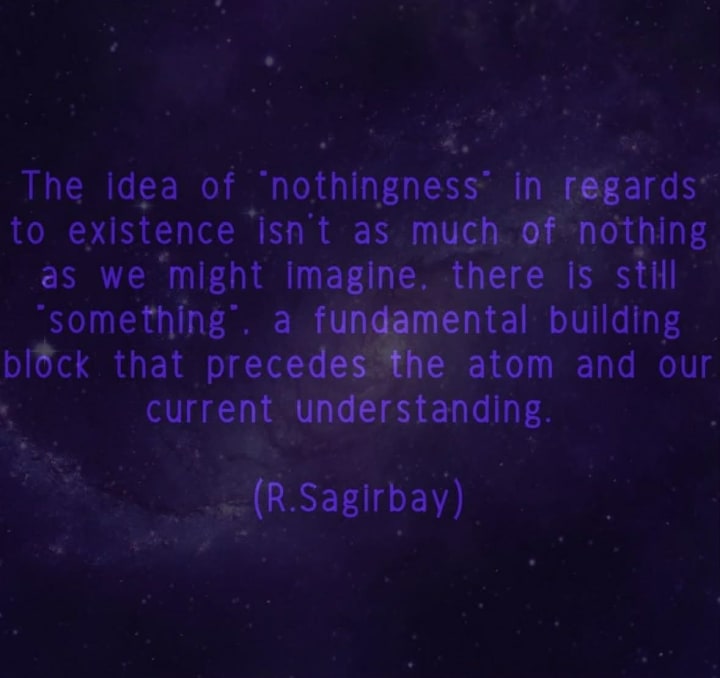
Furthermore, the very concept of “nothing” presents an interesting philosophical paradox. The moment we think about nothingness, it becomes an idea within consciousness — and therefore it is already something. Absolute nothingness seems impossible to conceive, because the act of contemplating it already produces a form of existence within the mind. For this reason, I am inclined to believe that consciousness itself may precede matter rather than arise solely from it. In this view, consciousness functions almost like a primordial principle of reality, similar to what earlier traditions called spirit. Matter and spirit may not be entirely separate domains but interacting aspects of the same underlying reality. Spirit can manifest as matter, and within matter there may still exist a trace of spirit — a dynamic balance reminiscent of the ancient yin and yang principle, where apparent opposites are in fact complementary parts of a deeper unity.
Jacobsen: What is the big lesson on maturation throughout life to you, now?
Sagirbay: The biggest lesson about maturation, at least for me, is the gradual development of perspective. When we are young, emotions and impulses often dominate our reactions to events. With time, experience, and reflection, a different mechanism begins to guide us—what psychologists would describe as stronger executive functioning in the frontal regions of the brain.
In practical terms, this means learning to pause before reacting. I notice that I tolerate stressful situations far better today than I did when I was younger. In the past, certain events might have triggered immediate frustration or anger. Now there is often a moment of internal evaluation: Is this truly a serious threat, or simply an inconvenience that will pass?
Many situations that once felt urgent turn out not to be. If something is not an immediate danger—if it is not, metaphorically speaking, a lion in front of you—then it usually deserves reflection rather than reaction. Often the most rational response is patience: give the situation a week, a month, or perhaps even longer, and a solution usually reveals itself.
This filtering process is one of the great advantages of maturity. The mind learns to conserve emotional energy for what truly matters—family, meaningful relationships, and long-term goals—rather than dissipating it on every irritation or disagreement.
At the same time, maturity does not mean passivity. If there is a genuine and immediate threat, any healthy person should react quickly and decisively. But wisdom lies in distinguishing between real danger and perceived danger. Many conflicts in life arise simply because we fail to make that distinction.
My own philosophical outlook also leads me to believe that development may extend beyond a single lifetime. Whether one interprets this literally or symbolically, the idea that consciousness evolves through experience resonates with me. Each stage of life brings new understanding, and the self gradually becomes more composed, more reflective, and more capable of navigating complexity.
In that sense, maturation is not merely aging. It is the refinement of judgment—the ability to think clearly, filter unnecessary reactions, and direct one’s attention toward what truly deserves it.
https://brght.org/iq/country/sweden/
BrainHQ does work. It helps refine the brain toward its peak performance. Even if I have completed some exercises 20 or even 100 times, the total pool contains more than 5,000 items—far too many to simply memorize. What improves instead is memory, learning capacity, and experience, along with a better ability to think and process information.
I can never be like Daniel Pohl or Rüdiger Gamm. So I truly know there are differences believe me. Mr Pohl is an academic monster and super genius he “maximized zoolmega test” and more.
Jacobsen: Thank you very much for the opportunity and your time, Rickard.
Scott Douglas Jacobsen is a blogger on Vocal with over 130 posts on the platform. He is the Founder and Publisher of In-Sight Publishing (ISBN: 978–1–0692343; 978–1–0673505) and Editor-in-Chief of In-Sight: Interviews (ISSN: 2369–6885). He writes for International Policy Digest (ISSN: 2332–9416), The Humanist (Print: ISSN, 0018–7399; Online: ISSN, 2163–3576), Basic Income Earth Network (UK Registered Charity 1177066), Humanist Perspectives (ISSN: 1719–6337), A Further Inquiry (SubStack), Vocal, Medium, The Good Men Project, The New Enlightenment Project, The Washington Outsider, rabble.ca, and other media. His bibliography index can be found via the Jacobsen Bankat In-Sight Publishing. He has served in national and international leadership roles within humanist and media organizations, held several academic fellowships, and currently serves on several boards. He is a member in good standing in numerous media organizations, including the Canadian Association of Journalists, PEN Canada (CRA: 88916 2541 RR0001), Reporters Without Borders (SIREN: 343 684 221/SIRET: 343 684 221 00041/EIN: 20–0708028), and others.
Image Credit: Rickard Sagirbay (AI-enhanced).
About the Creator
Scott Douglas Jacobsen
Scott Douglas Jacobsen is the publisher of In-Sight Publishing (ISBN: 978-1-0692343) and Editor-in-Chief of In-Sight: Interviews (ISSN: 2369-6885). He is a member in good standing of numerous media organizations.
Keep reading
More stories from Scott Douglas Jacobsen and writers in Interview and other communities.
Olga Sagaidak on the War That Began in 2014, Donbas, and Ukraine’s Cultural Resistance
Olga Sagaidak is a Ukrainian cultural manager, curator, and art historian who chairs the board of the Coalition of Cultural Actors of Ukraine and co-founded Dofa.fund (The Depth of Arts Charitable Foundation). Trained in art history, she also co-founded the Korners auction house, where she worked in the art and antiquities market before reorienting toward cultural activism after 2014. Sagaidak served on, and later chaired, the Supervisory Board of the Ukrainian Institute from 2019 to 2022. In 2022, she was appointed the Ukrainian Institute’s representative in France and helped launch Printemps Ukrainien, a cultural diplomacy initiative presenting contemporary Ukrainian culture to French and European audiences abroad.
By Scott Douglas Jacobsen4 days ago in Interview
Part 2 Interview With Joe Patterson, Author Of Melanin Memoirs
This is my second interview with Joe Patterson. His 4th anniversary writing on Vocal will be in March 2026. He has one achievement on Vocal, The Other Foot. He has over 17,000 reads on Vocal since he started on Vocal in 2022. Joe Patterson is very creative poet and rapper. Joe is deep thinker and I feel it is reflected in his latest published book, Melanin Memoirs.
By Mariann Carroll28 days ago in Interview
An Interview with Dr. Douglas Sung Won
In modern healthcare, progress often emerges at the intersection of clinical innovation and structural leadership. Few professionals embody that intersection as clearly as Dr. Douglas Sung Won, MD. Over the past two decades, Dr. Won has built a reputation not only as a pioneer in minimally invasive spine surgery but also as a healthcare systems architect responsible for developing vertically integrated clinical infrastructures.
By Robin Milton4 days ago in Interview



Comments
There are no comments for this story
Be the first to respond and start the conversation.