
When Bullets Turned a Garden into a Graveyard
More than a century later, the bullet marks on the walls of Jallianwala Bagh still testify to one of the darkest moments of colonial rule in India.

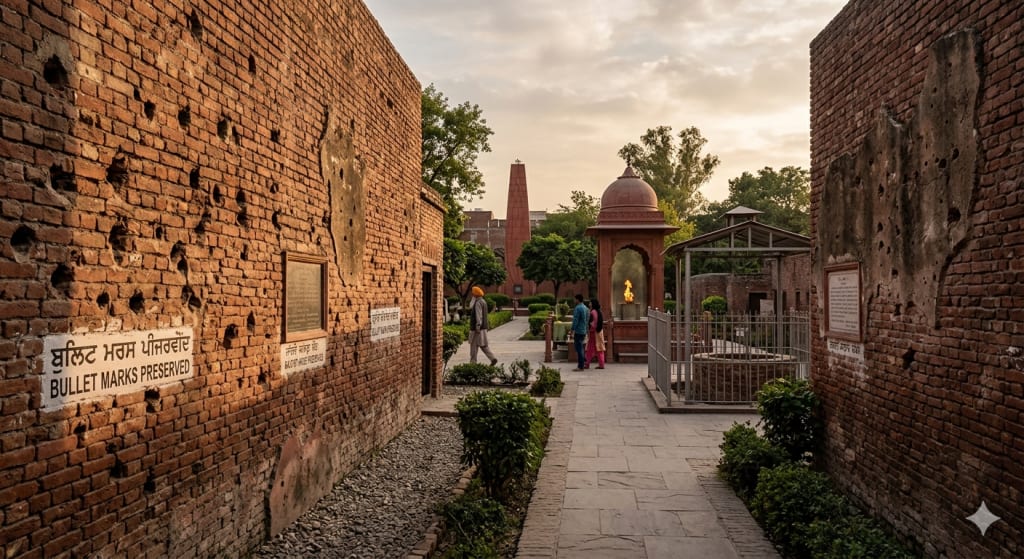
On April 13, 1919, a peaceful gathering in the northern Indian city of Amritsar turned into one of the most tragic and defining events in the history of British colonial rule in South Asia. The incident, now known as the Jallianwala Bagh Massacre, left hundreds of unarmed civilians dead and thousands wounded. More than a century later, the bullet marks that remain on the walls of the garden serve as a silent reminder of the brutality that unfolded that day.
Jallianwala Bagh was originally a public garden surrounded by high walls and narrow entrances. On the afternoon of April 13, thousands of people gathered there. Some had come to protest against the recently passed Rowlatt Act, a controversial law that allowed the British colonial government to arrest individuals without trial. Others were simply celebrating the traditional harvest festival of Baisakhi.
At the time, tensions were already high across the region of Punjab due to political unrest and growing opposition to British rule. The British authorities had imposed restrictions on public gatherings, but many residents were either unaware of the orders or did not expect such severe consequences for attending a meeting.
That afternoon, British Brigadier General Reginald Dyer marched into Jallianwala Bagh with around 50 soldiers. Without issuing any meaningful warning or giving the crowd a chance to disperse, Dyer ordered his troops to open fire.
The soldiers positioned themselves at the main entrance of the garden, effectively blocking the only major exit. Then the firing began.
For about ten minutes, the troops fired continuously into the densely packed crowd. Eyewitness accounts describe scenes of panic and chaos as people tried desperately to escape. Some attempted to climb the high walls, while others ran toward the narrow exits only to find them blocked. Many people jumped into a well inside the garden in a desperate attempt to avoid the bullets.
According to official British records, around 379 people were killed and over 1,200 wounded. However, Indian sources and later historians believe the death toll was much higher, possibly exceeding 1,000 victims. The firing only stopped when the soldiers began running low on ammunition.
The massacre sent shockwaves throughout India and across the world. It marked a turning point in the Indian independence movement and deeply damaged the legitimacy of British rule in the region.
One of the strongest reactions came from the renowned poet and philosopher Rabindranath Tagore, who had previously been knighted by the British Crown. In protest against the massacre, Tagore renounced his knighthood, declaring that he could not accept honors from a government responsible for such brutality.
The tragedy also profoundly influenced the political philosophy of Mahatma Gandhi. Although Gandhi had already been advocating for nonviolent resistance, the massacre convinced many Indians that the struggle for independence had entered a new and urgent phase. The incident fueled mass protests and strengthened the movement that would eventually lead to India’s independence in 1947.
Following international outrage, the British government launched an inquiry known as the Hunter Commission. While the commission criticized General Dyer’s actions, many Indians felt that justice was never fully served. Dyer was eventually removed from his post, but he was not criminally prosecuted.
Today, Jallianwala Bagh has been transformed into a national memorial. Visitors walking through the site can still see the bullet marks preserved in the walls, carefully protected behind glass. The well into which many people jumped has also been preserved as a memorial to those who died in desperation.
These physical traces serve as powerful historical evidence. They remind visitors that the massacre was not merely an event recorded in textbooks but a real tragedy experienced by ordinary people—men, women, and children who had gathered in a public space.
Each year, thousands of visitors come to the memorial to reflect on the sacrifices made during the struggle for freedom. For many, the bullet-scarred walls represent both mourning and resilience.
More than a century after the tragedy, the memory of the Jallianwala Bagh Massacre continues to shape historical consciousness in South Asia. It stands as a stark warning about the consequences of unchecked power and the importance of justice, dignity, and human rights.
The bullet marks that remain on the walls of Jallianwala Bagh are not just scars of the past—they are enduring symbols of remembrance, ensuring that the victims of that tragic day are never forgotten.
About the Creator
Irshad Abbasi
Ali ibn Abi Talib (RA) said 📚
“Knowledge is better than wealth, because knowledge protects you, while you have to protect wealth.
Keep reading
More stories from Irshad Abbasi and writers in History and other communities.
The Reluctant Nationalist
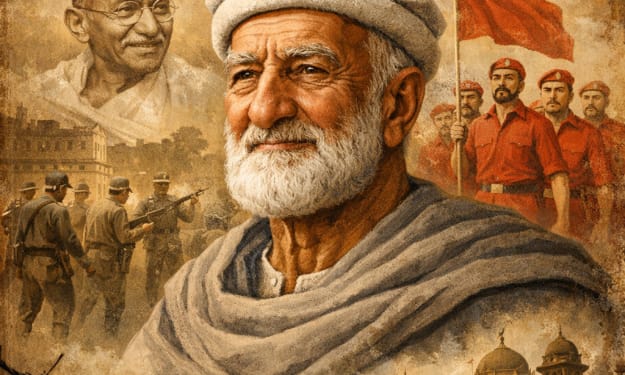
In the turbulent history of South Asia’s struggle against colonial rule, few figures stand as uniquely as Abdul Ghaffar Khan. Known to many as the “Frontier Gandhi,” Khan was a Pashtun leader who devoted his life to nonviolence, social reform, and the dignity of his people. Yet what makes his story even more remarkable is that he was often described as a “reluctant nationalist.” Rather than chasing political power or personal glory, Abdul Ghaffar Khan saw nationalism as a responsibility forced upon him by the suffering of his people.
By Irshad Abbasi about 15 hours ago in History
The Year 1962 in Review: Facts, Trivia, and Historic Highlights
This quick read is a collection of fun facts, trivia, and historic events from the year 1962. Discover the year’s top news stories, most influential people, sports facts, historic firsts, grocery prices, entertainment trivia, and much more.
By Gregory DeVictorabout 21 hours ago in History


Comments
There are no comments for this story
Be the first to respond and start the conversation.