
The Mystery of the “Damaged” Ship Finally Solved
After years of speculation, researchers uncover the truth behind a mysterious shipwreck that baffled historians and marine experts.

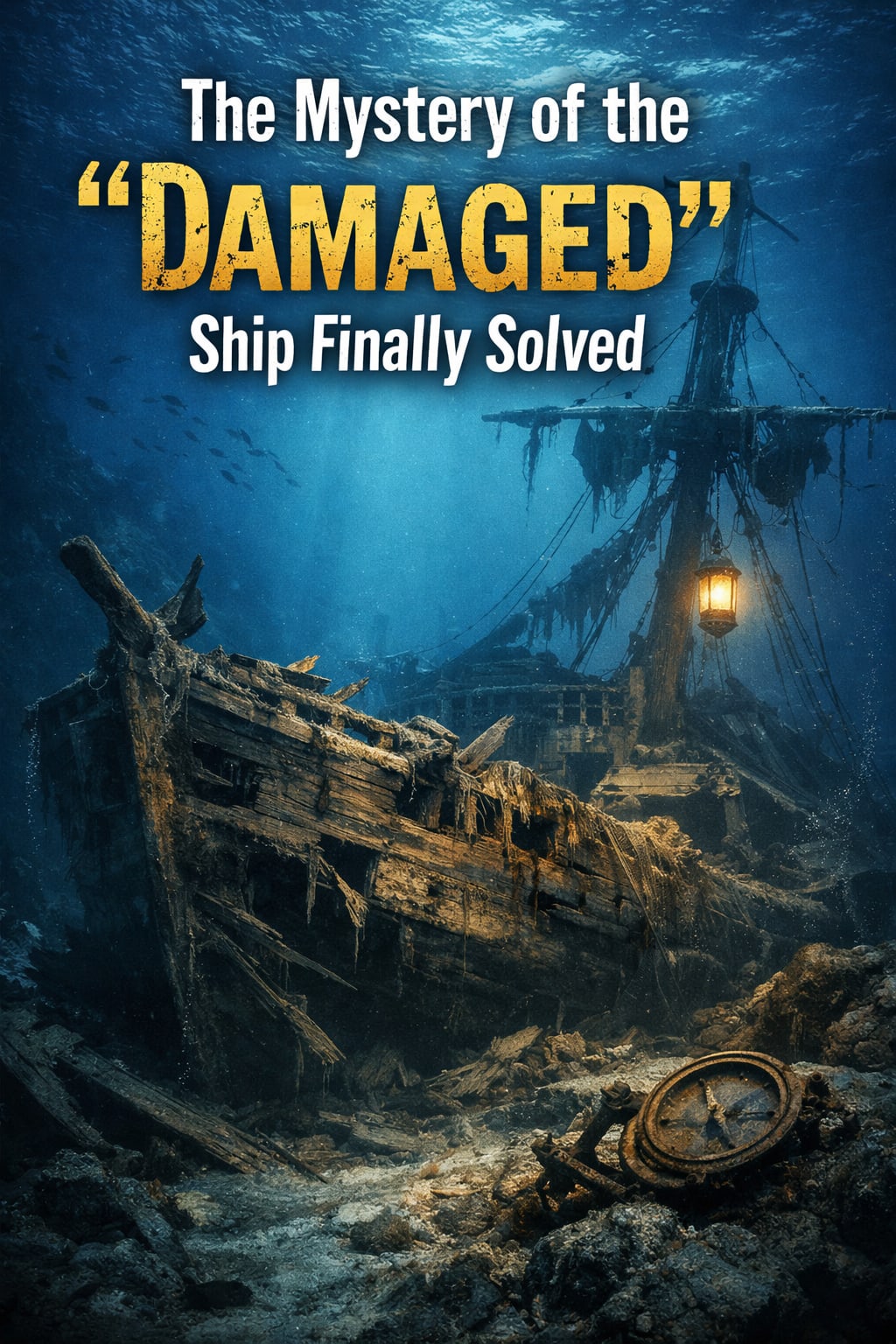
For decades, a mysterious shipwreck discovered deep beneath the sea puzzled historians, archaeologists, and maritime experts. The vessel, often described as a “damaged” or “cursed” ship due to the strange condition in which it was found, seemed to carry secrets that no one could fully explain. Now, after years of research and technological investigation, scientists believe they have finally solved the mystery behind the ship’s unusual damage and tragic fate.
The shipwreck was first discovered by a group of marine explorers during an underwater survey. At first glance, the vessel appeared heavily damaged, with large sections of its hull broken apart and unusual marks along its sides. The damage did not resemble typical shipwreck patterns caused by storms, reefs, or collisions with other vessels. This led researchers to believe that something far more unusual had happened.
Early theories about the ship’s fate were wide-ranging and sometimes dramatic. Some historians speculated that the ship may have been attacked by pirates. Others suggested that it might have been involved in a naval battle. A few even proposed that a powerful underwater earthquake or mysterious natural phenomenon could have caused the destruction.
Because the wreck was located deep underwater, studying it was not easy. Divers faced dangerous conditions, strong currents, and limited visibility. For many years, only small parts of the vessel could be examined. As a result, the ship remained one of the ocean’s most puzzling maritime mysteries.
The breakthrough came when researchers began using modern underwater technology. Advanced sonar mapping, remotely operated vehicles (ROVs), and high-resolution underwater cameras allowed scientists to examine the shipwreck in detail without disturbing it. These tools created precise digital models of the ship and revealed clues that had previously gone unnoticed.
One of the most important discoveries was the pattern of damage along the ship’s hull. Instead of random destruction, scientists found signs that the ship’s structure had been weakened gradually. The wooden beams showed evidence of long-term stress and decay. Marine organisms had also penetrated the wood, slowly weakening the structure over time.
Further analysis revealed that the ship had likely been carrying a heavy cargo. Over time, the weight may have shifted during rough seas, placing enormous pressure on the vessel’s aging structure. Combined with strong storms and the natural deterioration of materials, the ship eventually broke apart.
Researchers now believe that the vessel did not suddenly explode or suffer a violent attack, as some earlier theories suggested. Instead, the damage appears to have occurred during a powerful storm when the weakened hull could no longer withstand the pressure of the waves and cargo.
Another clue supporting this theory was the position of the shipwreck. The remains were scattered across the seabed in a pattern consistent with a vessel slowly breaking apart rather than sinking instantly. If the ship had been destroyed by an explosion or battle, the debris would likely have been distributed differently.
Historical records also played an important role in solving the mystery. Maritime historians examined shipping logs, trade records, and naval archives from the period when the vessel is believed to have sailed. They found references to a merchant ship that disappeared during a severe storm in the same region. Although the name of the ship was not immediately confirmed, the timeline and description strongly matched the wreck discovered underwater.
For archaeologists, solving the mystery is more than just an academic achievement. Shipwrecks serve as time capsules that reveal valuable information about trade, technology, and daily life in earlier centuries. By studying the construction methods and cargo remains, researchers can better understand how people traveled and conducted commerce across the seas.
The discovery also highlights the importance of modern technology in underwater archaeology. Tools such as sonar imaging, robotic exploration vehicles, and digital mapping have revolutionized the way scientists study shipwrecks. Many mysteries that once seemed impossible to solve are now becoming clearer thanks to these innovations.
Even though the central mystery of the “damaged” ship appears to have been solved, researchers say the wreck still has many stories to tell. Future studies may reveal details about the ship’s crew, its trade routes, and the goods it carried across the ocean.
For now, the once-mysterious shipwreck stands as a reminder of the dangers faced by sailors of the past and the enduring fascination that the ocean holds for explorers and historians alike. What was once considered an unsolved maritime mystery has now become an important piece of history, helping scientists better understand the challenges of life at sea centuries ago.
About the Creator
Irshad Abbasi
Ali ibn Abi Talib (RA) said 📚
“Knowledge is better than wealth, because knowledge protects you, while you have to protect wealth.
Keep reading
More stories from Irshad Abbasi and writers in History and other communities.
Titanic Menu Card Sells for £100,000 at Auction
A rare menu card from the legendary ocean liner RMS Titanic has sold at auction for an astonishing £100,000, highlighting the enduring fascination with one of history’s most famous maritime disasters. The menu, believed to have been from a first-class meal served shortly before the ship’s tragic sinking in 1912, is considered one of the most remarkable surviving artifacts from the doomed voyage.
By Irshad Abbasi about 24 hours ago in History
The Year 1926 in Review: Fun Facts, Trivia, and Historic Highlights
This quick read is a collection of fun facts, trivia, and historic events from the year 1926. Discover the year’s top news stories, most influential people, sports facts, entertainment trivia, grocery prices, and much more.
By Gregory DeVictor4 days ago in History
Early March 2026: 4 Goals Accomplished
It's early March and I've now accomplished my 4th writing goal for the year of 2026. Before diving into the behind-the-scenes of it... why not tell you up front what that accomplishment was? I was published in a 2nd publication for this year. Published in Helix Literary Magazine out of Central Connecticut State University. You can read it for free right now!
By Stephen Kramer Avitabile7 days ago in Writers



Comments
There are no comments for this story
Be the first to respond and start the conversation.