
The Lucky Japanese City That Escaped the Atomic Bomb Twice
How Kyoto narrowly avoided becoming a target during World War II and was spared from devastation not once, but twice.

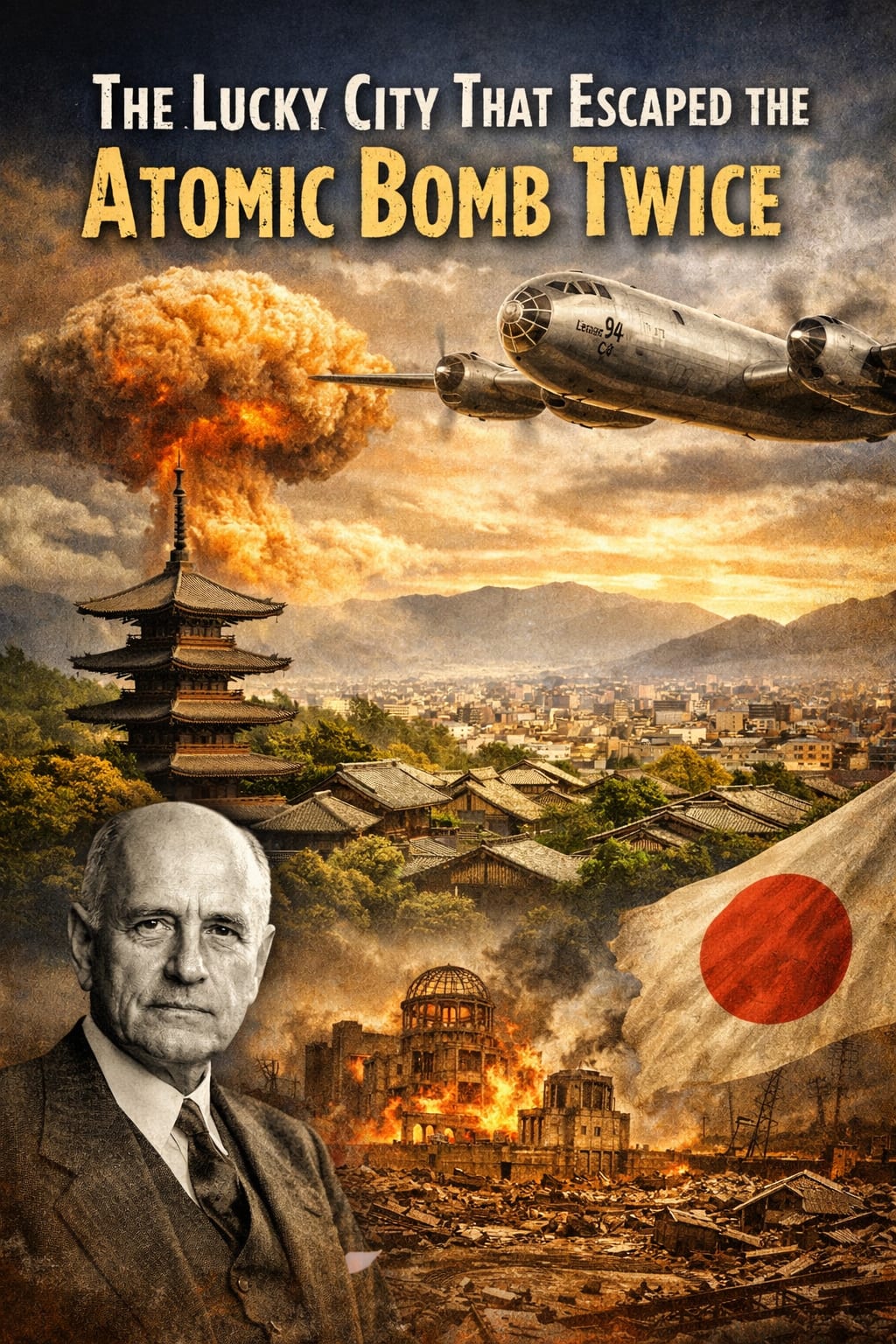
In the final months of World War II, the United States prepared to deploy a new and terrifying weapon that would forever change warfare: the atomic bomb. Two Japanese cities—Hiroshima and Nagasaki—would ultimately suffer unimaginable devastation in August 1945. Yet few people know that another city, rich in culture and history, came dangerously close to sharing the same fate. That city was Kyoto, often described as the “lucky city” of Japan because it escaped being targeted not once, but twice.
Kyoto was one of Japan’s most important cities during the early 20th century. Known as the country’s ancient imperial capital for more than a thousand years, it was home to countless temples, shrines, cultural treasures, and historic neighborhoods. Unlike many industrial cities, Kyoto represented the heart of Japanese cultural heritage. However, its cultural significance did not initially protect it from being considered a military target.
During the planning stages of the atomic bomb missions in 1945, the United States created a list of potential target cities. Military strategists wanted locations that had not yet been heavily bombed so that the effects of the new weapon could be clearly measured. They also wanted cities that had strategic or psychological importance. Kyoto quickly rose to the top of the list.
In fact, Kyoto was reportedly the first choice for the atomic bombing. Its large population, industrial activity, and untouched urban landscape made it an ideal target from a military perspective. Additionally, destroying such a historic city would have delivered a powerful psychological shock to Japan. For several weeks, Kyoto remained the primary candidate for the first atomic attack.
However, one man played a crucial role in changing that decision. Henry L. Stimson, the United States Secretary of War at the time, strongly opposed the idea of bombing Kyoto. Stimson had previously visited the city and admired its historical and cultural importance. He believed that destroying Kyoto would not only wipe out priceless heritage but also damage future relations between the United States and Japan.
Stimson repeatedly argued against Kyoto being targeted, even when military planners insisted it was the most suitable location. After intense discussions, he managed to convince President Harry S. Truman to remove Kyoto from the list. Instead, Hiroshima became the primary target. On August 6, 1945, the atomic bomb known as “Little Boy” was dropped on Hiroshima, killing tens of thousands instantly and leaving the city in ruins.
But Kyoto’s escape did not end there.
After the bombing of Hiroshima, the United States prepared a second atomic attack. Once again, Kyoto appeared in earlier planning discussions as a potential target. Yet it remained excluded from the final list thanks to Stimson’s continued insistence. Instead, the second bomb was aimed at Kokura. Due to heavy cloud cover and smoke from previous bombings, the bomber crew could not clearly see Kokura, forcing them to move to the secondary target—Nagasaki.
On August 9, 1945, the bomb called “Fat Man” was dropped on Nagasaki, causing another catastrophic loss of life. Within days, Japan announced its surrender, bringing World War II to an end.
Because of these decisions and circumstances, Kyoto was spared twice—first when it was removed from the target list, and again when the second bombing mission proceeded without it. Today, many historians consider Kyoto one of the luckiest cities in modern history.
Had Kyoto been destroyed, the world might have lost hundreds of irreplaceable cultural treasures, including ancient temples like Kinkaku-ji, historic wooden districts, and countless works of art dating back centuries. The city’s survival allowed Japan to preserve a vital part of its identity and history.
Today, Kyoto stands as one of Japan’s most visited cities, attracting millions of tourists each year who come to admire its traditional architecture, peaceful gardens, and centuries-old shrines. While Hiroshima and Nagasaki remain powerful reminders of the horrors of nuclear warfare, Kyoto represents a different story—one of narrow escape, historical preservation, and the impact a single decision can have on the course of history.
In the end, Kyoto’s survival was not just a matter of luck. It was the result of human judgment, cultural respect, and the determination of one individual who believed that some treasures of civilization were too valuable to destroy.
About the Creator
Irshad Abbasi
Ali ibn Abi Talib (RA) said 📚
“Knowledge is better than wealth, because knowledge protects you, while you have to protect wealth.
Keep reading
More stories from Irshad Abbasi and writers in History and other communities.
The Necklace That Partition Tore Apart
History often records wars, political decisions, and the actions of powerful leaders. Yet behind these grand narratives lie deeply personal stories—stories of ordinary people whose lives were forever changed by historic events. One such story is that of a simple necklace, a small but powerful symbol of love and separation during the tragic division of the Indian subcontinent in 1947.
By Irshad Abbasi 6 days ago in History
Year 1952 in Review: Fun Facts, Trivia, and Historic Highlights
This quick read is a collection of fun facts, trivia, and historical events from the year 1952. Discover the year’s top news stories, most influential people, sports facts, U.S. economic trends, historic firsts, entertainment news, and much more.
By Gregory DeVictor4 days ago in History
Why Didn't Anyone Tell Us
Men, move along. This is not for you. This is for the women. I was forty-five when I began menopause. It is pretty young for that to be going on in a woman’s life, but I had undiagnosed PCOS, my entire life. Thank you to all the gynecologists I had seen my entire life. That in itself should encourage women to keep seeking second opinions, especially when you are not getting correct answers or any at all.
By Alexandra Grant2 days ago in Humans


Comments
There are no comments for this story
Be the first to respond and start the conversation.