
Peter Quill's Father is HIM?
Over at Heroic Hollywood, Umberto Gonzalez is reporting to know the identity Peter Quill’s father!


Over at Heroic Hollywood, Umberto Gonzalez is reporting to know the identity Peter Quill’s father!
Is it who you expected? Find out the rumor below...
Possible spoilers ahead!

The big rumor is that the father of Peter Quill is silver-age Captain Marvel. Apparently, Marvel Studios attempted to get Matthew McConaughey for the role, but he turned it down.

If this rumor turns out to be true, it would definitely explain how Quill was able to withstand the Infinity gem. As no official announcement has been made by Marvel Studios, this is still only a rumor.
About the Creator
Zane Sanders
An enneagram 5, prone to absquatulate when around crowds for too long. A lover of family, music, coffee, and Marvel movies, with a heart to help others better understand how to actively engage culture with intelligence and creativity.
Keep reading
More stories from Zane Sanders and writers in Geeks and other communities.
...a beautifully made tribute to the book that made it famous...
I had the opportunity to see The Hunger Games: Mockingjay - Part 2 last Tuesday and, while I think it was a beautifully made tribute to the book that made it famous, many may not be as pleased about this final installment as myself. I was not excited about the splitting of the final book into two films, thinking that it is an overdone technique just to make money; however, in this instance, I think it was the right move. Having watched Mockingjay - Part 1 the night before, Mockingjay - Part 2 picked right up where the first had left off, seamlessly continuing Katniss' story of healing after Peeta's first brainwashed attack from the end of Part 1.
By Zane Sanders8 years ago in Geeks
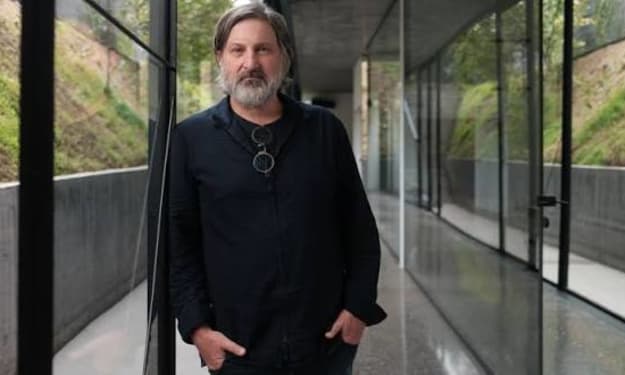
Pritzker Prize 2026: Chile’s Smiljan Radić Wins ‘Nobel’ of Architecture
The 2026 Pritzker Architecture Prize—commonly known as the “Nobel Prize of architecture”—has been awarded to Smiljan Radić Clarke, a Santiago‑based visionary whose quietly radical approach to design has garnered global admiration. Radić’s recognition marks a notable moment in contemporary architecture, drawing attention not only to his deeply personal work but also to how architectural expression can engage with culture, materiality, and human experience in profound ways. Founded in 1979 by the Pritzker family and sponsored by the Hyatt Foundation, the Pritzker Architecture Prize annually honors a living architect whose built work demonstrates a combination of talent, vision, and commitment that has contributed significantly to humanity and the built environment. It is widely regarded as the highest accolade in the field, accompanied by a US $100,000 grant, a citation, and a bronze medallion. A Career of Quiet Depth and Material Sensitivity Born in Santiago in 1965, Radić studied at the Pontifical Catholic University of Chile and later at the IUAV University in Venice. He founded his own practice, Smiljan Radić Clarke, in 1995, dedicating his career to exploring how architecture can transcend conventional form and instead become an experiential engagement with space, materials, and context. His approach is not rooted in superficial signatures or stylistic bravado but in a deeply reflective process that values atmosphere, perception, and the poetics of human experience. Over decades, Radić’s work has gained international attention for its capacity to blur boundaries between architecture, poetry, and landscape. One of his most celebrated projects is the Serpentine Gallery Pavilion (2014) in London, a delicate exercise in material and spatial ambiguity that invited visitors to experience architecture as a sequence of sensations rather than a fixed form. His built work often appears elemental and serene, seemingly resisting easy interpretation. Instead of declaring architectural authority, Radić’s buildings—both small and monumental—engage visitors through subtle shifts in light, texture, and proportion, encouraging reflection and sensory immersion. What Sets Radić Apart According to commentary from architectural critics following the award announcement, Radić’s designs embody a kind of architectural introspection that distinguishes him from many peers. In a profession that sometimes prioritizes spectacle or technical bravado, his work embraces fragility, ambiguity, and the poetic potential of space. Observers note that this quiet radicalism challenges assumptions about architectural expression while reinforcing the medium’s capacity to shape emotional and sensory experience. Radić becomes the second Chilean architect to receive the Pritzker Prize, following Alejandro Aravena, who won in 2016. Aravena’s work was widely celebrated for its socially conscious approach to housing and community design; Radić’s recognition highlights a different lineage of architectural thought—one rooted in phenomenology, material inquiry, and an almost philosophical engagement with place and presence. The Jury’s Rationale The Prize jury cited Radić’s body of work as emphasizing “architecture as a lived, sensorial experience.” Rather than imposing grand narratives or dominating the landscape, his buildings invite occupants to enter spaces that feel suspended in time—neither completely resolved nor entirely fixed—reflecting a belief that architecture can mirror the complexity and richness of human existence. This focus on the experiential over the declarative positions Radić’s work as uniquely attuned to contemporary architectural discourse. Reception and Influence Radić’s win has been celebrated within the architectural community as a recognition of innovative thinking that expands the boundaries of what architecture can be. Unlike designers who foreground bold formal gestures, his work subtly integrates cultural memory, material memory, and contextual sensitivity, offering a counterpoint to trends that prioritize surface spectacle or overly rationalized programs. His buildings address a wide spectrum of scales—from intimate residential work to public pavilions—yet they consistently reflect a commitment to crafting environments that foster reflection and emotional response. Critics have praised this depth of inquiry, suggesting that Radić’s architecture reminds the profession of its capacity to engage with human vulnerability and environmental context in meaningful ways. Looking Ahead As Radić prepares to receive the 2026 Pritzker Prize at an upcoming international ceremony, his recognition reinforces the enduring relevance of architecture that prioritizes human experience, cultural memory, and spatial poetry. For students, practitioners, and observers of the built environment, his work offers an inspiring example of how architecture can be both contemplative and transformative—capable of shaping not just cities, but how individuals perceive, inhabit, and emotionally connect with space. Smiljan Radić Clarke’s achievement underscores a broader truth: that architecture’s highest honors are not merely bestowed for iconic forms or technological mastery, but for work that resonates with human depth and reimagines how we live within the world.
By Fiaz Ahmed 2 days ago in Geeks
A System That Isn’t Working Challenge Winners
Systems promise order. They organize behavior, distribute opportunity, and suggest that if everyone follows the rules, things will work. The entries in A System That Isn’t Working look closely at what happens when that promise begins to slip.
By Vocal Curation Team3 days ago in Resources



Comments
There are no comments for this story
Be the first to respond and start the conversation.