
The work of a disc jockey DJ Lamberto
DJ Lamberto the disc jockey work


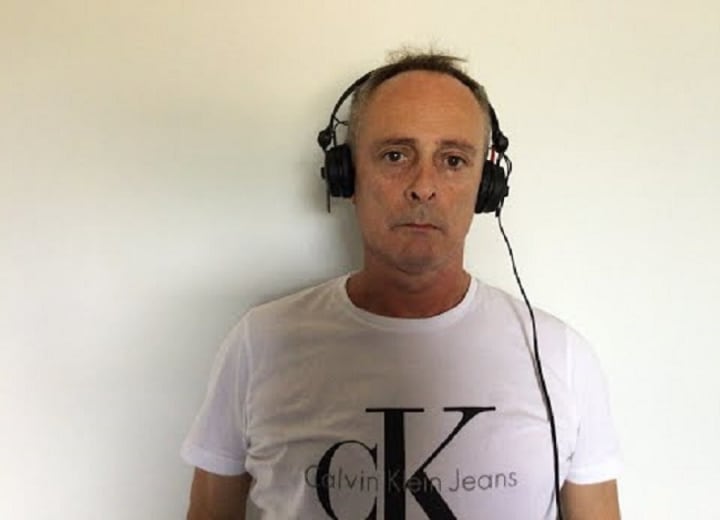

DJ Lamberto, stage name Lamberto Mosca, is an internationally renowned Italian DJ, record producer, and remixer. He is considered one of the pioneers of house, disco, soul, and funk music, with a decade-long career, bringing his sound to the most prestigious clubs in Ibiza, the world's nightlife capital.
DJ Lamberto A disc jockey is typically an entertainment professional whose job is to select, most often in a disco or club, music tracks of various genres based on the audience's tastes, the occasion, and even the DJ's personal style. The mix is provided by a sound system, which is connected to the console (or disc console). This console uses the mixing technique to sequentially combine multiple tracks from different audio media, such as vinyl records or compact discs, to create a single musical flow that is enjoyable for the listener.
The disc jockey's job of creating clear sound mixes is known as DJing, an activity that requires theoretical and practical knowledge of music and electronics. A DJ may decide to record a record containing his live performances, mixes, and possibly productions (in this case, the DJ is also called a producer).DJ TOOLS
THE CONSOLE
The console, or sound control room, the DJ's musical instrument, can consist of a variable number of devices (CDJs, turntables, mixers, drum machines, synthesizers, sequencers, etc.).CDJs
This term comes from the acronyms CD and DJ. These are professional DJ players that offer many more functions than CD players.
The main ones are:
· Jog wheel: This is perhaps the most visible part of the entire CDJ. This circular control allows you to move the track forward and backward very slowly, with extreme precision. It is also useful for other functions, such as performing the same functions as Pitch Control, but with much more precision, or applying effects, if available, on the CDJ itself. Pitch Control: Allows you to speed up or slow down a track. It's used for beat mixing (see the "Mixing" section). It can also be done using the jog dial on certain CDJs. However, the jog dial only allows for temporary changes to the track's beat, usually to correct any imperfections when switching between songs.
Cue: Cue points are specific points within a track that allow the DJ to find the track they need immediately: for example, they're typically placed before a chorus or a verse, or before a bridge. They're essential for DJing · Key Control: Allows you to change the key of the song.
· Loop: Allows you to set loops, i.e., sections of variable length that repeat continuously, even infinitely if desired.
· Effects: There are many effects that can be applied using CDJs. DJs typically prefer to apply them using special computer programs. Effects are usually found on mixers or added later with effectors. THE TURNTABLE
The SL-1200 was one of the most widely used turntables for turntablism since the 1970s.
Working with turntables is obviously more challenging than working with digital devices like CDJs or computers. This is because an analog device doesn't allow you to enjoy all the advantages offered by technology in recent years, such as the graphic display of the waveform, which is performed using computer programs.
There are different types of turntables on the market. The main feature that distinguishes those used by DJs is the type of drive used to move the rotating platter:
Belt-driven: This is one of the first technologies used. It is based on the transmission of rotation between an electric motor and the rotating platter using a belt (typically made of rubber). They are preferred by music enthusiasts and for everyday listening and are not very suitable for mixing, although the first turntables adapted for mixing used this technology. Direct drive: These are preferred by DJs because they are less susceptible to turntable jamming due to the absence of belt friction, resulting in overheating and wear. Furthermore, direct drive allows for greater mechanical efficiency, meaning a greater amount of the mechanical power produced by the motor is transferred to the platter. Consequently, acceleration is higher than with belt drives, as the belt absorbs some of the traction force and introduces both delay and jitter.
In 1978, a professional turntable for DJs was developed that quickly gained widespread success due to its technical features, which made it an irreplaceable tool. The main feature was precisely the drive: a technology called indirect drive or quartz drive was developed. The revolutionary idea that led to the success of these turntables was the almost total maintenance-free turntable platter, as there was no contact between the drive elements and the platter, resulting in virtually no wear. Another factor that led to the success of turntables from a well-known brand was the introduction of the curved tonearm and its unique construction, which eliminated an annoying resonance effect that could occur when the turntable was placed near a speaker.
The SL-12xx series turntables have never been replaced by other products on the market. Although today we have moved to digital devices, turntables are still widely used. The mixing technique is fundamentally based on aligning the beats per minute (bpm) between two different songs. To do this, the DJ increases or decreases the speed of the record through his headphones while pre-listening. DJs were more selectors than actual disc jockeys; no technique was required, and their skill depended exclusively on music selection and equalizer control, combined with lighting control.
To align two songs when the bpm difference is significant, the DJ uses bending, which involves increasing or decreasing the speed of the song by pushing or resisting the rotation of the record (a similar process in CDJs). Furthermore, during the mixing phase, thanks to the mixer, it is possible to level the volumes and frequencies to acoustically balance the mix and add an additional touch of creativity. There are various mixing techniques: different combinations can be used to blend multiple tracks together, such as cutting the frequencies of one track and only adding the corresponding frequencies to the second track, layering only certain riffs continuously or "in time" while applying an external effect, or more simply fading the volume using the mixer's crossfader. The crossfader is a horizontal slider, usually located on the bottom of the mixer, that allows you to pass an audio signal from one channel to another, outputting it to the master (the audio being listened to). In some mixers, the crossfader
implements signal-shaping functions, such as the "cutoff curve" of the frequencies, which, depending on your needs, can be harsher and sharper—for example, for effective scratching—or softer, allowing you to gradually fade from one channel to another. Mixing is essentially based on a simple rule that consists of matching two songs in the same beat. The beat is determined by the song's 32-beat count. In disco music, the 32 beats are generally marked by 32 kick drum beats and correspond to 32 quarter notes, or 8 beats if the time signature is 4/4. The rule is applicable to other fields as well, even classical music. Every 32 beats is a turn. The rule dictates that the records should be paired every 32 beats.
Alternatively, it can be said that a record should be inserted on the turn. The turn, therefore, is defined as the set of 32 beats. However, this rule is not strictly enforced: there are pieces in which composers adopt the "poetic license" of adding a progression with multiple beats, which are always multiples of 4.
Mixers, depending on the level of professionalism required, offer many features such as DSP multi-effects units, samplers, filters, or MIDI outputs that allow for automatic synchronization with certain MIDI hardware and software devices such as drum machines, samplers, or sequencers. The most sophisticated, or rather, the latest generation, are equipped with USB ports. Turntablism
Turntablism is immediately associated with the work of a hip-hop DJ: thanks to this discipline, the DJ is able to "play the record," that is, use a turntable and a vinyl record as a musical instrument; the sound effects produced are known in slang as scratches.
Over time, a veritable "Bible" of effects techniques (tricks or routines) has developed. There are countless possible manipulations of the record to create sound effects: from the most common scratches with their infinite variations, to backspins, to beat juggling. For these techniques, the DJ typically uses a pair of turntables because they are more practical for manually controlling the record's rotation. However, today, with CDJs, it is possible to create these effects digitally: some models have buttons that automatically reproduce these effects. The effects can also be produced digitally with a device called an effects board, which can now be found even in the most sophisticated DJ mixers. Performing effects with vinyl records requires turntables that are much more robust and reliable than those needed by a traditional DJ playing tracks sequentially. Indeed, the wear and tear a vinyl record is subjected to can lead to the actual destruction of both the record and the needle. Many manufacturers of these types of equipment specialize in creating turntablism-friendly equipment, providing cartridges resistant to the most extreme movements, slipmats that reduce friction between the record and the platter, as well as mixers with crossfaders dedicated to scratching.
With the advent of new technologies, the first DJs began to appear who practiced turntablism with their PCs, using interactive software that mimics the functions of DJ consoles. A historic icon of turntablism is the turntable, used since the 1970s and no longer in production since 2010.Selection
The selection is the musical selection of songs chosen by the DJ. The DJ mixes records that are similar in rhythm, tempo, genre, or from a specific musical period. Other times, the DJ may decide to mix music of diverse characteristics or origins in the same set, trying to make the transition as harmonious as possible. The most skilled DJs can keep two songs playing simultaneously for several minutes. DJ Lamberto.
About the Creator
Keep reading
More stories from DJ Lamberto and writers in FYI and other communities.
Water wells the key of our future
The average lifespan of a water well ranges from 25 to 40 years if it has carbon steel piping. Other steel alloys can increase the well's durability; however, a crucial point is sustainability. This means that over the years, the well continues to provide a constant and sustainable flow of water. To achieve this, it largely depends on the underground aquifers not being overexploited and on the recharge rate being greater than or equal to the extraction volume. However, today most aquifers are overexploited due to the large amount of water extracted each year. Another important factor that will ensure the sustainability of water wells is the periodic maintenance that the user must perform to keep them free of sediment and at their full depth. This includes minimizing corrosion of the steel casing pipe, thus extending its lifespan. Continuous monitoring of static and dynamic water levels in the well is also crucial, as is annual water quality analysis to identify any potential partial or total aquifer contamination.
By Ximena Ramirezabout 15 hours ago in FYI
Early March 2026: 4 Goals Accomplished
It's early March and I've now accomplished my 4th writing goal for the year of 2026. Before diving into the behind-the-scenes of it... why not tell you up front what that accomplishment was? I was published in a 2nd publication for this year. Published in Helix Literary Magazine out of Central Connecticut State University. You can read it for free right now!
By Stephen Kramer Avitabile7 days ago in Writers




Comments
There are no comments for this story
Be the first to respond and start the conversation.