
The Future of Smart Cities:How AI is Designing Urban Life Around You
Inside the real-time technology turning streets and neighbourhoods into spaces that adapt to how people live

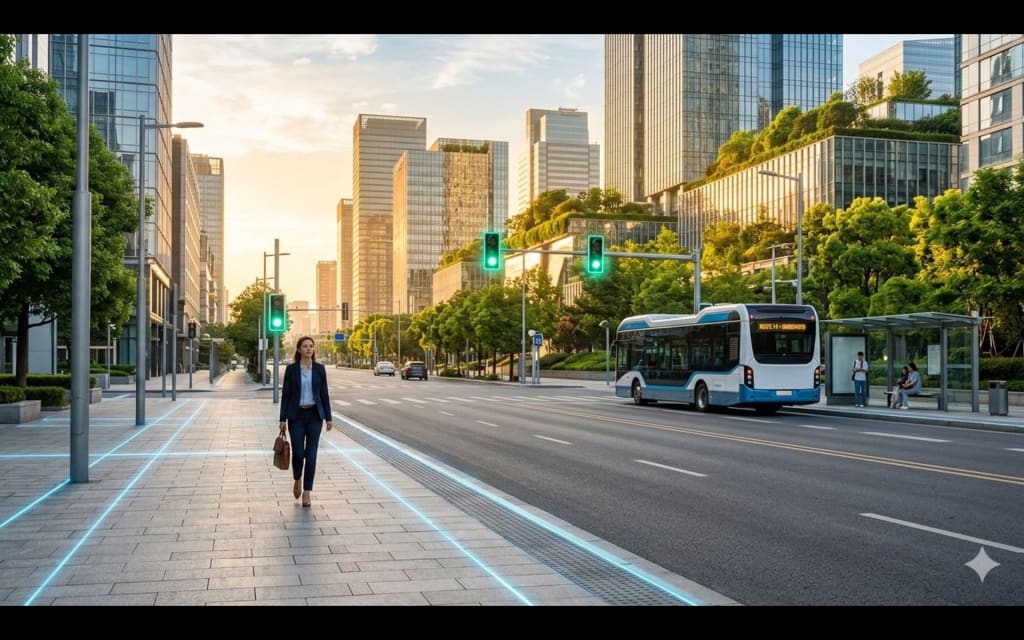
Imagine stepping out of your front door on a Tuesday morning, and the city already knows you are running five minutes late. The traffic lights on your usual route have adjusted.
The bus is holding just a moment longer. The pavement beneath your feet, embedded with quiet sensors, has already logged your footsteps as part of a living, breathing data stream that helps the city breathe better too.
This is not a distant dream. Smart cities are already here, quietly reshaping daily life in ways most people never notice. And the technology powering them is becoming more thoughtful, more personal, and more responsive with every passing year.
What a Smart City Actually Does
Strip away the buzzwords and a smart city is really just a place that pays attention. Sensors embedded in roads, bins, lamp posts, and public buildings collect continuous streams of information.
That data is processed in real time by AI systems that help city planners, transport teams, and local services respond faster and more intelligently.
Rather than reacting to problems after they happen, smart cities work to anticipate them. Traffic congestion, energy waste, flooding risk, even how long someone waits for a lift in a council building.
All of it becomes something the city can see, measure, and gently adjust.
It is interesting to watch how cities that embrace sensor-led infrastructure begin to feel noticeably different to the people who live in them. Quieter. Smoother. More in tune with the rhythms of actual human life.
Streets That Learn Your Rhythms
One of the most exciting developments in smart city design is adaptive infrastructure. Roads that change their speed limits based on live weather data.
Pedestrian crossings that extend their green phase when they detect a slower walker. Car parks that guide drivers directly to available spaces rather than letting them circle endlessly.
These small adjustments add up to something significant. Studies from cities trialling adaptive traffic systems have shown reductions in average journey times, lower fuel use across the city network, and measurable improvements in air quality.
The technology does not require people to change how they move. It simply makes the city better at moving with them.
Gen Z and younger generations who have grown up with personalised digital experiences are often the first to notice the difference, and the first to expect it. A city that responds like a good app, invisibly and helpfully, feels natural to them in ways it might not to earlier generations.
Energy, Water, and the Invisible Grid
Smart cities are also rethinking how resources flow. Intelligent energy grids can shift power loads across a neighbourhood automatically, drawing more from renewable sources when they are producing well and easing pressure during peak demand. Buildings talk to the grid, switching systems into low-power mode when occupancy sensors confirm the space is empty.
Water management is undergoing a similar transformation. Leak detection systems using acoustic sensors can identify pipe problems before they become visible on the surface.
Smart irrigation in parks and green spaces adjusts automatically based on rainfall data, cutting unnecessary water use without any human input needed.
The cities that are making the most meaningful progress are the ones that have stopped thinking about technology as something bolted on top of existing infrastructure and started designing for it from the ground up.
Community Spaces That Adapt
Perhaps the most human element of smart city design is how public spaces are beginning to respond to how people actually use them. Benches fitted with environmental sensors.
Playgrounds where lighting and sound adjust based on time of day. Town squares with retractable shading that responds to real-time temperature readings.
Libraries, leisure centres, and community hubs are using occupancy data to better schedule staff, open facilities at the right times, and reduce the frustration of turning up to a space that is understaffed or unexpectedly closed. For families, older residents, and anyone navigating a busy day, these small improvements in reliability can make a genuine difference.
City designers are also using AI to consult communities more effectively. Digital engagement platforms can gather and analyse feedback from thousands of residents simultaneously, identifying patterns and priorities that might take months to surface through traditional consultation methods.
The Neighbourhoods of Tomorrow, Built on What Works Today
The most thoughtful smart city projects are not starting from scratch. They are layering new technology carefully onto existing neighbourhoods, respecting what already works and using data to strengthen it.
Heritage areas are seeing smart solutions designed to be invisible. New developments are being built with sensor networks wired in from day one.
Across Europe, Asia, and the Americas, cities of all sizes are finding that the return on smart investment shows up quickly, in energy bills, in resident satisfaction scores, in reduced strain on public services.
The technology is no longer the preserve of huge capital cities. Mid-sized towns and regional centres are now finding accessible, scalable versions of the same tools.
According to experts, the conversation has shifted from whether smart city technology works to how it can be rolled out with care, with community input, and with a genuine focus on improving everyday life for the widest possible range of people.
The city of the future is not a gleaming utopia seen only in architectural renders. It is the place you already live in, quietly becoming more attentive. Noticing when the bin needs emptying. Holding the bus a moment longer. Keeping the lights on just a little later in the park when the evenings are still warm.
It is a city that is learning, one data point at a time, how to be a better place to call home.
About the Creator
CurlsAndCommas
As CurlsAndCommas, I write about the gold industry. My dad spent 30 years in the mines. I grew up hearing stories at the dinner table. Now I write about the industry that raised me. All angles, sometimes tech, science, nature, fashion...
Keep reading
More stories from CurlsAndCommas and writers in Futurism and other communities.
The Future of Work: How Gen Z is Rebuilding Career Culture from The Ground Up
She is twenty-four years old, running a client meeting from a sunlit flat in Lisbon while her colleague dials in from a co-working space in Seoul. The project is due by Thursday. Nobody is watching the clock. The work is getting done beautifully, and everyone involved chose to be here.
By CurlsAndCommas5 days ago in Futurism
Fuel Cell UAV Market Outlook: Long-Endurance Drone Technology and Clean Energy Aviation Opportunities
According to IMARC Group's latest research publication, The global fuel cell UAV market size was valued at USD 6.26 Billion in 2024. Looking forward, IMARC Group estimates the market to reach USD 20.67 Billion by 2033, exhibiting a CAGR of 13.49% during 2025-2033.
By James Whitman2 days ago in Futurism




Comments