
Specialty Polymers Market: Automotive & Aerospace Lightweighting Trends & Market Forecast
The specialty polymers market grows as industries seek advanced materials.

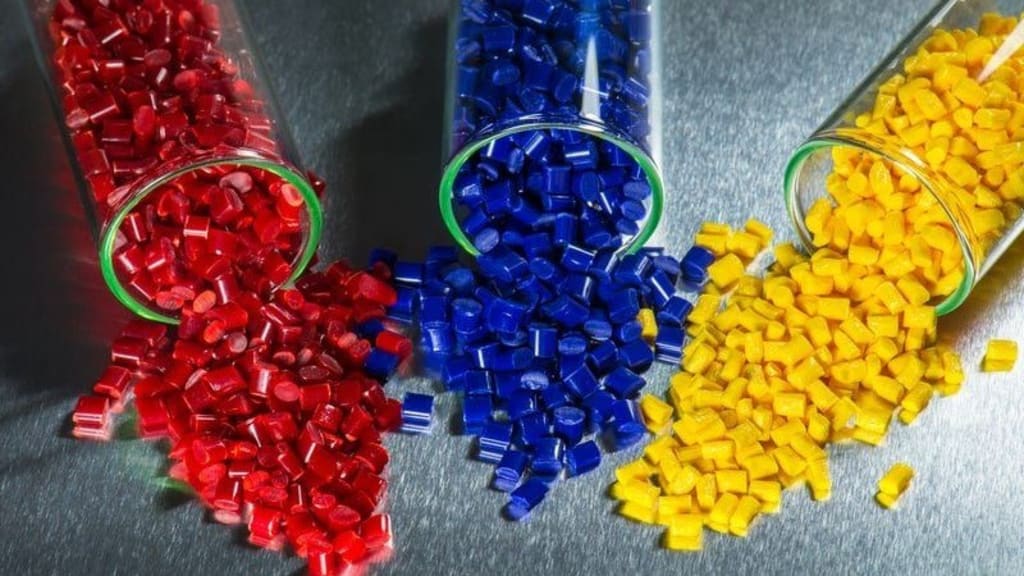
According to IMARC Group's latest research publication, the global specialty polymers market size reached USD 92.19 Billion in 2025. Looking forward, IMARC Group expects the market to reach USD 159.33 Billion by 2034, exhibiting a growth rate (CAGR) of 5.74% during 2026-2034.
How AI is Reshaping the Future of Specialty Polymers Market
- Autonomous Synthesis and Closed-Loop Optimization Machine learning algorithms now enable automated polymer synthesis platforms that continuously refine production parameters based on real-time feedback.
- AI-Driven Property Prediction and Material Discovery Deep learning models trained on millions of quantum-accurate polymer simulations can now predict mechanical strength, thermal stability, and chemical resistance before physical synthesis.
- Smart Process Control and Quality Assurance AI-powered systems now monitor production lines in real-time, detecting anomalies in melt temperature, dispersion quality, and electrical conductivity with precision impossible for manual inspection.

Specialty Polymers Industry Overview
The specialty polymers sector is experiencing fundamental transformation driven by electric vehicle proliferation, advanced electronics manufacturing, and sustainability mandates across major economies. Automotive manufacturers are aggressively replacing traditional metals with high-performance thermoplastics and composites to achieve weight reductions exceeding 30% while maintaining crash safety standards.
Specialty Polymers Market Trends & Drivers
The electric vehicle revolution is fundamentally reshaping specialty polymer demand as automakers race to improve battery performance and extend driving ranges. Solid-state batteries replacing liquid electrolytes with ceramics or polymers are moving toward commercial production, with multiple automakers announcing demonstration fleets for deployment.
The global sustainability movement is accelerating dramatic shifts toward bio-based and recyclable specialty polymers as manufacturers face mounting regulatory pressure and consumer demand for eco-friendly materials. BASF's Ultramid LowPCF and Ultramid BMB achieve carbon footprint reductions between 30% to 50% by incorporating recycled feedstocks and mass-balanced certified processes into production.
Advanced electronics and semiconductor manufacturing are creating surging demand for ultra-pure specialty polymers with precise electrical properties and thermal management capabilities. The global push toward 5G infrastructure, flexible electronics, and miniaturized components requires polymers offering superior insulation, heat dissipation, and dimensional stability under extreme conditions.
Specialty Polymers Market Report Segmentation
IMARC Group provides an analysis of the key trends in each segment of the global specialty polymers market, along with forecast at the global, regional, and country levels from 2026-2034. The market has been categorized based on product type and end use industry.
By Product Type:
- Specialty Elastomers (29.7% market share)
- Fluoroelastomers
- Fluorosilicone Rubber
- Liquid Silicone Rubber
- Natural Rubber
- Others
- Specialty Composites
- Particle Reinforced Composites
- Fiber Reinforced Composites
- Structural Composites
- Specialty Thermoplastics
- Polyolefins
- Polyimides
- Vinyl Polymer
- Polyphenols
- Others
- Specialty Thermosets
- Epoxy
- Polyester
- Vinyl Ester
- Polyimides
- Others
Specialty elastomers holds the largest market share owing to their exceptional heat resistance, chemical stability, and aging characteristics that make them indispensable for automotive sealing systems, aerospace applications, and healthcare devices. The rapid expansion of electric vehicle production is particularly driving demand for advanced elastomeric solutions in battery management and thermal control systems.
By End Use Industry:
Automotive and Transportation (31.9% market share - largest segment) Consumer Goods Building and Construction Coatings, Adhesives, and Sealants Electrical and Electronics Healthcare Others
Automotive and transportation leads the market as the industry's accelerating shift toward electric vehicles, lightweight materials, and compliance with stringent emission regulations worldwide drives specialty polymer adoption. These materials enable significant weight reduction compared to metals while maintaining structural integrity, crash resistance, and thermal management capabilities essential for modern vehicles.
Regional Insights:
Asia Pacific - 42.6% market share (Dominant region)
China
Japan
India
South Korea
Australia
Indonesia
Others
North America
United States (84.30% of North America market)
Canada
Europe
Germany
France
United Kingdom
Italy
Spain
Russia
Others
Latin America
Brazil
Mexico
Others
Middle East and Africa
Asia Pacific dominates the global specialty polymers market, supported by extensive manufacturing infrastructure across China, Japan, India, and South Korea, coupled with rising demand from automotive and electronics sectors, robust government support for electric vehicle production, and expanding construction activities.
Leading Companies Operating in the Global Specialty Polymers Industry:
- 3M Company
- A. Schulman Inc. (LyondellBasell Industries N.V.)
- Arkema S.A.
- Ashland Inc.
- Avient Corporation
- BASF SE
- Croda International Plc
- Dow Inc.
- Evonik Industries AG
- Koninklijke DSM N.V.
- Solvay S.A.
- Specialty Polymers Inc. (The Sherwin-Williams Company)
Recent News and Developments in Specialty Polymers Market
- March 2026: Cosmo Speciality Chemicals, the subsidiary of Cosmo First Limited, introduced an expanded portfolio of high-performance masterbatches, enhancing its range of specialty chemical offerings and reinforcing its position in the market for value-added polymer solutions.
- January 2026: Arkema successfully started up its new Rilsan Clear transparent polyamide unit in Singapore, tripling its global production capacity for bio-based specialty polymers.
Note: If you require specific details, data, or insights that are not currently included in the scope of this report, we are happy to accommodate your request. As part of our customization service, we will gather and provide the additional information you need, tailored to your specific requirements. Please let us know your exact needs, and we will ensure the report is updated accordingly to meet your expectations.
About the Creator
sujeet. imarcgroup
With 2 years of hands-on experience at IMARC Group, I have conducted in-depth market research and analysis across diverse industries including technology, healthcare, agriculture, and consumer goods.
Keep reading
More stories from sujeet. imarcgroup and writers in Futurism and other communities.
Optical Coherence Tomography Market: Regulatory Approvals, Clinical Adoption Trends & Growth Outlook
According to IMARC Group's latest research publication, The global optical coherence tomography market size was valued at USD 2.6 Billion in 2025. Looking forward, IMARC Group estimates the market to reach USD 7.0 Billion by 2034, exhibiting a CAGR of 11.13% from 2026-2034.
By sujeet. imarcgroup2 days ago in Futurism
Apple’s 2026 Reshuffle: 4 Surprising Shifts Redefining the Post-Ive Era
1. The "New" Apple Takes Shape The ghost of Jony Ive has finally left the building. Apple just concluded a "Big Week" that saw the release of seven distinct products—ranging from the breakthrough MacBook Neo to the M4 iPad Air and AirTag 2—but the real story isn't the hardware. It is the names on the leadership page.
By Tech Horizons5 days ago in Futurism
AI in Visual Effects Market Demand to Hit USD 9.6 Billion By 2033
The Global AI in Visual Effects Market is projected to reach approximately USD 9.6 Billion by 2033, rising from USD 1.6 Billion in 2023, reflecting a CAGR of 19.6% during the forecast period from 2024 to 2033. The market expansion is supported by the increasing use of artificial intelligence technologies in film production, gaming, advertising, and digital media.
By Roberto Crum4 days ago in Futurism
Lycan Lore
As the students of my 10am mythology class take their seats, I decide to steer the day's curriculum away from Greek and dive into a Western European discourse on the misaligned beliefs of the Werewolf. A tale of truth or fiction. No one really knows.
By Lamar Wigginsabout 10 hours ago in Fiction




Comments
There are no comments for this story
Be the first to respond and start the conversation.