
GCC Halal Tourism Market Analysis: Key Drivers, Industry Trends & Future Outlook
How Rising Muslim Travel Demand and Sharia-Compliant Services Are Driving the GCC Halal Tourism Market

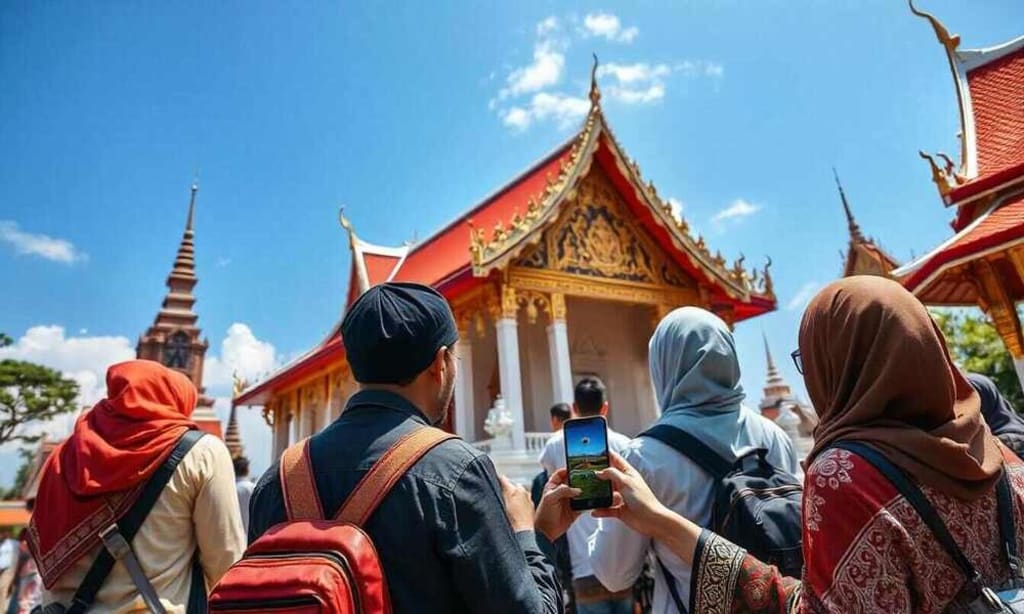
According to IMARC Group's latest research publication, "GCC Halal Tourism Market: Industry Trends, Share, Size, Growth, Opportunity and Forecast 2025-2033", The GCC halal tourism market size was valued at USD 7.20 Billion in 2024. Looking forward, IMARC Group estimates the market to reach USD 12.80 Billion by 2033, exhibiting a growth rate of 5.84% during 2025-2033.
How Digital Innovation is Reshaping the Future of GCC Halal Tourism Market
- Smart Booking Platforms Drive Convenience: Digital platforms like HalalBooking and MuslimPro are revolutionizing trip planning, with online halal tourism bookings in the GCC rising by 4.8% in the first half of 2024 compared to last year.
- Mobile-First Travel Experience: Over 80% of Muslim travelers now use smartphones for every step of their journey, from researching destinations to booking halal-certified accommodations and locating prayer facilities in real-time.
- AI-Powered Personalization: Artificial intelligence is creating customized halal travel itineraries based on individual preferences, with platforms offering tailored recommendations for Sharia-compliant hotels, halal dining, and Islamic cultural experiences.
- Seamless Package Integration: Qatar Airways Holidays launched integrated stopover packages in 2024 for GCC travelers, combining airfare and hotel stays for up to four nights with city tours and desert experiences.
- Digital Certification Transparency: The UAE's Department of Culture and Tourism trained over 2,500 hospitality professionals in 2024 under its Muslim-Friendly Tourism Certification Program, while Malaysia's JAKIM certified more than 15,000 tourism-related businesses for halal compliance.
Access the Sample Report for Current Insights and Forecasts
GCC Halal Tourism Market Trends & Drivers:
The GCC halal tourism sector is experiencing remarkable momentum, fueled by ambitious government initiatives across the region. Saudi Arabia's Vision 2030 is transforming the Kingdom beyond religious pilgrimage, with the Ministry of Tourism targeting 150 million total visits and hosting more than 37 million Hajj and Umrah pilgrims. In 2024, Saudi Arabia saw a 10% increase in international tourists drawn by both religious landmarks and new luxury developments like Red Sea coastal resorts. The UAE approved its comprehensive Strategy for Islamic Finance and Halal Industry, aiming to boost Islamic bank assets from AED 986 billion to AED 2.56 trillion within six years. Dubai launched its Halal Tourism Strategy in 2024 to position itself as the world's premier halal tourism hub, while tourism contributed AED 236 billion to the UAE economy. Qatar is capitalizing on post-World Cup infrastructure, with bookings in the first half of 2024 showing strong growth.
The region is witnessing a dramatic shift in traveler preferences and infrastructure development that's reshaping the halal tourism landscape. Cities like Dubai, Riyadh, Abu Dhabi, and Doha are rapidly expanding infrastructure catering to Muslim travelers, with hotels providing dedicated prayer rooms, halal-certified dining, and family-oriented leisure activities. Halal-certified hotels now hold over 45% of the accommodation market share, with global chains like Marriott and Hilton actively pursuing halal certifications. The demand for customized halal travel packages has surged, with expectations for a 5.5% increase in bookings in the second half of 2025 supported by more comprehensive halal offerings. Resorts World Cruises extended its Arabian Gulf presence with the Resorts World One homeported in Dubai from October 2024 to April 2025. The Arabian Travel Market in Dubai attracted over 41,000 attendees, showcasing Muslim-friendly and halal options tailored for travelers.
Young, affluent Muslim travelers are driving unprecedented growth in the GCC halal tourism market. The region's Muslim population is increasingly mobile and digitally savvy, with disposable incomes rising alongside economic growth projected at 2.8% in 2024 and 4.7% in 2025 according to the World Bank's Gulf Economic Update. GCC outbound travel and tourism reached over USD 76.4 billion in 2024. Domestic halal tourism represents the largest market segment, as traveling within the region offers convenience and affordability. Package travelers benefit from all-inclusive deals arranged by operators that guarantee halal compliance across transportation, lodging, meals, and activities. The sector is also attracting international investment, with the Qatar Halal Forum 2024 bringing together stakeholders to explore opportunities in the market projected to surpass USD 417.6 billion globally by 2034. Religious tourism dominates with approximately 38% market share, while cultural tourism follows at 27%.
GCC Halal Tourism Industry Segmentation:
The report has segmented the market into the following categories:
Tour Type Insights:
- Domestic
- International
Purpose Insights:
- Religious Tourism
- Cultural Tourism
- Leisure Tourism
- Others
Tourist Type Insights:
- Independent Traveler
- Package Traveler
Consumer Orientation Insights:
- Men
- Women
- Families
Age Group Insights:
- Millennials
- Generation X
- Baby Boomers
- Others
Booking Channel Insights:
- Online Travel Agencies
- Direct Booking
- Travel Agents
- Others
Breakup by Country:
- Saudi Arabia
- UAE
- Qatar
- Kuwait
- Bahrain
- Oman
Competitive Landscape:
The competitive landscape of the industry has also been examined along with the profiles of the key players.
Recent News and Developments in GCC Halal Tourism Market
- May 2025: The UAE Cabinet approved the comprehensive UAE Strategy for Islamic Finance and Halal Industry, setting ambitious targets to increase Islamic bank assets to AED 2.56 trillion and Islamic sukuk listings to over AED 660 billion by 2031, strengthening the foundation for halal tourism growth.
- February 2025: The 13th Halal Qatar Festival at Katara Cultural Village attracted prominent livestock breeders from Qatar, Saudi Arabia, UAE, and Kuwait, blending heritage with tourism while showcasing the region's commitment to authentic halal practices and cultural preservation.
Note: If you require specific details, data, or insights that are not currently included in the scope of this report, we are happy to accommodate your request. As part of our customization service, we will gather and provide the additional information you need, tailored to your specific requirements. Please let us know your exact needs, and we will ensure the report is updated accordingly to meet your expectations.
About the Creator
Abhay Rajput
I am working in market research company that provides market and business research intelligence across the globe.
Keep reading
More stories from Abhay Rajput and writers in Futurism and other communities.
GCC Halal Food Market Analysis: Key Drivers, Market Dynamics & Future Prospects
According to IMARC Group's latest research publication, "GCC Halal Food Market: Industry Trends, Share, Size, Growth, Opportunity and Forecast 2025-2033", The GCC halal food market size reached USD 65.10 Billion in 2024. Looking forward, IMARC Group estimates the market to reach USD 88.70 Billion by 2033, exhibiting steady growth during 2025-2033.
By Abhay Rajputabout 19 hours ago in Futurism
APAC Creator Economy Market to hit USD 390.7 Billion By 2034
APAC Creator Economy Market Overview The Asia Pacific Creator Economy Market is projected to reach approximately USD 390.7 Billion by 2034, increasing from USD 41.6 Billion in 2024, reflecting a strong CAGR of 25.1% during the forecast period from 2025 to 2034.
By Roberto Crum2 days ago in Futurism
The Refactor Command in Claude: Code 8 Underrated Tricks I Wish I Knew on Day One
I remember the exact moment I realized I’d been using Claude Code all wrong. It was 1:13 a.m., my third cup of coffee was going cold, and I was staring at a function so bloated it should’ve come with its own zip code. I typed a desperate prompt into Claude about “cleaning this up” and expected the usual: some polite suggestions, maybe a renamed variable or two.
By abualyaanart5 days ago in Futurism




Comments
There are no comments for this story
Be the first to respond and start the conversation.