
Australia Power Market: Renewable Energy Expansion, Grid Modernization & Electricity Demand Growth
How accelerating renewable energy deployment, ongoing grid modernization and rising electricity consumption are shaping Australia power market

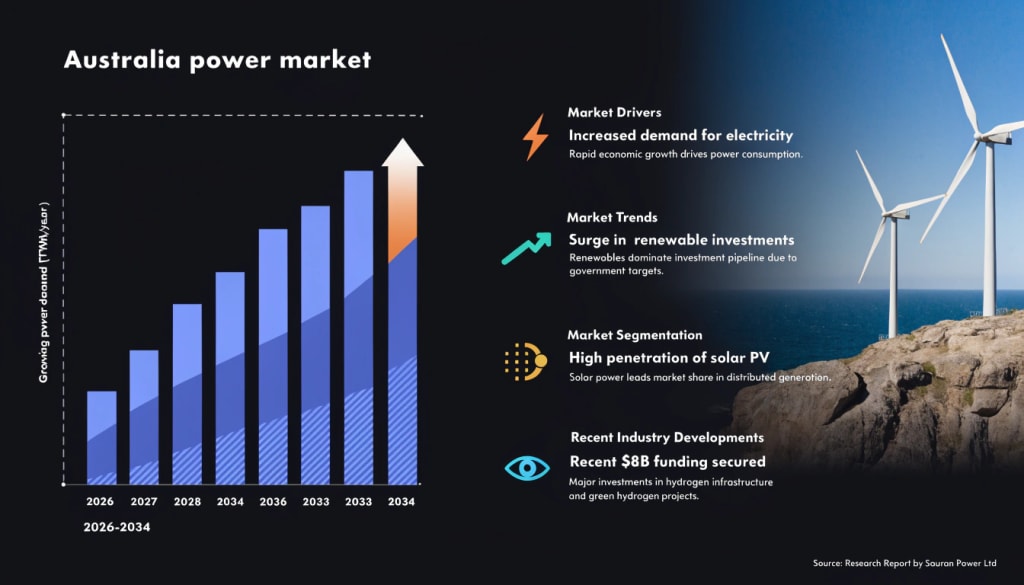
According to IMARC Group, the Australia power market reached 285.7 TWh in 2025 and is projected to reach 377.0 TWh by 2034, growing at a compound annual growth rate (CAGR) of 3.04% during 2026–2034. The market’s growth is being shaped by accelerating renewable energy adoption, increasing electricity demand and large-scale investments in grid modernization. Government incentives supporting clean energy transition, combined with rising corporate sustainability commitments, are encouraging the expansion of solar, wind and battery storage infrastructure. At the same time, the gradual phase-out of coal-fired power plants is transforming the structure of Australia’s electricity generation mix. With emerging technologies such as hydrogen energy systems and virtual power plants gaining traction, Australia’s power sector is evolving into a more diversified, digitally integrated and sustainable energy ecosystem.
Why Should Smart Buyers and Investors Know About the Australia Power Market?
Strong Renewable Energy Investment Opportunities
Australia’s transition toward renewable electricity generation is creating significant investment opportunities in solar, wind and storage infrastructure.
Growing Electricity Demand
Population growth, industrial expansion and electrification trends are increasing electricity consumption across the country.
Government Support for Clean Energy Projects
Policy frameworks and financial incentives are encouraging private sector participation in renewable power projects.
Expansion of Grid Infrastructure and Energy Storage
Modern grid systems and battery storage technologies are essential for maintaining energy reliability and stability.
Strategic Role in Energy Transition
Australia’s power market plays a crucial role in supporting national sustainability targets and decarbonization strategies.
Recent Trends & Developments in the Australia Power Market
May 2025:
Several large-scale solar and wind projects began construction across Australia to expand renewable electricity generation capacity.
October 2024:
Energy companies announced major battery storage investments designed to support grid stability and renewable energy integration.
July 2024:
Government initiatives introduced new incentives encouraging hydrogen energy development and clean electricity infrastructure expansion.
Australia’s power market is undergoing a major transformation driven by renewable energy expansion, grid modernization and rising electricity demand. Solar and wind power installations are rapidly reshaping the country’s energy generation mix, while battery storage systems and digital grid technologies are improving reliability and efficiency. Government policies supporting clean energy transition and corporate sustainability initiatives are further accelerating investments in renewable infrastructure. As emerging technologies such as hydrogen energy and virtual power plants gain momentum, Australia’s electricity sector is expected to evolve into a highly integrated and sustainable energy ecosystem. For investors, utilities and energy technology providers, the market represents a significant opportunity within the global transition toward cleaner and more resilient power systems.
Australia Power Market Vision 2050
1. Dominance of Renewable Energy Generation
By 2050, renewable energy sources such as solar and wind are expected to dominate Australia’s electricity generation mix. Large-scale renewable projects and distributed energy resources will supply most of the nation’s power needs.
2. Highly Digitized Smart Grid Infrastructure
Smart grids equipped with advanced sensors and automation systems will improve electricity distribution efficiency. Digital monitoring tools will enable utilities to balance supply and demand in real time.
3. Expansion of Energy Storage and Hydrogen Systems
Battery storage facilities and hydrogen-based energy systems will play important roles in managing renewable energy variability. These technologies will strengthen grid reliability and provide long-duration energy storage.
4. Growth of Virtual Power Plants
Virtual power plants integrating rooftop solar systems, home batteries and distributed energy resources will become more common. These networks will help utilities manage decentralized electricity generation.
5. Electrification of Transport and Industry
Electric vehicles and electrified industrial processes will significantly increase electricity consumption. Power infrastructure will expand to support these new energy demand sources.
Key Growth Drivers of Australia Power Market
Accelerating Renewable Energy Deployment
Australia is rapidly expanding renewable energy generation through solar and wind power projects. Large-scale solar farms and onshore wind installations are increasing clean electricity capacity nationwide. Government incentives and corporate sustainability commitments are further supporting renewable energy investments.
Rising Electricity Demand Across Industries
Electricity demand continues to grow due to population expansion, industrial development and electrification trends. Data centers, manufacturing facilities and electric vehicle infrastructure are increasing overall power consumption. This rising demand is encouraging utilities to expand generation and transmission capacity.
Ongoing Grid Modernization Initiatives
Australia’s electricity grid is undergoing modernization to support renewable integration and improved reliability. Smart grid technologies, digital monitoring systems and advanced transmission networks are being implemented. These upgrades help utilities manage fluctuating renewable energy generation and maintain grid stability.
Battery Storage Expansion
Energy storage systems are becoming essential components of Australia’s evolving electricity market. Large-scale battery projects store excess renewable power and release electricity during peak demand periods. This improves energy reliability and supports the transition away from traditional fossil-fuel generation.
Government Support for Clean Energy Transition
Government policies and incentives are accelerating investment in renewable power infrastructure. Programs encouraging solar installation, wind development and low-carbon technologies are driving market expansion. These initiatives support national climate targets and long-term energy sustainability goals.
About the Creator
Kevin Cooper
Hi, I'm Kavin Cooper — a tech enthusiast who loves exploring the latest innovations, gadgets, and trends. Passionate about technology and always curious to learn and share insights with the world!
Keep reading
More stories from Kevin Cooper and writers in Futurism and other communities.
Australia Private Equity Market: Venture Capital Growth, Infrastructure Investments & Tech Deals
According to IMARC Group, the Australia private equity market reached a value of USD 23.9 Billion in 2025 and is projected to reach USD 48.5 Billion by 2034, growing at a compound annual growth rate (CAGR) of 8.21% during 2026–2034. The market’s expansion reflects increasing demand for venture capital funding, buyout investments and infrastructure financing across multiple sectors. Private equity firms are actively expanding their portfolios in industries such as technology, healthcare, logistics and real estate, while institutional investors and pension funds are allocating larger portions of capital to private markets. As Australia continues strengthening its innovation ecosystem and infrastructure pipeline, private equity is becoming an essential driver of business expansion, digital transformation and long-term economic growth across the country.
By Kevin Cooper4 days ago in Futurism
Stanislav Kondrashov Oligarch Series: Intercontinental Electricity Networks and the Future of Energy Connectivity
Across the world, electricity systems are entering a new phase. For decades, national grids developed largely within their own borders, expanding step by step to meet growing demand. Today, a different vision is emerging: vast intercontinental electricity networks capable of linking regions thousands of kilometres apart.
By Stanislav Kondrashov7 days ago in Futurism
Early March 2026: 4 Goals Accomplished
It's early March and I've now accomplished my 4th writing goal for the year of 2026. Before diving into the behind-the-scenes of it... why not tell you up front what that accomplishment was? I was published in a 2nd publication for this year. Published in Helix Literary Magazine out of Central Connecticut State University. You can read it for free right now!
By Stephen Kramer Avitabile7 days ago in Writers




Comments
There are no comments for this story
Be the first to respond and start the conversation.