
First Taste of Loneliness in New York
A Story About A New Home

The subway screeched to a halt, and Mei sat in her usual corner seat, staring blankly at the empty cars around her. Usually, the morning commute in New York was a riot of bodies, smells, and conversations, a living rhythm that reminded her she was part of something bigger. Today, the train was silent except for the mechanical hum of the tracks.
Mei’s hands were clammy inside her gloves, her breath forming tiny clouds against her mask. She gripped the strap of her worn backpack, thinking of her apartment back in Queens. The city outside the window blurred into gray streaks, the familiar streets stripped of their chaos. Even Times Square, that cacophony of flashing screens and tourists, felt abandoned in the lockdown.
It had been two weeks since the city issued the stay-at-home order, closing restaurants, theaters, gyms, and shops. Mei, a new immigrant from Shanghai, had arrived in New York only six months ago, full of dreams and ambition. She had imagined the city as a place of endless opportunities, neon lights reflecting in puddles on wet streets, the smell of roasted chestnuts mixing with hot dog carts. Now, the city felt alien, cold, and indifferent.
She had tried to work from home, but the small studio apartment she rented was cramped and lonely. Her coworkers were gone, her friends back home in China unreachable in real time due to the time difference. Even her favorite coffee shop, the one with the tiny window overlooking Canal Street, was closed, its chairs stacked on tables like tombstones.
Mei thought about her mother, hundreds of miles away, waiting anxiously for news. She had called twice today, each conversation ending with a sigh, the word “be careful” repeated like a mantra. Mei wanted to reassure her, to tell her she was fine, but even she wasn’t sure what “fine” meant anymore.
A notification buzzed on her phone: a new email from her manager. It was short, perfunctory. “Please submit your weekly report by Friday. Stay safe.” The words offered little comfort. They were reminders of routine, not warmth.
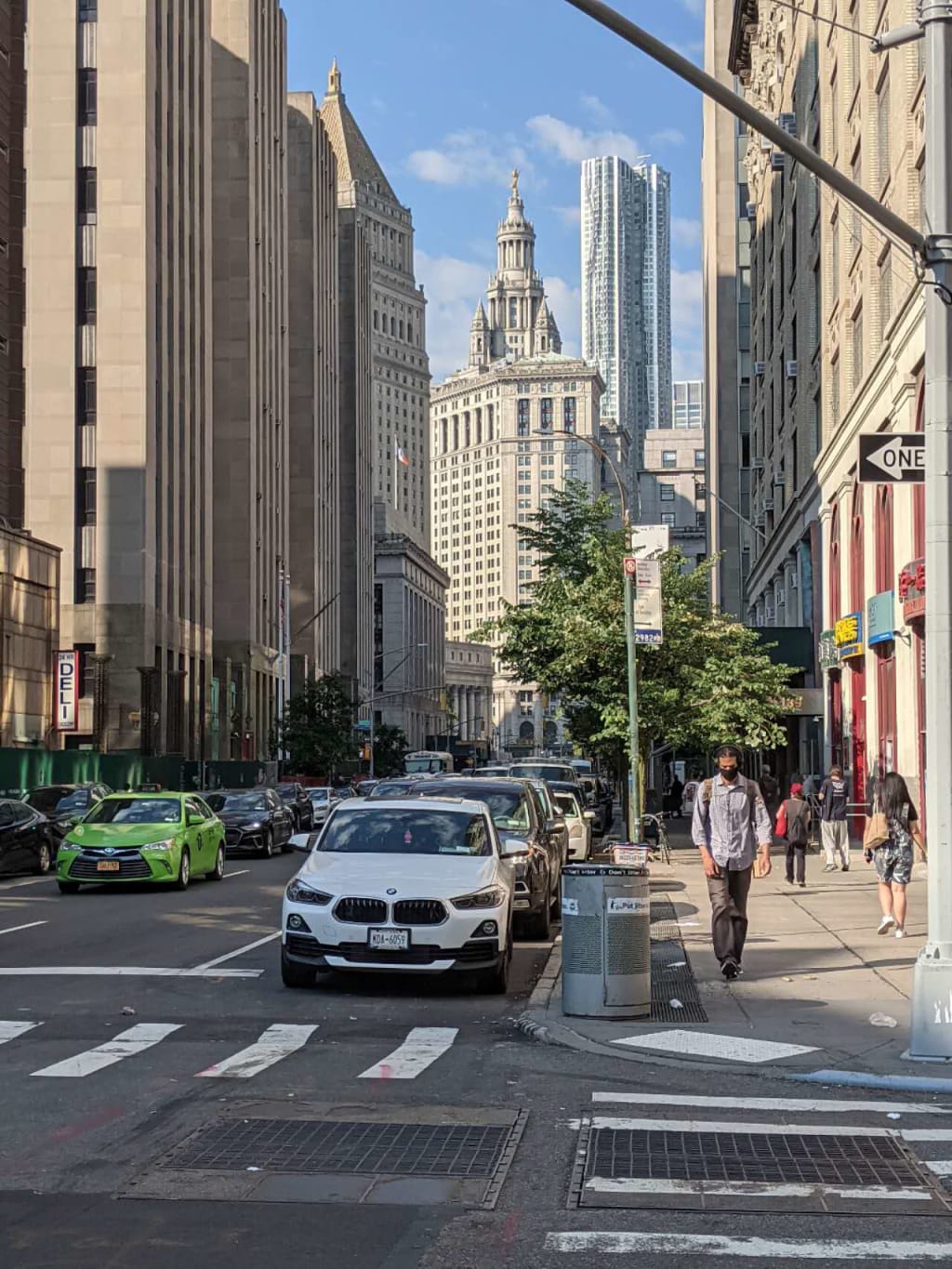
Exiting the subway, Mei walked through streets that were eerily quiet. Normally, Chinatown would be bustling with shoppers, tourists snapping photos of lanterns and storefronts. Today, the neon signs flickered weakly above shuttered doors. A lone taxi splashed through a puddle, the driver’s eyes wary behind his mask. Mei’s own footsteps echoed against brick walls, amplifying her sense of isolation.
She stopped at a corner where a newsstand usually stood, hoping for a semblance of normalcy. It was empty. Just a few discarded newspapers fluttered in the wind. Mei sighed, the sound swallowed by the empty streets. The loneliness settled in her chest like a stone. She realized she hadn’t spoken to another person in hours, not counting digital conversations.
Returning to her apartment, Mei set down her bag and stared out the window. The skyline was a jagged silhouette, buildings rising like silent sentinels. The city she had imagined as a place of dreams now felt like a vast, indifferent machine. She felt small, a speck swallowed by the endless gray.
Days blended together. Each morning, she woke, made coffee, checked emails, and attempted to work. But the walls of her apartment seemed to shrink daily, the silence pressing on her. She missed the subway chatter, the smell of street food, the friendly chaos of a city alive. Video calls with friends and family felt inadequate, screens separating her from the warmth she craved.
One evening, as she walked along the empty sidewalk, she passed a small bodega whose lights were still on. A man, wearing a neon vest and a mask, stacked crates of produce. Mei hesitated, then approached.
“Hi,” she said, trying to sound casual.
“Evening,” he replied, his voice muffled by the mask.
“Still open during all this?” she asked.
“Yeah. People need food,” he said, shrugging. “But it’s quiet. Too quiet.”
Mei nodded, suddenly feeling a shared understanding. Two strangers, both navigating the strange solitude of a city in lockdown. They exchanged a few more words—about bananas, bread, the difficulty of getting toilet paper—but even these mundane exchanges felt like lifelines.
Back in her apartment, Mei tried to read, tried to write, tried to occupy her mind. But loneliness had a weight that nothing could lift. She found herself staring at her phone late at night, scrolling through photos of friends, family, and memories from Shanghai. The nostalgia was bittersweet, the longing sharp.
Then came the turning point. One rainy afternoon, Mei received a message on a local community app: “Volunteers needed to check in on isolated neighbors.” She hesitated. She wasn’t sure if she wanted to interact, wasn’t sure she wanted more reminders of her separation. But something compelled her. She signed up.
Her first assignment was to call an elderly man living a few blocks away. His voice trembled over the phone, frail and lonely. Mei spoke gently, listening to his stories of growing up in Brooklyn, of World War II memories, of grandchildren who hadn’t visited in months. She offered encouragement, reminders to eat, and a little company.
For the first time in weeks, Mei felt a sense of purpose. She wasn’t alone, not completely. She was connecting, even if virtually, bridging the gap between strangers.
Over the next few days, Mei continued her volunteer work. She called seniors, checked on neighbors, dropped off groceries while maintaining social distance. Each small act chipped away at the wall of isolation she had felt. The city was still empty, quiet, and uncertain—but within that emptiness, Mei found moments of connection, fleeting smiles, and gratitude from those she helped.
One evening, Mei walked past the same bodega. The man smiled at her from behind his mask. “Hey, you’re the new volunteer, right? Helping the neighbors?”
“Yes,” she said, smiling back. “It helps me too.”
He nodded knowingly. “Sometimes it’s the little things that keep us sane.”
And in that moment, Mei realized something: the loneliness of New York during lockdown was real, but so was resilience. Isolation could press heavily on the chest, but kindness, connection, and small acts of courage could lift it, even if just a little.
Weeks later, Mei received a letter from the building manager: the elevator was repaired, the mailroom reopened, and life was slowly returning to routine. She stepped onto her balcony for the first time in weeks, breathing in the damp, crisp air. Across the street, a couple waved at her from their window. A small smile, a fleeting moment—but it was enough.
The city hadn’t changed. The pandemic raged on. But Mei had. She had learned that even in a city as vast and indifferent as New York, loneliness could be softened by reaching out, by caring, by small human gestures. And sometimes, that was enough to remind her why she had come here in the first place.
For the first time since arriving in New York, she didn’t feel quite so alone.
About the Creator
Peter
Hello, these collection of articles and passages are about weight loss and dieting tips. Hope you will enjoy these collections of dieting and weight loss articles and tips! Have fun reading!!! Thank you.
Becca
"Everything is so... flat." Denille said stupidly as she looked around her new neighborhood. She looked around at the muted desert where even the smallest sign of life seemed to have given up. The plant life was shrubs that were half cooked by the heat and where there should have been a lawn, a mess of white rocks laid glistening in the sun. Even the sky looked stretched thin, like the sun had ironed it smooth. She’d moved from Riverside, where at least there were hills, but here in Barstow, everything felt baked and brittle.
By Sara Wilson7 days ago in Fiction
Guard Your Battery, Lose Your Humanity
I used to think my phone was my lifeline. In Amsterdam, where rain slicks the cobblestones and bikes fly by like they're late for something important, my screen was the one constant: notifications buzzing through tram rides, endless scrolls while waiting for koffie at a brown café, quick checks at red lights on the Keizersgracht. It felt safe. Controlled. Connected. Until it didn't. By early 2026, I was exhausted in a way sleep couldn't fix. My anxiety had crept up quietly — heart racing in crowds, that low hum of dread when the battery dipped below 20%. I blamed the city, the weather, work. But deep down, I knew the truth: I'd outsourced my presence to a rectangle in my pocket. I was here, but never really here. So on a drizzly February morning, I made a rule that felt ridiculous: no phone in public for 30 days. Pocket, bag, or leave it at home — but never in hand when outside my apartment. If I needed directions or music, tough. The goal wasn't total detox; it was forcing myself to look up, be bored, and — if the moment felt right — talk to someone. One stranger conversation a day if it happened naturally. No forcing, just availability. What broke first was the fidgeting. Days 1–10: The Withdrawal Hits Hard The first week was brutal. At the Albert Cuyp Market, my hand kept reaching for my pocket like a phantom limb. Without the screen to hide behind, every line felt exposed. I noticed things I'd ignored for years: the way an old man feeds pigeons near the Nieuwmarkt, the precise rhythm of bike bells, the smell of fresh stroopwafels mixing with canal water. I also noticed people. Everyone else was doing what I'd been doing — heads down, thumbs moving. On the 2 tram toward Centraal, a carriage full of silent faces lit by blue light. No one spoke. No one looked up. It hit me: we're all in our own little bubbles, floating through the same beautiful city. By day 5, boredom turned into restlessness. Waiting for coffee at a spot on the Prinsengracht, I had nothing to do but watch. A woman in a red coat struggled with her umbrella in the wind. Our eyes met. She laughed first. "This weather," she said. I replied, "It builds character, right?" We chatted for two minutes about nothing — the rain, the best waterproof jackets. It felt awkward, electric, alive. That tiny exchange cracked something open. My anxiety didn't vanish, but it lost its grip for a moment. Days 11–20: The City Starts Talking Back Halfway through, the experiment shifted from punishment to curiosity.
By Shoaib Afridi7 days ago in Fiction


Comments
There are no comments for this story
Be the first to respond and start the conversation.