
The $300,000 Cost of Raising a Child in America
Why raising a child has become one of the largest financial commitments many Americans will ever make.


For decades, people have said that raising a child is expensive. But in recent years, the cost has risen so dramatically that economists, policymakers, and young families alike are asking the same question:
Can the average American still afford to raise children?
According to estimates from the U.S. Department of Agriculture and more recent analyses from groups like Brookings Institution, the cost of raising a child in the United States can now exceed $300,000 from birth to age 18—and that figure does not include college tuition.
When higher education costs are added, the total financial commitment for a single child can easily climb far beyond that number.
For many young families, the price of parenthood is becoming one of the biggest economic decisions of their lives.
Where the $300,000 Number Comes From
The $300,000 estimate comes from combining several major categories of expenses that accumulate over nearly two decades.
These include housing, childcare, food, transportation, healthcare, and education-related costs.
Here is a simplified breakdown of typical spending categories:
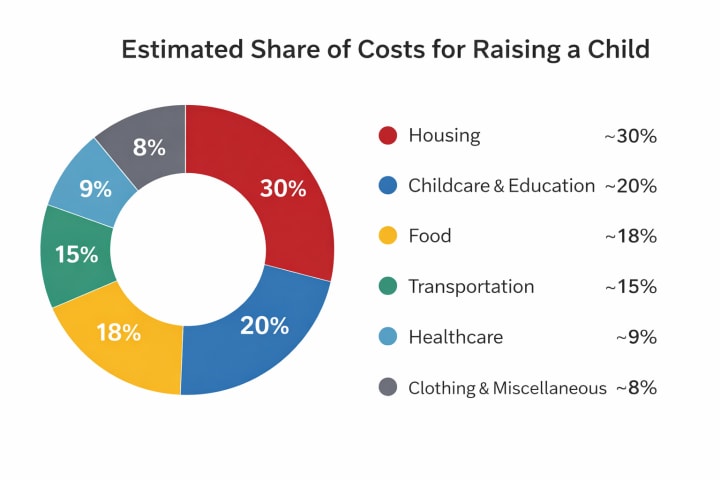
Housing alone represents the largest share of expenses. When families have children, they often need larger homes or apartments, which can significantly increase rent or mortgage costs.
In cities where housing prices have surged, this single factor can dramatically raise the overall cost of raising a child.
Childcare Is One of the Biggest Expenses
One of the fastest-growing costs for parents is childcare.
In many parts of the United States, full-time daycare can cost $10,000 to $20,000 per year per child, depending on location.
In some major metropolitan areas, it can exceed the cost of in-state college tuition.
According to data compiled by Child Care Aware of America, childcare costs in many states now represent one of the largest expenses for young families—sometimes even higher than housing payments.
For parents with multiple children, these costs can quickly multiply.
This is one reason why many families delay having children or choose to have fewer children than previous generations.
Housing Costs Are Changing Family Decisions
Housing prices have risen dramatically over the past decade, making it harder for many young adults to purchase homes.
As discussed in broader housing analyses, rising real estate prices mean that families often need larger incomes and bigger savings before they feel comfortable starting families.
In some cases, young adults are postponing parenthood until they achieve financial stability.
For others, the cost of housing makes having children feel financially unrealistic altogether.
Healthcare and Insurance Add Up
Healthcare is another significant cost that many families underestimate.
Medical expenses related to childbirth alone can reach thousands of dollars, even with insurance.
Over the course of childhood, families must also account for:
- pediatric visits
- prescription medications
- dental care
- vision care
- emergency medical expenses
In the United States, where healthcare costs are among the highest in the world, these expenses can quietly accumulate over time.
Food and Daily Living Expenses
Food costs for families have also increased significantly due to inflation.
Groceries, school lunches, and household supplies all contribute to the long-term cost of raising children.
Beyond food, everyday expenses include:
- clothing
- school supplies
- sports and extracurricular activities
- technology and electronics
- transportation
These smaller recurring costs often go unnoticed individually but add up substantially over 18 years.
Why Younger Generations Are Hesitating
The rising cost of raising children is one of the key reasons economists cite when explaining declining birth rates among younger generations.
Many Gen Z and millennial adults face additional financial pressures, including:
- student loan debt
- high housing costs
- stagnant wages relative to living expenses
When these financial factors combine with the estimated $300,000 cost of raising a child, parenthood can feel financially overwhelming.
For some people, the decision becomes less about whether they want children and more about whether they can realistically afford them.
The Cost Doesn’t Stop at Age 18
It’s important to note that the $300,000 estimate only covers childhood.
Many parents continue providing financial support long after their children reach adulthood.
This may include:
- college tuition
- housing assistance
- health insurance
- helping with early career expenses
College alone can cost tens of thousands of dollars per year depending on the institution.
As a result, the true lifetime cost of raising a child can be significantly higher than the widely cited $300,000 estimate.
The Emotional Value Versus Financial Reality
Despite the rising costs, many parents say the emotional rewards of raising children outweigh the financial burden.
Parenthood provides experiences that cannot easily be measured in dollars—family bonds, personal growth, and long-term relationships that last a lifetime.
However, the economic reality is still shaping how families make decisions about when and whether to have children.
As housing prices, childcare costs, and living expenses continue to rise, the financial side of parenthood is becoming harder to ignore.
Why This Debate Matters
Understanding the real cost of raising children is important not only for families but also for policymakers.
Declining birth rates can have major long-term effects on economic growth, workforce size, and retirement systems.
If younger generations continue to delay or avoid parenthood due to financial pressures, governments may eventually need to reconsider policies related to childcare, housing, and family support.
For now, one thing is clear:
Raising a child in America has never been cheap—but in today’s economy, it has become one of the most expensive commitments many people will ever make.
About the Creator
Navigating the World
News, commentary on entertainment, music, influencers, and modern culture, upcoming artists, politics, and more. Everything you need to know — all in one place.
Keep reading
More stories from Navigating the World and writers in Families and other communities.
Why Gen Z Is Having Fewer Kids — And What the Data Says About the Future of Birth Rates
Across the United States and much of the world, birth rates are falling—and Generation Z is at the center of that shift. For decades, starting a family in your twenties was considered the norm. Today, many young adults are delaying parenthood or choosing not to have children at all. The change is dramatic enough that economists, demographers, and policymakers are beginning to ask a serious question:
By Navigating the Worldabout 2 hours ago in Families




Comments
There are no comments for this story
Be the first to respond and start the conversation.