
Nuclear Firestorm
How modern nuclear weapons destroy life, nature, and the future within seconds—and leave scars for generations.

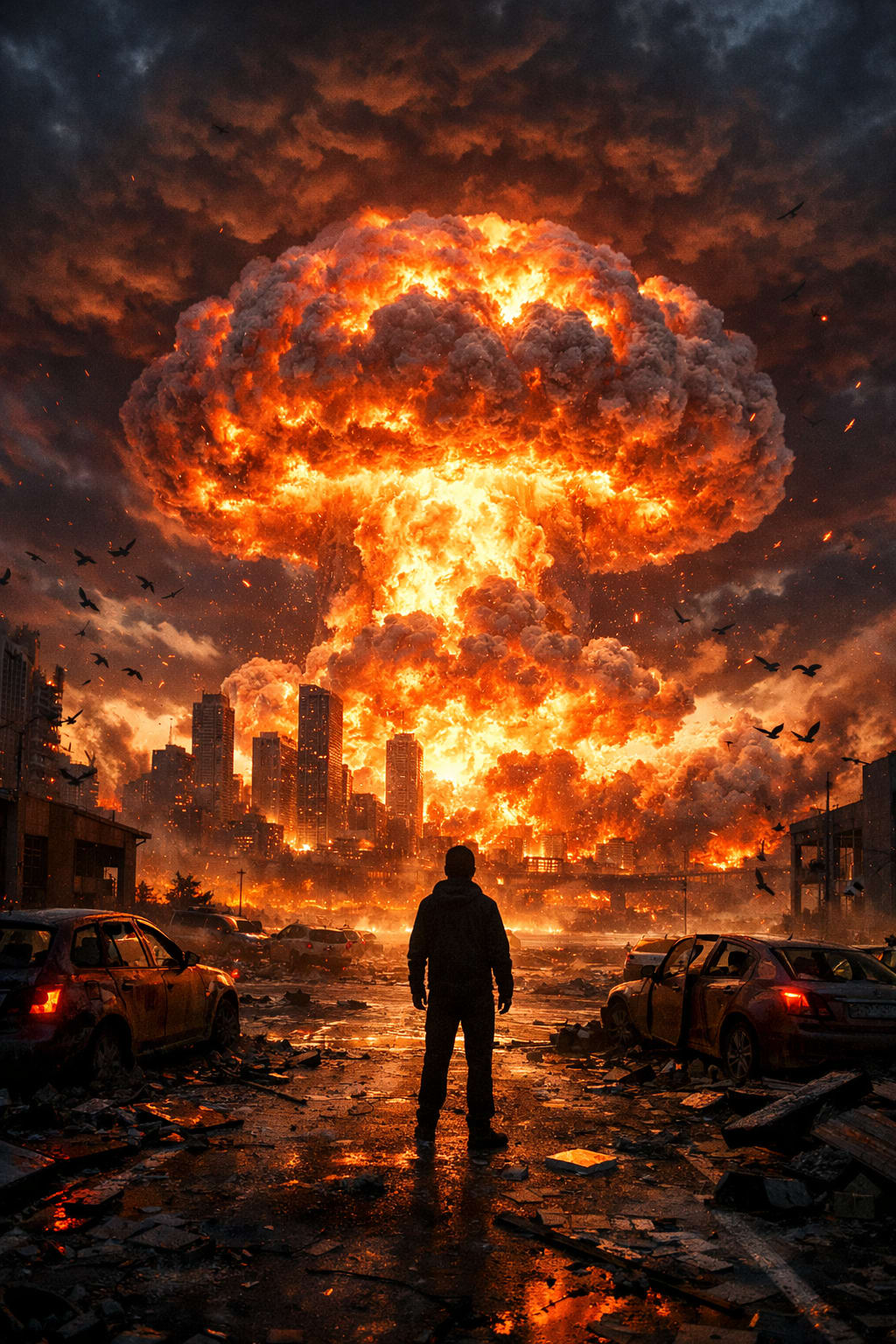
When a modern nuclear weapon explodes, the world inside its blast zone changes in a matter of seconds. The moment the weapon detonates, a blinding flash of light brighter than the sun fills the sky. Temperatures at the center of the explosion can reach millions of degrees, hotter than the surface of the sun. Everything close to the explosion—buildings, trees, vehicles, and living creatures—is instantly vaporized.
Within the first few seconds, a massive fireball expands rapidly outward. The heat is so intense that it can ignite fires several kilometers away. Human beings caught near the center of the blast would not even have time to react; the extreme heat would cause immediate death. Skin burns, clothing ignites, and structures collapse in a storm of fire and debris.
Following the flash comes the shockwave, a powerful wall of compressed air that moves faster than the speed of sound. This blast wave flattens buildings, shatters windows, and throws cars and debris through the air like toys. In a modern nuclear explosion, this destructive force can extend many kilometers from the center. In a large modern nuclear weapon—such as those measured in hundreds of kilotons—the severe destruction zone may reach 3–5 kilometers, while serious damage can extend 10–15 kilometers or more.
Humans within this range face terrible injuries. Many suffer severe burns, broken bones, crushed bodies, and blindness from the intense flash of light. Hospitals and emergency services in the area would likely be destroyed or overwhelmed, leaving survivors without help. Even those who initially survive may suffer from radiation sickness, a dangerous condition caused by exposure to intense radiation released by the explosion.
Animals suffer just as much as humans in this devastated environment. Wild animals in forests or fields near the blast are killed instantly by heat or the shockwave. Birds flying in the sky fall from the air as the pressure wave hits them. Domestic animals—dogs, cats, livestock—are either killed or left injured and confused in the ruins. The few animals that survive face a poisoned environment with little food or water.
The environment itself experiences catastrophic damage. Trees are burned or blown down, creating massive firestorms that spread across the landscape. Soil becomes contaminated with radioactive particles. Lakes and rivers may carry radioactive fallout into distant areas, spreading contamination far beyond the original explosion site.
Within hours, radioactive fallout begins to settle on the ground. This fallout consists of tiny particles of radioactive dust lifted high into the atmosphere by the explosion. Winds can carry this material for dozens or even hundreds of kilometers. When it falls back to Earth, it contaminates water, crops, buildings, and soil.
People exposed to high levels of radiation may develop radiation sickness within hours or days. Symptoms can include severe nausea, weakness, skin damage, and internal organ failure. Some may survive the first few days but develop long-term illnesses such as cancer years later.
Plants and ecosystems also suffer long-term consequences. Crops growing in contaminated soil may absorb radioactive materials, making them unsafe to eat. Forests near the blast zone can remain damaged for decades. In some areas, strange mutations may appear in plants and animals due to radiation exposure.
Over time, the abandoned blast area becomes a silent and eerie landscape. Buildings remain as broken shells. Vegetation slowly grows back, but the environment may remain contaminated for years or even decades depending on the size of the explosion and the level of radioactive fallout.
Modern nuclear weapons are far more powerful than those used in the past. A single large warhead can devastate an entire city. Immediate destruction may cover tens of square kilometers, while radiation effects and fallout can impact regions much farther away.
The tragedy of a nuclear explosion is not limited to the moment of the blast. Its effects continue long after the fireball disappears. Survivors struggle with injuries, disease, and psychological trauma. Communities vanish, ecosystems collapse, and entire regions can become unsafe for human life.
In the end, a nuclear blast is not just a weapon—it is a force that can permanently reshape the land, the environment, and the lives of every living thing within its reach. The destruction lasts not only for minutes or days, but for generations that must live with the consequences of a single moment of unimaginable power.
About the Creator
Keep reading
More stories from imtiazalam and writers in Criminal and other communities.
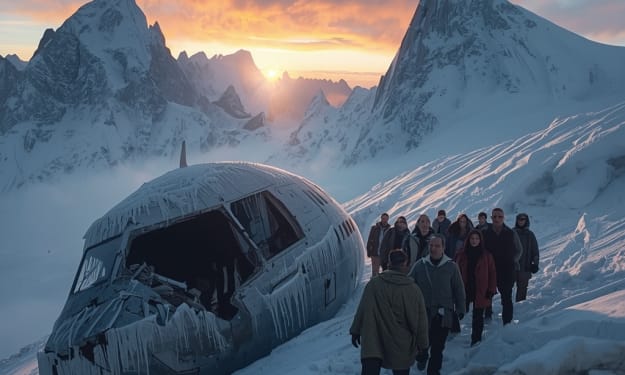
Frozen in the Andes: The Haunting Survival Story of Flight 571
On October 13, 1972, a small aircraft carrying a group of young rugby players, their friends, and family members took off from Montevideo, Uruguay, heading toward Santiago, Chile. The journey was meant to be a simple trip across the Andes Mountains for a friendly rugby match. Spirits were high inside the plane. Laughter, excitement, and youthful energy filled the cabin.
By imtiazalam3 days ago in Criminal
The Midnight Train Murder
M Mehran Late one winter night, the last train leaving the city of Blackridge carried only a handful of passengers. The midnight train was usually quiet—mostly travelers returning home after long days or strangers heading toward destinations unknown. But on this particular night, the train carried something far more dangerous. A secret. At 12:18 AM, while the train rushed through the dark countryside, a passenger screamed from the third carriage. The sudden panic caused the conductor to stop the train immediately. When the train staff reached the scene, they discovered a horrifying sight. A man lay lifeless across one of the seats. His briefcase had fallen to the floor, papers scattered across the aisle. The passengers nearby stared in shock, unsure of what had just happened. Within thirty minutes, police arrived at the nearest station where the train had been stopped. Detective Ryan Carter stepped aboard to investigate. He quickly realized this was no ordinary case. A Murder in a Moving Train The victim was identified as Jonathan Blake, a financial analyst working for a large investment company. According to the passengers, Blake had boarded the train alone and sat quietly for most of the journey. No one noticed anything unusual. Then suddenly he collapsed. At first, people assumed he had suffered a heart attack. But when the medical examiner inspected the body, the truth became clear. Blake had been stabbed. The wound was small but precise—clearly delivered by someone who knew exactly where to strike. The biggest problem for investigators was simple. No one had seen the attack. The train had been moving the entire time, meaning the killer had to be someone on board. Detective Carter now faced a chilling possibility. The murderer was still sitting among the passengers. The Suspects Only seven passengers were present in the carriage when the crime occurred. Police questioned each of them carefully. First was Emily Dawson, a university student traveling home for the holidays. She claimed she had been listening to music and noticed nothing unusual. Next was Harold Finch, a retired engineer reading a newspaper at the time of the incident. Then there was Lucas Grant, a businessman who appeared extremely nervous during questioning. The remaining passengers included an elderly couple and a quiet man sitting near the window who gave his name as Victor Lane. At first glance, none of them seemed capable of murder. But Detective Carter knew appearances could be deceiving. The Hidden Motive While searching Blake’s belongings, investigators discovered something interesting inside his briefcase. Several confidential documents. The papers revealed that Blake had recently uncovered a major financial fraud involving millions of dollars being secretly transferred through international accounts. Someone inside his company had been stealing money for years. Blake had been planning to expose the crime. Which meant someone had a powerful reason to silence him. Detective Carter focused on the passengers again. One by one, their stories were examined. Most checks came back clean—until investigators looked deeper into Lucas Grant’s background. A Dangerous Connection Lucas Grant claimed to be a businessman traveling for work. But financial records showed something different. Grant had recently received large payments from a shell company connected to the same fraud Blake was investigating. When confronted with the evidence, Grant began to sweat. But he still denied everything. Carter knew he needed one final piece of proof. So he carefully reviewed the security footage from the train station where passengers had boarded. There it was. The camera showed Grant walking behind Blake on the platform. But more importantly, it revealed Grant slipping something into his coat pocket—a small folding knife. The Final Confrontation When detectives searched Grant’s luggage, they discovered the weapon hidden inside a shoe. The blade matched the wound perfectly. Realizing the evidence against him was overwhelming, Grant finally confessed. Blake had discovered the fraud network and was preparing to report it to federal authorities the next morning. Grant, who was deeply involved in the scheme, followed him onto the midnight train to stop him. When the lights dimmed in the carriage, Grant quietly moved behind Blake and delivered the fatal stab. The attack was so quick that no one noticed. Grant believed the crowded train would make it impossible for police to identify the killer. But he underestimated one thing. Truth always leaves traces. Justice on the Rails Grant was arrested and later sentenced to life in prison for murder and financial crimes. His confession helped authorities uncover the entire fraud network, leading to several additional arrests. For Detective Carter, the case became known as The Midnight Train Murder—a chilling reminder that danger can appear even in the most ordinary places. Passengers eventually returned to their normal lives, but many never forgot that night. Because somewhere between two quiet stations, on a train speeding through darkness, a murderer had almost escaped justice. And only careful investigation had stopped him.
By Muhammad Mehran6 days ago in Criminal
Toronto Consulate Shooting, Synagogue Attacks, and Antisemitic Violence in Canada
Irina Tsukerman is a human rights and national security attorney based in New York and Connecticut. She earned her Bachelor of Arts in National and Intercultural Studies and Middle East Studies from Fordham University in 2006, followed by a Juris Doctor from Fordham University School of Law in 2009. She operates a boutique national security law practice. She serves as President of Scarab Rising, Inc., a media and security strategic advisory firm. Additionally, she is the Editor-in-Chief of The Washington Outsider, which focuses on foreign policy, geopolitics, security, and human rights. She is actively involved in several professional organizations, including the American Bar Association’s Energy, Environment, and Science and Technology Sections, where she serves as Program Vice Chair in the Oil and Gas Committee. She is also a member of the New York City Bar Association. She serves on the Middle East and North Africa Affairs Committee and affiliates with the Foreign and Comparative Law Committee.
By Scott Douglas Jacobsen2 days ago in Criminal



Comments
There are no comments for this story
Be the first to respond and start the conversation.