
When Justice Is for Sale
How bribed courts and corrupt rulers threaten democracy—and why independent journalism remains society’s last line of defense.

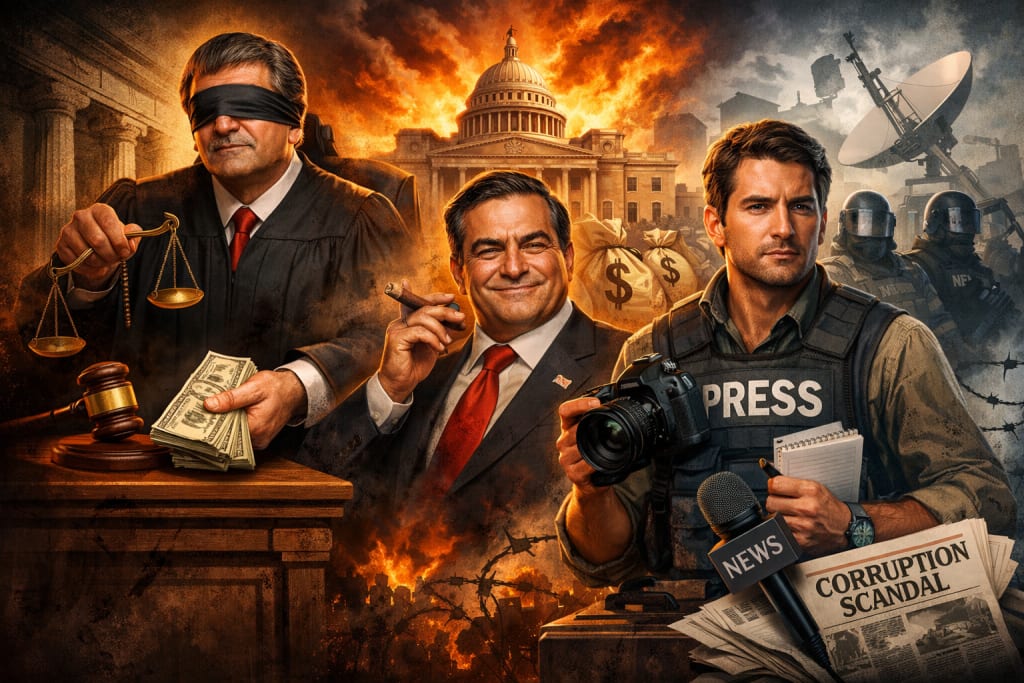
In any democratic society, three pillars are expected to uphold justice and accountability: an independent judiciary, honest political leadership, and a free press. When these pillars function properly, they create a system of checks and balances that protects citizens from abuse of power. But when the courts become bribed, rulers turn corrupt, and pressure mounts against journalists, democracy itself begins to weaken. The relationship between these institutions can determine whether a nation moves toward justice or slides into authoritarianism.
The judiciary is often described as the guardian of justice. Its primary role is to interpret the law fairly and ensure that no individual, regardless of status or wealth, stands above it. However, when bribery infiltrates the judicial system, the rule of law becomes compromised. Decisions may no longer depend on evidence or legal principles but on money, influence, or political connections. In such an environment, ordinary citizens lose faith in the courts because justice appears to favor the powerful rather than the rightful.
Judicial corruption has far-reaching consequences. If courts are suspected of being influenced by bribery or political pressure, criminals may escape punishment while innocent people suffer unjust outcomes. Businesses also lose confidence in legal protections, which discourages investment and weakens the economy. Ultimately, a corrupt judiciary does not merely fail individuals; it undermines the stability of the entire state.
Equally damaging is corruption among political leaders. When rulers prioritize personal wealth or political survival over public service, government institutions begin to deteriorate. Public funds meant for education, healthcare, infrastructure, and social welfare can be diverted into private pockets or used to maintain political loyalty. In such situations, corruption becomes systemic, spreading through bureaucracies and weakening governance.
Corrupt rulers often rely on influence over state institutions to protect themselves. This can include manipulating law enforcement agencies, controlling regulatory bodies, or pressuring courts to deliver favorable verdicts. When political authority interferes with judicial independence, the legal system becomes an extension of political power rather than a neutral arbitrator of justice.
However, even in such circumstances, there remains one institution capable of challenging corruption: a free and independent press. Journalism plays a vital role in exposing wrongdoing, revealing hidden deals, and informing the public about abuses of power. Investigative reporters often uncover corruption that would otherwise remain concealed behind official secrecy.
History shows that many major corruption scandals have been exposed by determined journalists who refused to remain silent. Through investigative reporting, leaked documents, and interviews with insiders, the press can bring truth into the public sphere. When citizens become aware of corruption, they can demand accountability through democratic processes, including elections and public debate.
Yet the power of journalism also makes it a frequent target for those in authority. Governments facing criticism may attempt to silence reporters through censorship, intimidation, legal harassment, or economic pressure. Media organizations can be threatened with lawsuits, advertising bans, or regulatory obstacles designed to weaken their independence. In more severe cases, journalists may face arrest, violence, or forced exile.
Despite these challenges, independent journalism continues to serve as a crucial watchdog in society. A free press ensures that corruption cannot operate entirely in the shadows. By publishing evidence and holding leaders accountable, journalists provide citizens with the information they need to make informed decisions about their government.
The interaction between the judiciary, political leadership, and the media ultimately shapes the health of a democracy. When courts are honest, leaders are accountable, and journalists are free to investigate, a country can maintain transparency and public trust. But when corruption infects the legal system and political institutions while the press is suppressed, citizens may find themselves powerless against injustice.
Strengthening democratic institutions requires protecting judicial independence, promoting transparency in governance, and ensuring freedom of expression. Anti-corruption laws, independent oversight bodies, and ethical standards for public officials can help prevent abuse of power. Equally important is safeguarding journalists’ rights so they can continue their work without fear.
In the end, democracy is not sustained by institutions alone but by the values of accountability, integrity, and truth. A society that defends these principles—through fair courts, responsible leadership, and courageous journalism—stands a far better chance of preserving justice and freedom for future generations.
About the Creator
Irshad Abbasi
Ali ibn Abi Talib (RA) said 📚
“Knowledge is better than wealth, because knowledge protects you, while you have to protect wealth.
Keep reading
More stories from Irshad Abbasi and writers in Chapters and other communities.
The Lakes of Soon Sakesar Valley Await Travelers
Nestled within the picturesque Salt Range of Punjab, Pakistan, the enchanting Soon Sakesar Valley is a place where nature reveals some of its most captivating wonders. Among its most beautiful attractions are the valley’s tranquil lakes, which seem to patiently await the arrival of travelers and nature enthusiasts. These lakes not only enhance the valley’s natural charm but also play an important role in supporting wildlife, local communities, and tourism in the region.
By Irshad Abbasi 3 days ago in Chapters
What was said about Afghanistan at the UN Security Council meeting?
The United Nations Security Council held a mNew York, Uni, to discuss the situation in Afghanistan. Representatives froGeorg, the head of the United, exchanged views on the situation in Afghanistan.
By Real content4 days ago in Chapters



Comments
There are no comments for this story
Be the first to respond and start the conversation.