
The Story of Mary Van Brittan Brown
The Watchful Door
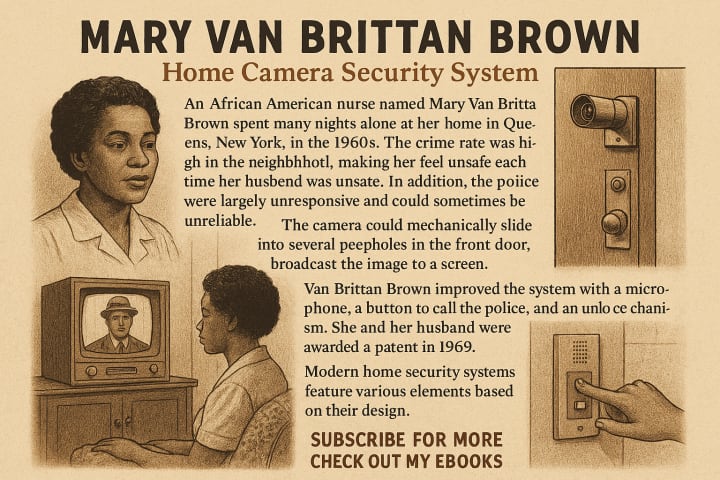
In the quiet hours of night, when most of New York City had finally lulled itself to sleep, the row houses of Queens told a different story. Streetlights flickered against cracked sidewalks, shadows moved where no footsteps sounded, and the uneasiness of the era seemed to settle into the very bones of the neighborhood. It was the mid‑1960s, a time when the city pulsed with ambition and creativity—but also with rising crime. For many residents, safety was something you hoped for rather than something you could rely on.
Inside one of those modest Queens homes lived Mary Van Brittan Brown, a nurse whose shifts often kept her husband, Albert, away at the same time. Their schedules overlapped in a way that left Mary alone far too often, with her only company being the low hum of appliances and the persistent echo of sirens in the distance. While she had a strong spirit and the resilience of someone used to caring for others, the nights had a way of stretching long and thin. Every rustle outside, every knock that came with no warning, served as a reminder that the world outside her door wasn’t always kind.
What made these nights especially unsettling was the unreliability of police response during that period. In her neighborhood, you could call—but there was no guarantee anyone would show up in time, if at all. And so, Mary found herself in a constant balancing act: staying calm, staying aware, and staying prepared, all while the weight of isolation pressed a little heavier each evening.
But Mary Van Brittan Brown was not someone who waited to be rescued. She was someone who created solutions.
The Idea That Changed Everything
One night, after hearing a noise outside and debating whether to approach the door, something sparked in her mind. She thought, There must be a way to see who is out there without having to open the door. With that single thought, a seed was planted—a seed that would grow into the foundation for modern home security systems used around the world today.

Mary began sketching. Her training as a nurse had taught her precision, attention to detail, and a methodical way of solving problems. If she could find a way to observe the outside of her home from inside it, she could take control of her own safety.
She envisioned a camera. Not a large broadcast camera or the heavy equipment used by professionals. She imagined something slim, mobile—perhaps something that could slide into different door peepholes to change angles. She pictured wires leading to a screen inside the house where she could sit at her television stand and watch whoever approached.
Even in those early sketches, something extraordinary was blossoming.
Albert, seeing her determination, became intrigued and eventually joined her in refining the idea. Together, they pieced together wires, mirrors, lenses, and moving mechanisms. Night after night, their dining table became a workshop. Small parts scattered the surface like puzzle pieces waiting for placement.
The First Prototype
The final design was brilliant in its simplicity: a camera system installed in the front door, with multiple peepholes at varying heights. The camera could mechanically slide up or down to peer through each one. This allowed Mary to see not only adults but also delivery workers or unexpected guests who might stand at different heights.
Inside the home, the camera connected to a small television monitor. With this setup, Mary could remain safely seated while watching anyone who came to her door. It was an ingenious way to reclaim peace of mind, built using what she had, guided by the ingenuity she naturally possessed.

But Mary didn’t stop there. After testing it for several nights, she began asking herself new questions:
What if she needed to speak to the person without opening the door?
What if she needed to call the police quickly?
What if the person at her door had good intentions—could she create a way to unlock the door without physically standing in front of it?

These questions became upgrades:
A two-way microphone to communicate safely.
A remote-controlled door unlock mechanism.
A panic button that contacted authorities.
Her invention was no longer just a personal solution; it was a system—something the world had never seen before.

A Patent and a Legacy
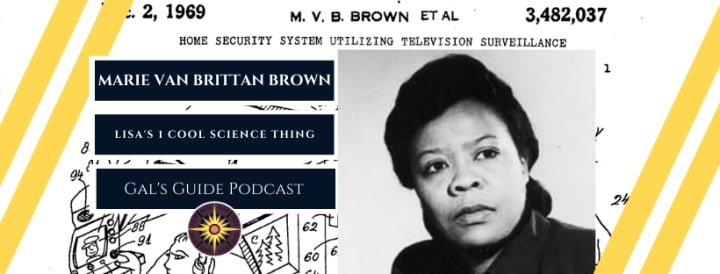
In 1966, Mary and Albert filed for a patent, and in 1969, it was officially granted. It was titled “Home Security System Utilizing Television Surveillance.” At the time, it was revolutionary. Newspapers reported on it. Industry professionals admired it. And more importantly, it served as the blueprint for today’s home security technology—camera doorbells, intercom systems, remote locks, emergency rapid‑response mechanisms, and more.
Mary Van Brittan Brown didn’t just solve her own problem. She reshaped an entire industry.
Her system showed that everyday people—especially those whose voices were often overlooked—could create world-changing ideas. The invention became a quiet but powerful reminder that innovation often starts at home, in the heart of someone who refuses to accept unsafe conditions as unchangeable.

The Impact on Future Generations
Decades later, people around the world tap their cellphone screens and instantly see who is at their door. They use remote locks, integrated microphones, motion sensors, alarm triggers, and complex communication networks—all built on the same foundational principles Mary imagined at her kitchen table.
When a package arrives, when a stranger approaches, when families lock their doors at night—they benefit from her vision.
Mary’s work also carries another meaning: the power of perseverance. She innovated during a time when African American inventors faced overwhelming obstacles and limited recognition. Yet her contribution broke through barriers and became an enduring symbol of empowerment.
Her legacy continues not only in security systems but in the spirit of creative problem-solving. Her courage inspires countless future inventors—especially those who look around their world, see a problem, and dare to imagine a solution.
Your Invitation
If you enjoyed this story and want more original, inspiring narratives like this, make sure to subscribe so you never miss a post.
And don’t forget to check out my ebooks, where you’ll find more powerful stories, creative insights, and transformative ideas that keep you learning, thinking, and inspired.

Your support helps keep these stories alive
About the Creator
TREYTON SCOTT
Top 101 Black Inventors & African American’s Best Invention Ideas that Changed The World. This post lists the top 101 black inventors and African Americans’ best invention ideas that changed the world. Despite racial prejudice.
Keep reading
More stories from TREYTON SCOTT and writers in Chapters and other communities.
Moses Fleetwood Walker
Until Jackie Robinson joined the Brooklyn Dodgers in 1947 March 6, 2026 —Leavie scott Long before Jackie Robinson became a household name in 1947, another pioneering athlete stepped onto the field and challenged the deeply entrenched racial barriers of his era. His name was Moses Fleetwood “Fleet” Walker (1856–1924), and although history remembers him primarily as one of the earliest Black athletes to play in professional Major League Baseball, his extraordinary life story stretches far beyond the diamond.
By TREYTON SCOTT7 days ago in Chapters
Valentine's Dates Over the Years
Colin grinned as Brooklyn slipped into the living room. “Is it all set?” he asked. The twenty-one year old grinned. She was in her last year of college and Colin knew that Lincoln was proud of her. Although she had been away at college, she’d eagerly helped Colin plan his surprise for Lincoln. “I’m so glad you’re finally doing this,” she said.
By Reb Kreyling29 days ago in Chapters
Tattoos & Rail Guns Chapter 21: The Chaos Becomes Order
Kev grabbed a gargoyle and tossed it just outside the circle of dogs while kicking another. The third clawed him across the belly, leaving deep wounds. Kev hit the one he had kicked, stunning it. The one tossed outside jumped back into the fray. Kev's wounds began healing, but he would not be able to keep up with the damage for long.
By Jamais Jochimabout 21 hours ago in Chapters
Why Didn't Anyone Tell Us
Men, move along. This is not for you. This is for the women. I was forty-five when I began menopause. It is pretty young for that to be going on in a woman’s life, but I had undiagnosed PCOS, my entire life. Thank you to all the gynecologists I had seen my entire life. That in itself should encourage women to keep seeking second opinions, especially when you are not getting correct answers or any at all.
By Alexandra Grant3 days ago in Humans


Comments
There are no comments for this story
Be the first to respond and start the conversation.