
Hamnet is a swing & mostly a miss
Review of Chloe Zhao’s 2025 Oscar Nominated film, Hamnet

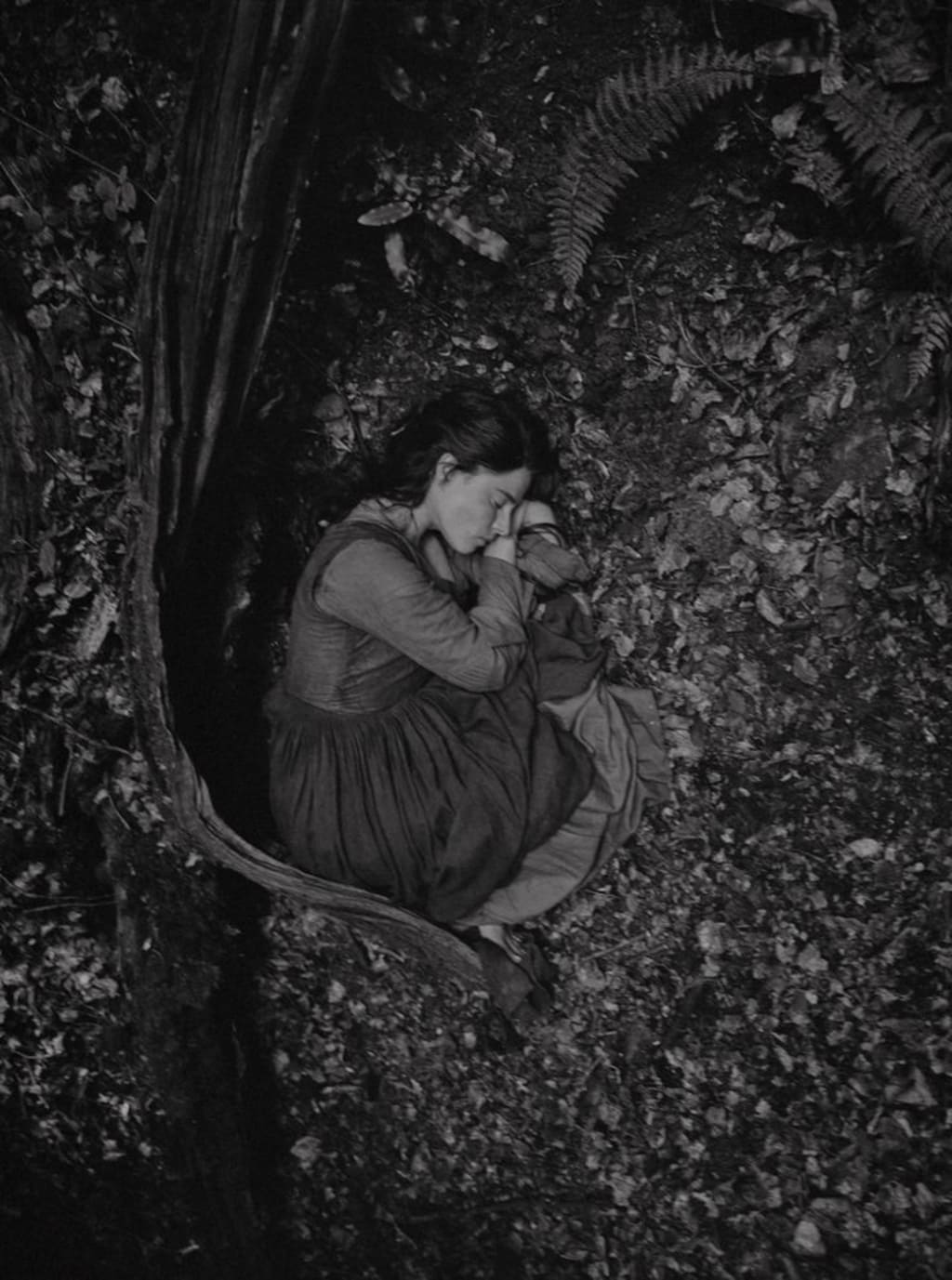
“You are simply mouthing the words”, yells a disgruntled Shakespeare at a struggling performer. But in a way, that’s what Hamnet does a majority of the time.
I’m really not a fan of films that:
1. Build little depth and present scenes as a fleeting collection of moments
2. Stake literally everything on an emotional final act
And that’s essentially what Hamnet carries out. By presenting these characters as caricatures or simple archetypes — grieving mother, failing writer — instead of actual people for most of its runtime, the movie misses out on the story beats that make the audience feel a connection with the characters and the performers that portray them. These moments are simply acted out–like a play performer mouthing words without emotion–but they don’t hit. There are scenes where they’re more than that though, but those scenes are so infrequent.
The plot floats around from one fictionalized event of William Shakespeare and Agnes Hathaway’s romantic life to the next, but most of it is only to lay the foundations of the last act. It’s like ticking off a checklist of how they get to having a family, but without properly writing in the emotions that should be experienced with those scenes.
The film spoils the base of the story–Hamnet Shakespeare’s death– in the description and marketing, so the first hour is just emotionlessly retelling an expanded version of events that the viewer already learns about from the plot bio. I don’t know why they did this. Did they assume all viewers know about the story of Agnes Hathaway and Shakespeare’s life, and the death of their son? Along with the theory of it perhaps inspiring the creation of Hamlet? And that audiences were simply keen to speed past that and get to the presentation–not even the creation– of the iconic play?
That seems a bit nearsighted, especially considering the connection of Hamnet Shakespeare with the story of Hamlet is theoretical and unable to be proven. Historicity notwithstanding, I think showcasing the creation of Hamlet through this lens could have been quite interesting.
Displaying Shakespeare struggling with the trauma of his son’s death, not being present and having to leave for work right after, along with having to write the story in a way that both allows him to vent and not disrespect his son’s memory, are all scenes I think could have gave the early parts of the movie some much needed psychological depth.
One of the best parts of the film–for me–was William’s frustrations with the failure of one of his earliest drafts. He couldn’t tighten the script the way he wanted to, which leads to a fit of rage in which he leaves for London to calm his mind. I found that part very well-written, but it was not only because of the acting. I also believe the script did a superb job here, interlinking his life’s frustrations– with the arguments against his family either for laboring or for his marriage– with his struggles as a writer.
I can’t say the same for the rest of the film, where the script falls where the performers shine.
As a result, you get a movie that wants to make you feel sad because the actors do an amazing job of showcasing sorrow. But the script builds no real connection throughout most of it, no relationship between the audience and the characters is properly established. Events pass, and time progresses rather quickly. So when the main story beats arrive, it’s simply, “Look, this just happened. Now you need to feel sad because it’s supposed to be sad and our actors are portraying sad emotions.” Shout out to Cameron Wayne Johnson on Letterboxd, who describes this method of writing as “emotional manipulation”. As he puts it, “This may be an ‘emotional rollercoaster’ on the most superficial of levels for art cinema”.
If this was meant to be a historically accurate biopic, I’d get it. At that point, you can sacrifice depth for presentation, because any dialogue crafted is the director’s own imagination, and limiting that is best for accuracy.
But it’s not. We simply know little to nothing about Billy Shakespeare’s life outside the theatre. This allows for fascinating interpretations and filling in the gaps, yet this movie decides to upend that freedom to bounce around different eras of Shakespeare’s life without committing or building depth through a single one. It leaves the ones we did experience feeling empty.
The third act was great though. Jessie Buckley and Paul Mescal without a doubt gave two of the best performances of 2025, despite the script’s failings.
Some of this article is lifted from my Letterboxd review
About the Creator
Juju
To read and write are the gifts that keep life flowing.
https://jasonsingh347.wixsite.com/crystalized-words
Review of 'Man on the Run'
My wife and I saw Man on the Run, a nearly 2-hour documentary on Amazon Prime, about Wings, Paul McCartney's group that flew around the world from shortly after The Beatles broke up in early 1970 to shortly after John Lennon was murdered at the end of 1980, making a Beatles reunion forever impossible.
By Paul Levinson14 days ago in Beat
Why So Many Artists Feel Helpless Right Now
For decades, the dream of becoming an artist followed a relatively clear path. Musicians wrote songs, played local shows, and hoped to eventually be discovered by a record label that would invest in developing their talent.
By Navigating the Worldabout 24 hours ago in Beat


Comments
There are no comments for this story
Be the first to respond and start the conversation.